No te vayas sin conocer la historia Suscribete
IAudioGuia iaudioguia
Audio Guides of Erfurt

Audio Guide of Krämerbrücke

Discover the history and secrets of this place with our audio guide.

✓ What guidebooks don't tell you
✓ Secrets other tourists miss
✓ Listen while you explore
Discover everything
00:00
00:00
Rate this audio guide

📖 Audio Guide Chapters

6 chapters

1. Introduction

🔒 Premium Content

Subscribe to access all chapters of this audio guide.

2. History of the Bridge

🔒 Premium Content

Subscribe to access all chapters of this audio guide.

3. Architecture and Design

🔒 Premium Content

Subscribe to access all chapters of this audio guide.

4. Life on Krämerbrücke

🔒 Premium Content

Subscribe to access all chapters of this audio guide.

5. Workshops and Shops

🔒 Premium Content

Subscribe to access all chapters of this audio guide.

6. Closing and Reflections

🔒 Premium Content

Subscribe to access all chapters of this audio guide.

❓ Frequently Asked Questions

1. What are the opening hours of Krämerbrücke and how do you access it?

As a public street, the bridge is accessible 24 hours a day, every day of the year. However, if you plan to visit the craft shops and boutiques located on it, business hours are usually Monday to Saturday from 10:00 a.m. to 6:00 p.m. You can find more details on the Erfurt Tourism website.

2. How much does admission cost, or is there an entry fee?

Walking across and strolling along Krämerbrücke is completely free, as it functions like any other pedestrian street in the city. The only cost will be whatever you choose to spend in the exclusive artisan shops, galleries, or the famous chocolate shop you will find along the way.

3. How much time is recommended for the visit?

To explore it at a relaxed pace, browse the shop windows, and take good photos, we recommend setting aside between 45 minutes and 1 hour. If you decide to climb the tower of St. Aegidius Church for the panoramic views, add about 20 extra minutes.

4. What is the historical importance of Krämerbrücke?

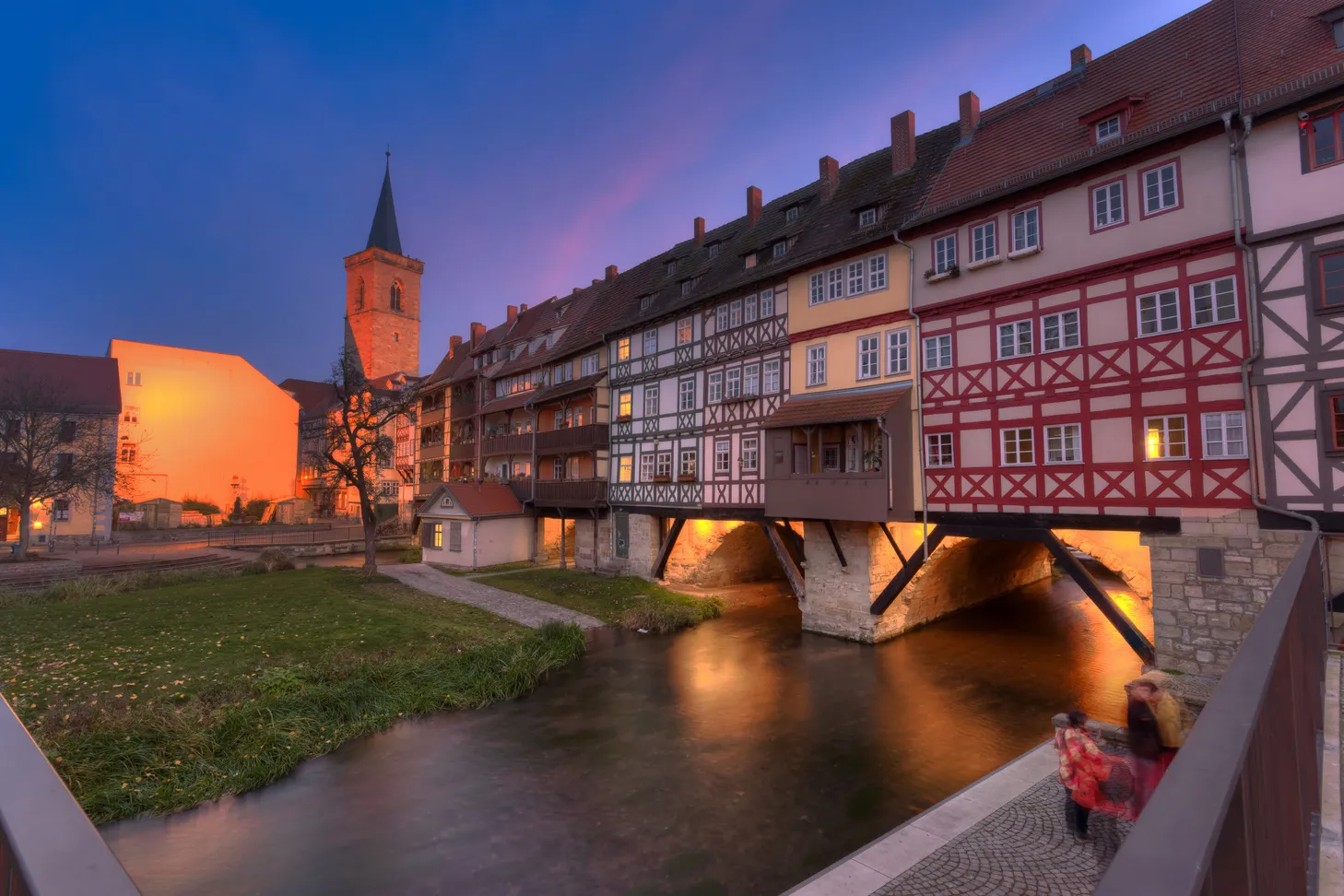
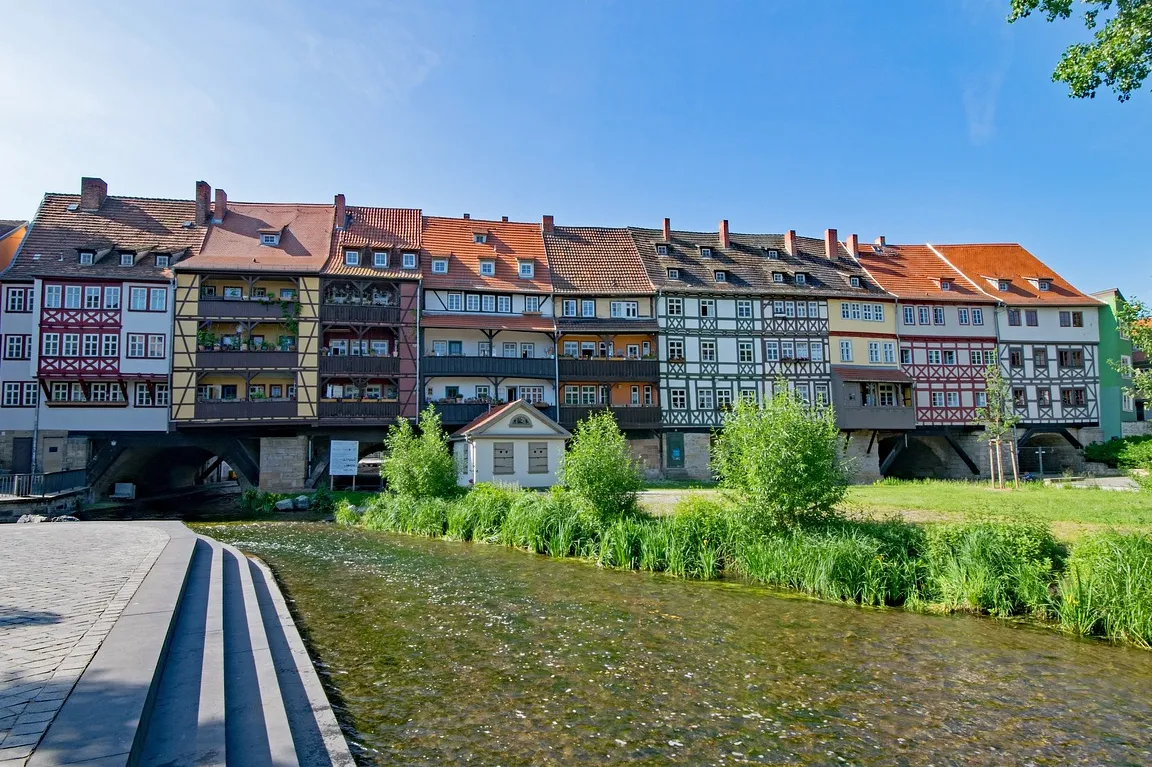
It is a unique architectural gem: the longest inhabited bridge in Europe north of the Alps. Built in stone in 1325 after several fires, it was part of the important Via Regia trade route and today still preserves its medieval spirit with 32 half-timbered houses above the water.

5. What is the best time of day or year to visit?

For shopping and atmosphere, visit on a Saturday morning; if you want crowd-free photography, go at sunrise. A key date is the third weekend of June during the *Krämerbrückenfest* (Bridge Festival), one of the biggest events in the city.

6. Is the bridge accessible for people with reduced mobility?

Yes, the bridge is flat and paved, allowing wheelchair access, although the historic cobblestones may feel a bit uneven. Keep in mind that some old shops are narrow or may have a small step at the entrance.

7. What other nearby attractions are worth seeing afterward?

You are in the heart of the city: right next to it you will find Wenigemarkt Square, and within a few minutes on foot you can reach the impressive Erfurt Cathedral and the Old Synagogue. It is the ideal starting point for a walking tour of the old town.

8. What practical tip would you give me to make the most of the visit?

Do not just cross it; for the best full view of the bridge, go down to the bank of the Gera River from the north side. Also, do not leave without trying the 'Goldhelm' chocolate made right on the bridge; it is a true local institution. More info about the shops is available at Krämerbrücke Foundation.

¿Prefieres escuchar en español?

🇪🇸 Escucha la audioguía de Krämerbrücke en español