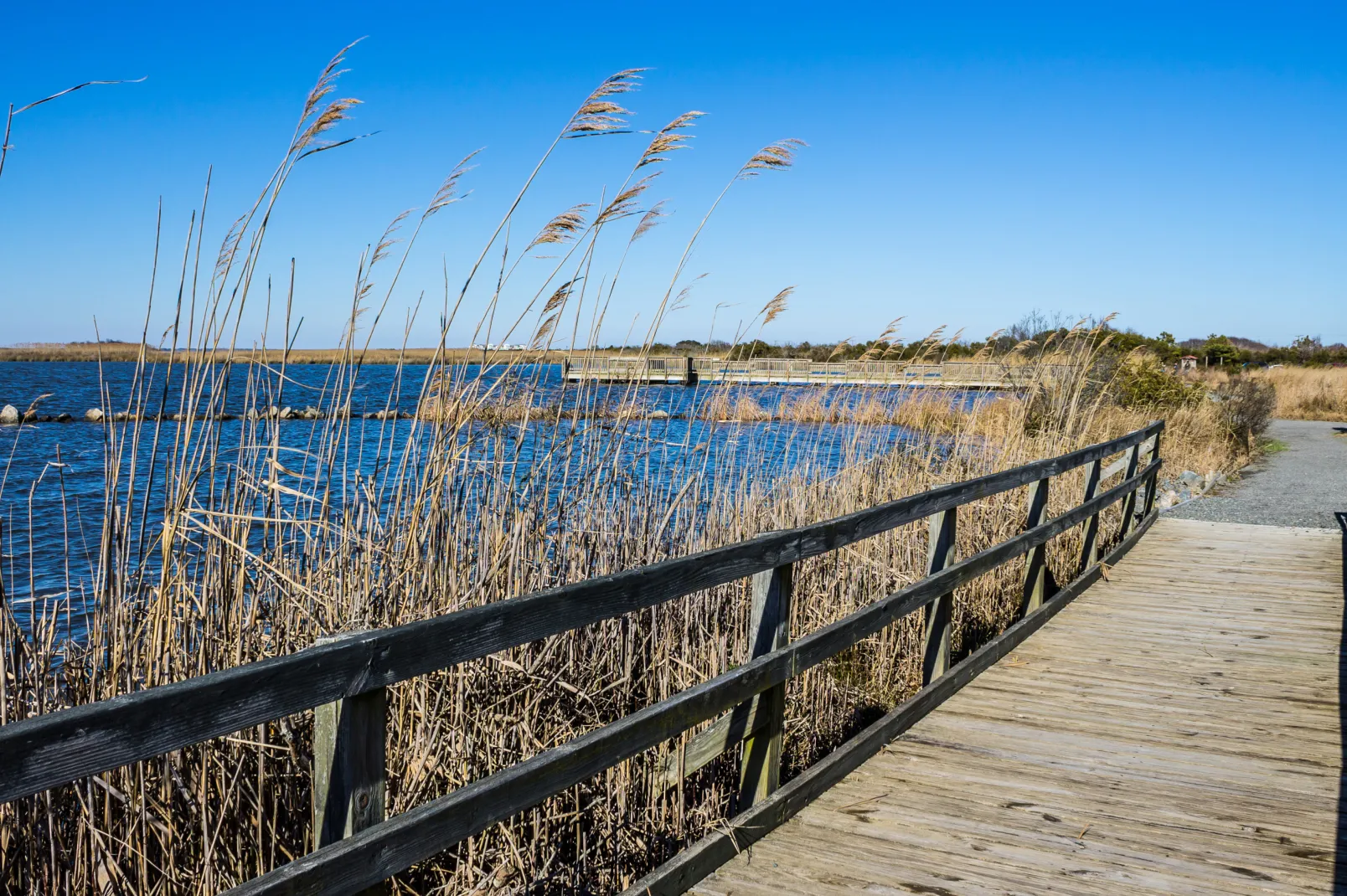
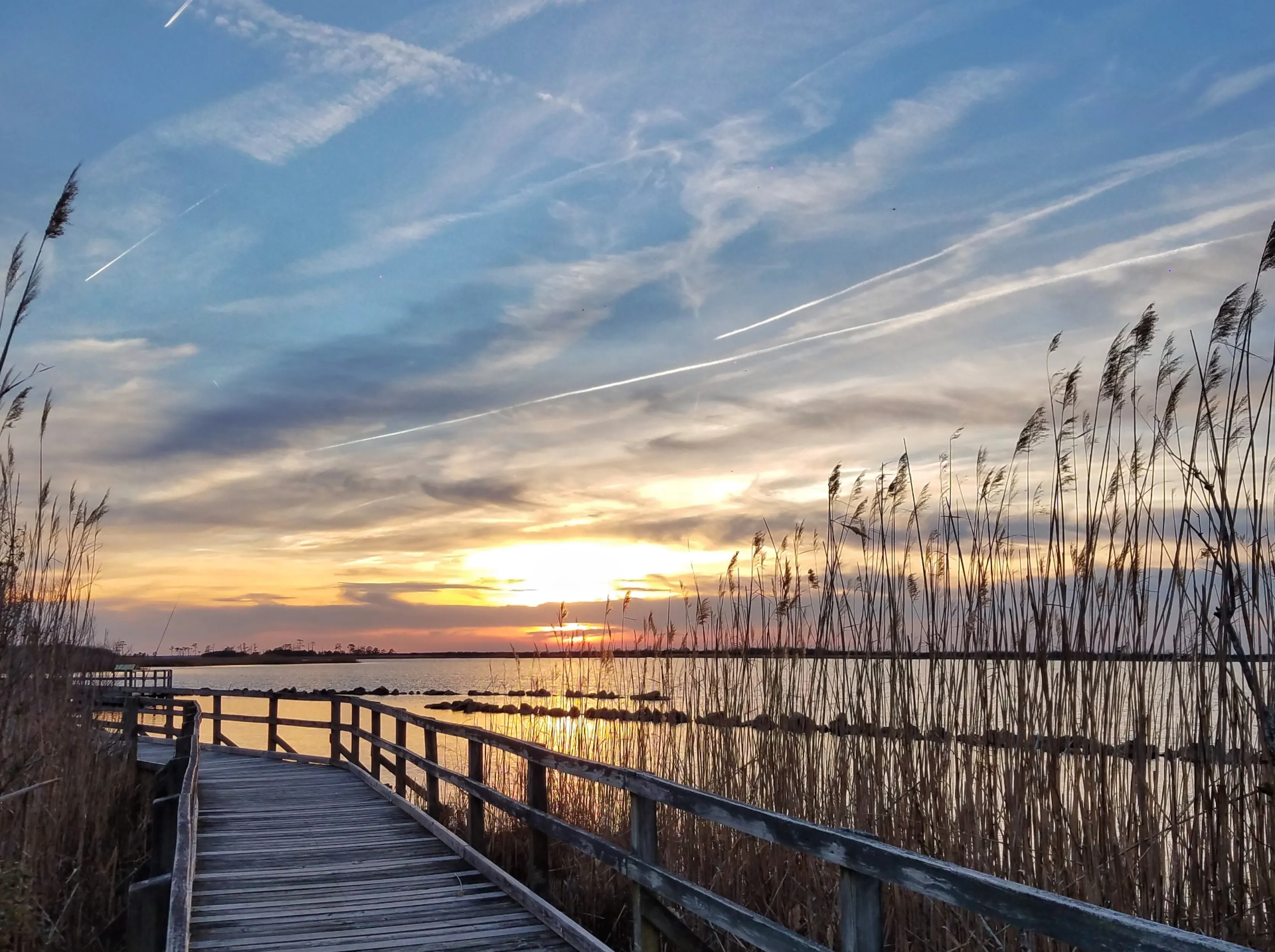
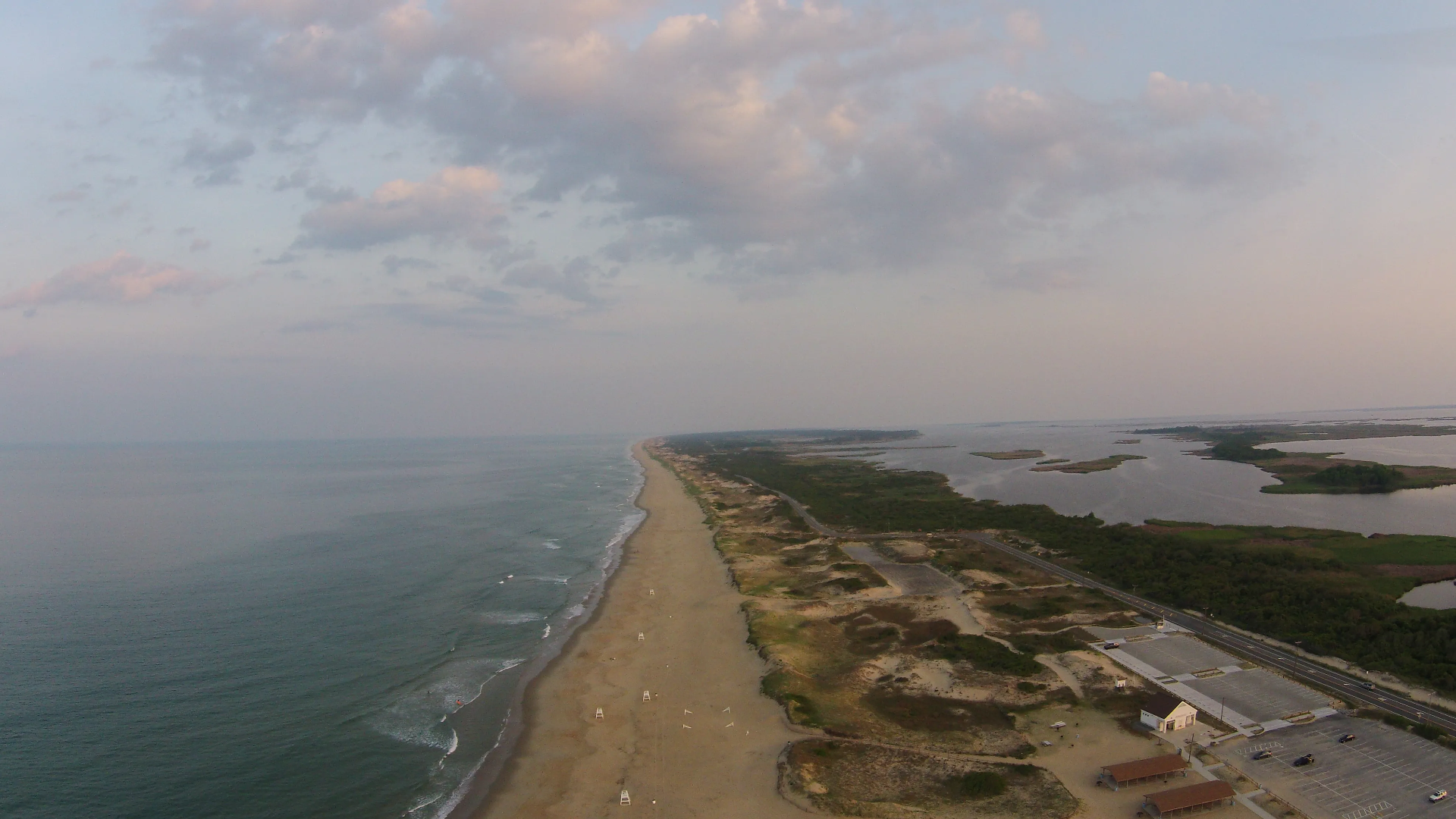
A vital coastal sanctuary in Virginia, home to rich biodiversity and pristine natural landscapes.
The outdoor grounds and trails are open daily from dawn to dusk. The Visitor Center is usually open Tuesday through Friday from 8:00 a.m. to 4:00 p.m., although it is advisable to check for updates on its official website before going.
From April 1 to October 31, there is a daily entrance fee of approximately $5 per vehicle. If you have an America the Beautiful Annual Pass or the federal Duck Stamp, admission is free. You can check accepted passes here.
For a full experience that includes a walk along the main trails and a stop at the Visitor Center, 2 to 3 hours are recommended. If you plan to do bird photography or follow the longer trails toward the beach, you should set aside half a day.
Established in 1938, this refuge is a critical link in the Atlantic Flyway. It protects more than 9,000 acres of vital habitats such as dunes, maritime forests, and marshes, serving as a winter home for thousands of waterfowl such as snow geese.
Fall and winter, from November to February, are spectacular for viewing massive migrations of birds. If you prefer the beach and water activities, summer is ideal, although you will encounter more insects and heat.
Yes, the Visitor Center is accessible, and there are specific trails such as the boardwalk that make it easier to reach dune viewpoints. However, some deep-sand trails may be difficult for standard wheelchairs.
Just to the south is False Cape State Park, which can only be reached by crossing the refuge on foot, by bike, or by tram. To the north, the tourist area and the Virginia Beach boardwalk are just a short drive away.
Bring strong insect repellent, especially in summer, as mosquitoes and horseflies can be intense. Bring binoculars for wildlife viewing and enough water, since there are few water sources along the outer trails.
¿Prefieres escuchar en español?
🇪🇸 Escucha la audioguía de Back Bay National Wildlife Refuge en español