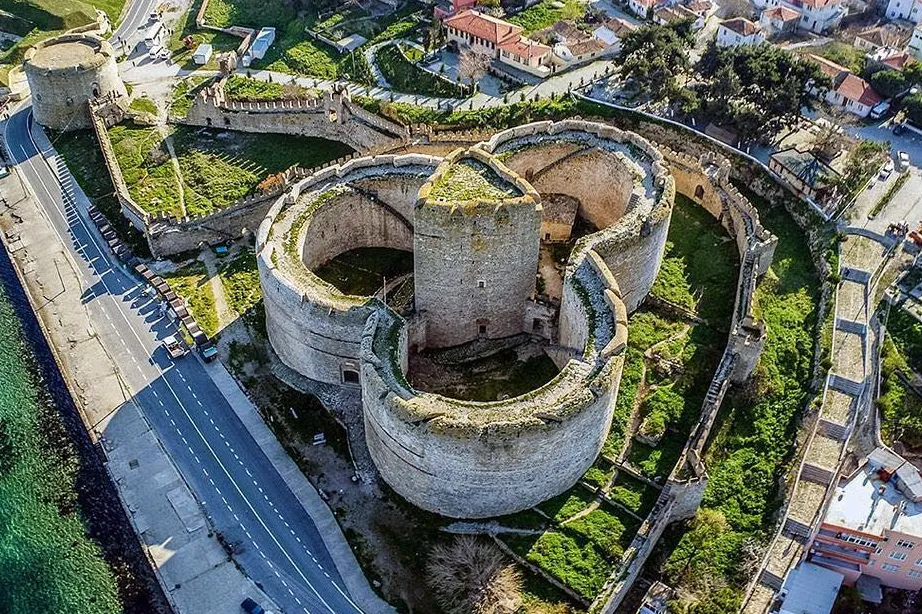
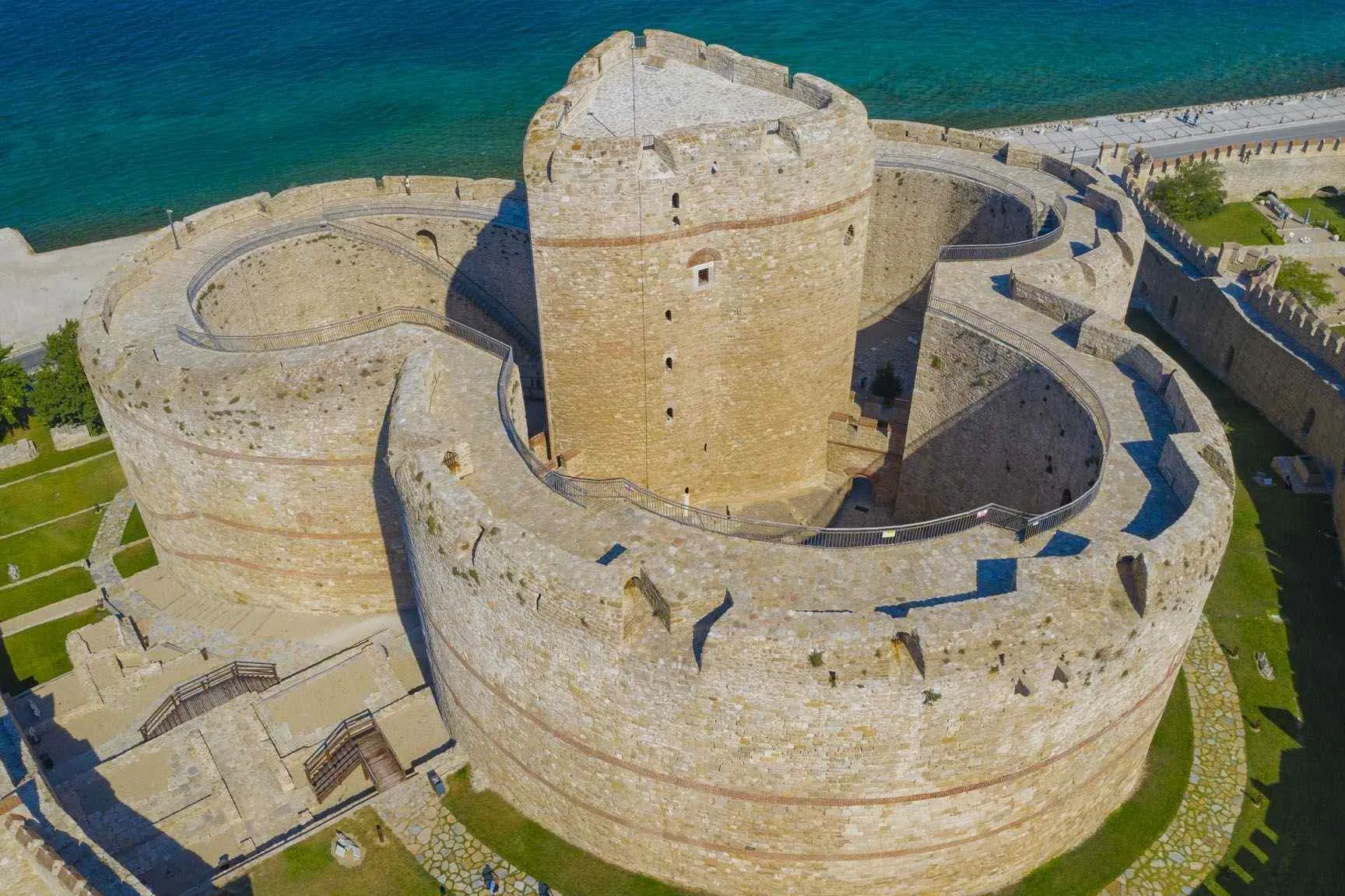
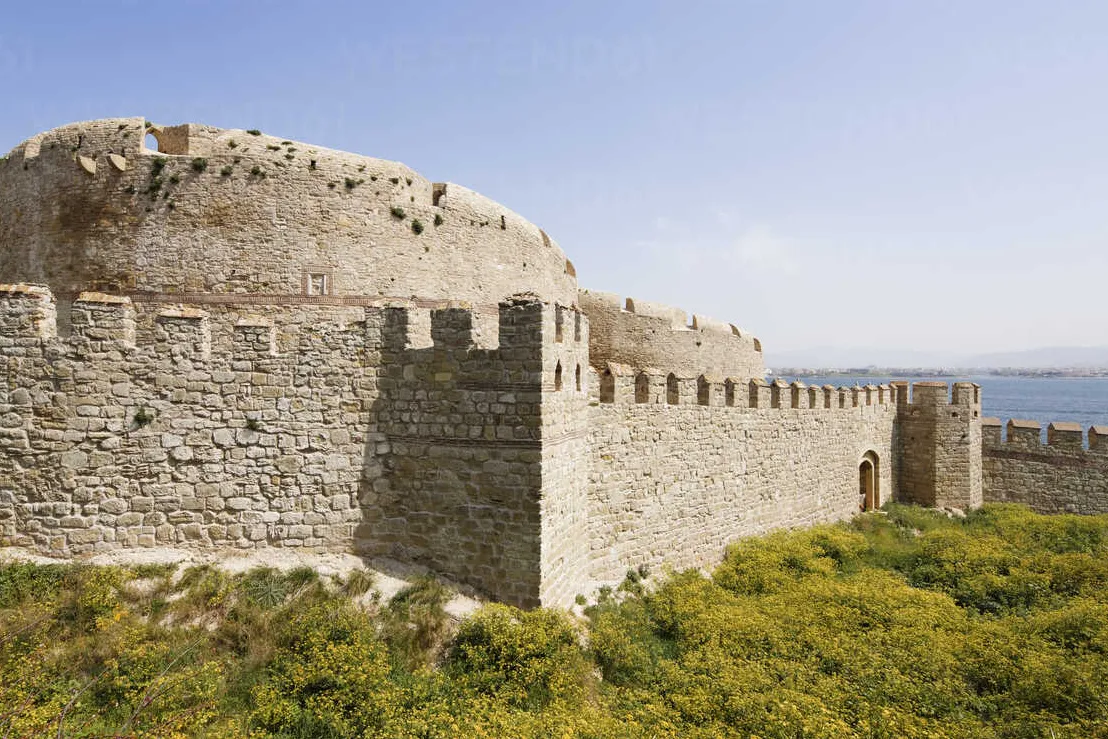
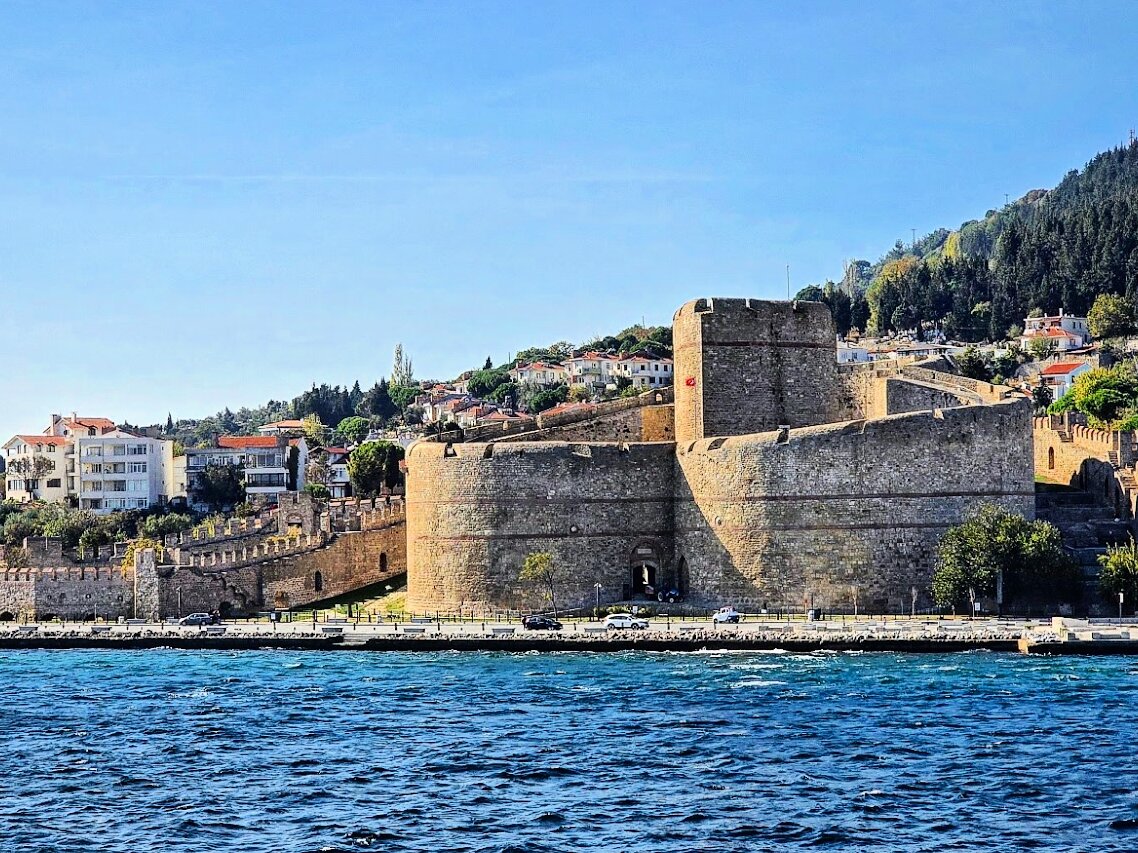
An Ottoman clover-shaped fortress that has guarded the Dardanelles Strait for centuries.
The fortress is open daily from 9:00 AM to 6:00 PM during the high season (April to October), and from 9:00 AM to 5:00 PM in winter; it is recommended to check for updates on the official website. To get there, take a ferry from Canakkale to Eceabat and then a short bus or taxi ride to Kilitbahir, which is about 25 km south of Canakkale. More details at GoTürkiye.
Admission costs around 50 Turkish lira for adults, and it is free for children under 12 and for students with ID. Tickets are paid for at the box office, and there are sometimes group discounts; check the Ministry of Culture website for updated prices.
A typical visit lasts between 1 and 2 hours, enough time to explore the walls, towers, and panoramic views of the Dardanelles. If you are interested in history, allow a bit more time to read the information panels or join a local guided tour.
Built in 1452 by Sultan Mehmed II before the conquest of Constantinople, the fortress was part of a defensive chain to block ships from passing through the Dardanelles and protect the Ottoman Empire. Today it stands as a key symbol of Ottoman military history and played a role in World War I during the Gallipoli campaign.
Spring (April to June) or autumn (September to October) are ideal because of the mild weather and fewer crowds, avoiding the summer heat. Visit early in the morning to enjoy the views in the best light and avoid afternoon ferry traffic.
Access is limited due to steep stairs and uneven ground on the ancient walls; there are no ramps or elevators in most areas. It is recommended to contact the visitor center for assistance, and wheelchair users may only be able to enjoy the exterior views.
Nearby you will find Seddulbahir Fortress across the Dardanelles, the beaches of Troy, and the Gallipoli Museum in Eceabat, just a 10- to 15-minute drive away. For a fuller experience, combine your visit with the ruins of Troy, about 30 km away; more info at GoTürkiye.
Wear comfortable shoes for walking on rocky areas, and bring sunscreen and water, as there are not many facilities on site. Consider joining a guided tour in Canakkale for historical context, and check ferry schedules on the Canakkale ferry website (in Turkish, use a translator).
¿Prefieres escuchar en español?
🇪🇸 Escucha la audioguía de Kilitbahir Fortress en español