Donde los ecos de Nerón y las risas de los gladiadores aún resuenan entre piedras milenarias
As part of the archaeological site of Troy, the Troy Amphitheater generally follows the opening hours of the Troy Museum and the archaeological area. It is usually open from 8:30 AM to 5:00 PM in the low season (October-March) and until 7:00 PM in the high season (April-September). To get there, the most common option is to take a taxi or minibus from Canakkale or Eceabat, as it is about 30 km away. I recommend checking the most up-to-date information on the official Troy Museum website.
Yes, to access the Troy Amphitheater, which is part of the ruins of the ancient city of Troy, you must pay the entrance fee for the full archaeological site. The price is usually around 100-150 TRY per person, but prices may vary. Children under 8 years old usually enter free of charge. It is always a good idea to check current prices on the website of the Turkish Ministry of Culture and Tourism.
To see the Troy Amphitheater and properly explore the vast archaeological site of Troy, including its different excavation layers and the Troy Museum, I recommend allowing at least 2 to 3 hours. If you are a history enthusiast and want to stop at every detail, you could easily spend half a day. The amphitheater itself is only one part, but the full experience is the site as a whole.
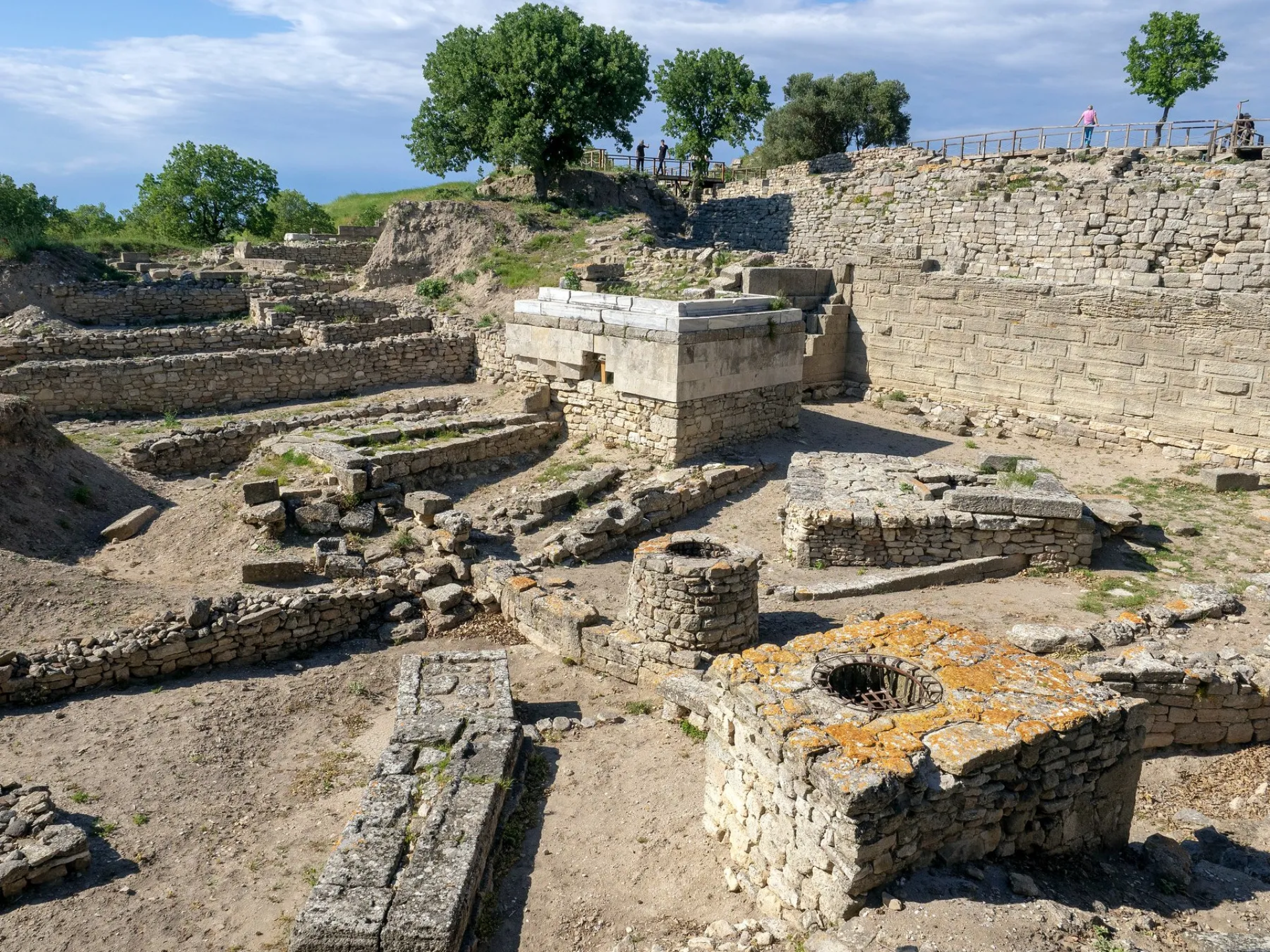
The Troy Amphitheater, although not as monumental as other Roman amphitheaters, is a key testimony to the Roman period in Troy, specifically Troy VIII or IX. It reflects the Romanization of the city and how public life and performances were part of its culture. Its presence highlights the continuity of occupation and Troy’s adaptation to the customs of the Roman Empire, long after the legendary Trojan War.
The best time to visit is in spring (April-May) or autumn (September-October), when the weather is milder and there are fewer crowds. If you can only go in summer (June-August), I recommend visiting early in the morning or late in the afternoon to avoid the strongest heat. In winter, it can be quite cold and windy. The evening light is also ideal for photography.
The archaeological site of Troy, including the amphitheater, presents accessibility challenges due to its uneven terrain, dirt paths, and some stairs. Although efforts have been made to improve accessibility in certain areas, the amphitheater itself may be difficult for wheelchairs without assistance. For the most detailed and up-to-date accessibility information, I suggest contacting the Troy Museum directly or checking its website.
Near the Troy Amphitheater you have several options. Of course, the Troy Museum is a must-see visit that complements the archaeological site. You can also explore the city of Canakkale, with Kilitbahir Castle and the Naval Museum. In addition, the nearby Gallipoli Peninsula is a historical site of great importance, especially for those interested in World War I and the Gallipoli Campaign.
Absolutely. I suggest wearing comfortable walking shoes, bringing sun protection (a hat, sunglasses, and sunscreen), and carrying enough water, especially in the warmer months, as there is little shade. Consider hiring a local guide or downloading an audio guide to understand the complexity of the site (a shout-out to IAudioguide, for example), since the ruins can be difficult to interpret on your own. And do not forget your camera—the views are stunning!
¿Prefieres escuchar en español?
🇪🇸 Escucha la audioguía de Troy Amphitheater en español