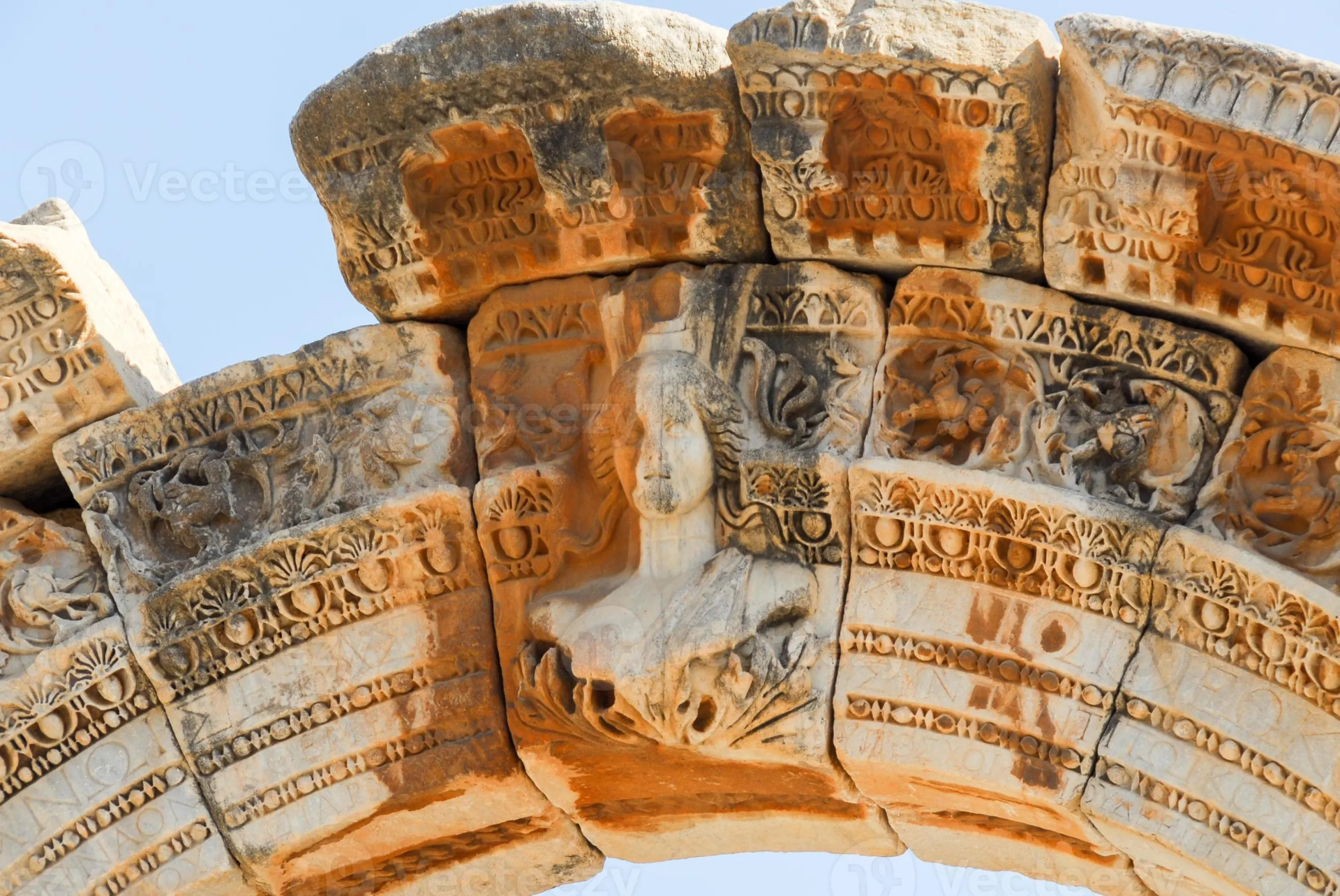
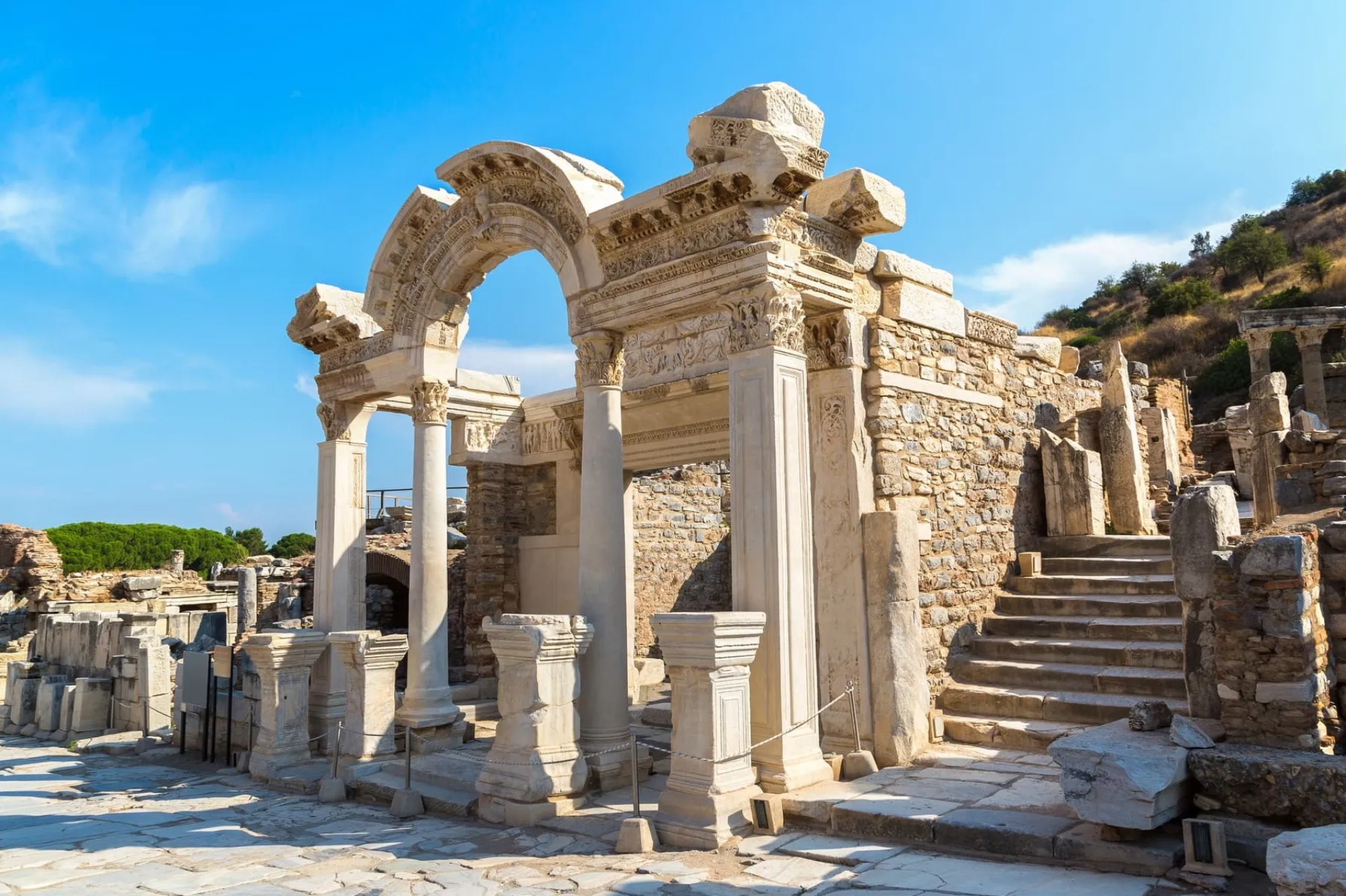
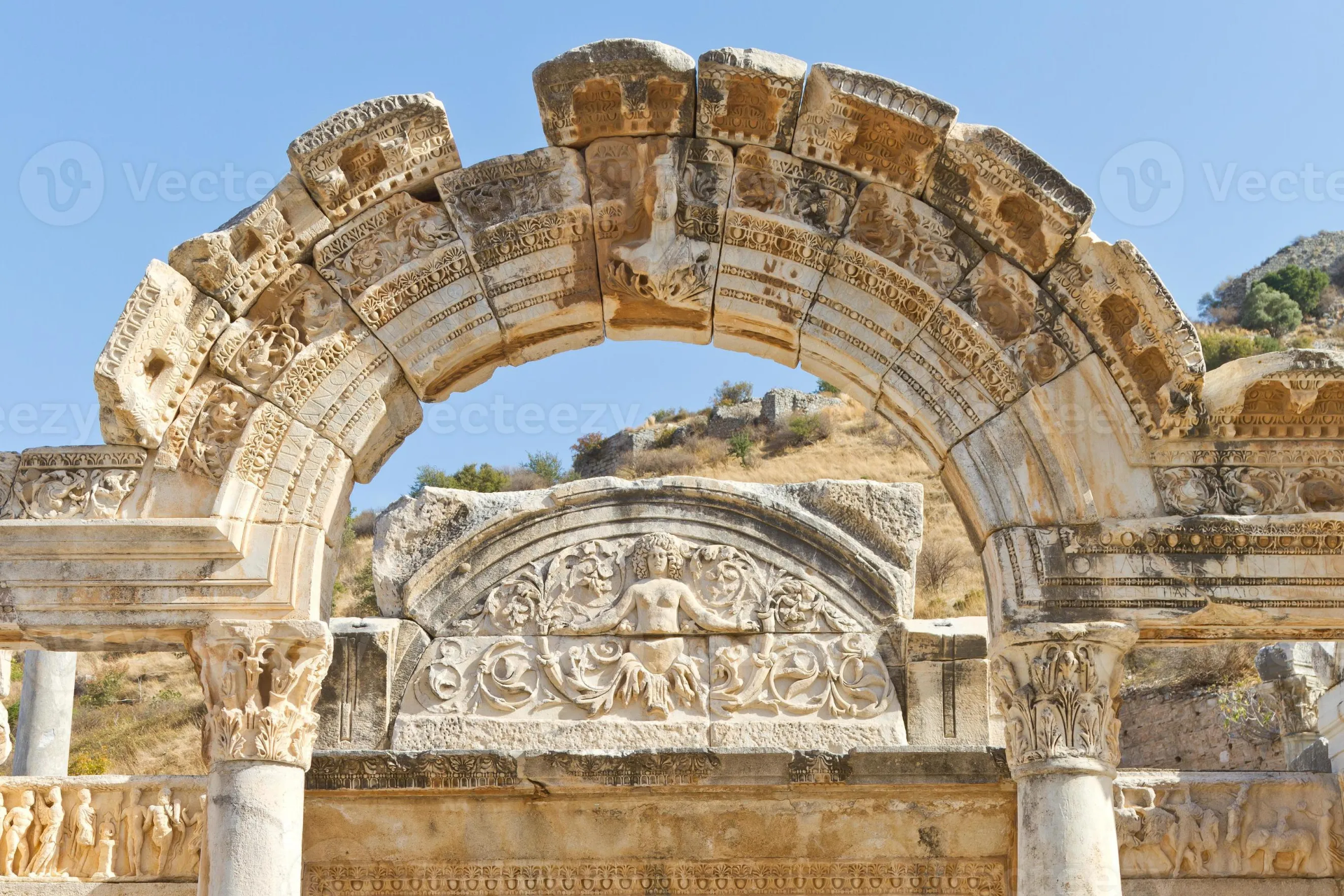
A temple erected in honor of Emperor Hadrian, notable for its friezes and architecture.
The Temple of Hadrian, as part of the ruins of Ephesus, does not have separate opening hours from the archaeological site itself. Generally, the site is open from 8:00 a.m. to 7:00 p.m. in summer and from 8:30 a.m. to 5:30 p.m. in winter. You can reach it by walking along Curetes Street, which is the main road through the site. For the most up-to-date information on opening hours, I recommend visiting the official website of the Turkish Ministry of Culture and Tourism or the page of the Turkish Museums Directorate.
A visit to the Temple of Hadrian is included in the general admission ticket to the archaeological site of Ephesus. The ticket price is 700 Turkish lira (TRY) for foreign visitors (updated in early 2024). If you plan to visit other museums and sites in Turkey, the Museum Pass Turkey may be worth considering, as Ephesus is a major site and the pass can save you money.
To explore the Temple of Hadrian at a relaxed pace along with the rest of the vast archaeological site of Ephesus, it is recommended to allow at least half a day, around 3 to 4 hours. If you are a history enthusiast and want to dive into every detail, you could easily extend your visit to a full day. Do not forget to wear comfortable walking shoes.
The Temple of Hadrian was built in the 2nd century AD and is an excellent example of Roman Corinthian architecture. It is dedicated to Emperor Hadrian and the goddess Artemis. It is famous for its exquisite reliefs, which depict the mythical foundation of Ephesus and figures such as the god Apollo, Emperor Theodosius I, and the goddess Athena, offering deep insight into local mythology and history.
The best time to visit the Temple of Hadrian and Ephesus in general is during spring (April-May) or autumn (September-October), when the weather is milder and there are fewer tourists. If you can only go in summer, I suggest visiting early in the morning just after opening, or later in the afternoon, to avoid the intense heat and the largest crowds.
Ephesus, due to its nature as an archaeological ruin with uneven ground, steps, and gravel paths, presents significant challenges for people with reduced mobility. The Temple of Hadrian is located on Curetes Street, which is relatively flat, but access to other parts of the site may be difficult. It is strongly recommended to check with the site administration for specific accessibility information before your visit. You can contact the Ephesus Museum by email.
In addition to the Temple of Hadrian, within the archaeological site of Ephesus itself you can admire the incredible Library of Celsus, the Great Theatre, and the Terrace Houses. Very close to Ephesus, I recommend visiting the House of the Virgin Mary, the Basilica of Saint John, and the Selçuk Archaeological Museum, which houses many of the finds from Ephesus.
Of course. For a successful visit, bring comfortable walking shoes, plenty of water, and sun protection such as a hat, sunglasses, and sunscreen. Consider hiring a local guide or using an audio guide to better understand the history of each structure, including the Temple of Hadrian. At IAudioguia.com we are working to offer the best audio guides for sites like this. And do not forget your camera—the views are stunning!
¿Prefieres escuchar en español?
🇪🇸 Escucha la audioguía de the Temple of Hadrian in Ephesus en español