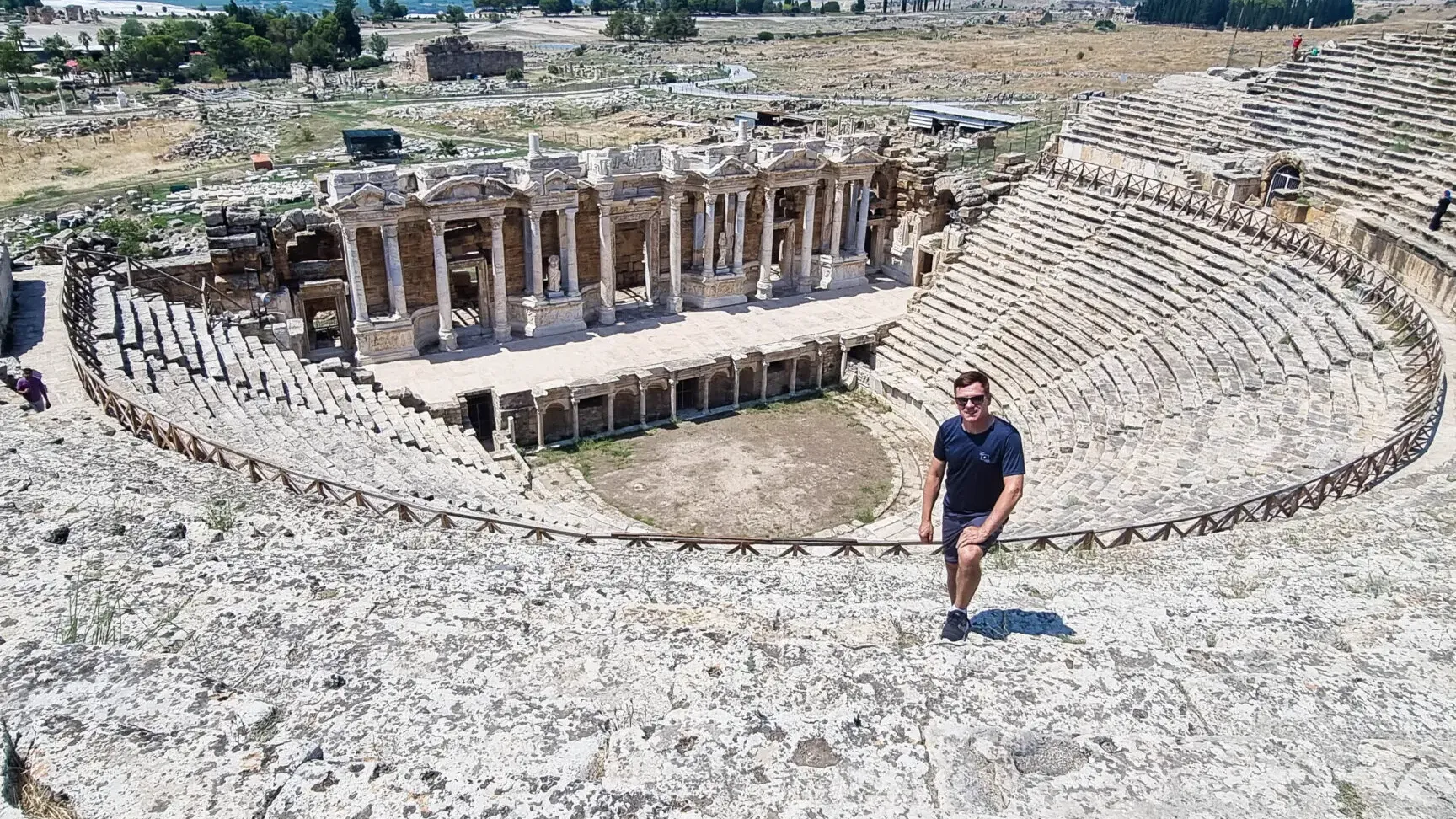
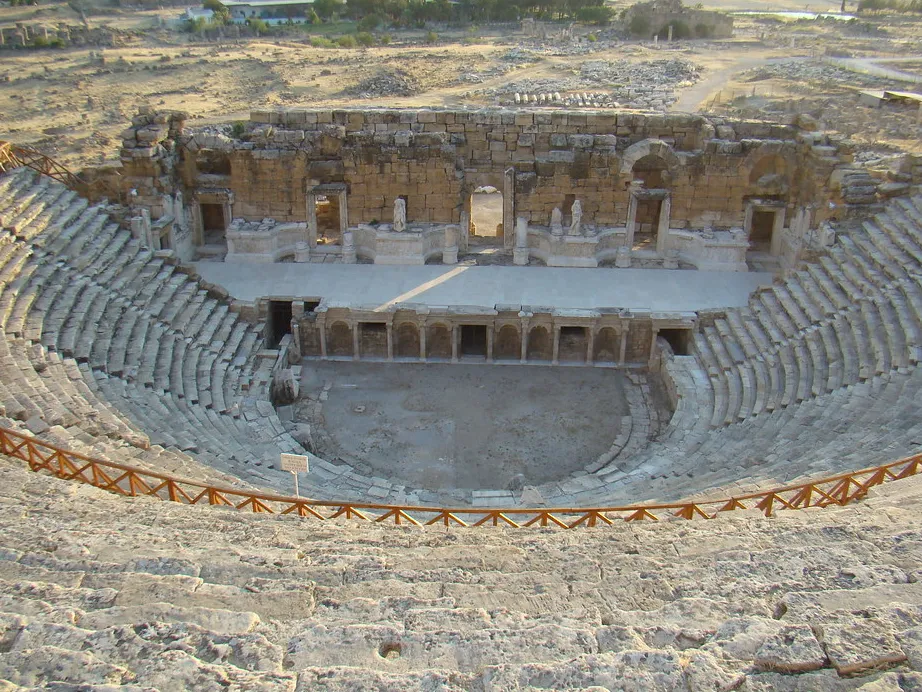
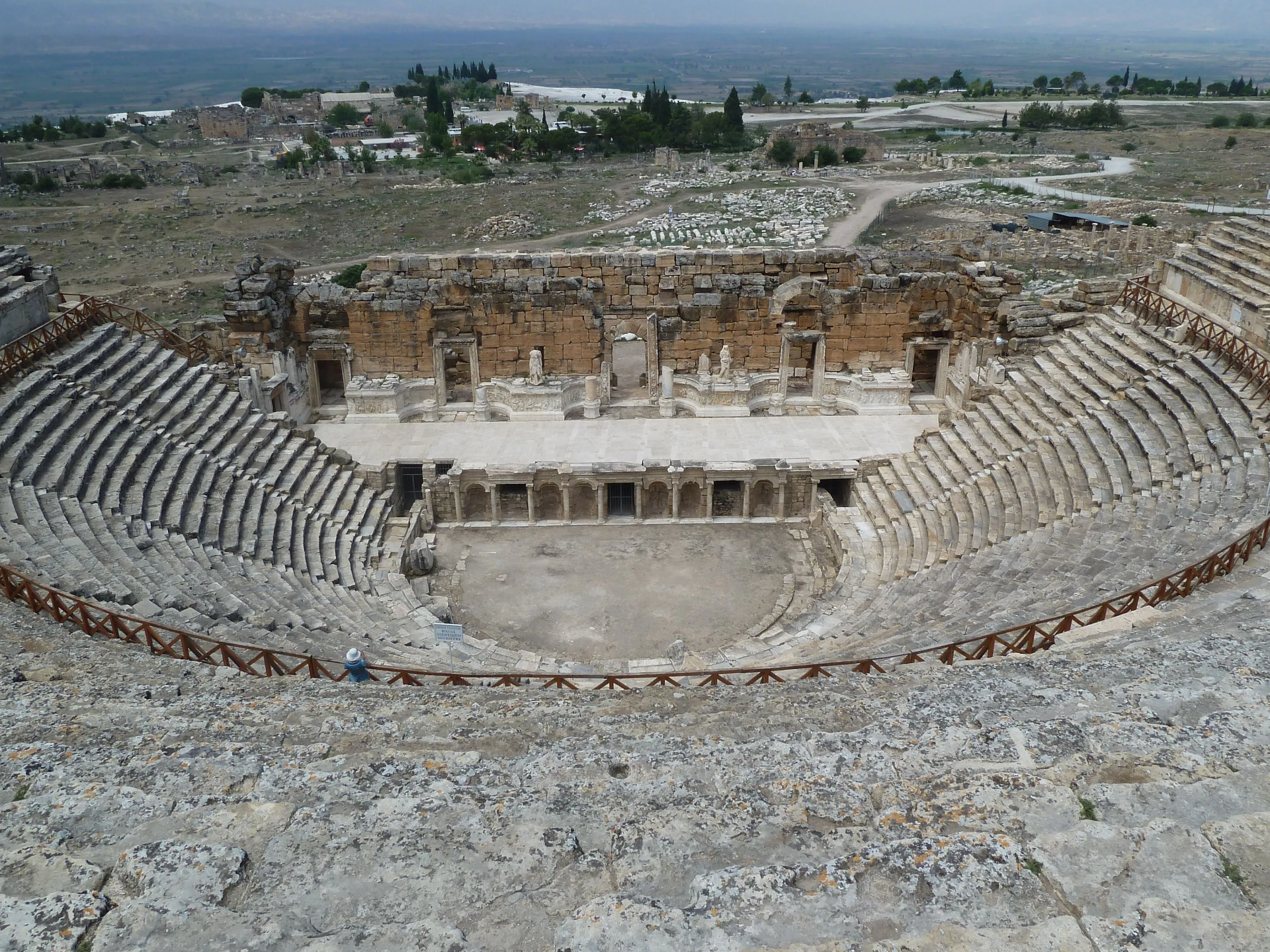
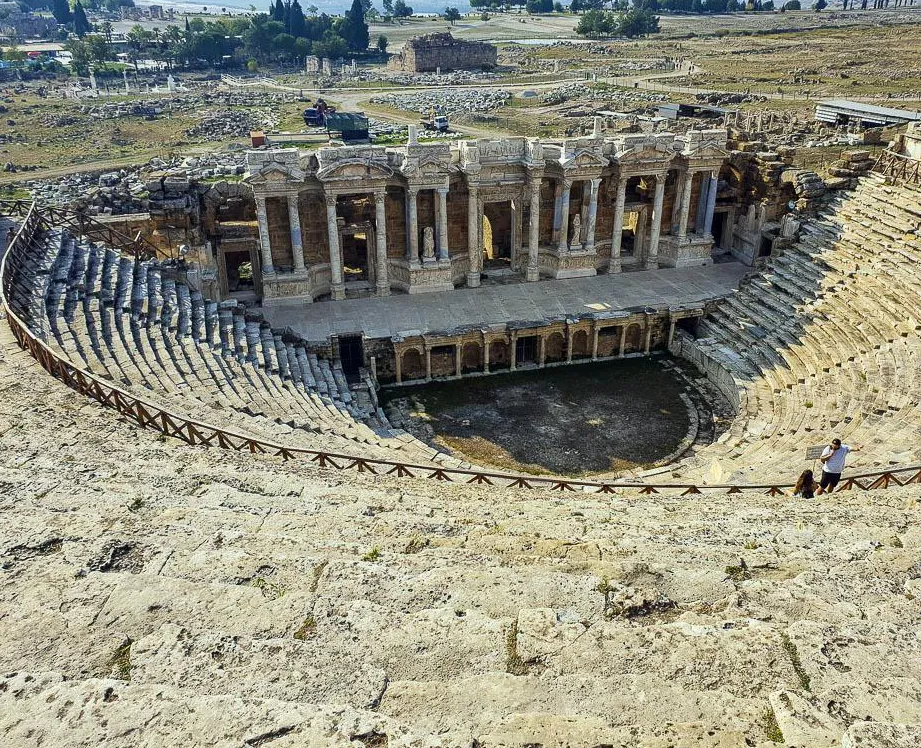
A majestic theatre anchored in the ancient city of Hierapolis, a silent witness to centuries of performances and events.
The Roman Theatre of Hierapolis is part of the Hierapolis archaeological site, which generally opens at 6:30 a.m. and closes at 7:00 p.m. during the summer season (April to October), and from 8:00 a.m. to 5:00 p.m. in winter. To access it, you must buy a ticket for Hierapolis and Pamukkale, since the theatre is inside the complex. I recommend checking the latest opening hours on the official Museums of Türkiye page shortly before your visit.
Admission to the Roman Theatre is not sold separately; it is included in the general ticket for Hierapolis and Pamukkale. The price may vary, but it is generally around 400 TL (Turkish lira) or more. Students often receive discounts by presenting a valid international student ID. It is advisable to check current prices at the ticket office or on the official website before your visit. The Pamukkale government website usually has updated information.
To fully enjoy the Roman Theatre and appreciate its details, I suggest allowing at least 1 hour. However, if you want to explore the whole site of Hierapolis, including the Necropolis, Domitian Gate, and of course the Pamukkale terraces, you will need between 3 and 5 hours. Also consider the walking time between the different sections.
The Roman Theatre of Hierapolis is one of the best-preserved ancient theatres in the world, with an original capacity of around 15,000 spectators. It was built in the 2nd century AD and has been restored several times. Its importance lies in its impressive architecture, its ornamental reliefs, and its strategic location within the ancient spa city of Hierapolis, which was a key cultural and religious center in antiquity.
The best time to visit is early in the morning (just after opening) or late in the afternoon before closing, to avoid the crowds and the midday heat, especially in summer. Spring (April-May) and autumn (September-October) offer more pleasant temperatures and fewer tourists than the peak summer season. Avoid the middle of the day in July and August if you do not want to roast in the heat.
Access to the Roman Theatre can be challenging for people with reduced mobility, as it involves dirt and stone paths as well as steep steps inside the theatre itself. The Pamukkale area in general has uneven terrain. Some parts may be accessible with assistance, but for a full exploration it may not be entirely suitable. I recommend contacting the local Pamukkale administration for more precise accessibility information: there are options to contact them through the local tourist office.
Once in Hierapolis, you should not miss Pamukkale’s famous travertine terraces, the main attraction and just a short distance away. You can also explore the rest of the ancient city of Hierapolis, including the Necropolis (one of the largest in the world), the Archaeological Museum (located in the Roman baths), and Cleopatra’s Pool. The entire complex is a UNESCO World Heritage Site.
Of course! I recommend wearing comfortable walking shoes, bringing sun protection (a hat, sunglasses, and sunscreen), and carrying enough water, especially in summer. Arrive early to avoid the heat and the crowds. Consider hiring a local guide to better appreciate the site’s rich history. And of course, do not forget your camera—the views are stunning! If you can, consider bringing headphones with our Hierapolis audio guide so you can carry all the history with you.
¿Prefieres escuchar en español?
🇪🇸 Escucha la audioguía de Roman Theatre of Hierapolis en español