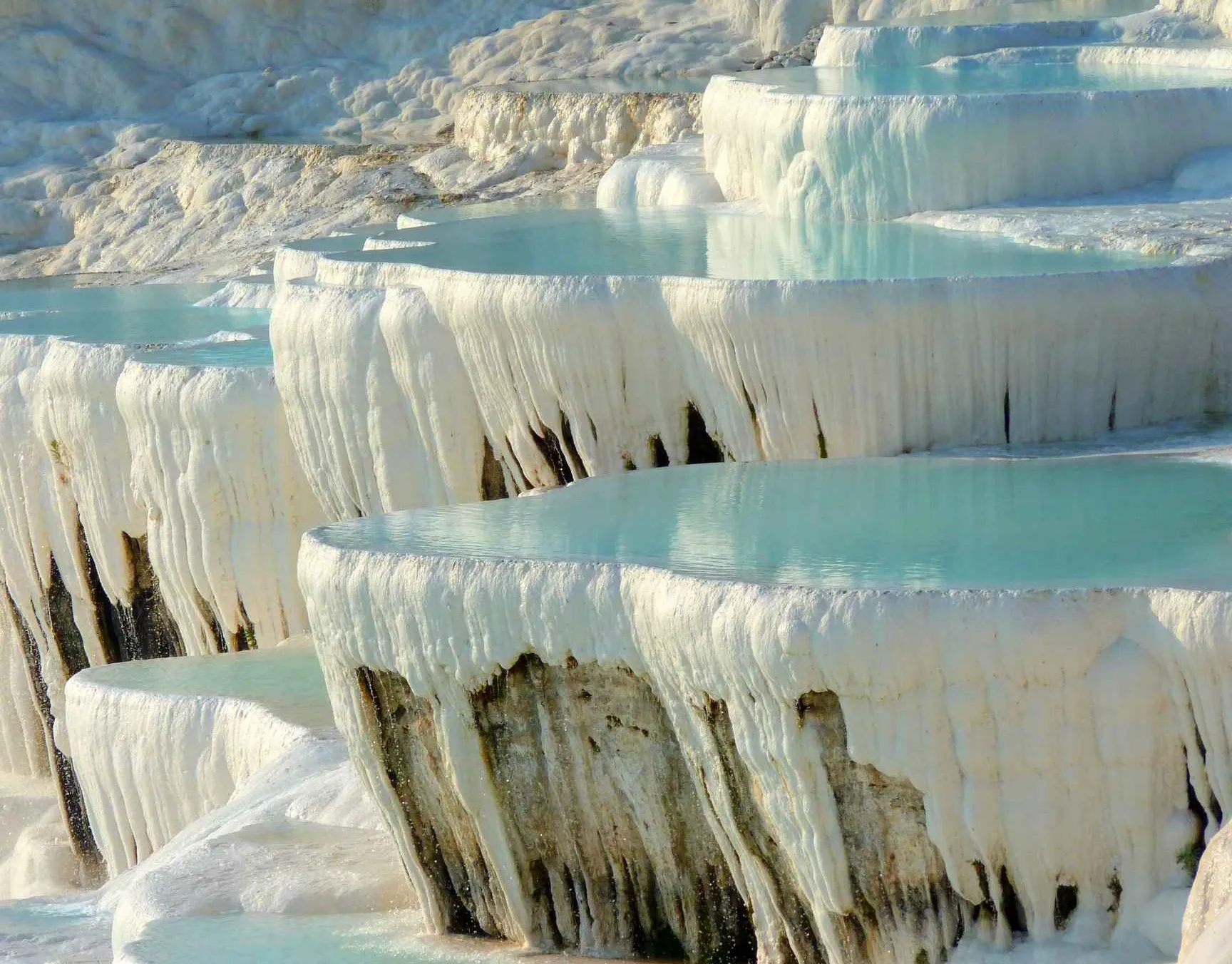
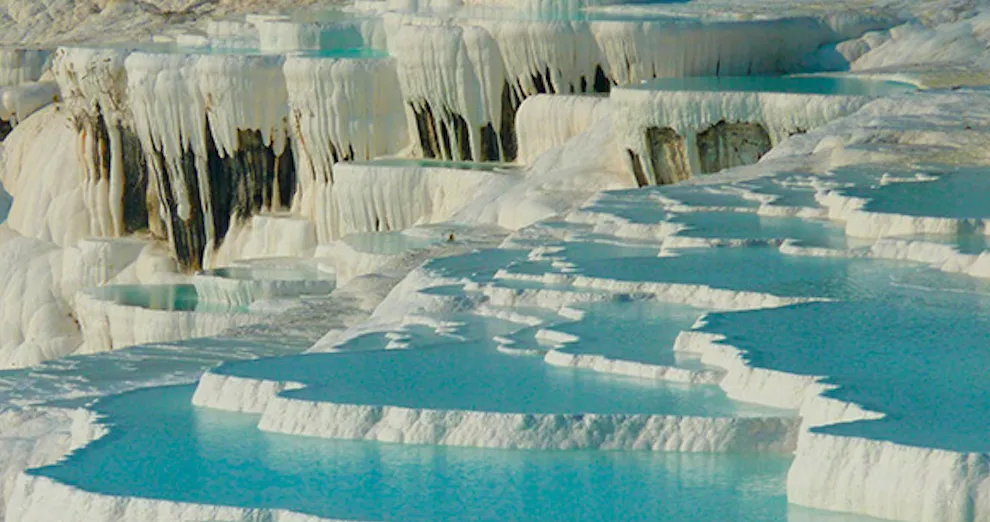
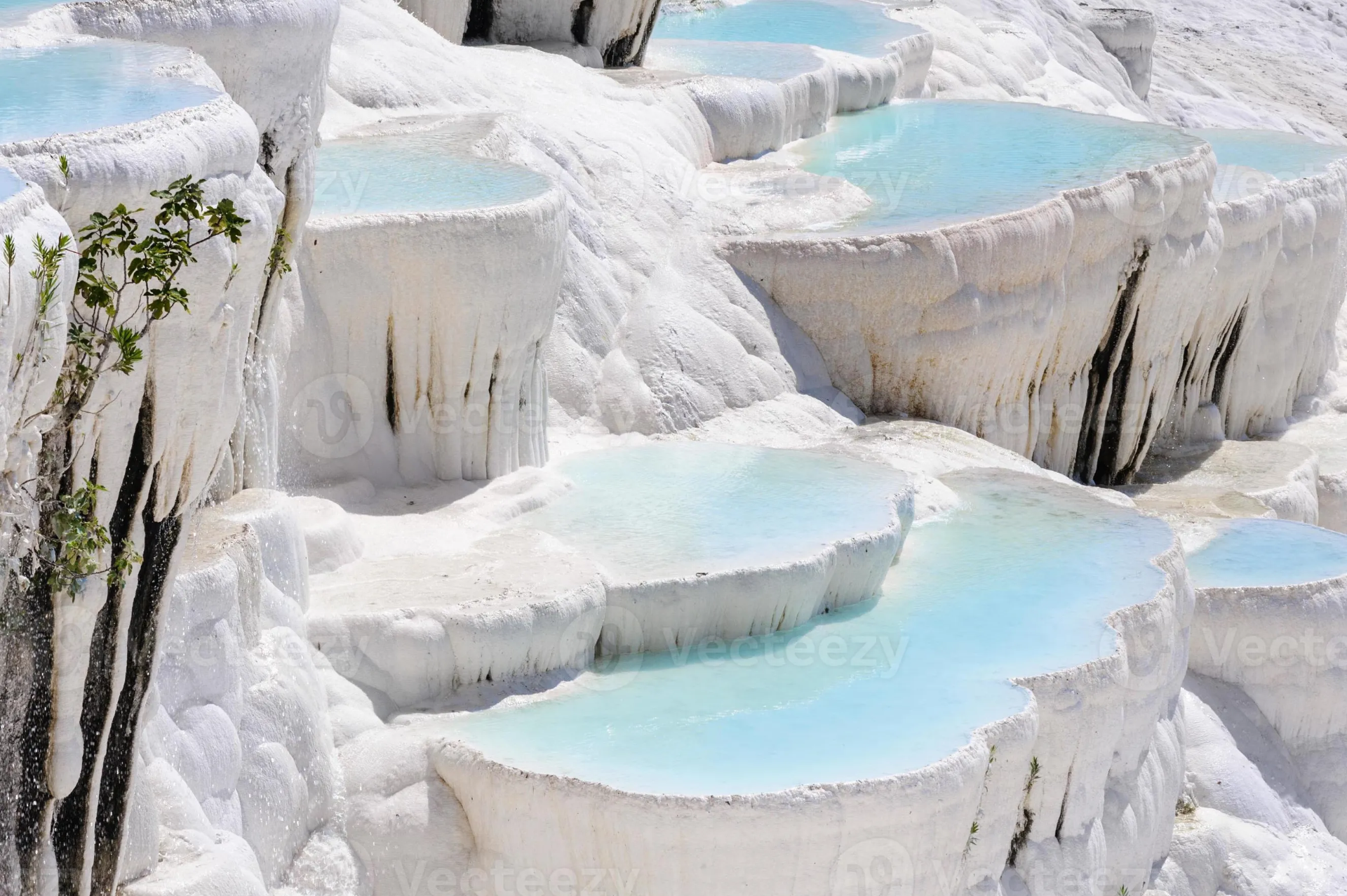
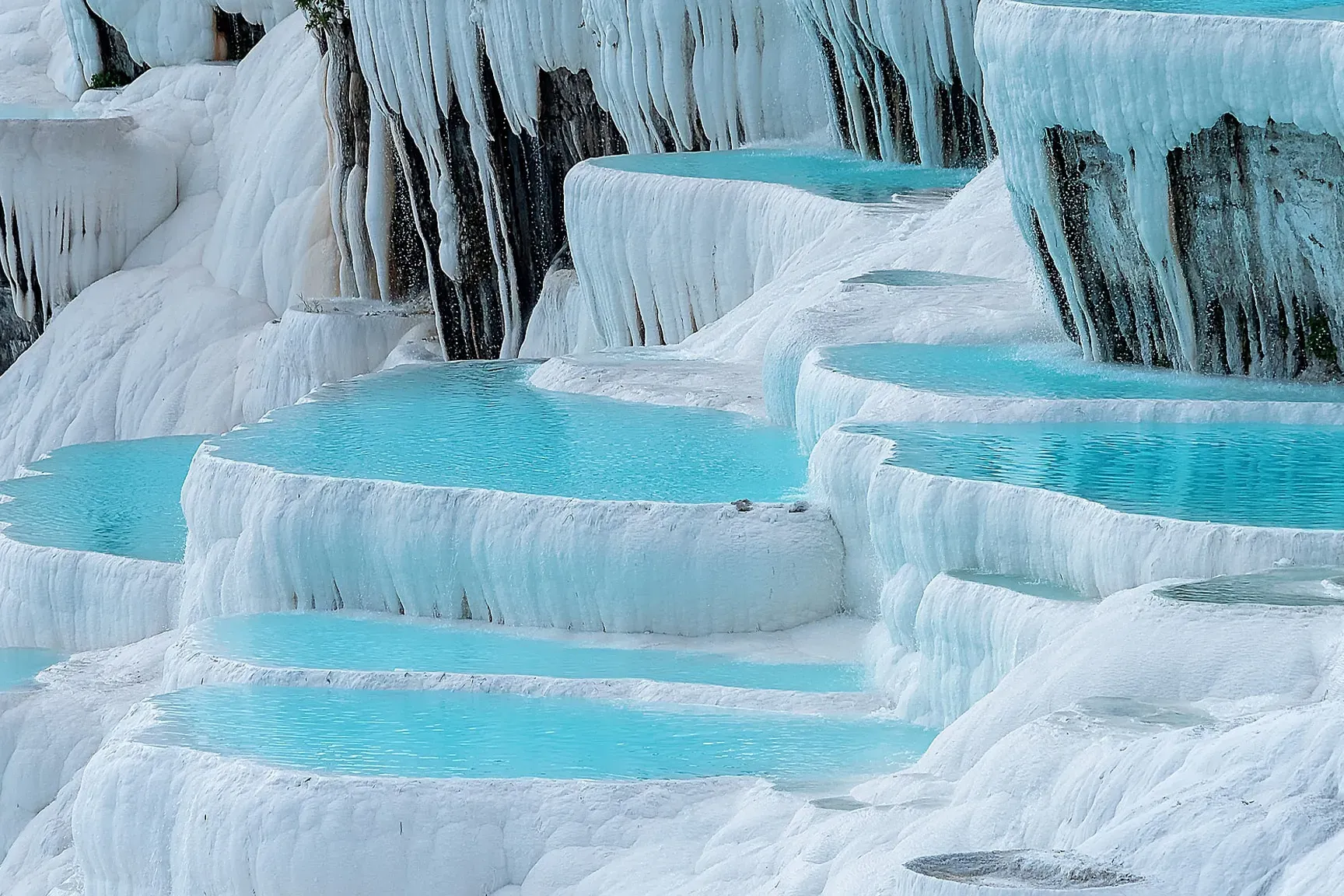
Natural travertine formations created by mineral salt deposits from thermal waters. These white, stepped terraces are Pamukkale’s main attraction.
The Pamukkale Travertine Terraces usually open at sunrise and close at sunset, although hours may vary slightly depending on the season. I recommend checking the official Turkish Museums website for exact opening times. The most common way to get there is by bus from nearby cities such as Denizli, and then by taxi or dolmuş (shared minibus) to the entrance.
Yes, access to the Pamukkale Travertine Terraces is part of the same complex as Hierapolis and requires an admission ticket. Entry includes both attractions. Prices may vary, so it is advisable to check current rates on the official website or at the ticket office.
To fully enjoy both the Pamukkale Travertine Terraces and the ancient city of Hierapolis, which share the same site, I would recommend setting aside at least half a day, around 3 to 4 hours. If you love history, you could easily spend a full day exploring.
The Travertine Terraces are the result of mineral-rich thermal waters, especially those high in calcium carbonate, flowing down the mountainside. As the water cools and evaporates, it leaves behind the white mineral, creating these astonishing cascading formations over thousands of years. Pamukkale means 'Cotton Castle' in Turkish, a very fitting name.
Spring (April to May) and autumn (September to October) are usually the best seasons to avoid the extreme summer heat and the crowds. As for the best time of day, I suggest going early in the morning or late in the afternoon to enjoy incredible light, fewer people, and more pleasant temperatures, especially for photos.
Access to the travertine pools themselves can be challenging for people with reduced mobility because of the uneven and slippery surfaces, especially since visitors walk barefoot. However, there are areas with walkways and panoramic viewpoints that are more accessible. I suggest contacting the local administration if you have specific needs in order to get the most up-to-date information.
Absolutely! In addition to the incredible Hierapolis, with its Roman theater and necropolis, you can visit Cleopatra’s Pool, also known as the Sacred Pool, where the queen is said to have swum. There are also small villages around the area that offer a glimpse of local life, and overall this is a region rich in history and natural beauty.
Of course, here are a few: bring sunscreen and a hat, as there is very little shade; do not forget your swimsuit and towel if you want to take a dip in the thermal waters (you walk barefoot on the terraces, so footwear that is easy to remove is essential); and bring a refillable water bottle to stay hydrated. Most importantly, make sure your camera is fully charged because the views are spectacular! Oh, and consider hiring a guide to better understand the history of Hierapolis.
¿Prefieres escuchar en español?
🇪🇸 Escucha la audioguía de Travertine Terraces in Pamukkale en español