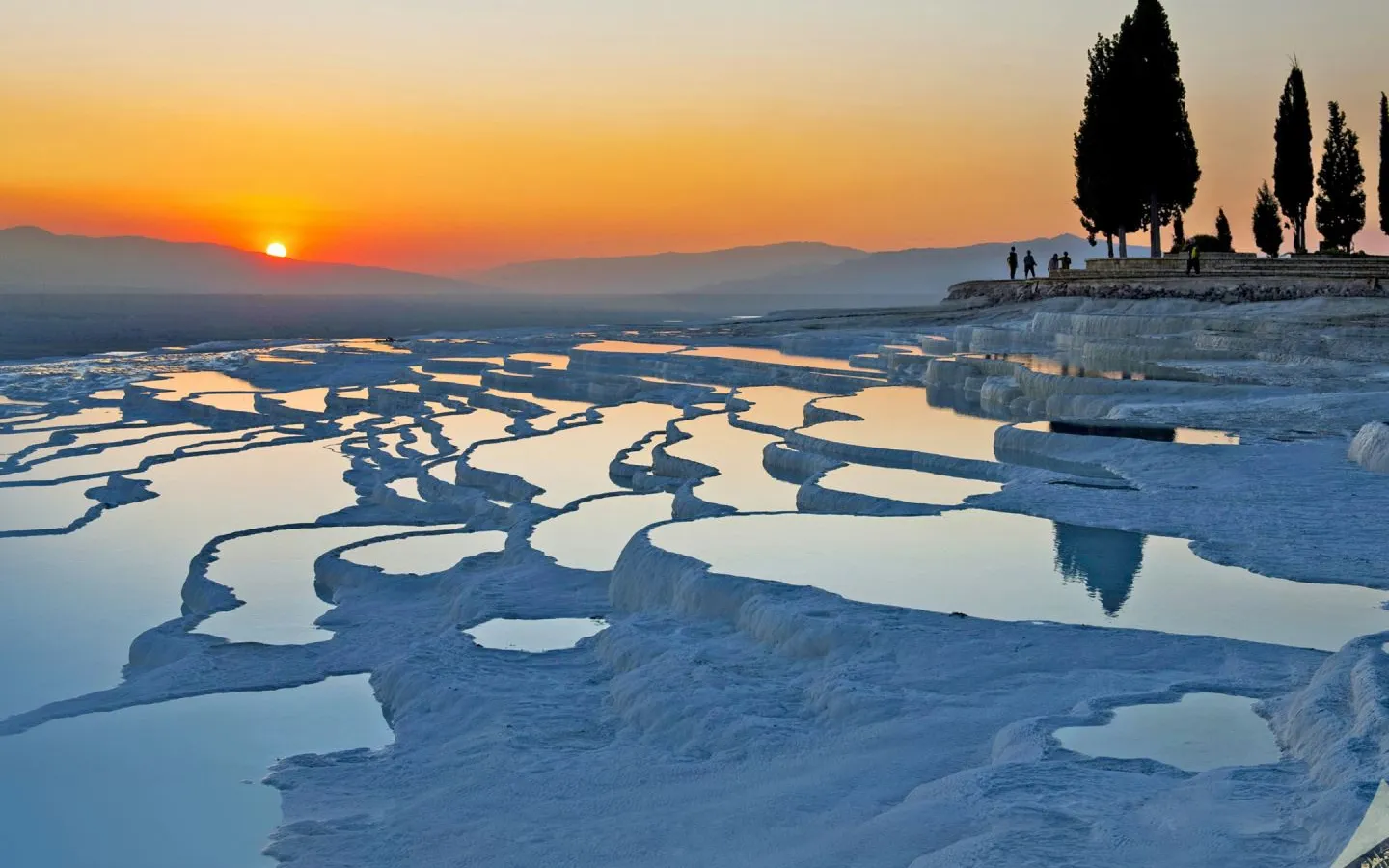
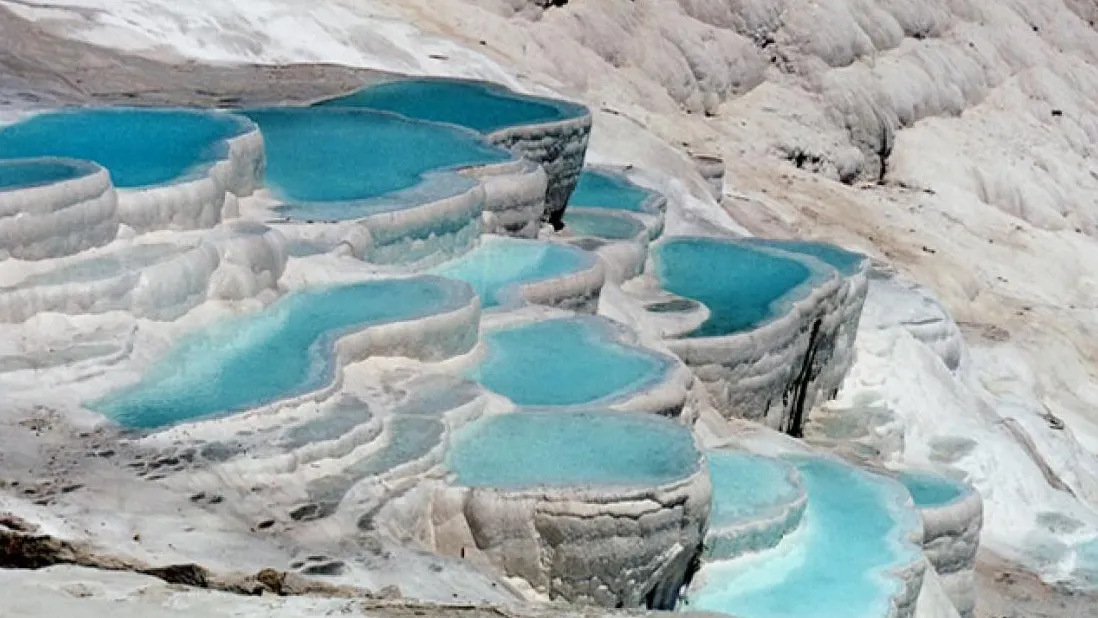
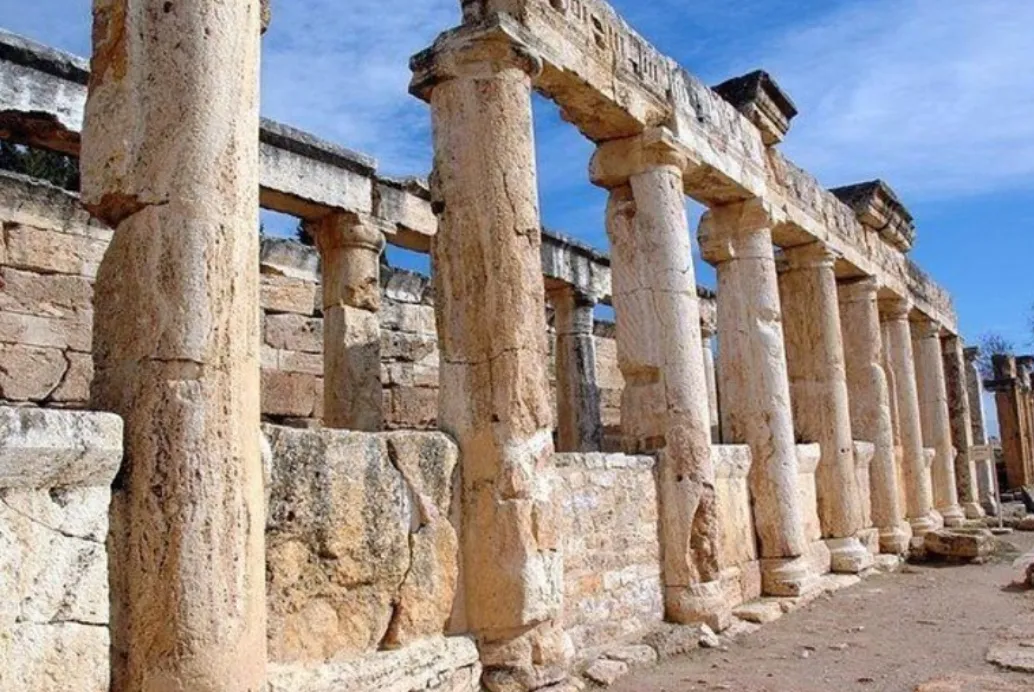
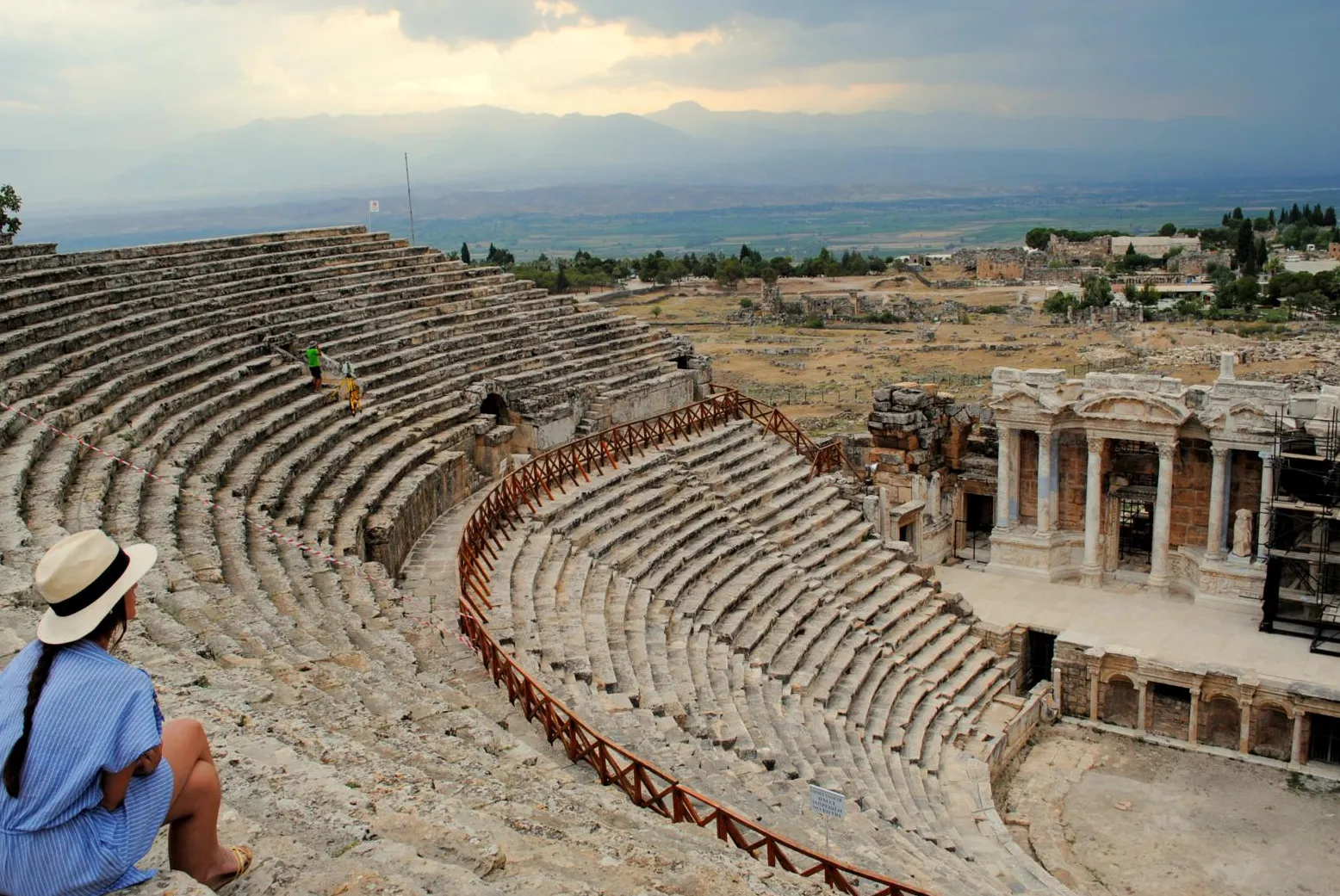
Ancient sacred city built above Pamukkale’s white terraces, with an impressive necropolis, Roman theater, and baths.
The Ancient City of Hierapolis is open every day. In the summer months (April to October), opening hours are from 08:00 to 21:00, and in winter (November to March), from 08:00 to 17:00. To get there, the most common way is by bus from Denizli (the nearest city with an airport and bus station), or by taxi/minibus from Pamukkale. You can find more details on how to get there on the official website of the Turkish Ministry of Culture and Tourism or in travel guides such as Lonely Planet.
The entrance fee for Hierapolis and the Pamukkale travertine terraces is a single combined ticket. Currently, the cost is 700 TL per person (approximately 25 EUR, although this may vary); children under 8 enter free of charge. You can buy tickets directly at the entrance ticket offices. Unfortunately, online purchasing is not always available or reliable for this particular site; the safest option is to buy them on site. For updated pricing information, it is always recommended to check official Turkish sources such as muze.gov.tr.
To fully enjoy Hierapolis and the Pamukkale terraces, I recommend setting aside at least half a day, between 4 and 6 hours. This will allow you to stroll through the ruins of Hierapolis, visit the theater, the necropolis, and of course bathe in Pamukkale’s natural pools. If you also want to visit the Hierapolis Museum (which is inside the complex and requires an additional ticket of about 50 TL), or Cleopatra’s Pool (with an additional cost of 130 TL), allow a couple more hours.
Hierapolis was an ancient Roman city and thermal spa, founded in the 2nd century BC. Its importance lies in having been a major religious and therapeutic center in antiquity, thanks to its healing thermal waters. In fact, its name means 'sacred city.' It was declared a UNESCO World Heritage Site together with Pamukkale, noted for its magnificent theater, vast necropolis (one of the best-preserved ancient cemeteries in the world), and Roman ruins. It is an impressive testimony to Roman engineering and ancient life.
The best time to visit Hierapolis and Pamukkale is during spring (April-May) or autumn (September-October), when the weather is milder and there are fewer crowds than in summer. If you go in summer, try to arrive early in the morning (right when it opens) or late in the afternoon to avoid the hottest hours and the arrival of tour groups. That way, you can enjoy the peace of the site and the best light for your photos.
Some parts of Hierapolis and Pamukkale are accessible, but others can be challenging. The areas around the travertine terraces have fairly flat paths, but the uneven terrain of the ancient city ruins, especially the necropolis or the theater, can present difficulties for wheelchairs. Cleopatra’s Pool is usually more accessible. I recommend contacting the local administration or consulting specific accessibility guides before your visit to obtain detailed information about adapted routes.
In addition to Hierapolis and Pamukkale, the region offers other points of interest. You can visit the ancient city of Laodicea, about 10-15 km away, also home to impressive Roman ruins and a church highly significant to early Christianity. Another option is a walk through the modern city of Denizli, which has local markets and a cable car (Denizli Cable Car) offering panoramic views of the region. If you have more time, you could even consider a detour to nearby Aphrodisias, another impressive UNESCO archaeological site.
Of course! Bring sunscreen, a hat, and sunglasses, as the sun can be intense. It is essential to bring water, because there are few options inside and they are expensive. If you plan to bathe in the travertines, bring a swimsuit and a towel, and be prepared to walk barefoot. I also recommend comfortable footwear for exploring the ruins of Hierapolis. And finally, do not forget your camera—the views are spectacular! Oh, and consider bringing a power bank for your phone, because you are going to use it a lot!
¿Prefieres escuchar en español?
🇪🇸 Escucha la audioguía de the Ancient City of Hierapolis in Pamukkale en español