Donde las aguas curativas conviven con la puerta al inframundo, y los muertos tienen más historias que los vivos.
Hierapolis and Pamukkale are usually open from 08:00 to 20:00 during the high season (April to October) and until 17:00 in the low season. You can get there by bus or taxi from Denizli, the nearest city with an airport, or by car. The main entrance is well signposted, and parking is available. I recommend checking the official Turkish Museums website for updated opening hours.
The combined ticket for Hierapolis and the Pamukkale terraces is approximately 200 TL (Turkish lira) per person, although the price may vary. There are discounts for students with an international student card, and children under 8 usually enter free. It is best to check the official Pamukkale website or ask directly at the ticket office for the latest prices. You may also consider the Museum Pass Turkey if you plan to visit other archaeological sites in the country.
To fully enjoy Hierapolis and explore the Pamukkale terraces, I recommend setting aside at least half a day, around 4 to 5 hours. If you want to swim in Cleopatra's Pool and explore the museum more leisurely, you could extend your visit to a full day. Wear comfortable shoes, as there is a lot of walking involved.
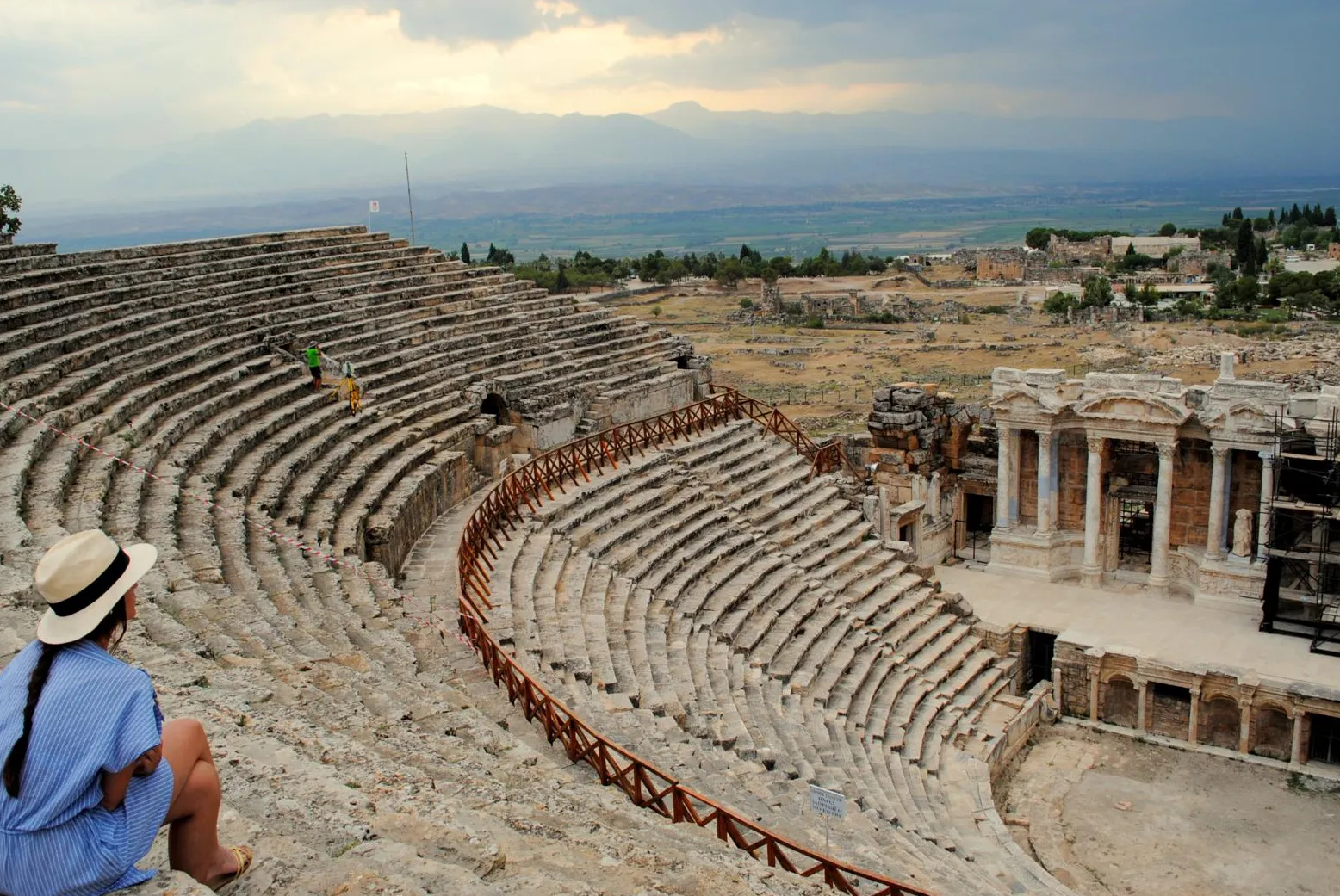
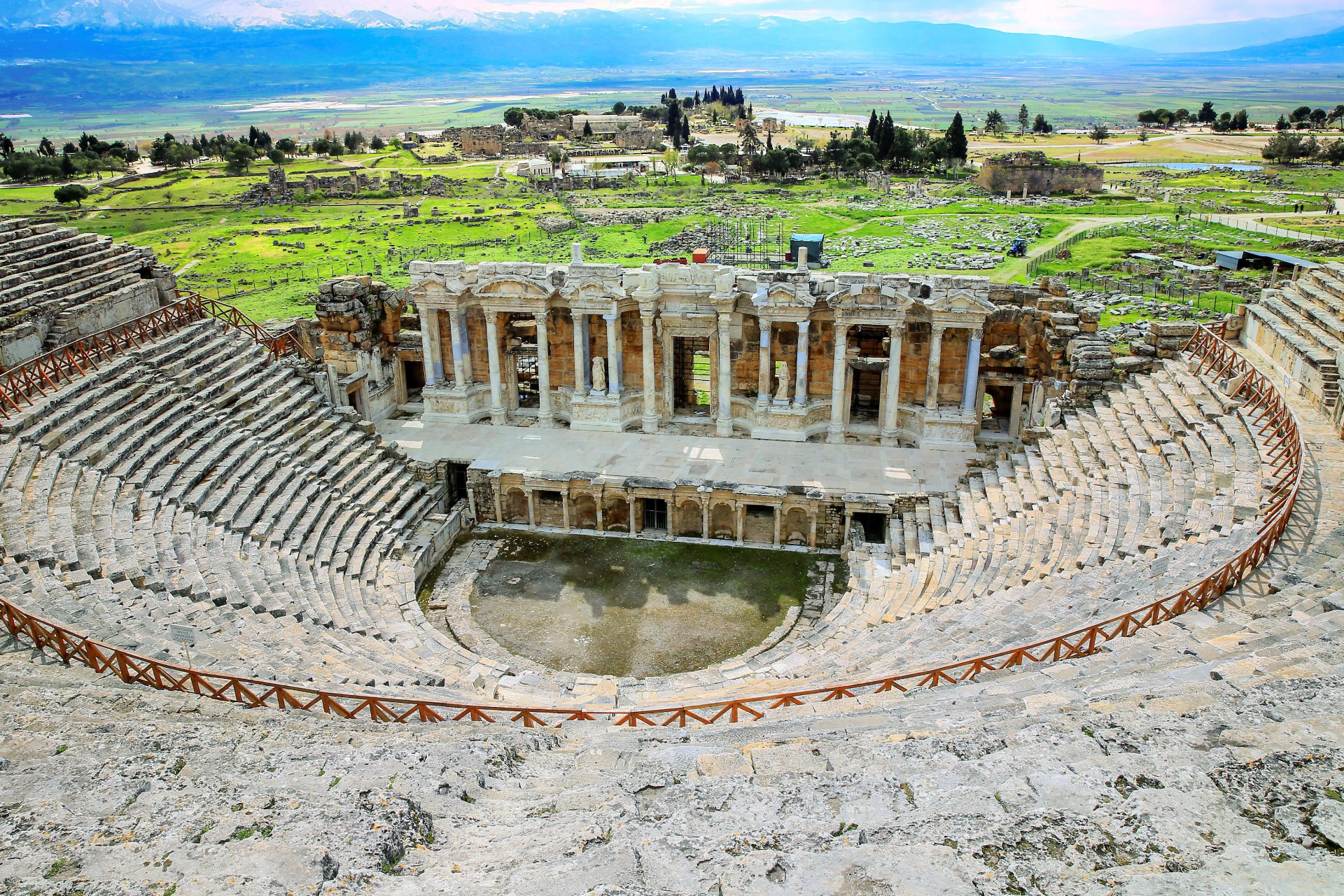
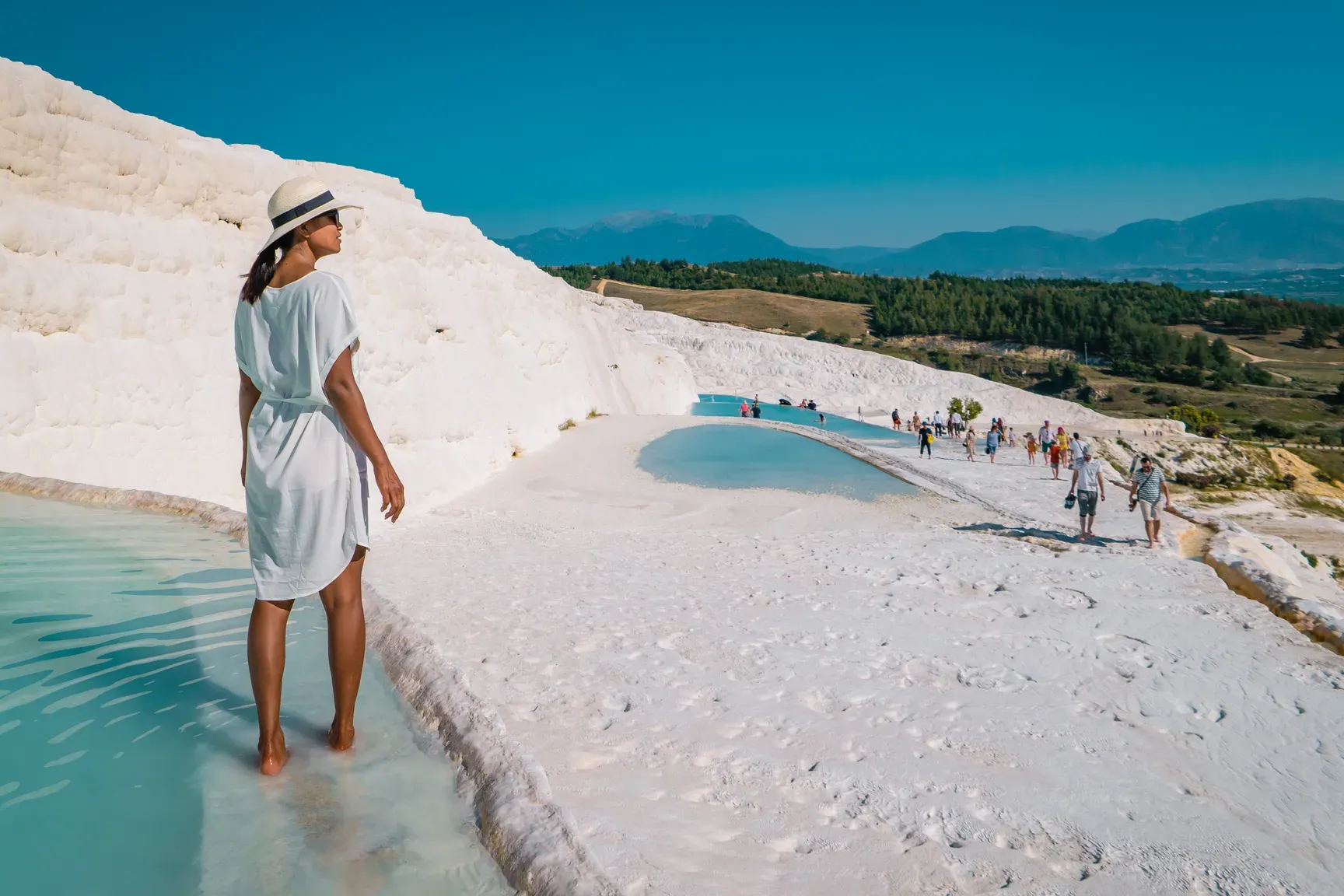
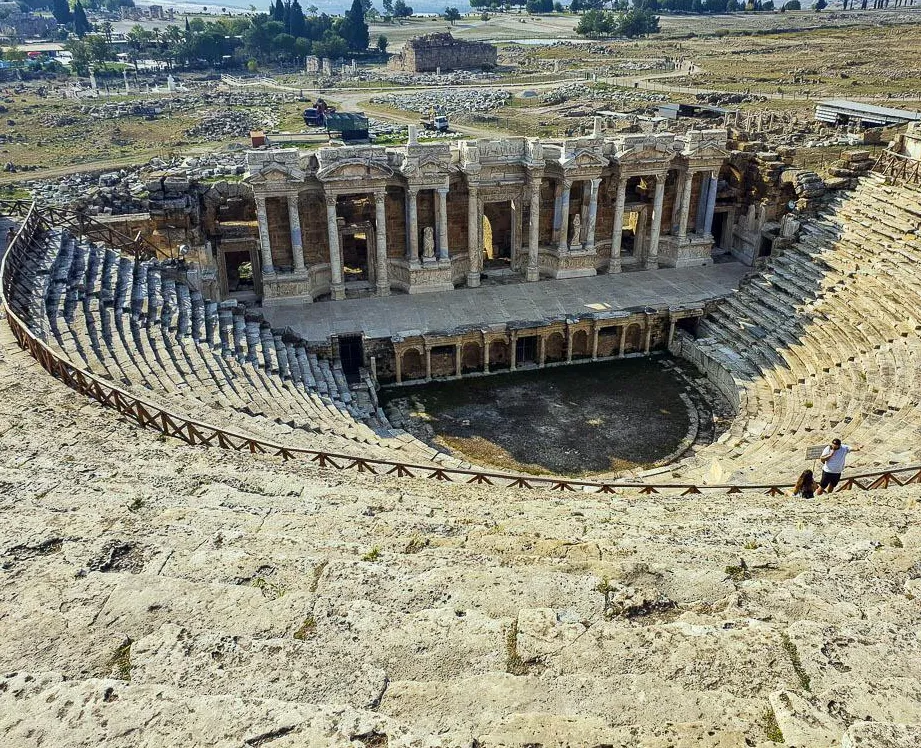
Hierapolis was an ancient Greco-Roman city famous for its thermal waters and its impressive necropolis, one of the best preserved in the ancient world. It is a UNESCO World Heritage Site. Do not miss the magnificent Roman Theater, the Antique Pool (Cleopatra's Pool), the Archaeological Museum, and of course the famous travertine terraces of Pamukkale. The Gate of Domitian and the Colonnaded Street are also impressive.
The best time to visit is during spring (April-May) or autumn (September-October), when the weather is milder and there are fewer tourists. To avoid the crowds, I recommend arriving early in the morning (right at opening time) or late in the afternoon, about 2 to 3 hours before closing. This way you can enjoy the sunset colors over the terraces and have a more peaceful experience.
Accessibility at Hierapolis is limited due to the rocky terrain and slopes. Main areas such as the entrance, the museum, and some parts of the theater and the necropolis have more or less flat paths. However, access to the Pamukkale terraces may be more difficult because of the uneven and slippery surface in some areas. I advise contacting the site staff at +90 258 272 20 27 for detailed information about accessible routes before your visit.
Yes, absolutely! In addition to Hierapolis and the Pamukkale terraces, you can explore Laodicea, another ancient city that is less crowded but equally fascinating, just a short drive away. You can also visit the Kaklik caves or relax in other nearby thermal water centers. The city of Denizli offers accommodation, restaurants, and shopping options. Do not hesitate to ask locals for their recommendations.
Absolutely! Use sunscreen, a hat, and sunglasses, especially in summer. Bring enough water, although there are shops inside the site. Wear comfortable shoes that are easy to remove so you can walk barefoot on the travertine terraces (it is mandatory!). Consider hiring a local guide or using an audio guide to better understand the history, such as the ones we offer at IAudioguia, so you do not miss any important details.
¿Prefieres escuchar en español?
🇪🇸 Escucha la audioguía de Hierapolis en español