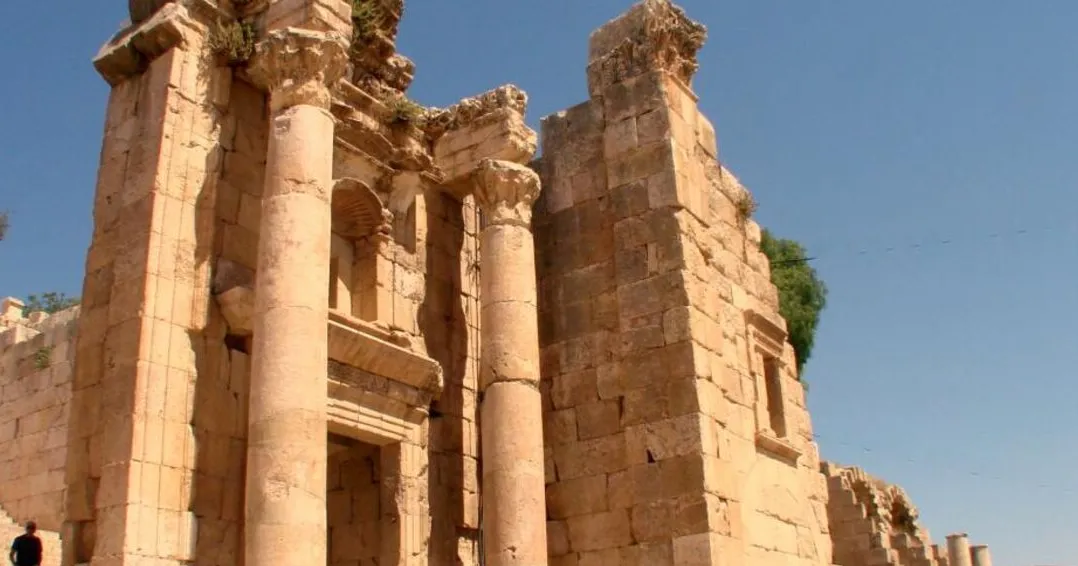
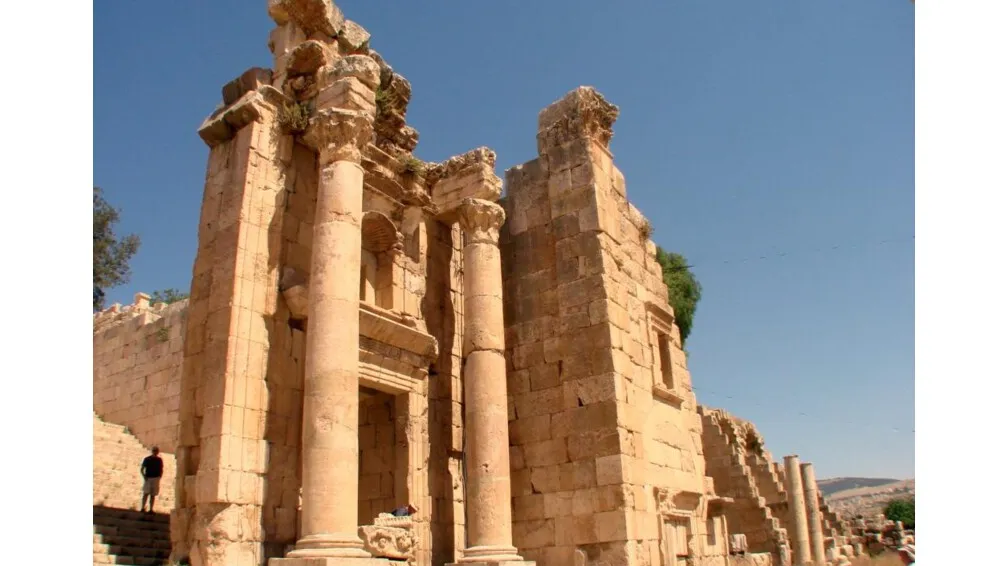
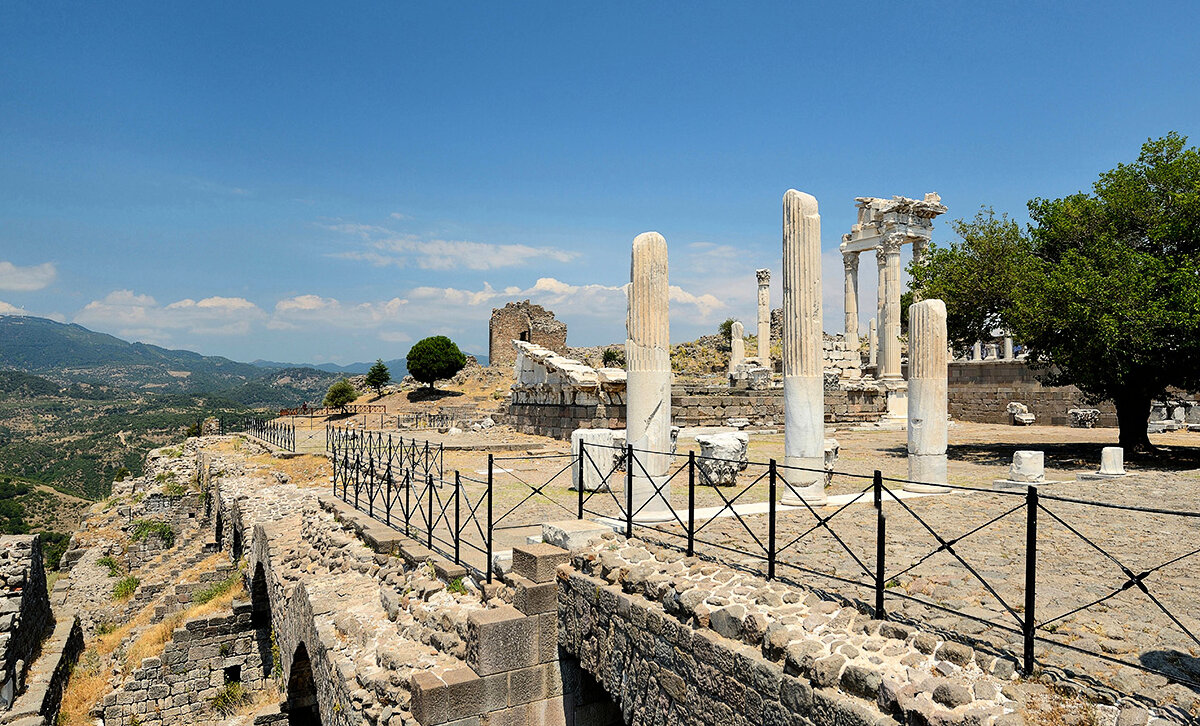
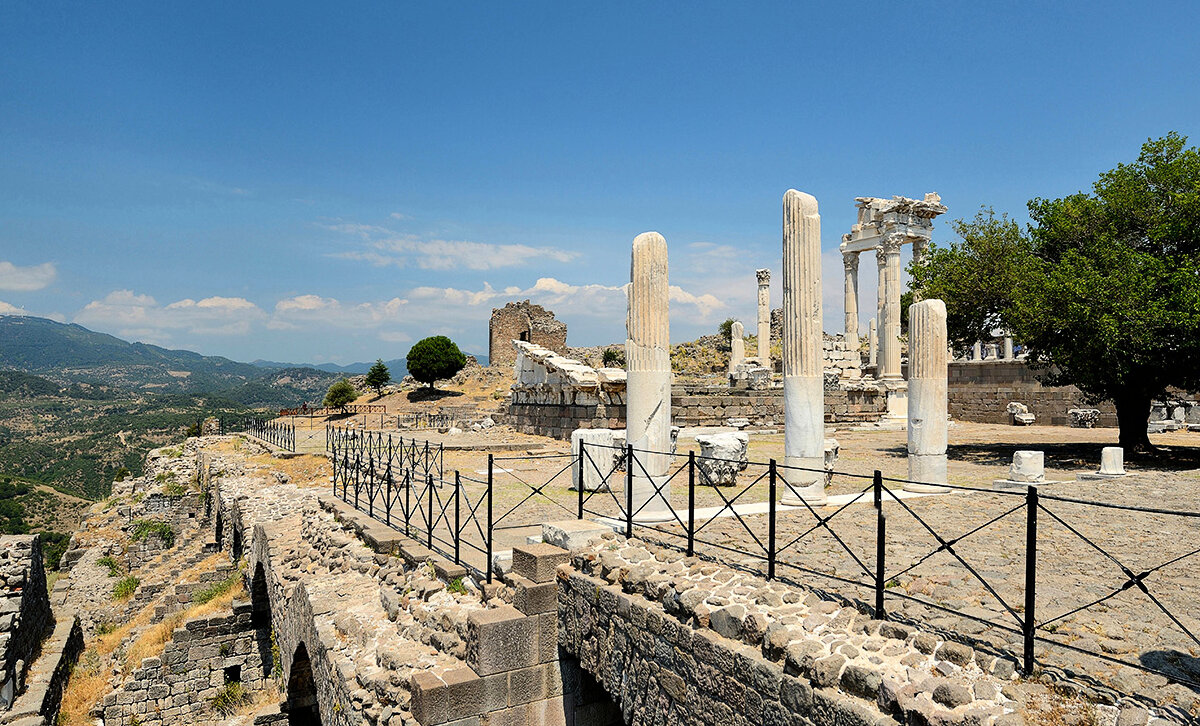
A temple dedicated to Dionysus, the Greek god of wine and theater, located within the acropolis complex.
The Temple of Dionysus is part of the archaeological site of Pergamon. It is generally open from 8:30 a.m. to 7:00 p.m. in summer (April to October) and until 5:00 p.m. in winter (November to March). To get there, you can take a bus or taxi from Bergama to the base of the acropolis and then a cable car that will take you directly to the site. You can check the cable car details here: Bergama Cable Car.
Admission to the Temple of Dionysus is included in the general entrance fee for the archaeological site of Pergamon. A combined ticket giving access to the Acropolis is often required. The price is usually around 200–300 Turkish lira, but I recommend checking the latest prices on the official website or upon arrival.
To explore the Acropolis of Pergamon, including the Temple of Dionysus, the Pergamon Theater, and other ruins, I suggest allowing at least 2 to 3 hours. If you are a history enthusiast and want to fully immerse yourself, you might even consider half a day to enjoy every detail at a relaxed pace.
The Temple of Dionysus was an important center of worship in ancient Pergamon, dedicated to the Greek god of wine, fertility, and theater. This temple was not only a place of worship, but it was also associated with Dionysian celebrations and the cultural development of the city, highlighting its social and religious importance in antiquity. It stands as an architectural testament to the rich cultural and spiritual life of Pergamon.
The best time to visit is during spring (April–May) or autumn (September–October), when the weather is milder and more pleasant for walking. If you visit in summer, I advise going early in the morning or late in the afternoon to avoid intense heat and crowds, and to enjoy a calmer experience.
The archaeological site of Pergamon, including the area near the Temple of Dionysus, has uneven ground and slopes, which can make access difficult for wheelchair users or people with reduced mobility. While the cable car makes the ascent to the acropolis easier, once at the top many areas consist of dirt paths and ruins.
Absolutely—within the same Acropolis of Pergamon, you should not miss the spectacular Pergamon Theater, the ancient library, and the Altar of Zeus (although much of it is in Berlin). In addition, at the base of the hill, you can visit the Asclepieion, an ancient medical and healing center: Asclepieion of Pergamon.
Of course! I recommend wearing comfortable shoes, sunscreen, and a hat, especially if you visit during the warmer months, as there is little shade. It is also an excellent idea to bring a refillable water bottle. And do not forget your camera to capture the panoramic views and the impressive ruins.
¿Prefieres escuchar en español?
🇪🇸 Escucha la audioguía de the Temple of Dionysus in Pergamon en español