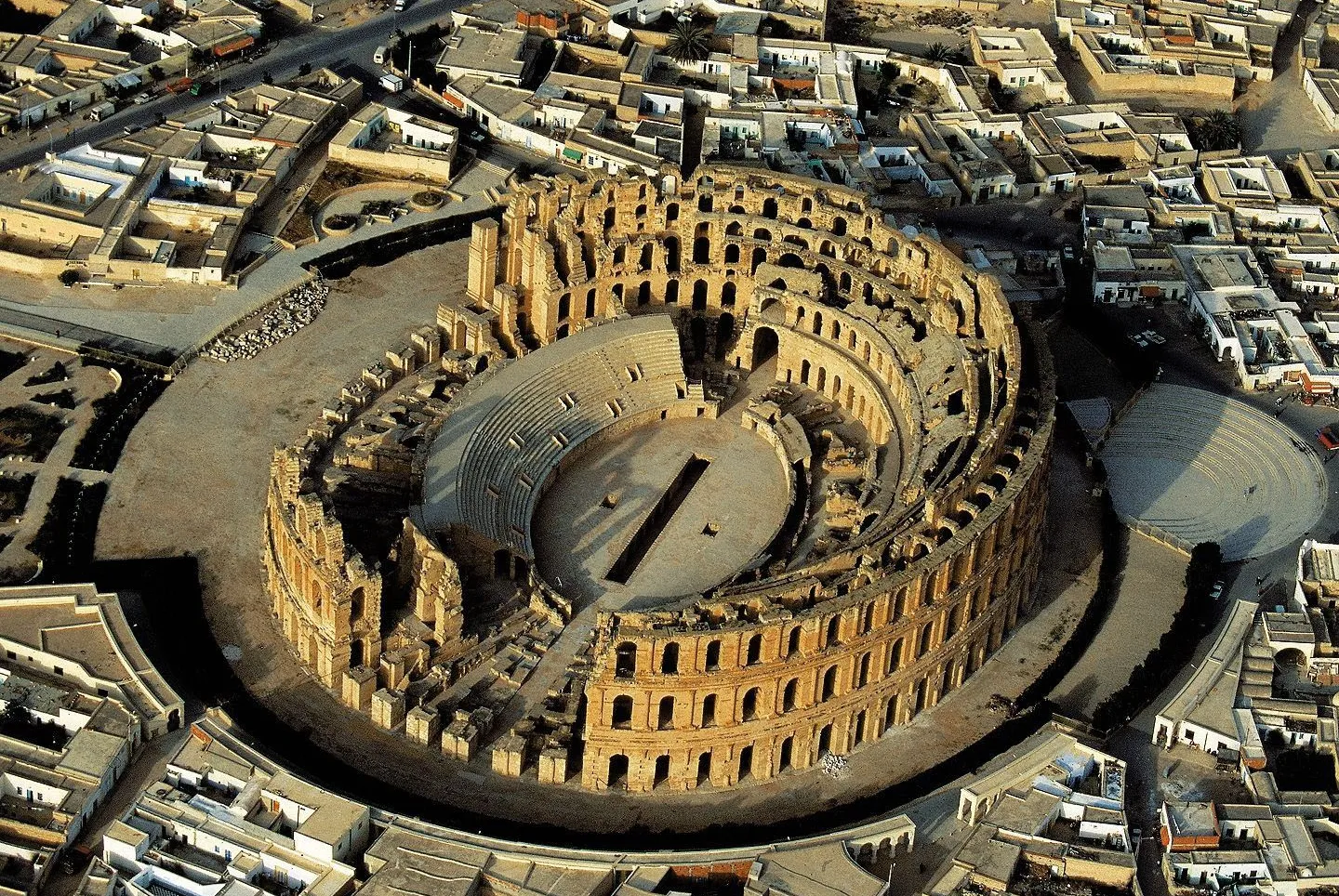
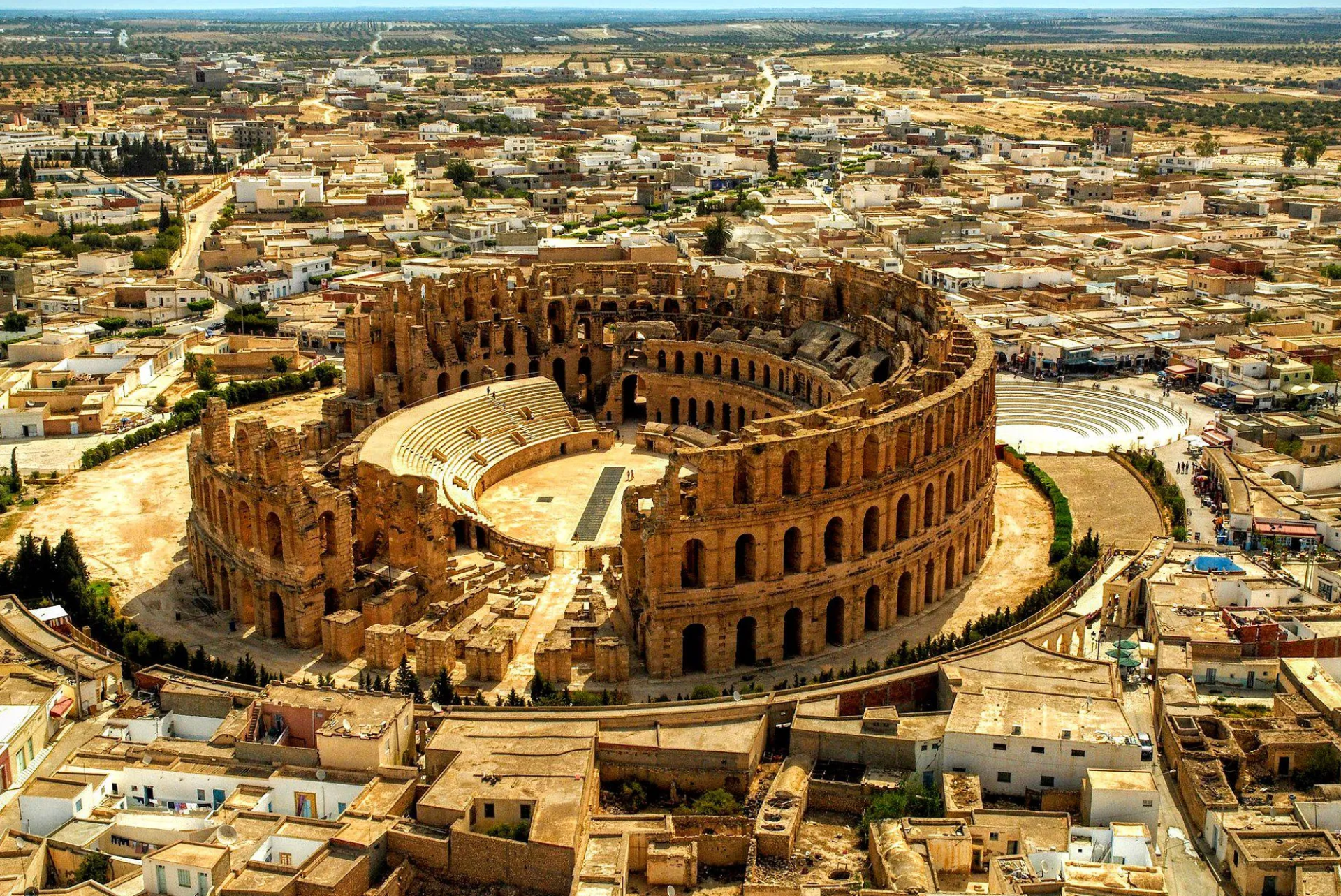
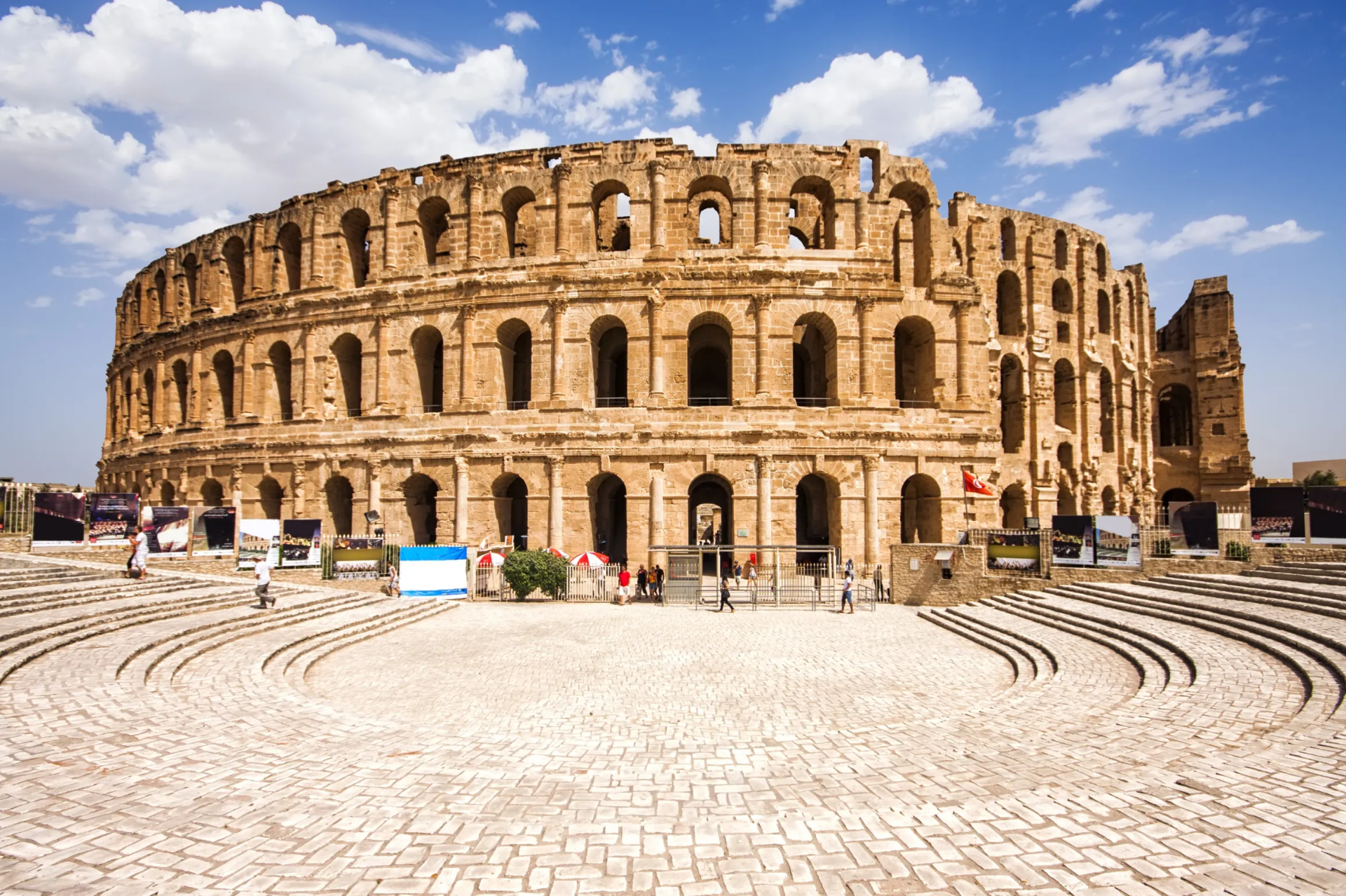
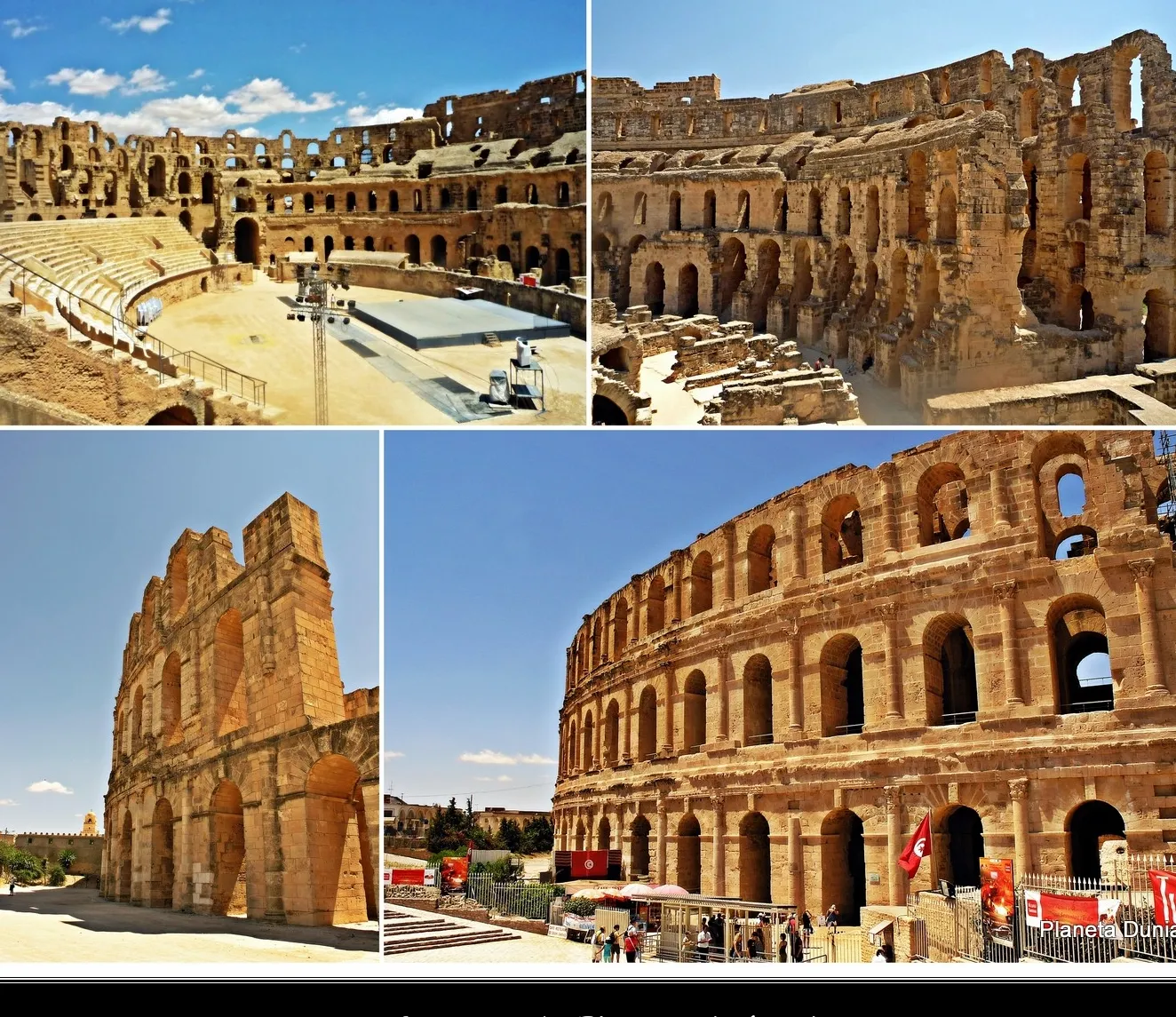
An impressive Roman amphitheatre, a testament to the imperial legacy in North Africa and one of the best preserved in the world.
The El Jem Amphitheatre generally opens from 7:30 a.m. to 5:30 p.m. in winter (November to March) and from 7:30 a.m. to 7:00 p.m. in summer (April to October). Yes, you can usually buy tickets directly at the site’s ticket office. I recommend checking the official website of Tunisia’s National Heritage to confirm any schedule updates.
General admission to the El Jem Amphitheatre costs 12 Tunisian dinars when purchased at the ticket office, and this also includes entry to the Archaeological Museum and the El Jem Museum. While there are not usually age-based special rates, I recommend asking at the ticket office or checking the official website in case there are discounts for large groups or students.
For a complete visit to the El Jem Amphitheatre, I recommend allowing at least 1.5 to 2 hours. If you also plan to visit the Archaeological Museum, whose admission is included, you will need an additional hour, for a total of 2.5 to 3 hours.
The El Jem Amphitheatre is the third-largest Roman amphitheatre in the world and was built in the 3rd century AD with a capacity of about 35,000 spectators. It is an impressive testament to Roman architecture in Africa and, yes, it is comparable in size and importance to the Colosseum in Rome, having been a UNESCO World Heritage Site since 1979.
The best time to visit the El Jem Amphitheatre is during spring (March to May) or autumn (September to November), when temperatures are more pleasant. During the day, I suggest going early in the morning right when it opens, or late in the afternoon, to avoid the busiest hours and the intense heat, especially in summer.
Accessibility at the El Jem Amphitheatre for visitors with reduced mobility is limited. Although some ground-level areas may be accessible, many sections, such as the underground tunnels or upper levels, involve stairs and uneven terrain. If you have concerns, I recommend contacting the amphitheatre directly or the National Heritage Institute of Tunisia for specific information.
In addition to the impressive amphitheatre, do not miss the El Jem Archaeological Museum, which houses a magnificent collection of Roman mosaics found in the area and is included in the same ticket. Also, a short distance away, you can see the ruins of Roman villas with their mosaics in situ.
Of course. Here are some tips: bring plenty of water, a hat, and sunscreen, especially in the warmer months, as there is very little shade. Wear comfortable shoes for walking on the ruins. If you are a history lover, consider hiring a local guide for a richer experience. And do not forget your camera to capture the majesty of this place.
¿Prefieres escuchar en español?
🇪🇸 Escucha la audioguía de the El Jem Amphitheatre en español