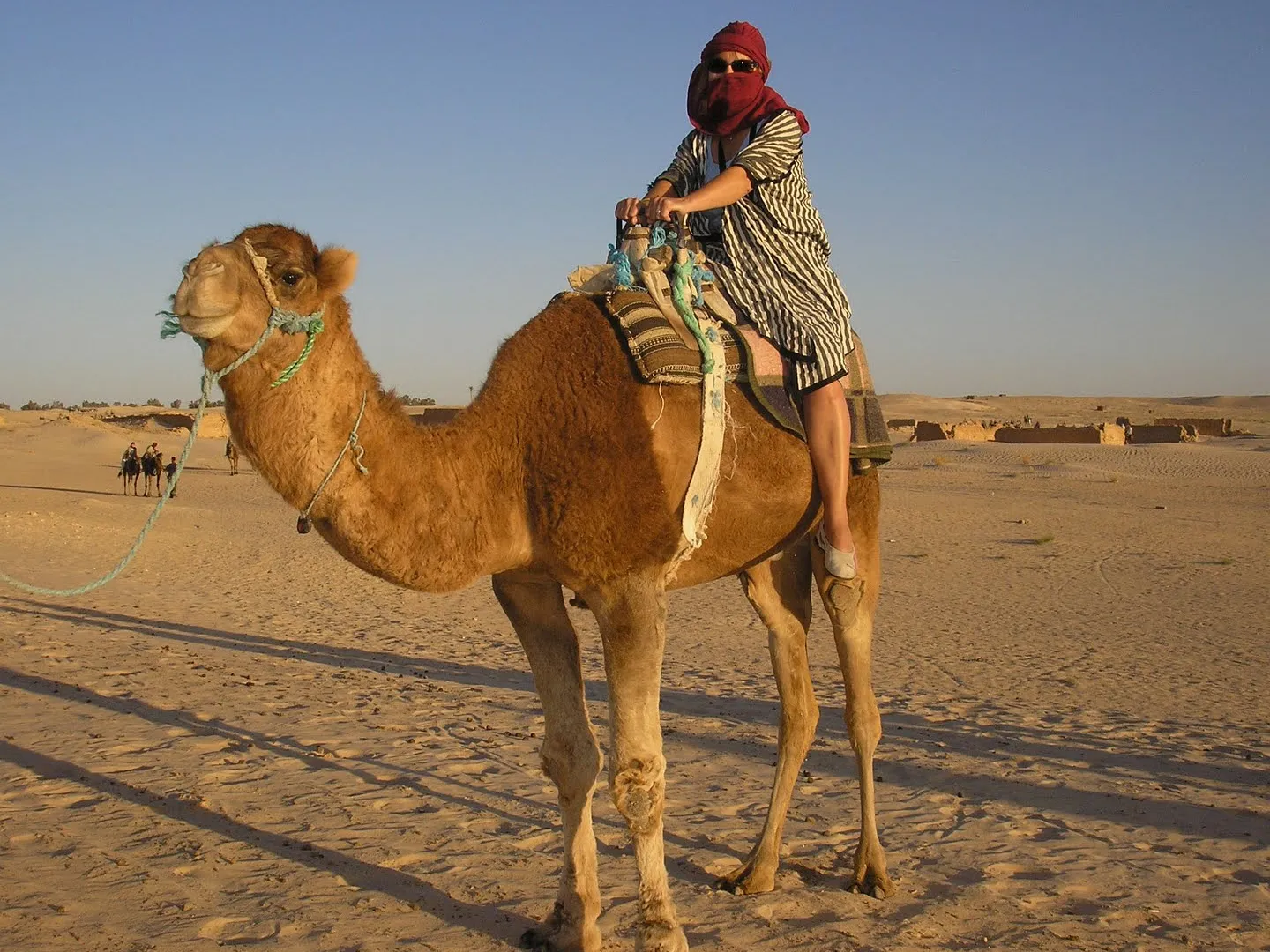
Imagina el Sáhara entero metido en una casa de Douz: beduinos, dunas y secretos que Ali Khima guardó celosamente por décadas.
The museum is generally open every day, with hours usually from 9:00 a.m. to 4:30 p.m. in winter, and with a midday break during the summer months (approx. 9:00 a.m.-1:00 p.m. and 3:00 p.m.-6:00 p.m.). I recommend going in the morning to avoid the intense heat if you are traveling in peak season.
Admission is very inexpensive, usually around 5 to 8 Tunisian dinars (less than €3 at the exchange rate), with a small extra charge if you want to take photographs. Tickets are purchased directly at the entrance ticket office in cash.
It is a small museum but very rich in culture; a leisurely visit will take between 45 minutes and one hour. It is the perfect amount of time to immerse yourself in nomadic life without getting tired before heading out to the dunes.
This place is essential for understanding the life of the Mrazig, the nomadic people of the region. Here you will discover the deep meaning of Berber tattoos, traditional jewelry, and desert survival tools, far beyond what you see on a typical tourist excursion.
The best season is from October to May, avoiding the scorching summer heat; if you go in late December, you may coincide with the spectacular International Sahara Festival. During the day, the early morning hours or late afternoon offer the best light and temperature.
The building is mainly single-story and fairly accessible inside, although the outdoor surroundings in Douz can be sandy and make movement more difficult. The rooms are spacious, allowing wheelchair access.
As soon as you step outside, you are at the 'Gateway to the Desert,' so do not miss the Great Dune of Ofra to watch the sunset. You can also visit the lively Thursday market in the main square or take an excursion to Jebil National Park.
Do not just look at display cases; to really understand the story behind each object, I recommend using a detailed audio guide. Also, bring water and cash, and consider completing your cultural experience by downloading our immersive audio guide at IAudioguia.com.
¿Prefieres escuchar en español?
🇪🇸 Escucha la audioguía de the Sahara Museum en español