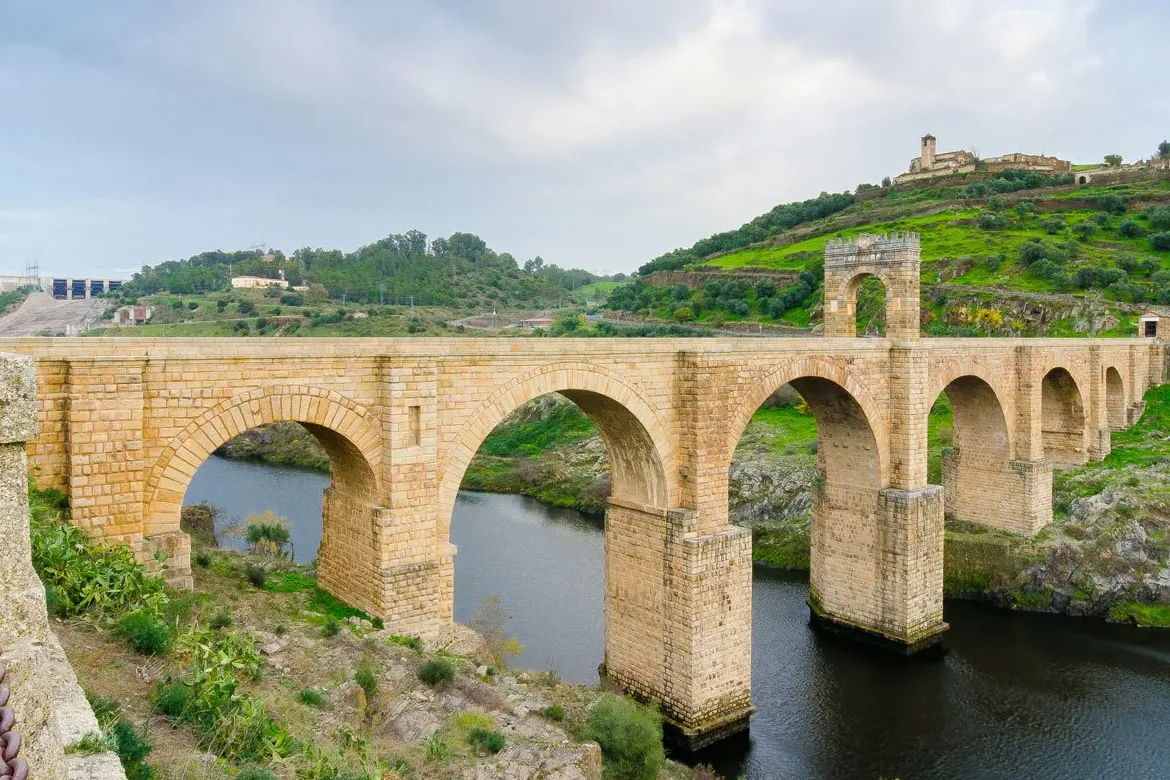
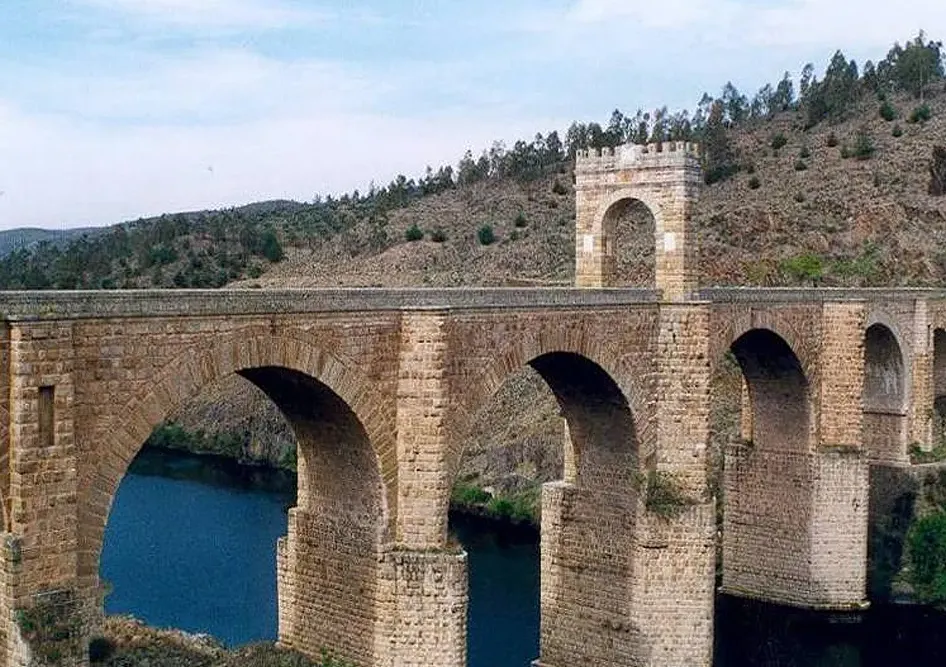
Discover the Roman Bridge of Alcántara in Cuacos de Yuste. A unique experience to learn about its history and significance.
The Roman Bridge of Alcántara is an ancient engineering work and, as such, it does not have fixed opening or closing hours. It is accessible to the public 24 hours a day, 7 days a week, allowing you to admire it at any time. To get there, the most practical option is by car, as it is located in a rural setting. From Alcántara, follow the signs to the bridge. You can use Google Maps for the exact route: Roman Bridge of Alcántara on Google Maps.
Not at all! Visiting the Roman Bridge of Alcántara is completely free. It is a public monument, and you can explore it at your own pace at no cost. This makes it an excellent option for enjoying history without affecting your budget.
For a complete and relaxed visit to the Roman Bridge of Alcántara, we suggest allowing between 45 minutes and 1 hour and 30 minutes. This will give you enough time to walk across the bridge, admire its architecture, read the information panels if there are any, and enjoy the stunning views of the Tagus River and the surrounding landscape. If you are a photography enthusiast, you may want even more time!
The Roman Bridge of Alcántara is a true jewel of Roman engineering, built between 104 and 106 AD under Emperor Trajan. Its main purpose was to facilitate communication between Hispania and Lusitania. It has remained standing for nearly two millennia, surviving wars and the passage of time, which demonstrates the mastery of its builders. It is an imposing symbol of the Roman presence and legacy on the Iberian Peninsula.
To enjoy the Roman Bridge of Alcántara to the fullest, I recommend visiting at sunrise or sunset. The light at those times is magical for photographs, and the temperatures are more pleasant, especially in summer. As for the best time of year, spring (April-May) and autumn (September-October) are ideal, as the weather is mild and the landscape is at its best.
As an ancient structure, the Roman Bridge of Alcántara presents certain accessibility challenges. Direct access to the bridge has no steps and is relatively flat, which makes movement easier for people with reduced mobility or in wheelchairs on the bridge deck. However, the surrounding areas and the paths leading to viewpoints may have uneven terrain. Caution is recommended and, if possible, it is best to go with a companion. It is always advisable to check the latest accessibility information with the local tourist office.
The area around the Roman Bridge of Alcántara is full of charm. Very close by, in the town of Alcántara itself, you can explore the Convent of San Benito, an impressive building with a Renaissance Gothic cloister, and the Roman Bridge Interpretation Center. Do not miss the opportunity to stroll through the historic center of Alcántara. If you have more time, the Tagus International Natural Park area, just a few kilometers away, offers spectacular landscapes for hiking and birdwatching. For more information, you can visit the Alcántara Tourism website.
Of course! Here are a few tips: Bring water, especially if you visit in summer, and wear good footwear, as you may walk around the surrounding area. Do not forget your camera, as the views are spectacular. Consider bringing a small picnic to enjoy by the Tagus. If you are interested in history, look up information beforehand or hire a local guide to better appreciate the scale of this work. And most importantly, take your time to soak in the greatness of Rome!
¿Prefieres escuchar en español?
🇪🇸 Escucha la audioguía de Roman Bridge of Alcántara en español