No te vayas sin conocer la historia Suscribete
IAudioGuia iaudioguia
Audio Guides of Nis

Audio Guide of Bubanj Memorial Park

El parque que vio explosiones partisanas, árboles regalo de Mussolini y un general nazi fantasma que no sabía irse

✓ What guidebooks don't tell you
✓ Secrets other tourists miss
✓ Listen while you explore
Discover everything
00:00
00:00

📖 Audio Guide Chapters

6 chapters

1. When the partisans blew up the clock, literally

🔒 Premium Content

Subscribe to access all chapters of this audio guide.

2. The raven, the beer, and the Ottoman cannon

🔒 Premium Content

Subscribe to access all chapters of this audio guide.

3. Crime, heroes, and a stubborn ghost

🔒 Premium Content

Subscribe to access all chapters of this audio guide.

4. Mussolini's fir trees and other ironies

🔒 Premium Content

Subscribe to access all chapters of this audio guide.

5. The soldier asking for selfies and symbols beneath your feet

🔒 Premium Content

Subscribe to access all chapters of this audio guide.

6. What the grandparents will not tell you, but the park will

🔒 Premium Content

Subscribe to access all chapters of this audio guide.

❓ Frequently Asked Questions

What are the opening hours, and how do I get to the park?

The park is a public outdoor space, so it is open 24 hours a day, 365 days a year. To get there, you can take bus line 4 from central Nis or go by taxi, which is quite affordable; it is about 3 km from the city center on Bubanj Hill.

Do I have to pay admission, or are there any hidden costs to access the monument?

You do not have to pay anything; admission to Bubanj Memorial Park is completely free for all visitors. It is a public memorial site managed by the city, ideal for budget-conscious travelers.

How much time should I set aside to explore the park without rushing?

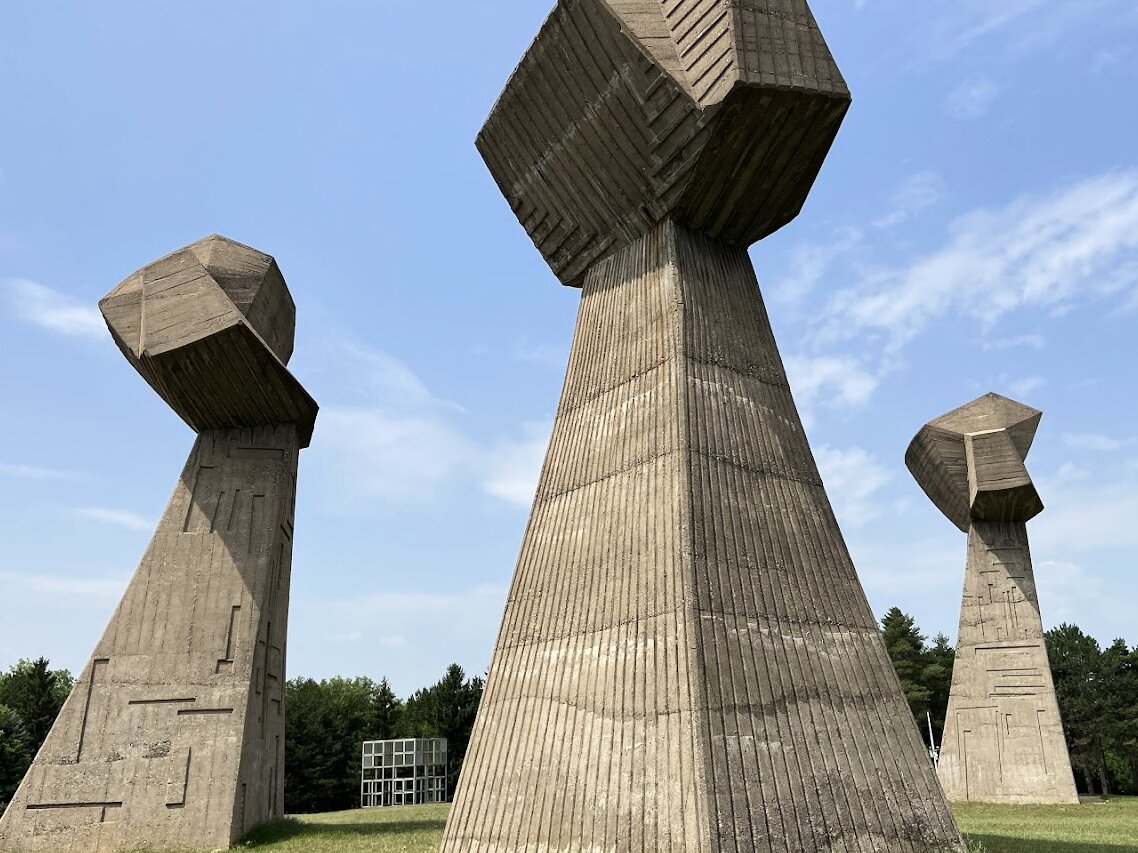
I recommend setting aside between 45 minutes and an hour. That will give you enough time to walk along the wooded path to the top, see the famous concrete Three Fists, and read the information panels at a relaxed pace.

What is the real history behind this place, and what do those giant structures mean?

This site is deeply moving; it was a place of mass execution during World War II where more than 10,000 people were killed. The three enormous concrete fists symbolize the resistance of men, women, and children who defied the enemy, making it a key antifascist symbol in the Balkans.

What time of day or year is best for taking good photos?

Without a doubt, the golden hour at sunset is the best time, as the sun sets behind the monoliths and creates dramatic silhouettes. As for the season, autumn is spectacular because of the contrast between the gray concrete and the colorful forest foliage.

Is the terrain accessible if I am using a wheelchair or pushing a stroller?

Access is mixed; there are paved paths leading to the main monument, but keep in mind that the site is on a hill and the slope can be steep in some sections. It is passable, but it will require effort or assistance for manual wheelchairs.

Is there anything else interesting to visit nearby after seeing the park?

Yes, to complete the historical route, you should visit the Red Cross Concentration Camp (Logor Crveni Krst), which is about a 10-minute drive away. It is the place where many of the victims were imprisoned before being taken to the park.

Any practical tips I should know before heading up?

Wear comfortable shoes because you will be walking on forest trails and asphalt, and make sure to bring water, as there are no kiosks or shops inside the memorial complex. For more details about events, you can check the official website of Nis Tourism.

¿Prefieres escuchar en español?

🇪🇸 Escucha la audioguía de Bubanj Memorial Park en español