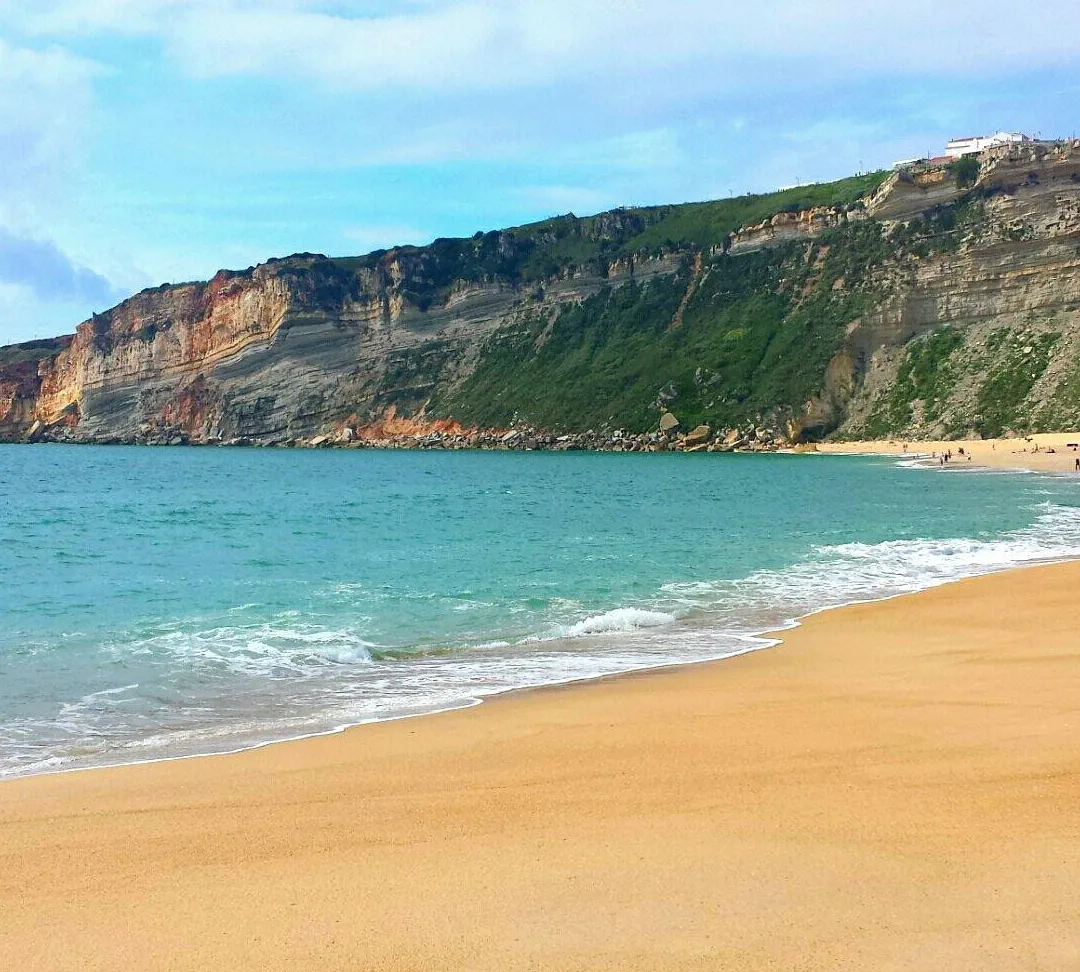
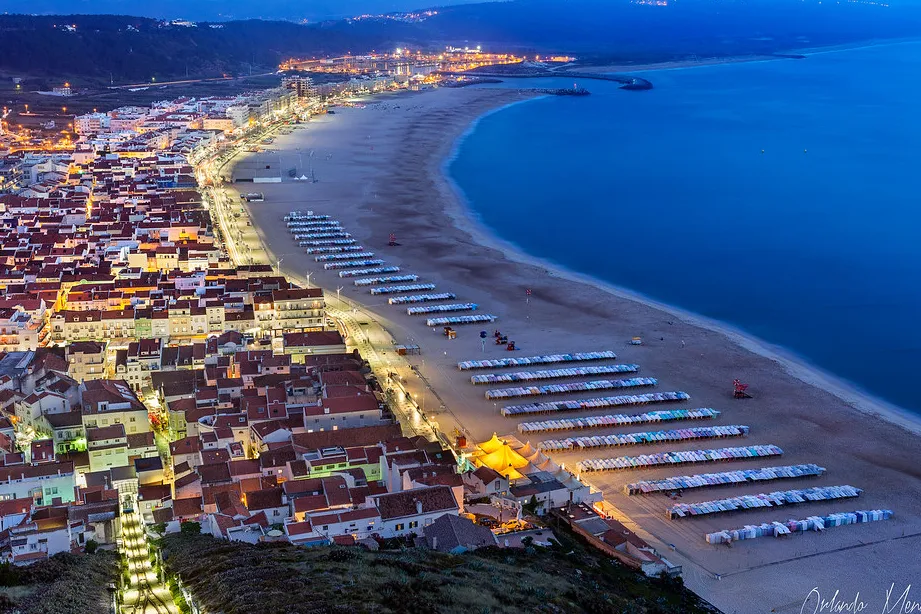
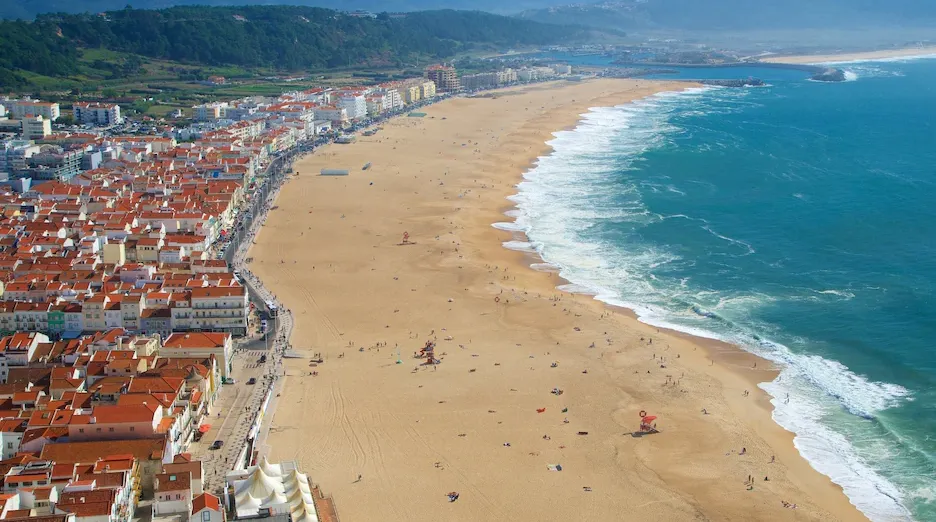
La Playa de Nazaré es una de las playas más emblemáticas de Portugal, famosa por sus olas gigantes que atraen a surfistas de todo el mundo y su impresionante entorno de acantilados y arena dorada.
Nazaré Beach is a public beach and is therefore open 24 hours a day. To get there, you can drive to Nazaré and park in the designated areas, or even use the Nazaré Funicular to go up to Sítio and then head down to the beach, although the main beach is easy to reach on foot from the town center. There are bus stops in Nazaré connecting it with other nearby cities. You can find more information on how to get there on the Nazaré Town Hall website.
Access to Nazaré Beach is completely free, as it is a public beach. There are no entrance fees or costs directly associated with accessing the sand or swimming. However, you should expect expenses if you use services such as paid parking, umbrella or sunbed rentals, or visits to nearby attractions such as Fort of Saint Michael the Archangel.
To fully enjoy Nazaré Beach, I would recommend spending at least half a day, around 3 to 4 hours. This will allow you to walk along the shore, sunbathe, take a swim, and enjoy the atmosphere. If you also plan to go up to Sítio for the panoramic views or visit Fort of Saint Michael the Archangel, it is better to set aside a full day for the complete experience.
Nazaré Beach is world-famous for its gigantic waves, especially during the winter months, making it a paradise for big-wave surfers. It also preserves a rich fishing tradition, with colorful boats still present and the women of Nazaré dressed in their seven skirts. It is a place where the power of the Atlantic meets the authenticity of Portuguese culture, a living reflection of the country’s maritime identity. Its history is linked to legends such as the miracle of Our Lady of Nazaré.
The best time to visit Nazaré Beach depends on your interests. If you want to enjoy the sun and beach with warm temperatures, the summer months (June to September) are ideal. However, if you are drawn by the famous giant waves and want to watch extreme surfers, the winter months (October to March) are the most suitable, although the weather can be colder and windier. To avoid the crowds, spring (April-May) and autumn (September-October) offer a good balance.
Nazaré Beach, across its sandy stretch, can be challenging for people with reduced mobility, like most beaches. However, the seafront promenade along the beach is fully wheelchair accessible. In addition, the famous Nazaré Funicular, which connects the beach with the Sítio district, is adapted for wheelchairs.
Absolutely, there is a lot to see nearby. You should not miss Sítio da Nazaré, accessible by funicular, where you will find the Sanctuary of Our Lady of Nazaré, the Suberco Viewpoint with spectacular views, and the famous Fort of Saint Michael the Archangel, from where the giant waves can be seen. You can also visit the Nazaré Municipal Market to try local products or explore the Ethnographic and Archaeological Museum to immerse yourself in local history. For more ideas, see the 'What to Do' section of the Nazaré Town Hall website.
To make the most of your visit, I suggest: if you go in summer, arrive early to get a good spot and parking. Do not forget sunscreen, a hat, and water. If you are looking for giant waves, check the surf forecasts online and visit Fort of Saint Michael the Archangel. Try the local cuisine, especially fresh fish and seafood. And take a walk through the traditional district to feel the essence of Nazaré. And yes, bring your camera — the views are spectacular!
¿Prefieres escuchar en español?
🇪🇸 Escucha la audioguía de Nazaré Beach en español