Donde un Cristo negro desafió piratas, epidemias y malentendidos lingüísticos
Saint Philip Church in Portobelo is usually open to the public during the day. Although it does not have fixed museum-style opening hours, as it is an active place of worship, visiting during daylight hours is recommended. You may find its doors closed between religious services; if so, wait a moment or ask a local. For more information about religious services, you can consult the Portobelo Heritage Foundation page.
Good news! Entry to Saint Philip Church in Portobelo is completely free. It is a place of worship and a historic heritage site open to the public, although a small donation for the upkeep of the church is always appreciated, helping to preserve it. There is no formal admission fee to enter.
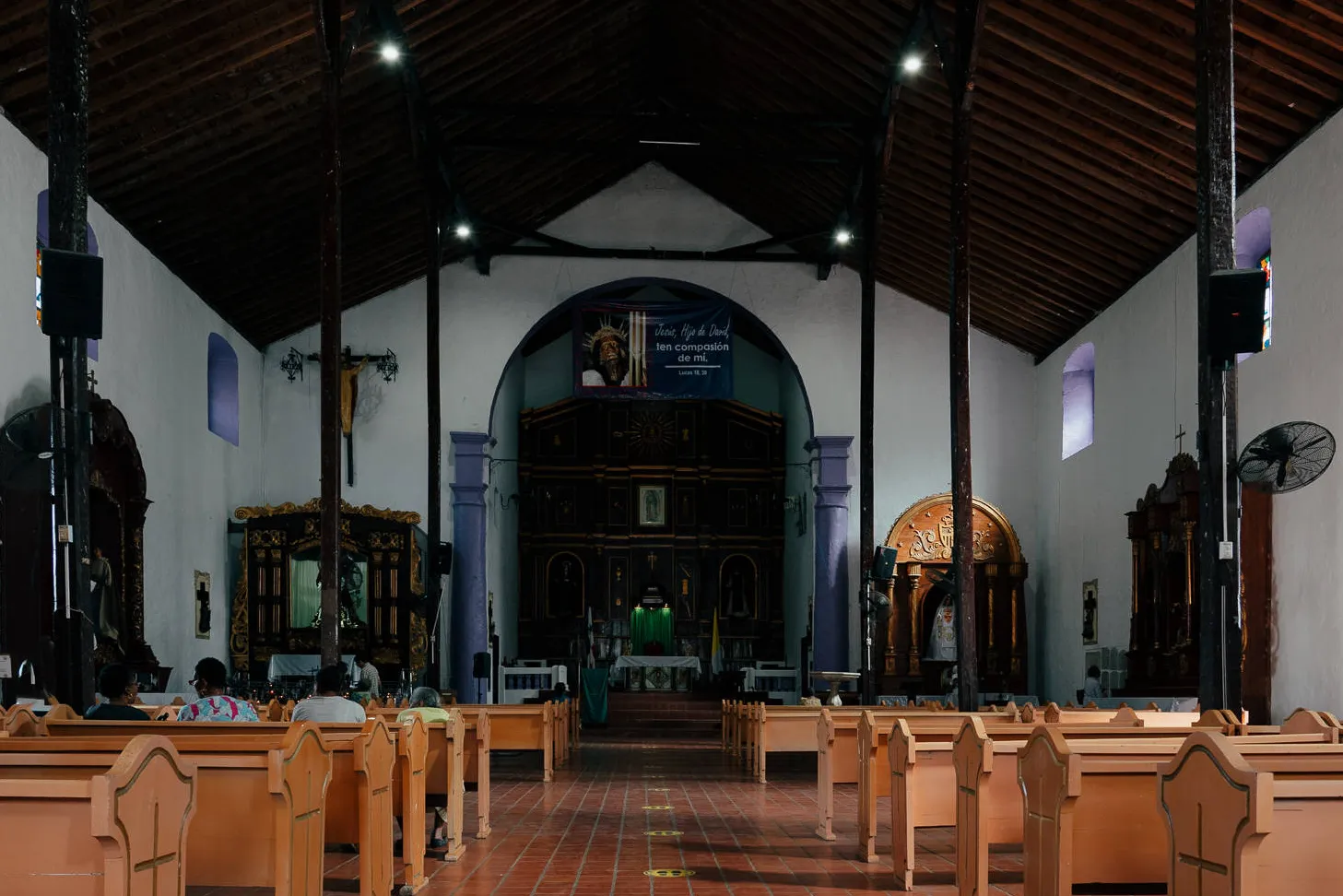
To calmly appreciate the architecture, the details, and soak in the atmosphere of the church, I would recommend setting aside between 30 and 45 minutes. If you are especially interested in the history or the figure of the Black Christ, you may want to extend your visit a little longer. Keep in mind that it is a key stop on any tour of Portobelo’s historic center.
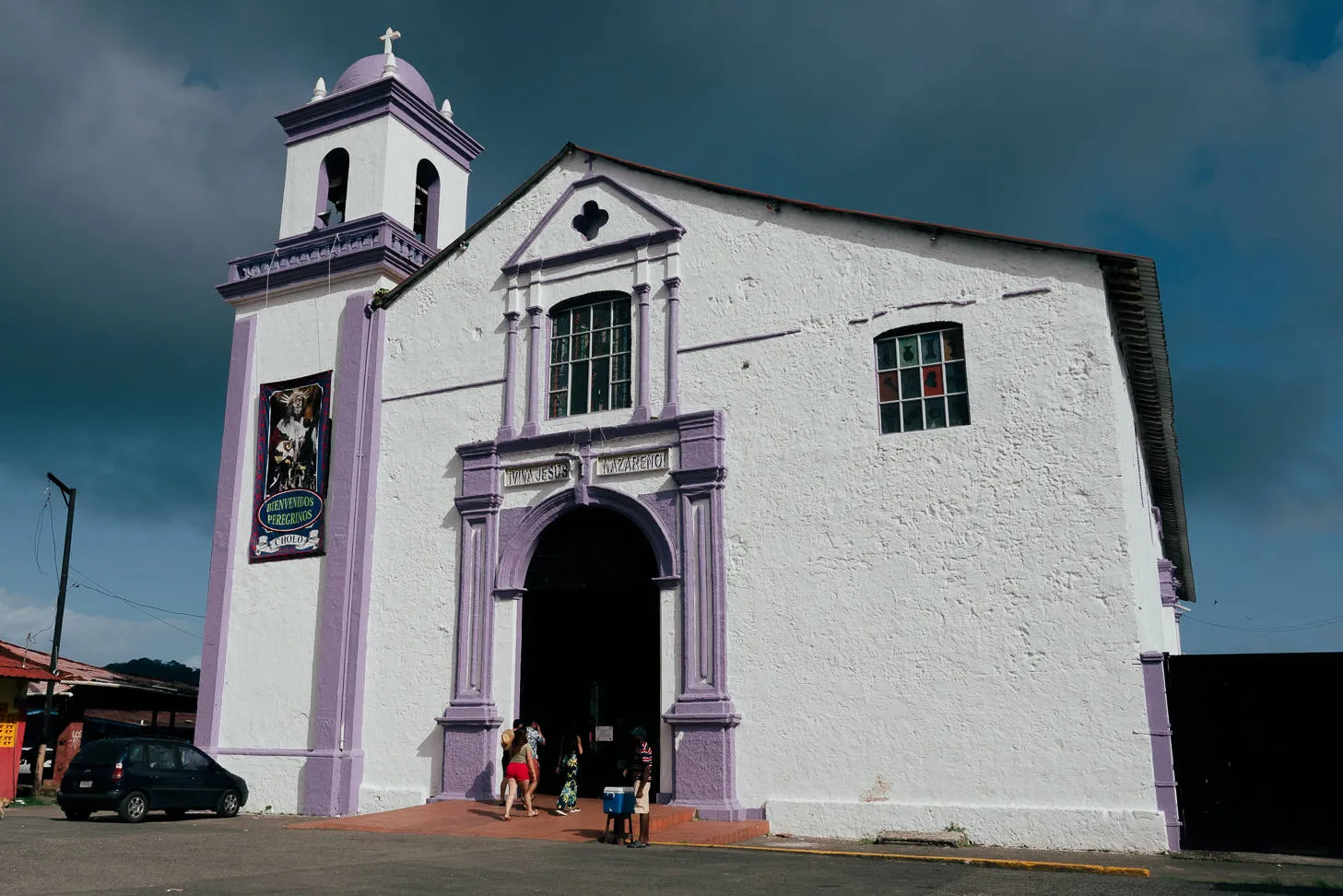
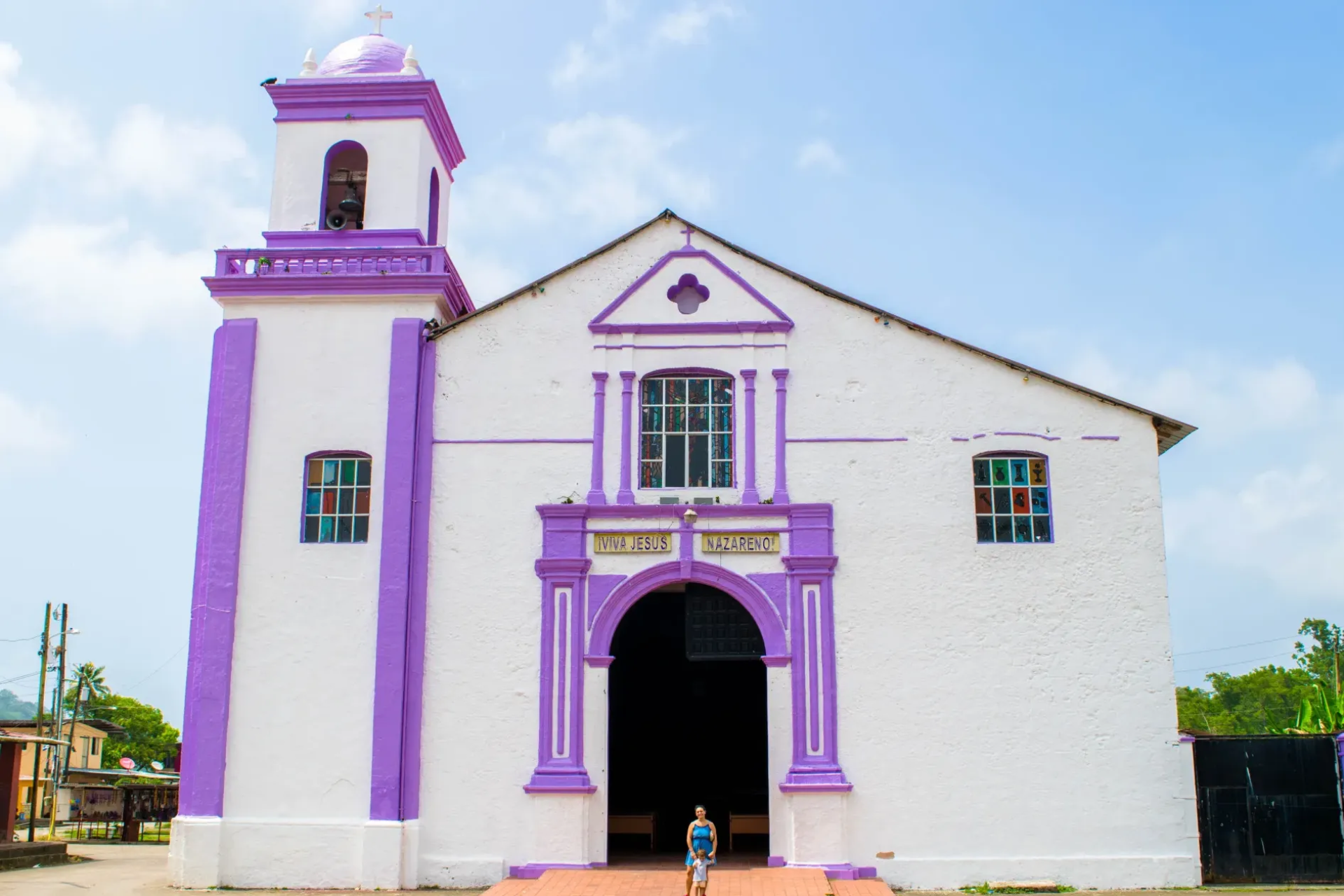
Of course! Saint Philip Church in Portobelo is world-famous for housing the venerated image of the Black Christ of Portobelo. This figure is the center of one of Panama’s most important pilgrimages, drawing thousands of devotees every October 21. In addition, the church is part of the UNESCO World Heritage Site Fortifications on the Caribbean Side of Panama: Portobelo-San Lorenzo, highlighting its historical and cultural importance since colonial times.
The best time to visit Saint Philip Church, and Portobelo in general, is during the dry season, from December to April, to avoid the rain and better enjoy the outdoor surroundings. As for the time of day, I suggest going early in the morning or late in the afternoon to avoid the strongest heat and, if possible, the crowds. Avoid October 21 unless your intention is to take part in the massive Black Christ pilgrimage.
As a historic building, Saint Philip Church in Portobelo presents some accessibility challenges. Generally, its main entrance has steps, and the interior is not always adapted for wheelchairs. It would be advisable to contact the local tourism authorities or the church itself through the Portobelo parish office in advance to see whether they can offer assistance or help plan your visit, although we do not have a specific phone number.
Portobelo is a treasure! Right next to the church, you can explore the ruins of the historic Spanish fortifications, such as Santiago and San Jerónimo forts, part of the UNESCO World Heritage Site. I also recommend the Portobelo Royal Customs House Museum for a deeper look into its mercantile and colonial history, and a stroll through the picturesque town to experience its vibrant Afro-Caribbean culture.
Of course, here are some tips: dress respectfully (shoulders and knees covered), since it is a place of worship. Bring water and sun protection, because the heat can be intense. Immerse yourself in the history; imagine what Portobelo was like in its colonial golden age. And, of course, do not forget your camera to capture the beauty and significance of this place. If you can, read a little about the Black Christ before you go so you can better appreciate its deep history.
¿Prefieres escuchar en español?
🇪🇸 Escucha la audioguía de Saint Philip Church en español