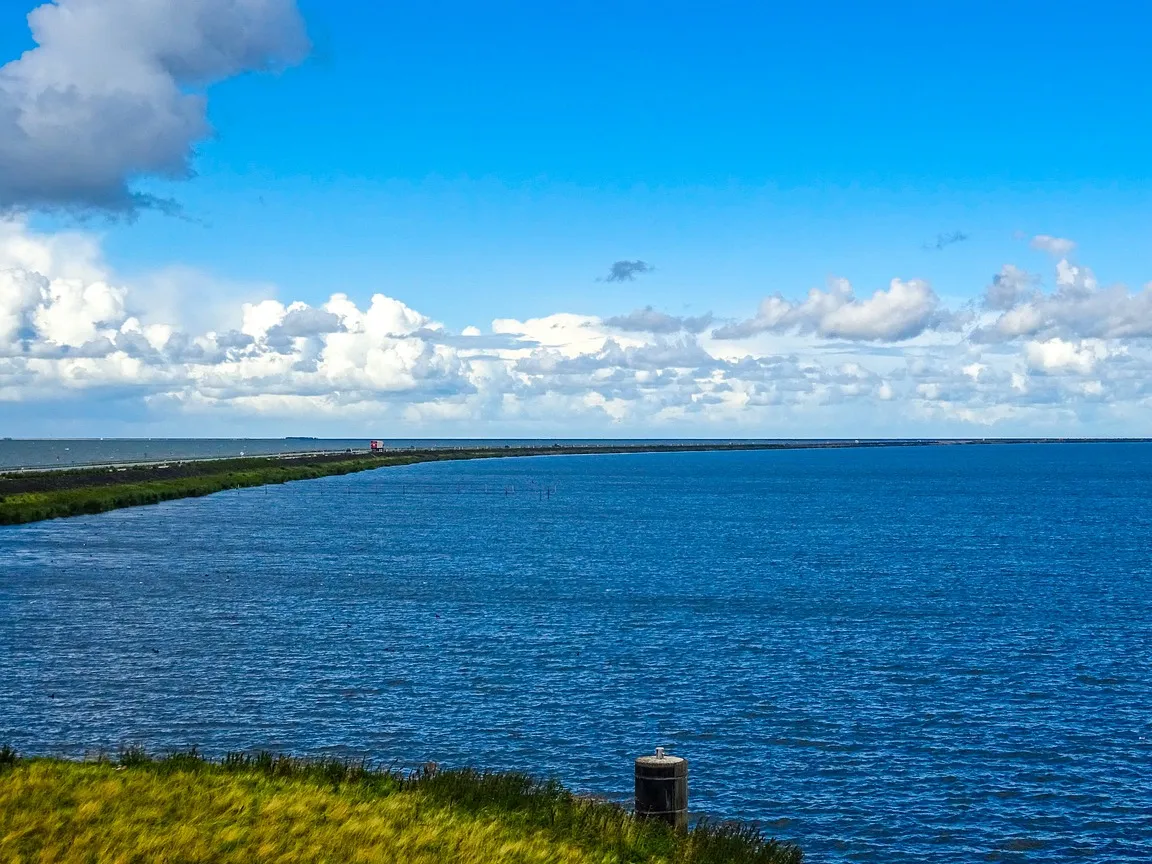
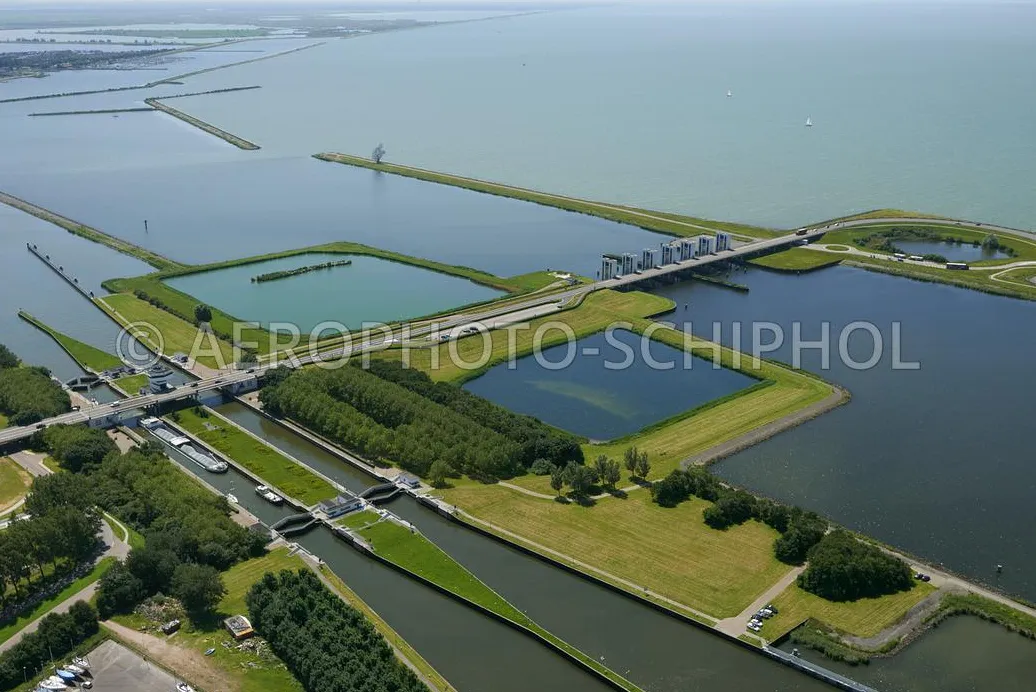
El Dique de Houtrib es una monumental obra de ingeniería holandesa que cruza el IJsselmeer, conectando Lelystad con Enkhuizen y simbolizando la lucha eterna de los Países Bajos contra el agua.
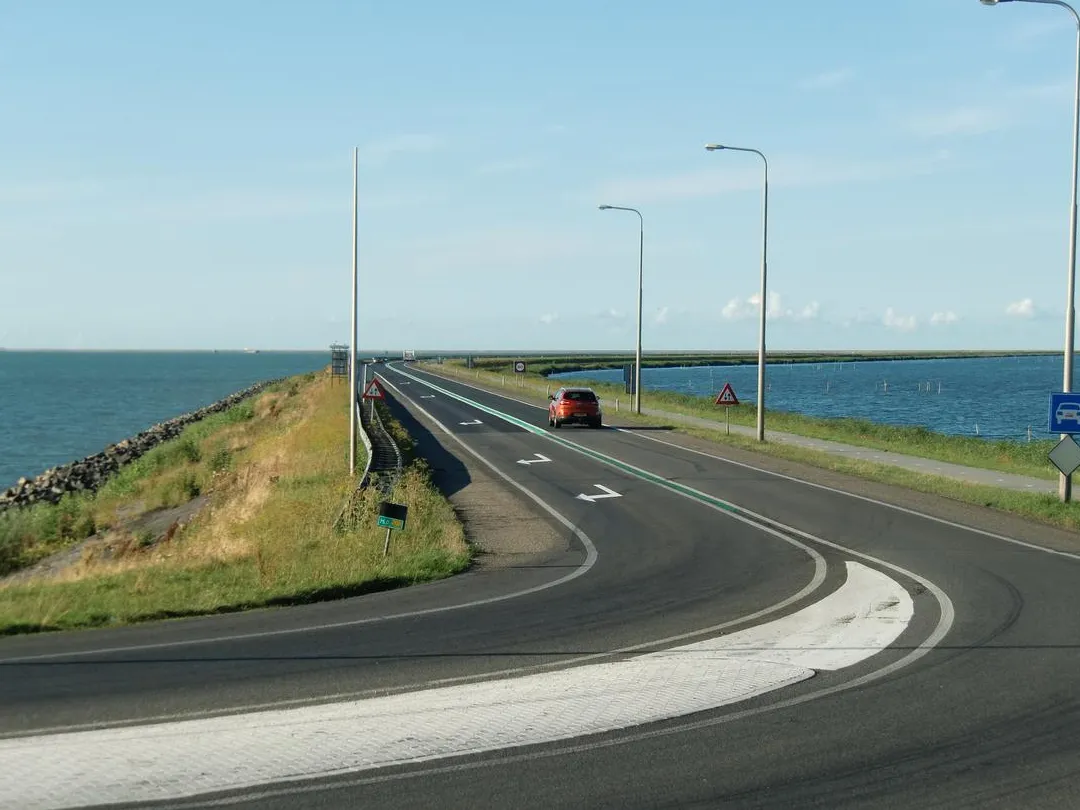
Houtribdijk is a public infrastructure route (the N307 road), so it is open 24 hours a day, 365 days a year. You can easily reach it by car or bicycle from Lelystad or Enkhuizen, enjoying a unique journey with water on both sides.
No, crossing Houtribdijk is completely free, as there are no tolls on this stretch of road. It is a perfect and affordable way to enjoy Dutch hydraulic engineering at no cost.
The drive covers about 27 kilometers and usually takes around 20 to 30 minutes without stops. However, I recommend allowing at least 45 minutes so you can stop at the Trintelhaven shelter and take photos of the scenery.
Built between 1963 and 1975 as part of the Zuiderzee Works, its original purpose was to create new land (a polder), but the plan was later canceled. Today it is crucial because it separates Lake IJsselmeer from Lake Markermeer and protects the coast from flooding.
Clear summer days are ideal for seeing the endless horizon, and sunset offers spectacular colors over the water. Keep an eye on the wind forecast, as on stormy days the crossing can feel intense, especially if you are cycling.
Yes, the visit is very accessible because it is mainly done by vehicle along a modern, well-paved road. Rest areas and viewpoints usually provide enough space for wheelchairs, allowing visitors to enjoy the views comfortably.
On the Enkhuizen side, do not miss the fantastic Zuiderzee Museum. At the Lelystad end, I recommend visiting Batavialand to learn more about maritime history and water management in the Netherlands.
If you have the time and energy, consider renting a bicycle to truly feel the vastness of the water, as there is a very safe separate bike lane. Also, look for the striking sculpture "Exposure" (the crouching man) by Antony Gormley near the Lelystad shoreline.
¿Prefieres escuchar en español?
🇪🇸 Escucha la audioguía de Houtribdijk en español