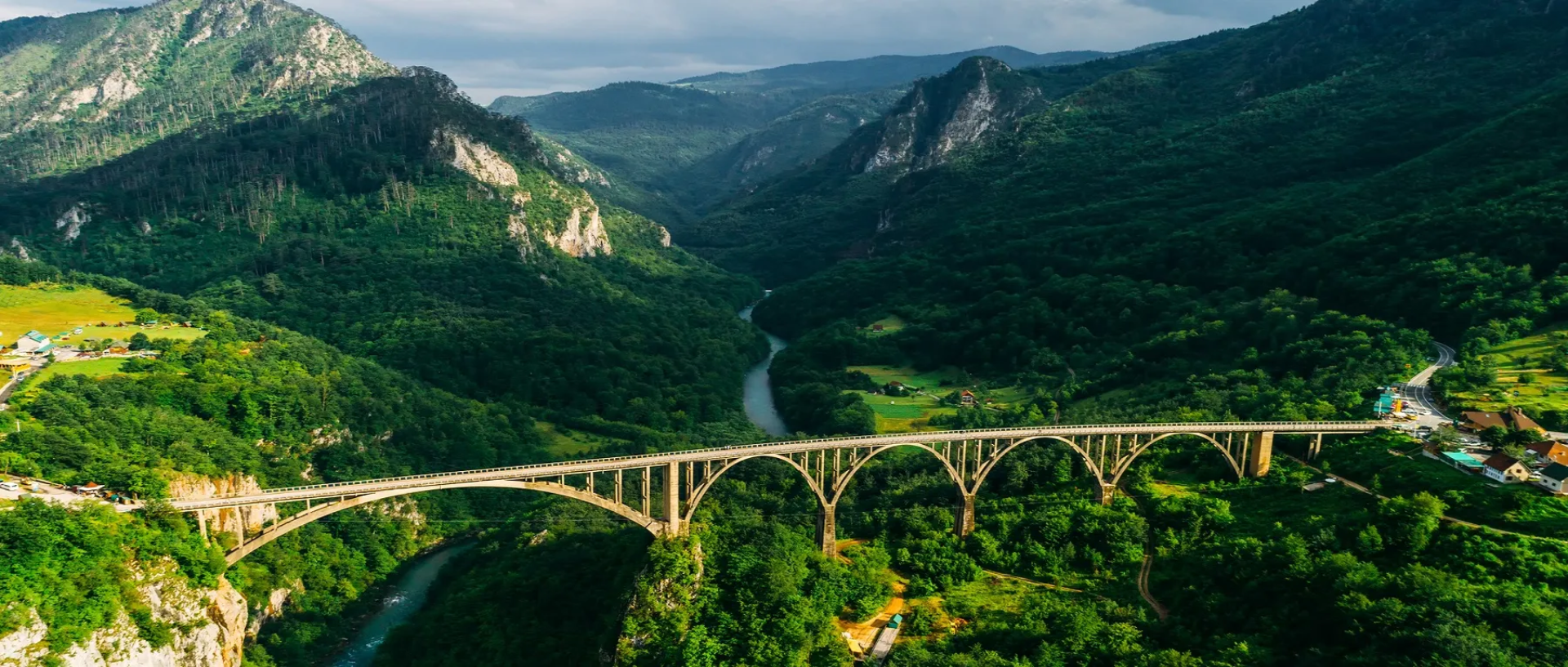
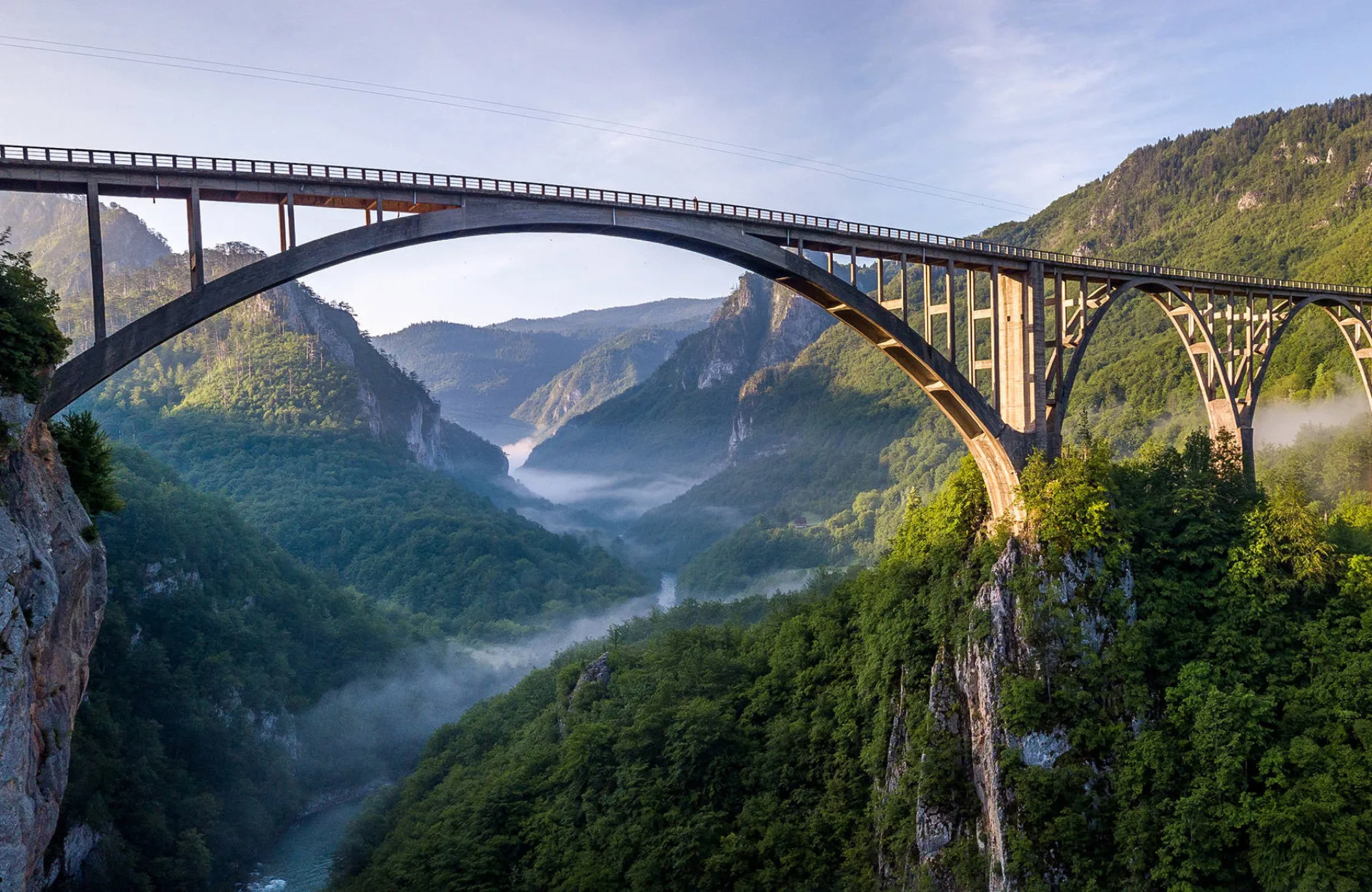
Imponente puente arqueado sobre el río Tara en Montenegro, una hazaña de ingeniería del siglo XX que desafía la gravedad y enamora a los visitantes con su elegancia y vistas espectaculares.
Tara Bridge is an open-air structure and, as such, is generally accessible 24 hours a day, 7 days a week. However, nearby businesses and tourist activities, such as cafés or rafting agencies, usually operate on more specific schedules, especially during the high season (spring and summer). We recommend checking the hours for these specific activities if you plan to take part in them. You can find additional information about the region on the website of the National Tourism Organization of Montenegro.
Access to and visits to Tara Bridge itself are completely free. There is no charge to cross it or enjoy the views. However, if you decide to take part in activities such as zip-lining or rafting on the Tara River, those do have associated costs. We suggest checking the prices of these activities with local operators in advance.
For a simple visit to Tara Bridge—crossing it, admiring the views, and taking photos—30 to 60 minutes will be enough. However, if you plan to enjoy the surroundings, go zip-lining, or explore rafting activities on the Tara River, you may need half a day or even a full day. It all depends on your interest in the activities available.
Tara Bridge, officially known as Đurđevića Tara Bridge, is a symbol of Montenegro’s engineering and history. Built between 1937 and 1940, it was once the largest reinforced-concrete bridge in Europe. Its cultural importance lies in its connection to local resistance during World War II, when one of its engineers, Lazar Jauković, partially demolished it to stop the advance of occupying forces and was later executed for doing so. It stands as a testament to bravery and human ingenuity. You can read more about its history on Wikipedia: Đurđevića Tara Bridge on Wikipedia.
The best time to visit Tara Bridge is during spring (April–June) or autumn (September–October), when the weather is pleasant and the crowds are smaller. Summer (July–August) is ideal for activities such as rafting, but there may be more tourists. To avoid crowds, we recommend visiting early in the morning or late in the afternoon, just before sunset, to enjoy beautiful views and ideal light for photography.
Tara Bridge itself is a paved and relatively flat structure, which makes it passable for people with reduced mobility and wheelchair users. However, access from the parking areas and surrounding grounds may include some slopes or uneven terrain. There are no specifically adapted facilities such as elevators or special ramps. Caution is recommended and, if possible, visiting with a companion.
Tara Bridge is a gateway to breathtaking landscapes. A short distance away, you can explore Durmitor National Park, a UNESCO World Heritage Site, famous for its glacial lakes, mountain peaks, and canyons, including the Tara River Canyon, one of the deepest canyons in Europe. You can find more information about the park on the UNESCO World Heritage page for Durmitor National Park.
Of course! We suggest wearing comfortable walking shoes, especially if you plan to explore the surrounding area. Don’t forget your camera, as the views are spectacular. If you visit during colder seasons, bring layers, since the wind can be strong on the bridge. If you’re interested in rafting or zip-lining, book in advance, especially in high season. And most importantly, take your time to appreciate the scale of the structure and the natural beauty of the Tara Canyon.
¿Prefieres escuchar en español?
🇪🇸 Escucha la audioguía de Đurđevića Tara Bridge en español