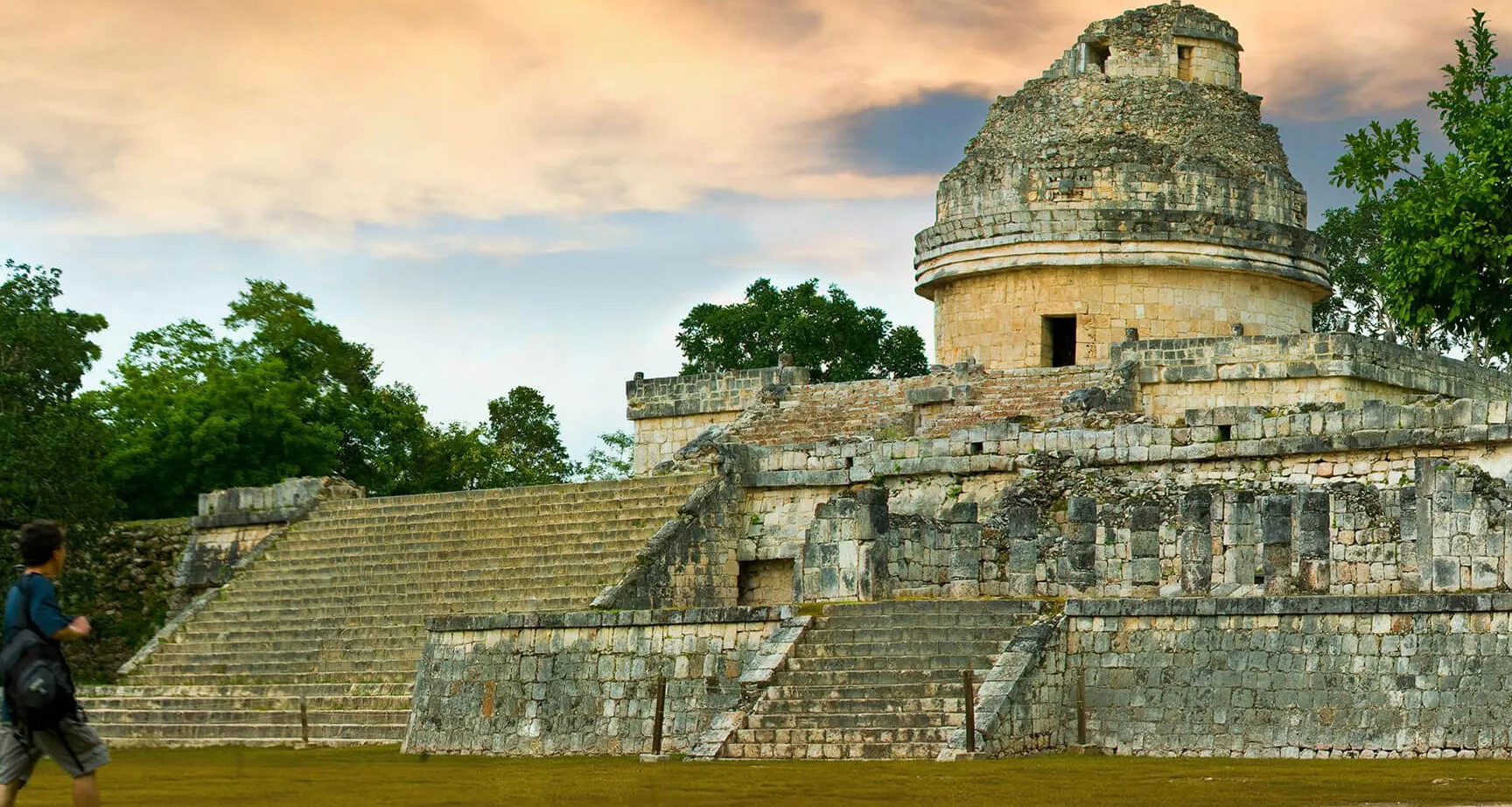
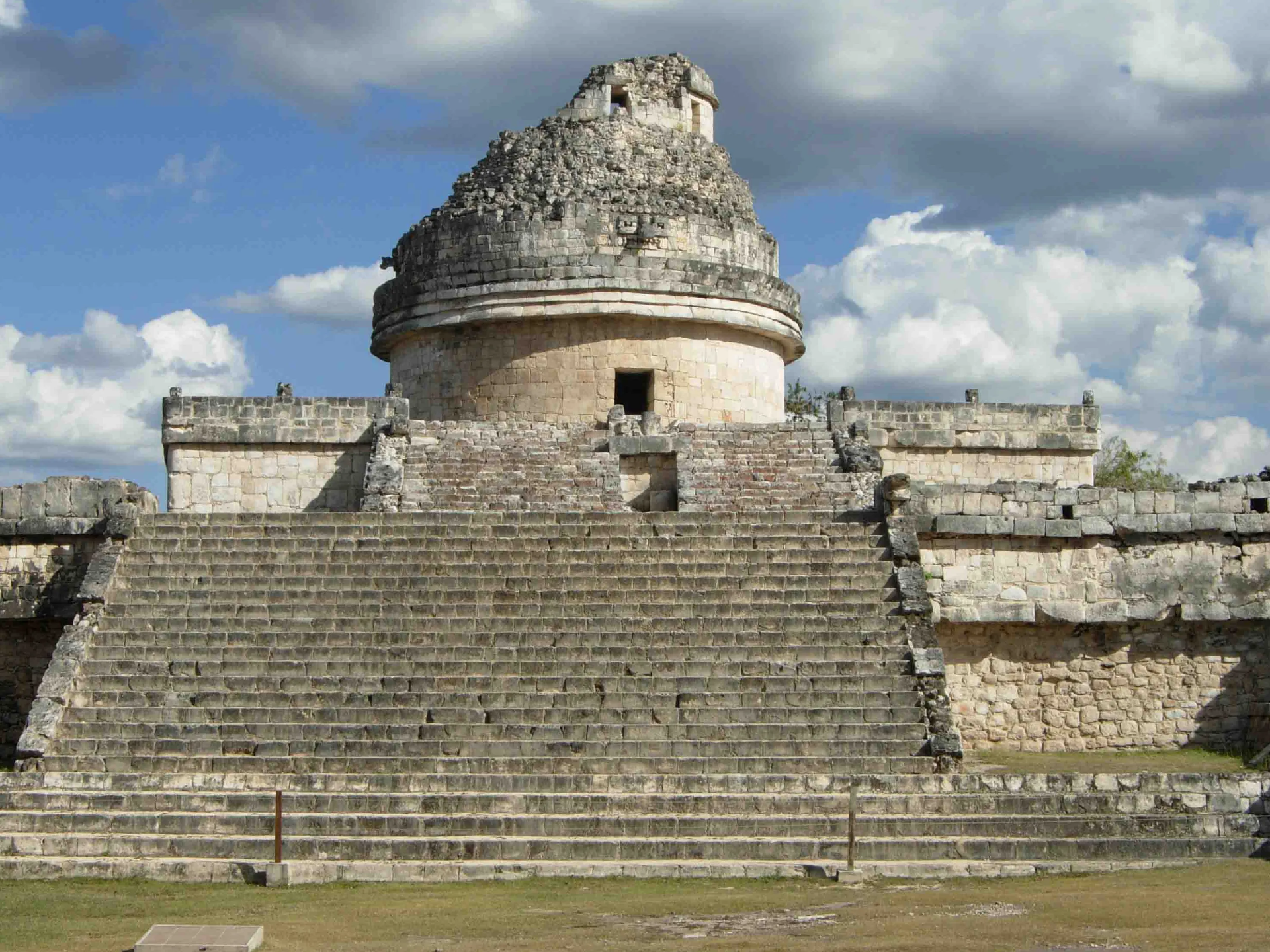
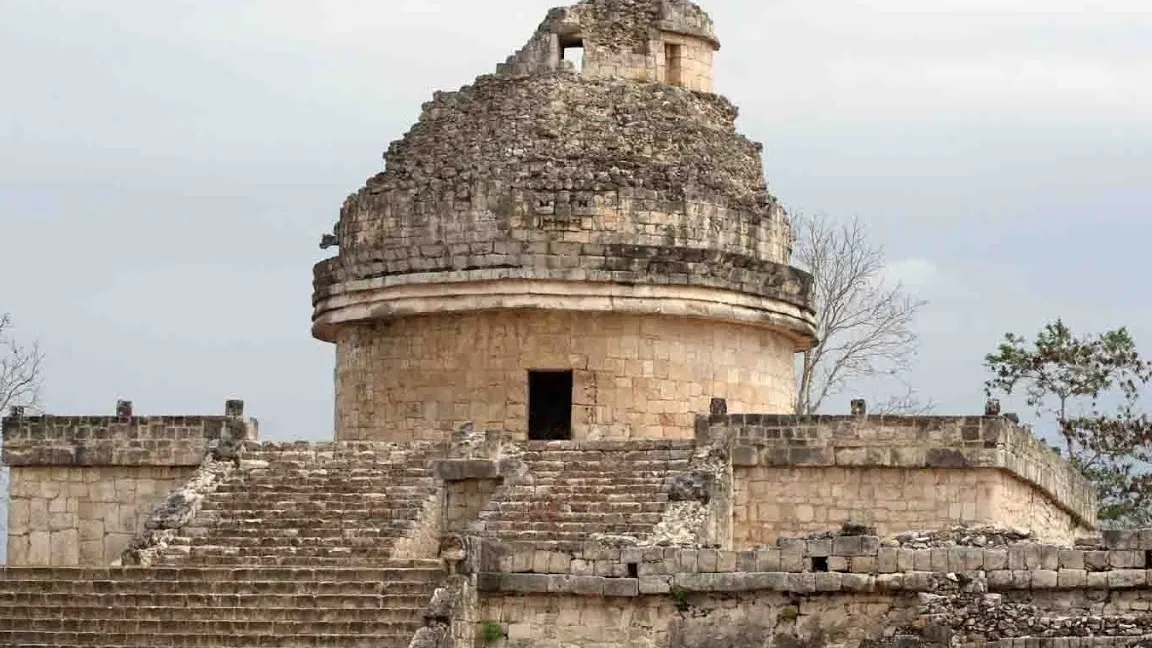
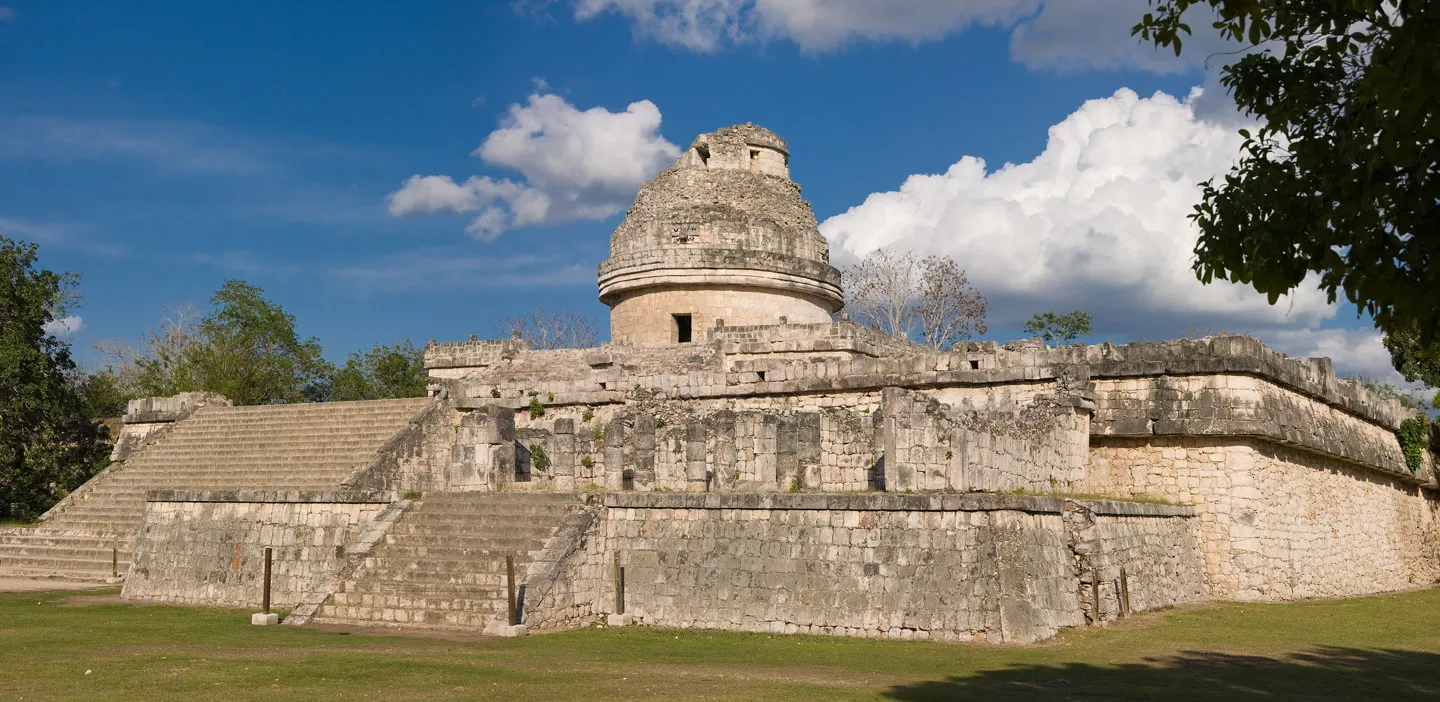
A circular Maya structure dedicated to astronomical observation, key to its worldview and calendar.
Chichen Itza is open every day of the year, including holidays, from 8:00 AM to 5:00 PM (last entry is at 4:00 PM). El Caracol Observatory is located within the main Chichen Itza complex, so access depends on the general admission ticket to the archaeological site. Arriving early is recommended to avoid crowds. You can find more details about access on the official Chichen Itza website: inah.gob.mx/chichen-itza.
The admission price to Chichen Itza for foreign visitors is approximately 614 MXN, while the cost for Mexican nationals varies. This price includes access to all structures within the site, including El Caracol. There are discounts for Mexican students with valid ID and free admission for Mexican retirees and children under 13 years old. It is important to check updated prices and conditions on the official INAH website: inah.gob.mx.
For El Caracol specifically, you could spend about 20 to 30 minutes appreciating it and understanding its function. However, since it is inside Chichen Itza, we recommend planning at least 3 to 5 hours to tour the entire archaeological site and calmly admire all its wonders, including the Pyramid of Kukulcan, the Great Ball Court, and other important structures.
El Caracol is one of the most important astronomical observatories of Maya culture. Its circular design and the openings in its walls align with key astronomical events such as the equinoxes and solstices, allowing the Maya to predict celestial phenomena and establish their agricultural and ceremonial calendars. It represents this civilization’s advanced understanding of astronomy. You can learn more about its significance on the INAH website.
The best time to visit Chichen Itza and El Caracol is early in the morning (right when it opens at 8:00 AM) to avoid large crowds and the intense midday heat. As for the best time of year, the months from November to February offer cooler and more pleasant weather, avoiding the heavy rainy season from June to October. However, any time is good if you arrive early.
The Chichen Itza archaeological site has some areas with wide, flat paths that may be accessible, but other parts, especially around structures like El Caracol, may have uneven ground, steps, and changes in level. Full accessibility is not guaranteed in all areas. It is recommended to contact the INAH staff at Chichen Itza directly for specific information about accessibility and possible adapted routes: +52 985 858 1417.
Near Chichen Itza, you can explore several stunning cenotes, such as Ik Kil Cenote or Saamal Cenote, ideal for a refreshing swim after your visit. You can also consider a visit to the nearby colonial city of Valladolid, which offers beautiful architecture, local cuisine, and a picturesque atmosphere. Both are excellent additions to your day of exploration.
Of course! I recommend bringing sunscreen, a hat or cap, sunglasses, and enough water to stay hydrated, as it gets very hot. Wear comfortable walking shoes, preferably sneakers. Consider hiring a certified guide at the entrance to enrich your experience with fascinating Maya history. Arrive early to avoid the crowds and the strongest heat. Don’t forget your camera—the ruins are stunning!
¿Prefieres escuchar en español?
🇪🇸 Escucha la audioguía de El Caracol Observatory en español