Discover the history and secrets of this place with our audio guide.
The Bahia Palace usually opens its doors every day from 9:00 a.m. to 5:00 p.m. Tickets are generally purchased directly at the palace ticket office. I recommend arriving early to avoid the queues, especially during high season. You can check the most up-to-date hours on the official Marrakech tourism website or by asking at your accommodation.
Admission to the Bahia Palace has a symbolic cost, usually around 70 Moroccan dirhams (about 7 euros). There are usually no significant discounts for students or seniors, but the price is quite affordable for everyone. Sometimes children get free or reduced admission, but it's best to confirm at the ticket office upon arrival.
To fully enjoy the Bahia Palace and appreciate all its architectural details and courtyards, I recommend dedicating at least 1 hour and 30 minutes to 2 hours. If you like taking photographs or simply soaking up the atmosphere, you could extend your visit a little longer.
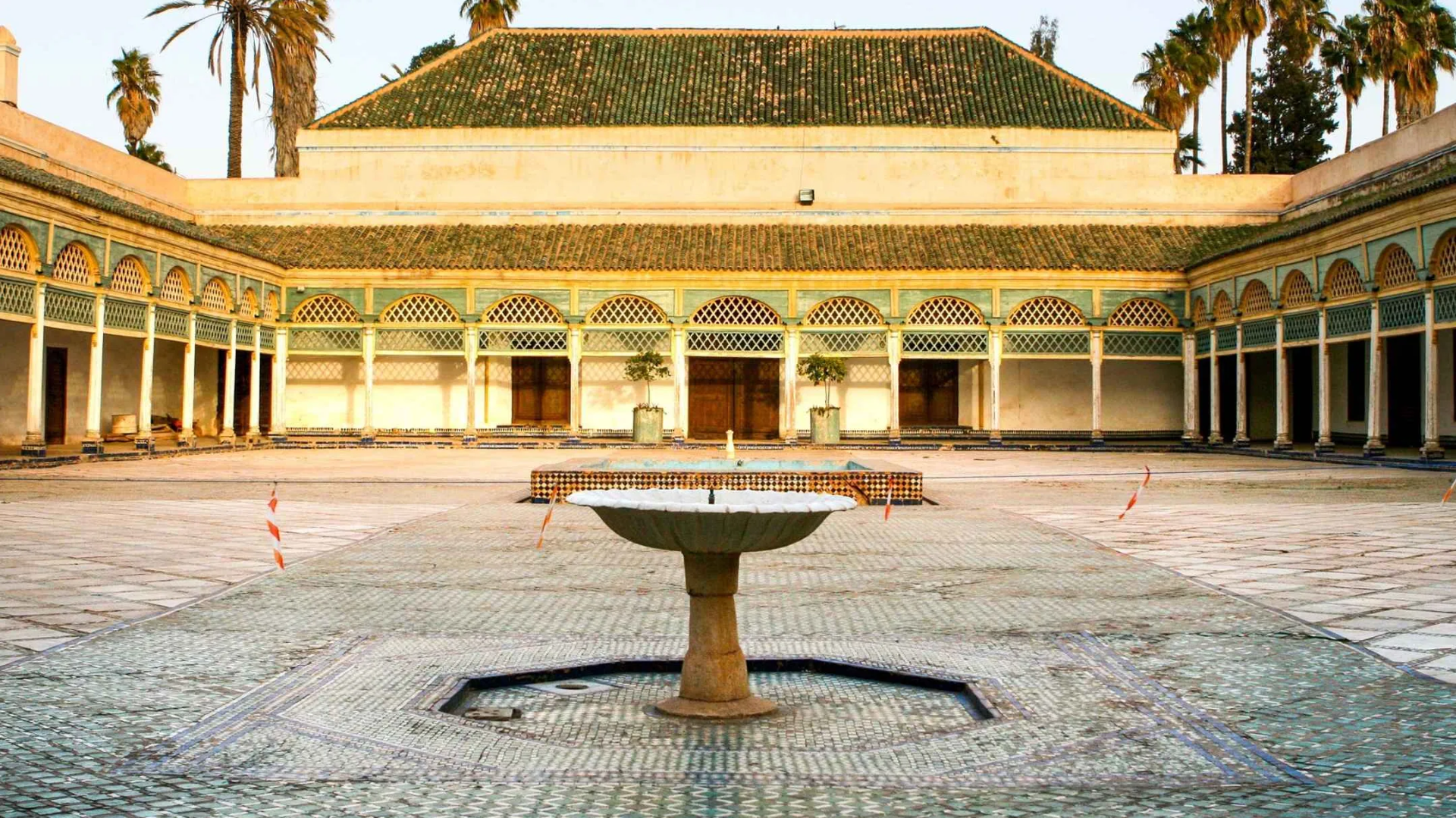
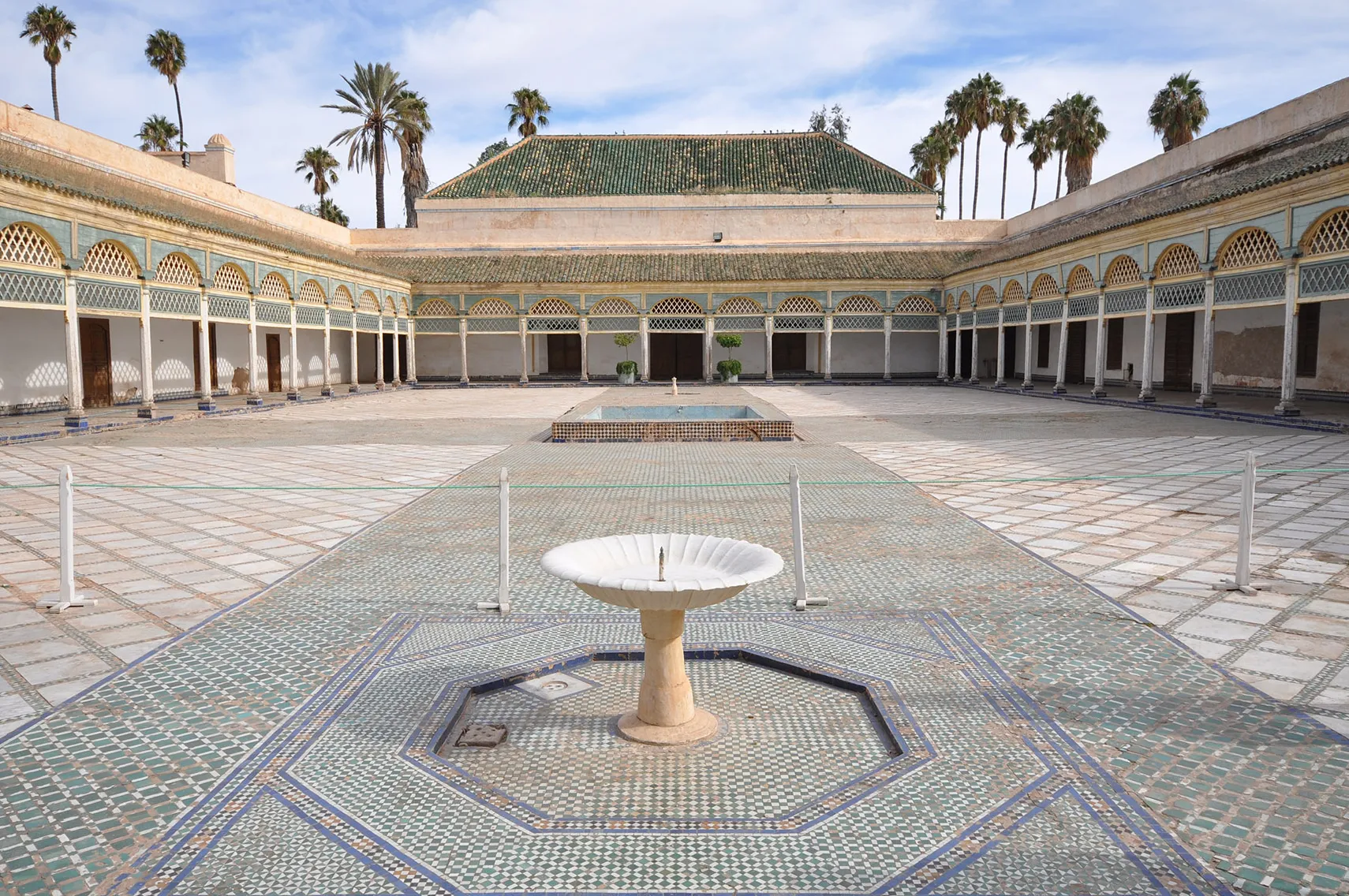
The Bahia Palace, or 'Palace of Beauty', was built at the end of the 19th century by the vizier Si Moussa and expanded by his son and successor, Ba Ahmed, with the intention of being the largest and most luxurious palace of its time. It is a magnificent example of Islamic and Moroccan architecture, notable for its courtyards, gardens, painted wooden ceilings and the rich decoration with tiles and stuccos, which symbolize the power and wealth of the era.
The best time to visit the Bahia Palace is first thing in the morning (right when it opens) or late in the afternoon, before closing. This way you'll avoid the crowds and the midday heat. As for the time of year, spring (March-May) and autumn (September-November) offer more pleasant weather in Marrakech, ideal for exploring without enduring extreme temperatures.
The Bahia Palace, being an old building with many stairs and corridors, may present challenges for people with reduced mobility. Some areas are accessible at ground level, but others require climbing steps. Although it is not fully adapted, much of the complex can be visited. I recommend contacting the palace staff or a local guide in advance for more specific accessibility information.
Very close to the Bahia Palace, within walking distance, you'll find other gems of Marrakech. I recommend visiting the Saadian Tombs, an impressive funerary complex, and the Dar Si Said Museum, which houses a collection of Moroccan art and craftsmanship. Strolling through the Mellah neighborhood (the old Jewish quarter) is also an authentic experience and is very close by.
To get the most out of your visit, I advise wearing comfortable shoes, as you'll be walking quite a bit. If you want to learn more about the history and architecture, consider hiring a local guide at the palace entrance; their knowledge can greatly enrich your experience. Don't forget to bring water, especially during the hot months, and of course, your camera to capture the beauty of this place.
¿Prefieres escuchar en español?
🇪🇸 Escucha la audioguía de the Bahia Palace en español