Donde las piedras cobijan misterios, santos peleones y cabras que te leen el futuro
Sidi Chamharouch is a sanctuary and pilgrimage site that is generally open during the day. As it is a sacred place, visiting in daylight hours is recommended so you can fully appreciate its surroundings. To get there, the most common way is on foot from Imlil. There are several hiking routes, and most visitors join guided excursions or hire a muleteer from one of the many local services offering transport. The route is scenic but requires physical effort, with a climb of about 2 to 3 hours from Imlil.
There is no entrance fee to visit Sidi Chamharouch, as it is a sacred place open to visitors. However, if you hire transport such as a muleteer or a local guide to get there, those services will have an associated cost. It is also customary to leave a small donation for the sanctuary if you wish, to help with the upkeep of the site and as a sign of respect. Keep in mind that any additional services such as food or drinks on site will also have a cost.
For a full visit to Sidi Chamharouch, including the round trip on foot from Imlil and enough time to explore the sanctuary and its surroundings, it is recommended to allow at least 5 to 7 hours. The ascent usually takes between 2 and 3 hours, time at Sidi Chamharouch can be about 1 hour, and the descent is generally faster, around 1.5 to 2 hours. It is a half-day to full-day excursion, depending on your pace and how long you want to spend enjoying the scenery and atmosphere at the sanctuary.
Sidi Chamharouch is an important pilgrimage site for many Moroccans, especially those seeking healing or blessings. It is said to be the place of a king of the jinn named Chamharouch. People visit to pray, make offerings, and seek intercession for health problems or success, making this place a meeting point of devotion and culture. It is a fascinating site where faith and local traditions are woven together in a very distinctive way.
The best time to visit Sidi Chamharouch is during spring (April-May) and autumn (September-October), when the weather is milder and more pleasant for hiking. In summer it can be very hot during the day, and in winter, especially from December to February, the area may be covered in snow, making access more difficult or limiting the views. If you visit in summer, it is advisable to start early in the morning to avoid the hottest hours. For more details about weather conditions, you can check AccuWeather Imlil.
Unfortunately, access to Sidi Chamharouch is not suitable for people with reduced mobility or wheelchairs. The path from Imlil is a steep, rocky mountain trail with uneven sections and natural steps that can only be done on foot or by mule. There are no ramps or adapted facilities to make access easier for those with mobility difficulties. It is a demanding mountain trail.
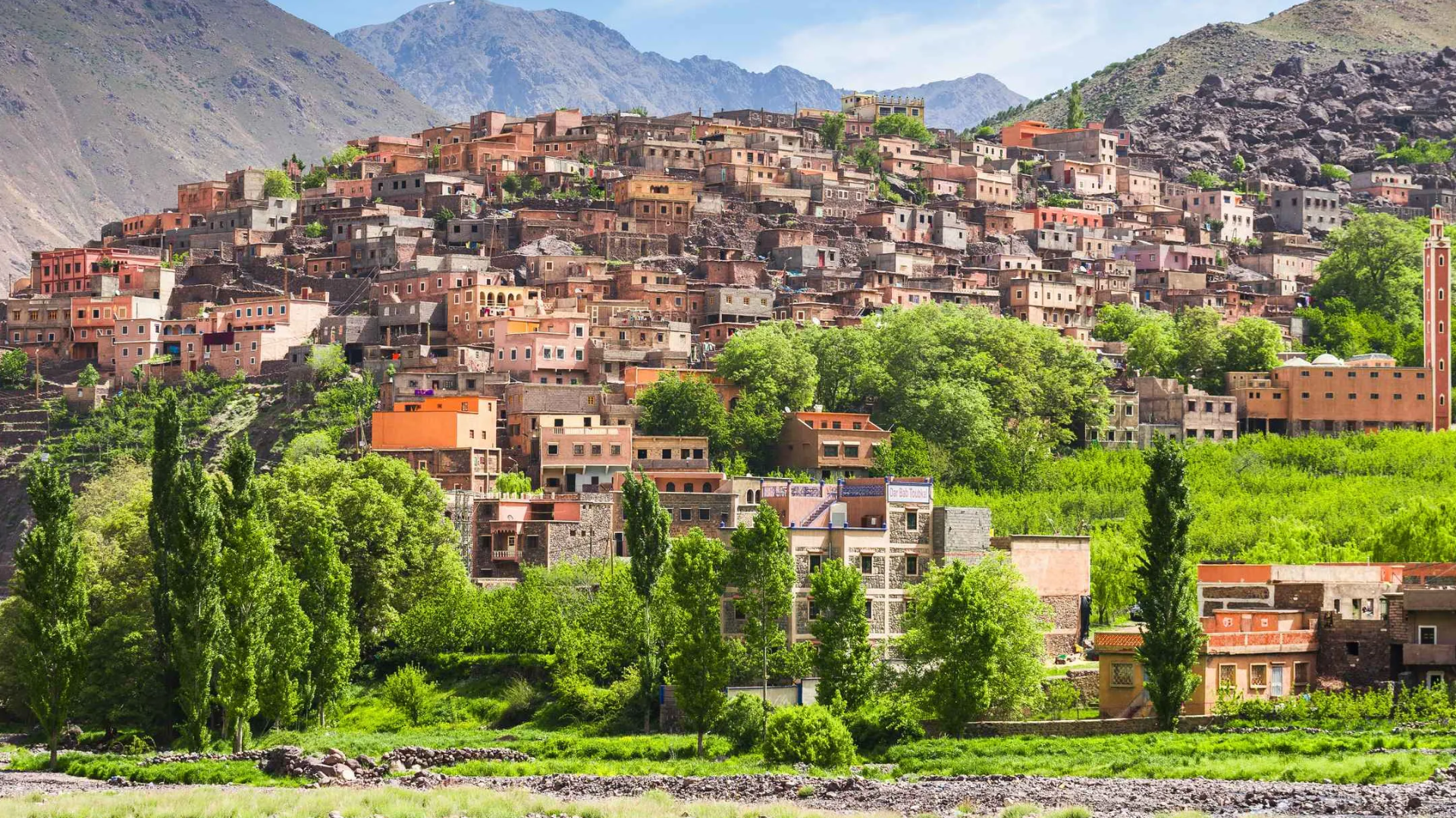
Yes. Since it is in the heart of Toubkal National Park, Imlil is the starting point for numerous excursions. Very close to Sidi Chamharouch, on your way back to Imlil, you can enjoy views of the different Berber villages scattered across the valley. From Imlil, it is common to set out on trips to Mount Toubkal, the highest peak in North Africa, or explore nearby waterfalls and valleys. There are hiking routes for all levels and the possibility of visiting local markets. For route ideas, I recommend looking at AllTrails Imlil.
Of course! Wear comfortable, sturdy hiking shoes, as the trail can be uneven. Dress in layers, since the temperature can vary. Pack enough water and some snacks, although you will find small food and drink stalls at Sidi Chamharouch. Bring sunscreen and a hat, and do not forget your camera to capture the stunning landscapes. If you hire a muleteer, agree on the price in advance, and do not forget a map of the area or to download one offline to your phone. And remember, respect the sacred character of the place.
¿Prefieres escuchar en español?
🇪🇸 Escucha la audioguía de Sidi Chamharouch en español