El puente de los dioses donde una tragedia lo convirtió en leyenda y el rojo no es solo un color, es una advertencia.
Shinkyo Bridge does not have an official 'opening' time as such, since it is outdoors and can be viewed from outside at any time. However, if you want to cross it, it is usually open from 8:30 AM to 4:00 PM (although this may vary by season). The easiest way is to take a bus from JR Nikko Station or Tobu Nikko Station and get off at the 'Shinkyo' stop. More information on how to get there on Japan-Guide.
Viewing Shinkyo Bridge from the riverbank or the road is completely free. If you want to cross the current bridge, there is a small admission fee (about 300 yen for adults), paid at a small booth next to the bridge. This helps support its maintenance and preservation. Check current fees on the official website (in Japanese, use a translator).
If you simply want to admire the beauty of Shinkyo Bridge, take a few photos, and read about its history, 15 to 30 minutes should be enough. If you decide to cross it, you may need an additional 10 to 15 minutes. It is a relatively quick stop before exploring the nearby temples.
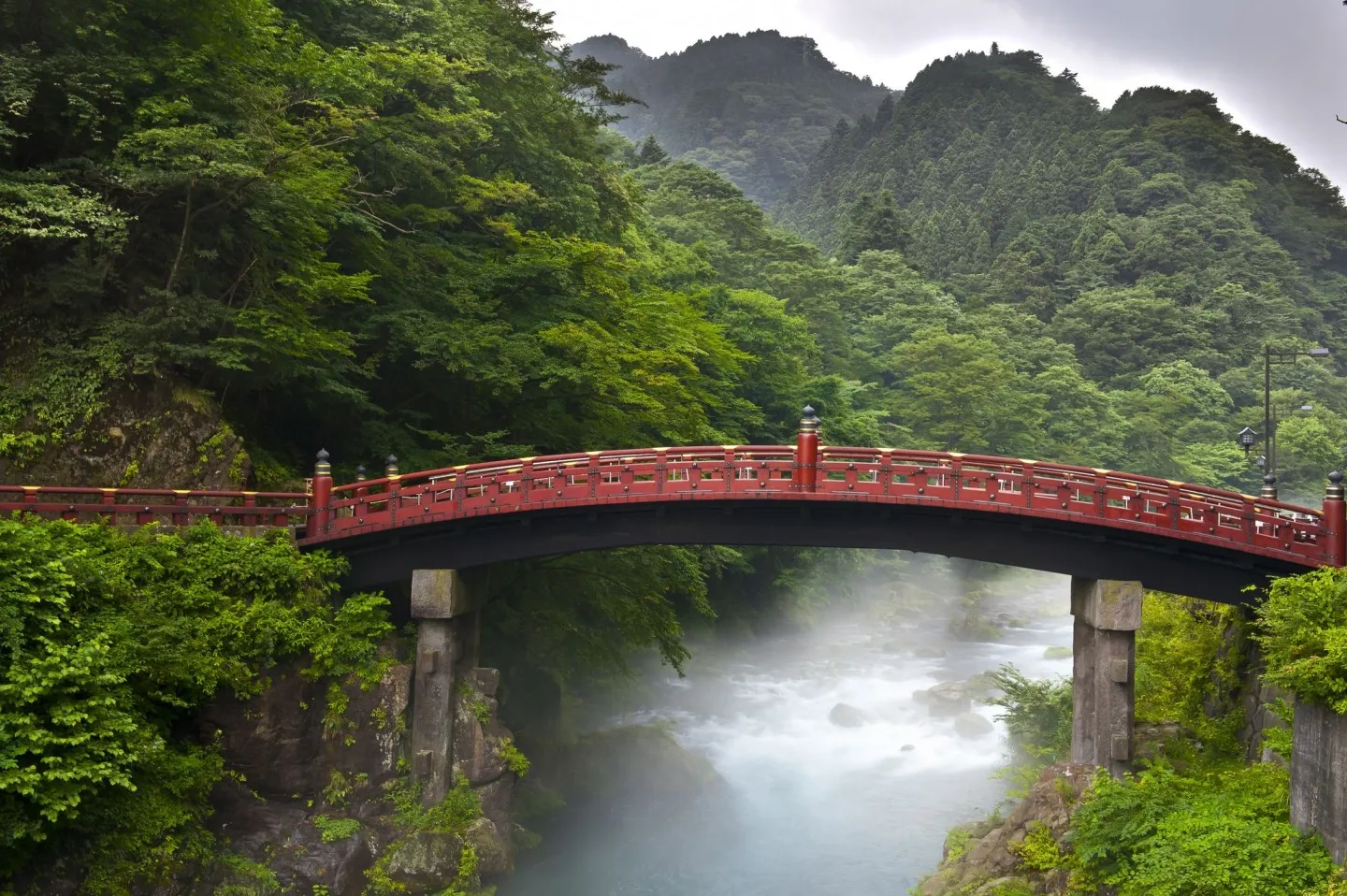
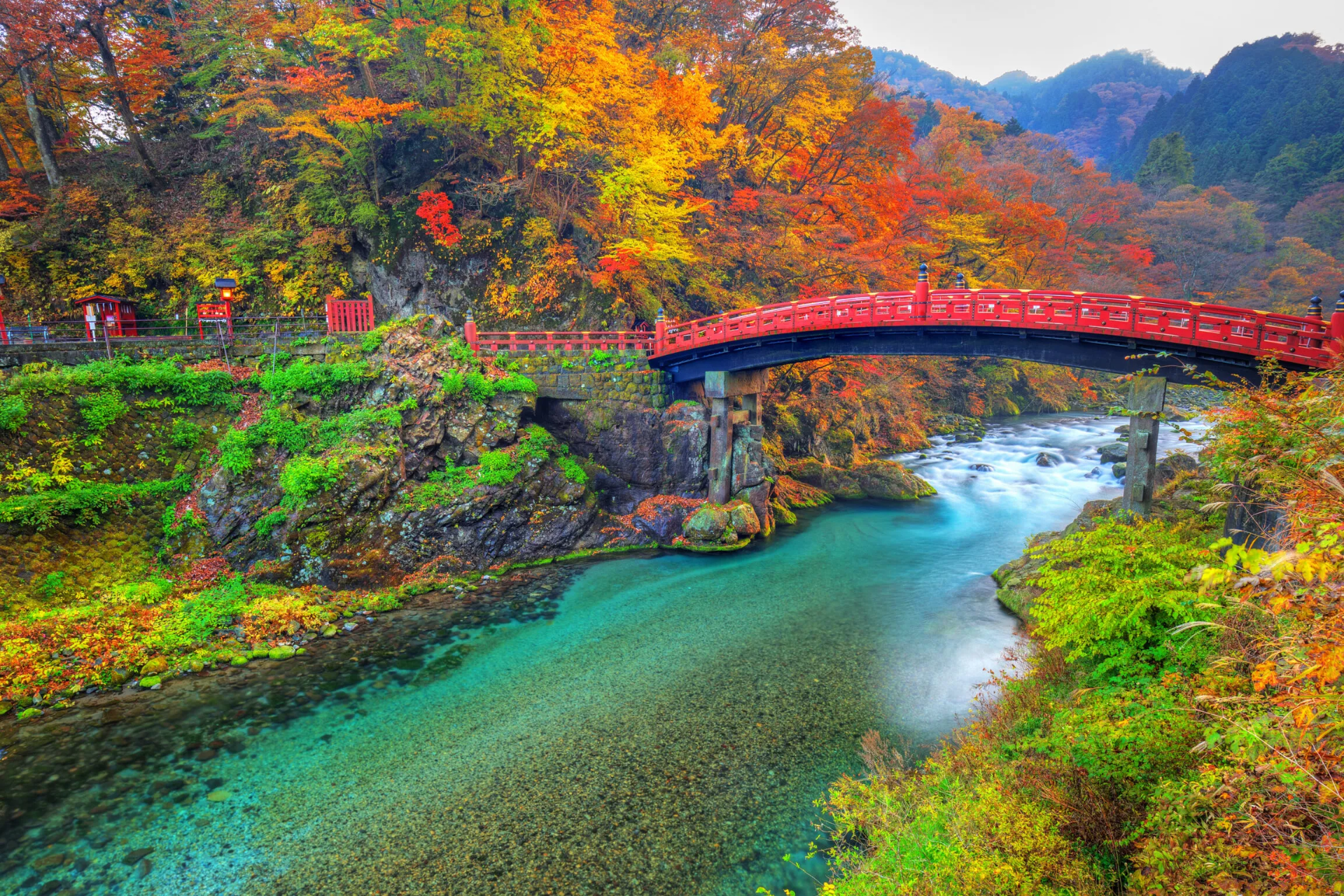
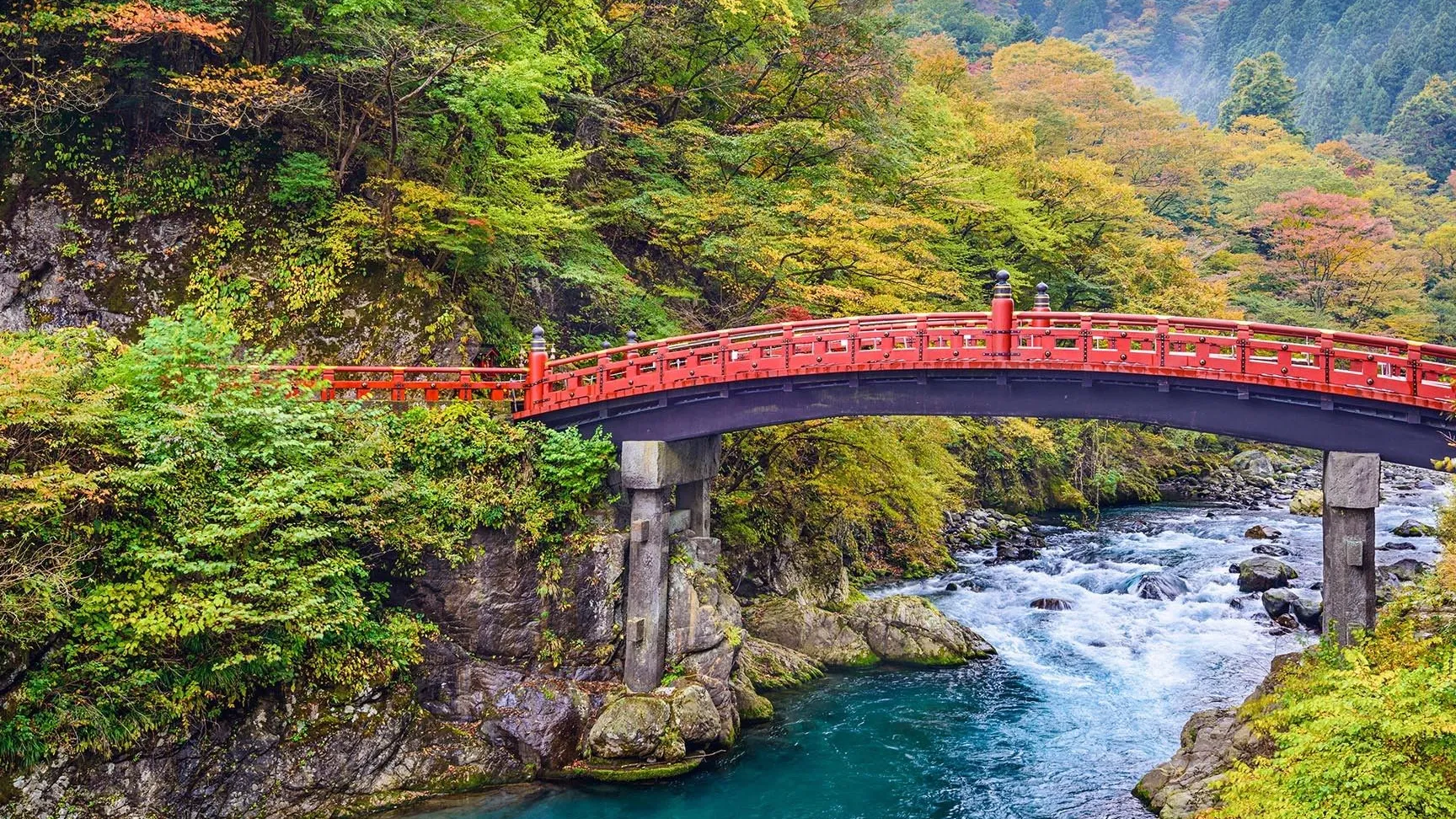
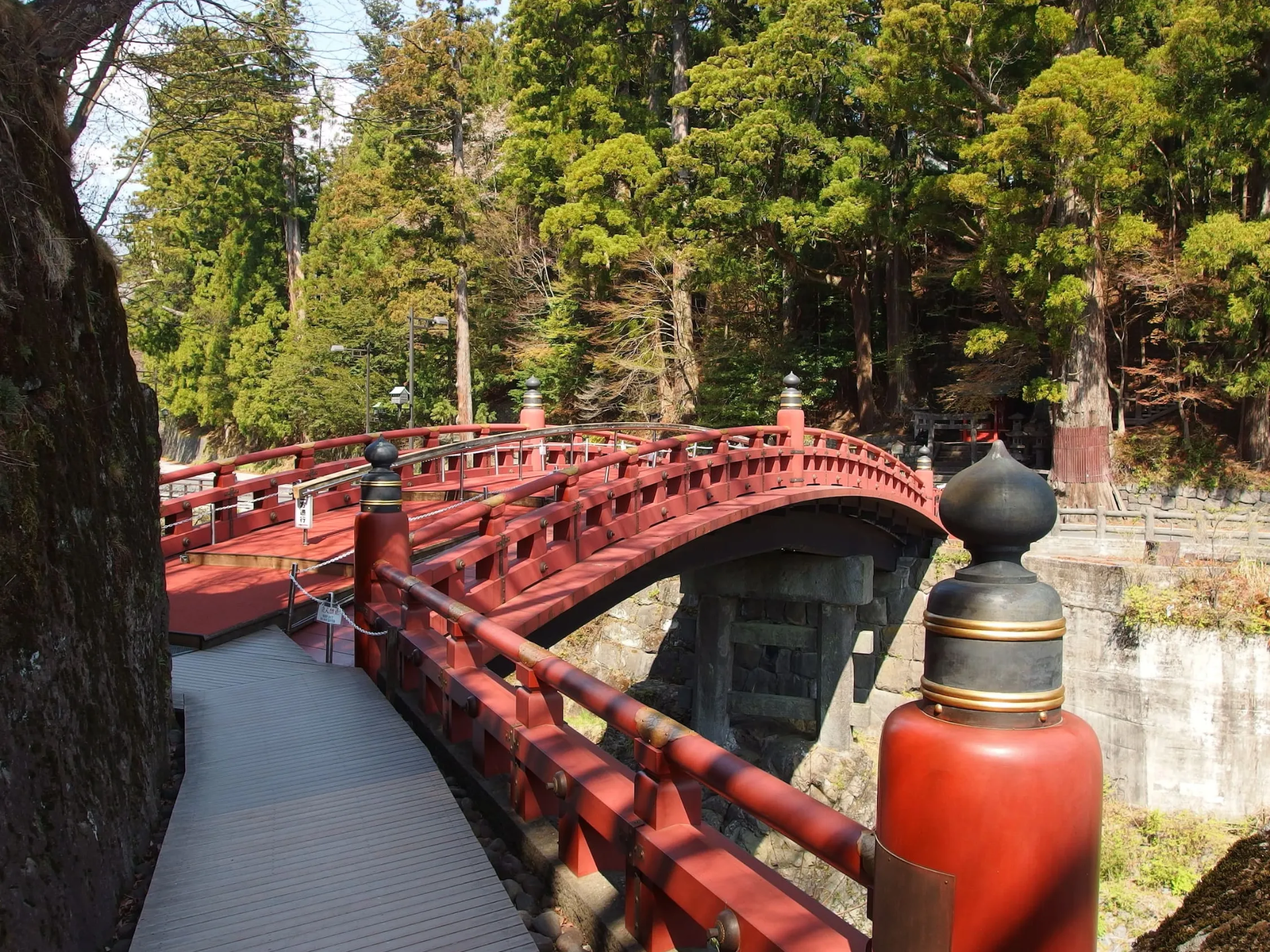
Shinkyo Bridge, which means 'Sacred Bridge,' is one of the oldest and most sacred bridges in Japan, considered the entrance to Nikko’s shrine and temple complex. Its origins are said to date back to the 8th century, although the current structure is a reconstruction from 1904. It symbolizes the connection between the earthly world and the sacred realms of Nikko. Discover more about its legend.
Autumn (late October to early November) is spectacular because of the red maple leaves framing the bridge, although it is also the busiest season. Spring, with cherry blossoms, and winter, with snow, offer unique views as well. Early morning or sunset provides ideal light for photography and usually fewer crowds.
The view from the riverbank and the areas around the bridge are generally accessible. However, crossing the bridge itself may present some limitations, as there are steps or steep ramps at the entrances and the bridge itself is narrow. If you have any doubts, we recommend contacting the Nikko tourist office directly for specific accessibility information. You can find their contact details on the official Nikko tourism website.
Shinkyo Bridge is the gateway to the Shrines and Temples of Nikko, a UNESCO World Heritage Site. Just beyond it you will find Futarasan Shrine, Taiyuin Temple, and the crown jewel, Toshogu Shrine, with its elaborate carvings. Kirifuri Falls Park is also not far away and is worth visiting. Regular buses connect these attractions.
Wear comfortable shoes, as you will be doing quite a bit of walking in the surrounding area. A good tip is to visit the bridge early in the morning to avoid the crowds and enjoy the peaceful atmosphere. Do not forget your camera—the views are stunning. If you have time, explore the small path along the river to capture different perspectives of the bridge.
¿Prefieres escuchar en español?
🇪🇸 Escucha la audioguía de Shinkyo Bridge en español