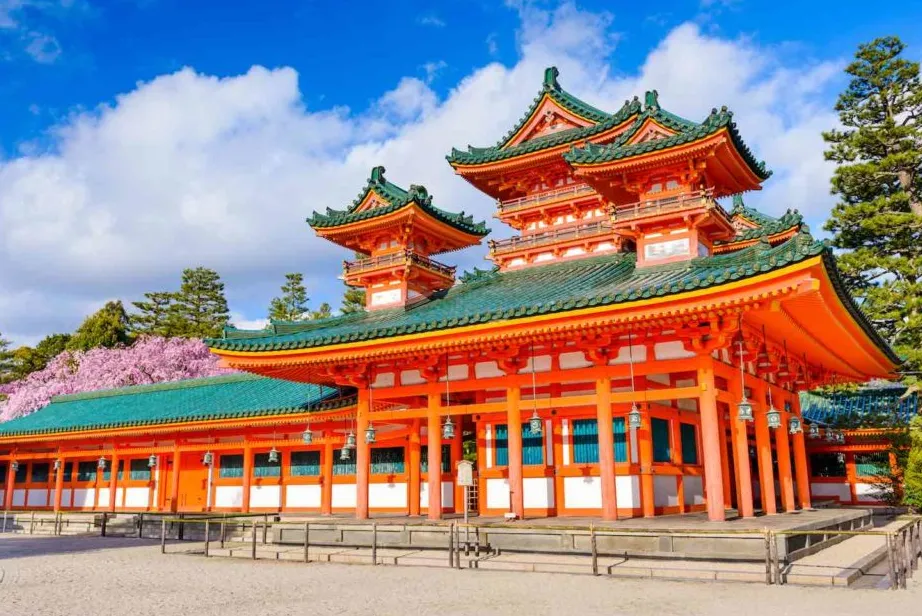
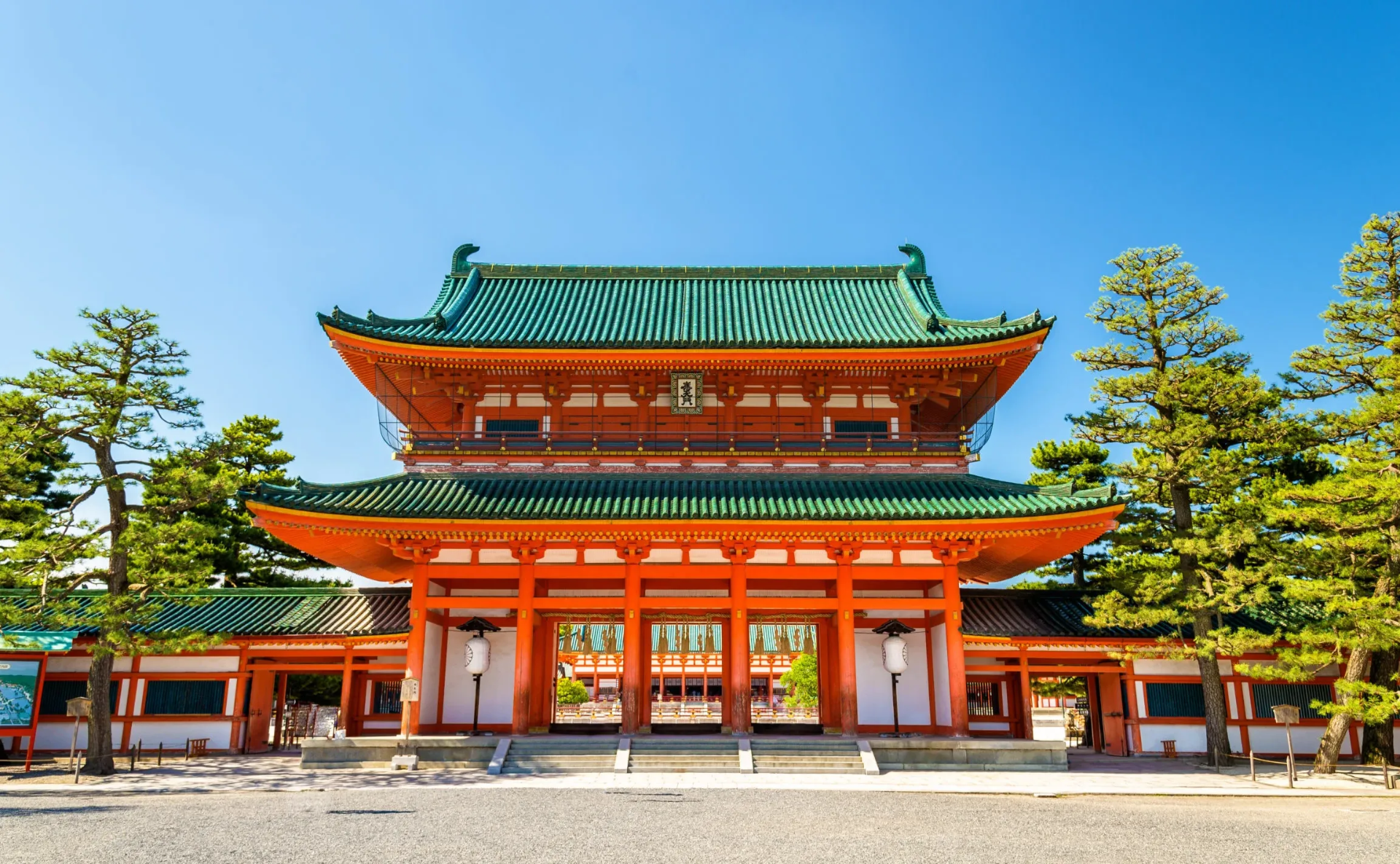
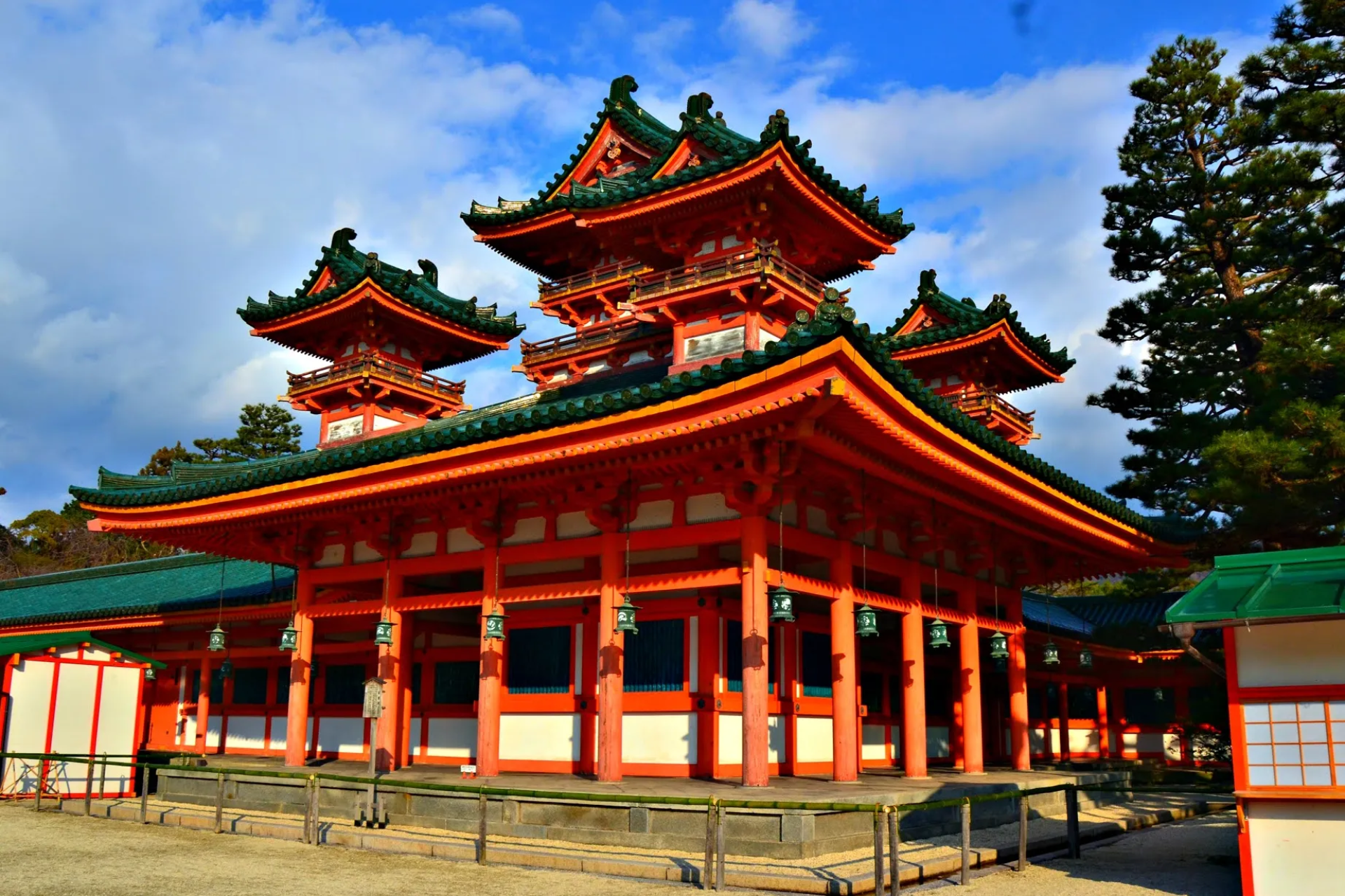
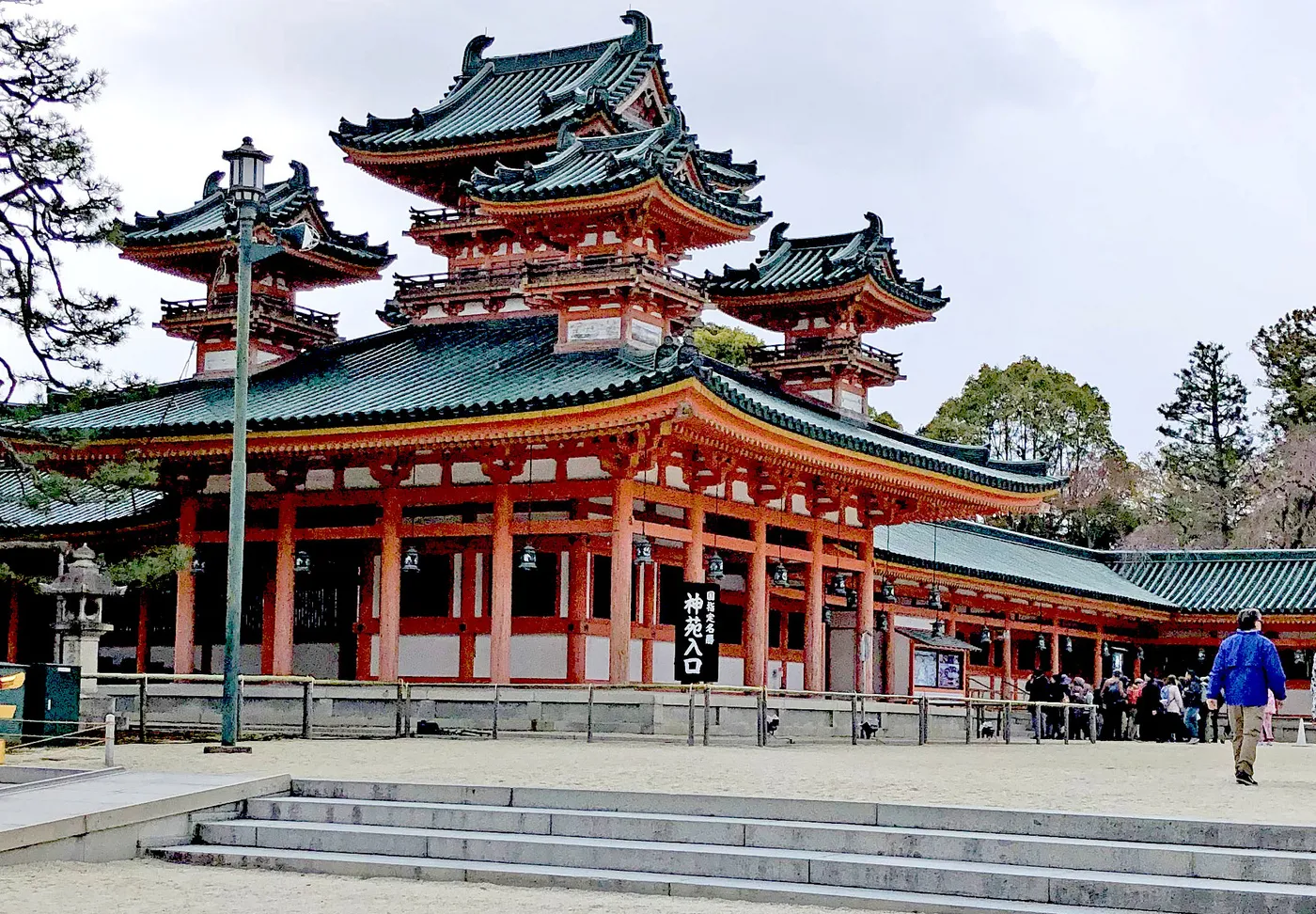
A vibrant Shinto shrine in Kyoto commemorating two key emperors and the founding of the city.
Heian Shrine usually opens from 6:00 AM to 5:30 PM (hours may vary by season, so always check the official website). It can be reached easily by bus, taking lines 5 or 100 from Kyoto Station to the 'Okazaki Koen / Heian Jingu-mae' stop.
Entry to the shrine itself is free. However, to access the beautiful landscaped gardens, known as 'Shin'en' (神苑), an admission fee is required, usually around 600 yen for adults. I recommend visiting them—they are wonderful!
For a good experience, I suggest setting aside between 1.5 and 2 hours. This will allow you to walk through the main shrine, admire its imposing architecture, and above all enjoy the intricate Shin'en gardens at a relaxed pace, as they are the true highlight.
Heian Shrine was built in 1895 to commemorate the 1,100th anniversary of Kyoto's founding as the imperial capital. It is dedicated to Emperor Kanmu, who moved the capital to Heian-kyo (the former name of Kyoto), and to Emperor Komei, the last emperor of Kyoto. It is a symbol of Kyoto's rich history and architectural beauty.
Generally, spring (March-May), when the cherry trees bloom in the gardens, is spectacular, and autumn (October-November) is beautiful for the fall colors. To avoid crowds, try to go early in the morning just after opening. Visiting on a sunny day will also enhance the beauty of the vermilion buildings.
The main shrine area is fairly accessible, with wide, flat paths. However, some parts of the gardens may have steps or uneven paths. It is advisable to check in advance or ask upon arrival for specific accessibility information and alternative routes. You can find more information in the Kyoto Accessibility Guide.
You are in a great area! Very close by are the National Museum of Modern Art, Kyoto, the Kyoto Museum of Crafts and Design, and the Kyoto Museum. You can also stroll along the canal by the Philosopher's Path, which is within walking distance.
Wear comfortable shoes, as you will do quite a bit of walking, especially if you plan to explore the gardens. Do not forget your camera—the shrine's colors and gardens are incredibly photogenic. If you are interested in history, consider reading a bit about the shrine beforehand or using an audio guide to better understand what you are seeing. An audio guide could be ideal for this if specific content is available.
¿Prefieres escuchar en español?
🇪🇸 Escucha la audioguía de Heian Shrine en español