Imagina una espada sagrada que calmó tormentas y salvó imperios, escondida aquí desde hace 1900 años. ¿La sientes llamarte?
Atsuta Shrine is open year-round, 24 hours a day, although the treasure hall has specific opening hours. You can get there easily by public transportation, as it is within walking distance of Jingū-mae Station (Meitetsu and JR lines). The address is 1-1-1 Jingu, Atsuta-ku, Nagoya, Aichi 456-8585, Japan.
Admission to Atsuta Shrine, including its extensive grounds and most of its buildings, is completely free. Only the Atsuta Treasure Museum (Bunkaden) charges an entrance fee of 500 JPY for adults and 200 JPY for children.
For a full visit, including a leisurely walk through the gardens, visits to the different halls, and, if you are interested, a stop at the Treasure Museum, I recommend setting aside 1 to 2 hours. If you only want a quick visit, 45 minutes may be enough.
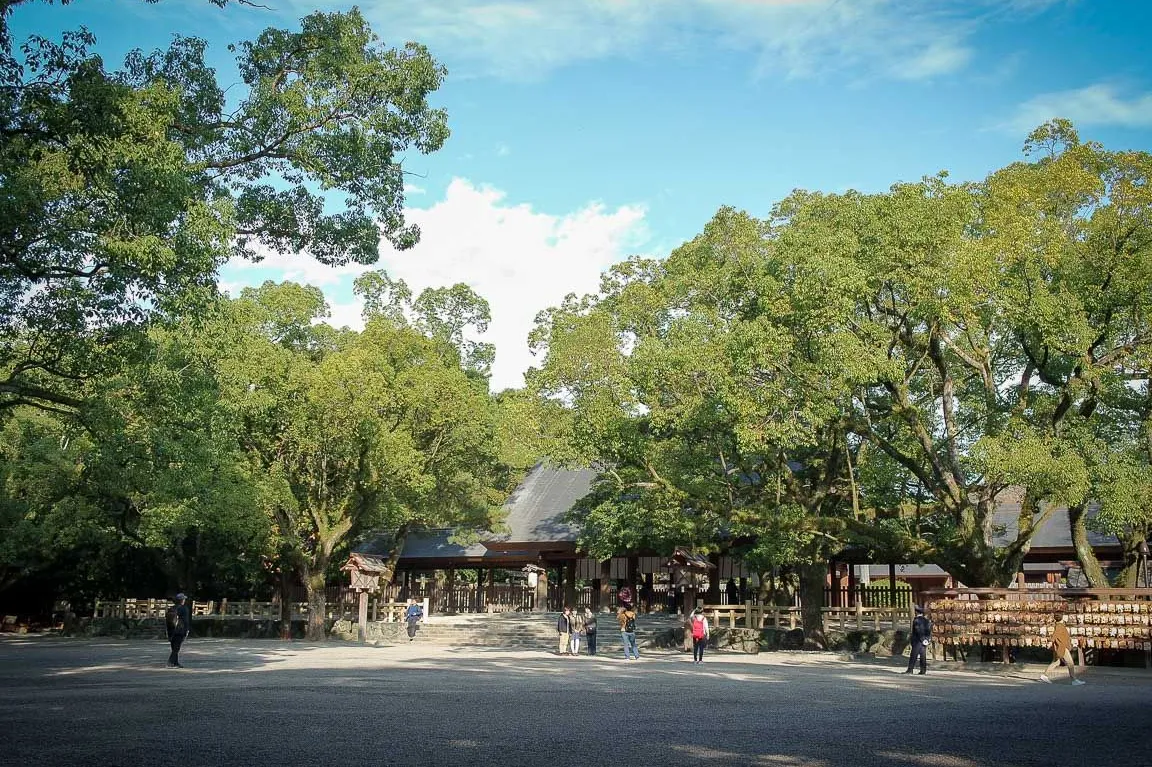
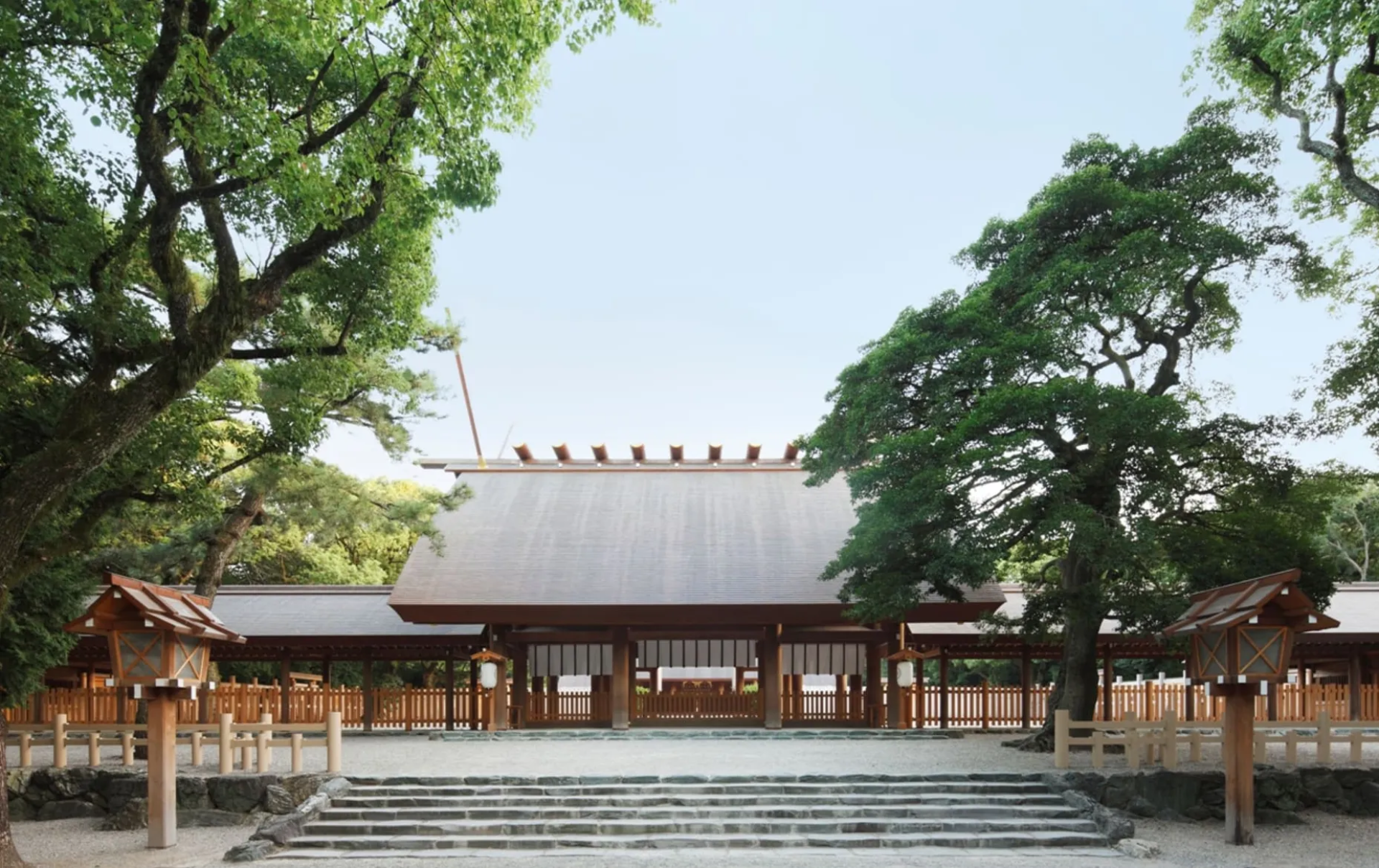
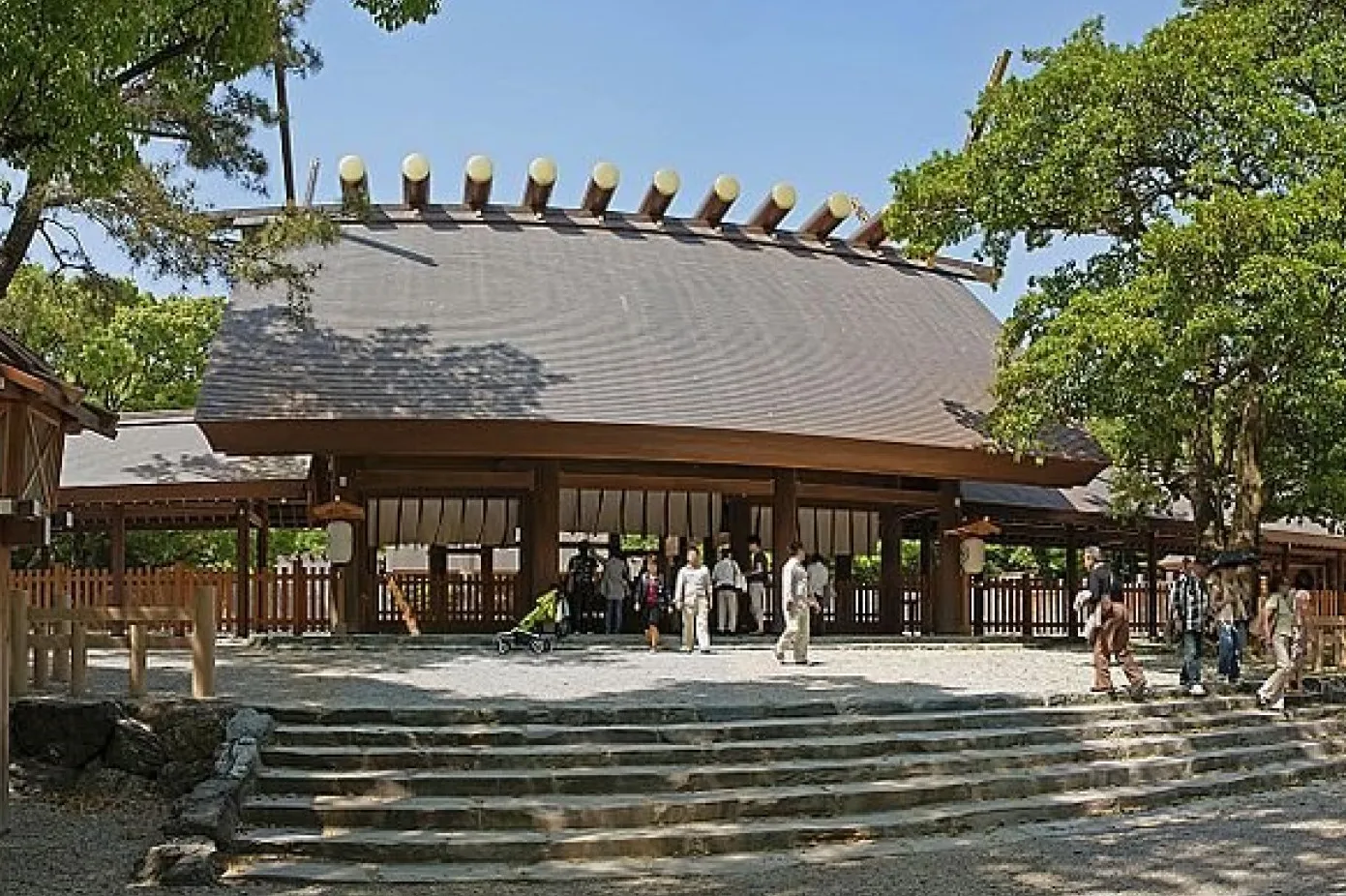
Atsuta Shrine is one of Japan’s oldest and most revered Shinto shrines, second only to Ise Grand Shrine. It is famous for housing Kusanagi-no-Tsurugi (the Grass-Cutting Sword), one of Japan’s Three Imperial Regalia, a symbol of the emperor’s power and of deep cultural and mythological importance.
Spring (March-April), with the cherry blossoms in bloom, and autumn (October-November), with its colorful foliage, are beautiful times to visit. To avoid crowds, I suggest going early in the morning (before 10:00 AM) or late in the afternoon, especially on weekdays.
Yes, Atsuta Shrine is quite accessible. The main paths within the grounds are flat and well paved, making them suitable for wheelchairs. There are ramps in many of the buildings and accessible restrooms are available. For more details, you can contact the shrine directly at +81 52-671-0852.
Near Atsuta Shrine, you can explore Nagoya Castle, although it is a short subway ride away, or Tokugawa-en Garden, a beautiful traditional Japanese garden. The Tokugawa Art Museum is also in the same area, offering a rich cultural experience.
Wear comfortable shoes, as you will do a fair amount of walking. Consider buying an ema (wooden prayer plaque) or an omikuji (fortune slip) for a more interactive experience. Remember to respect Shinto customs: bow at the entrance and avoid the central paths, which are reserved for the gods. And do not forget your camera, as it is a very photogenic place!
¿Prefieres escuchar en español?
🇪🇸 Escucha la audioguía de Atsuta Shrine en español