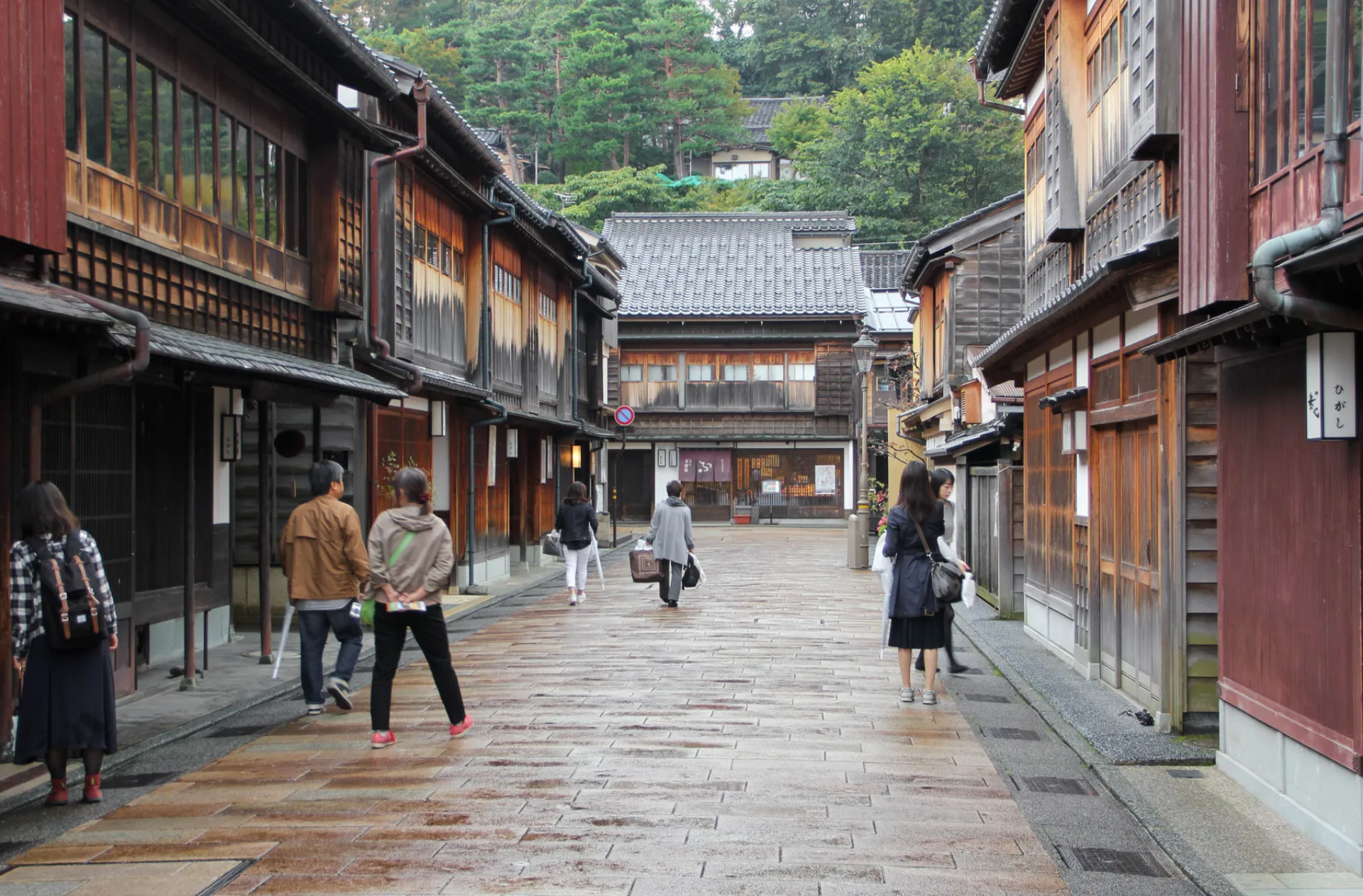
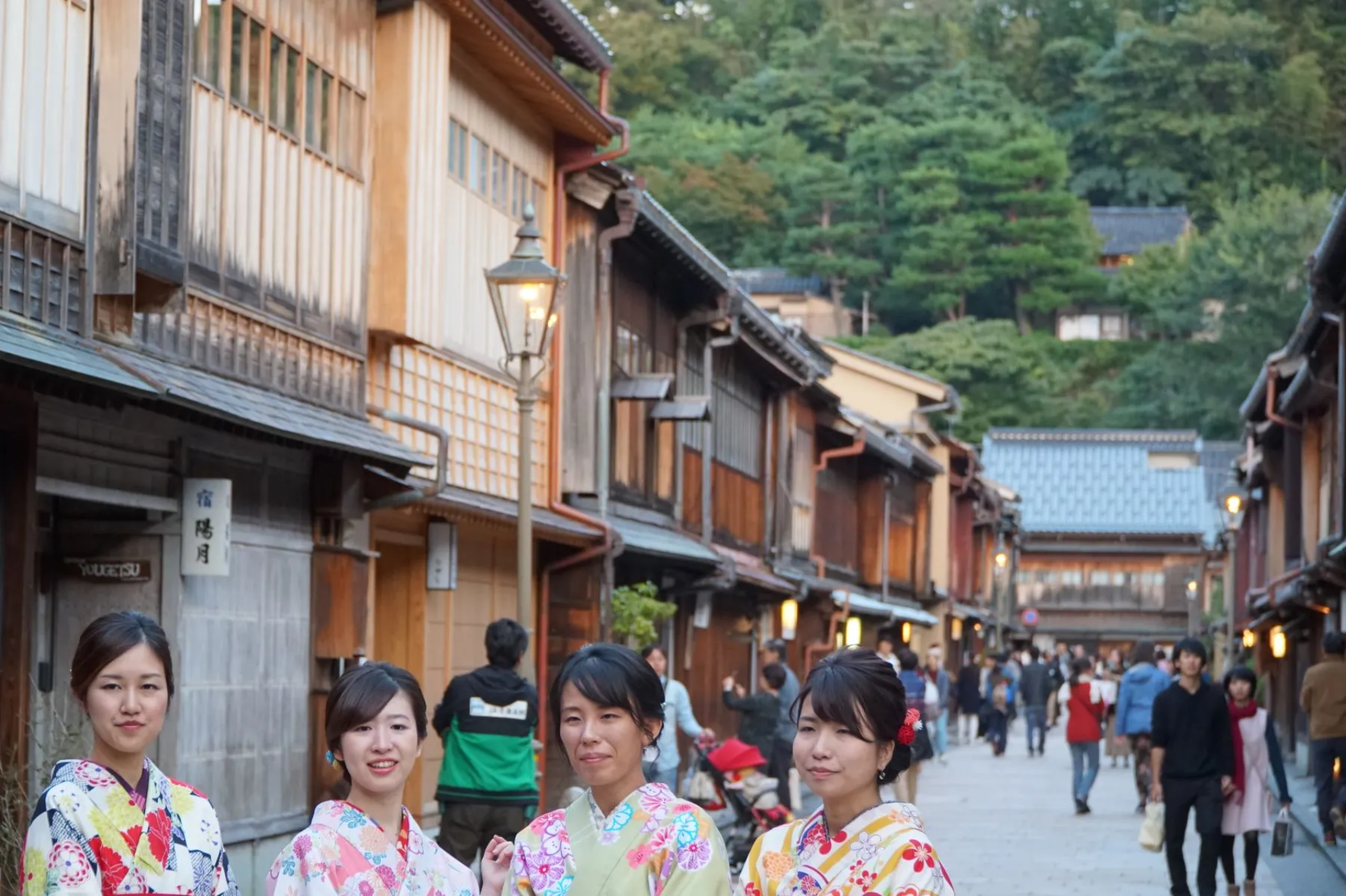
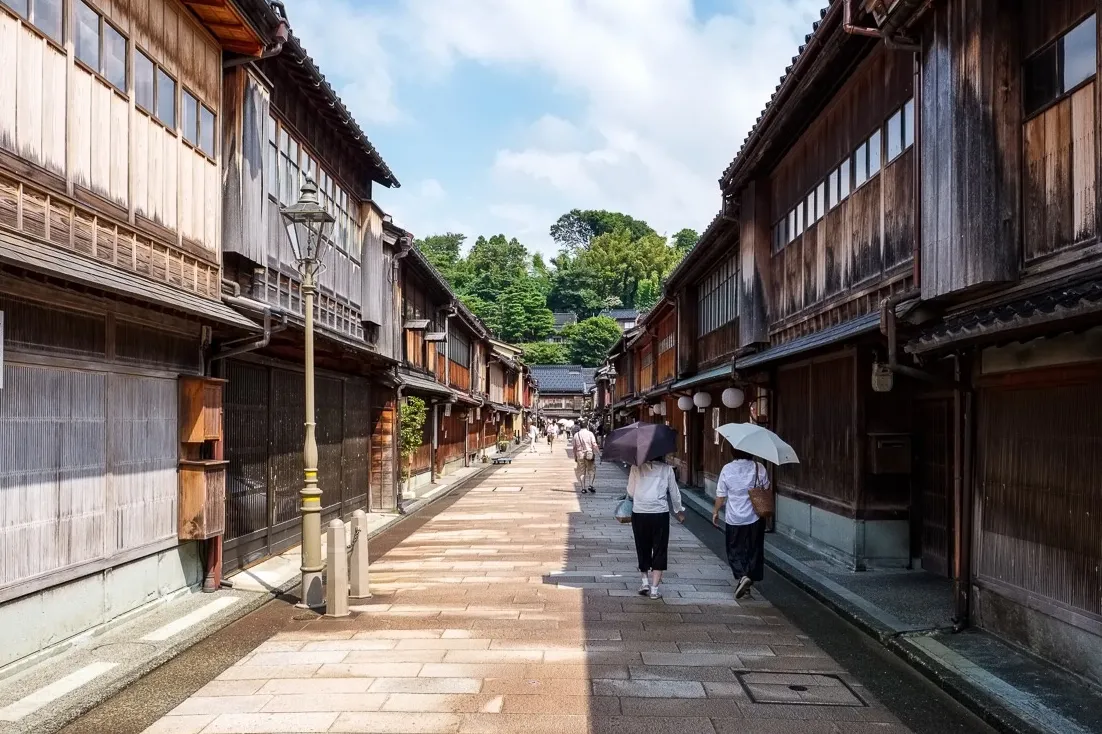
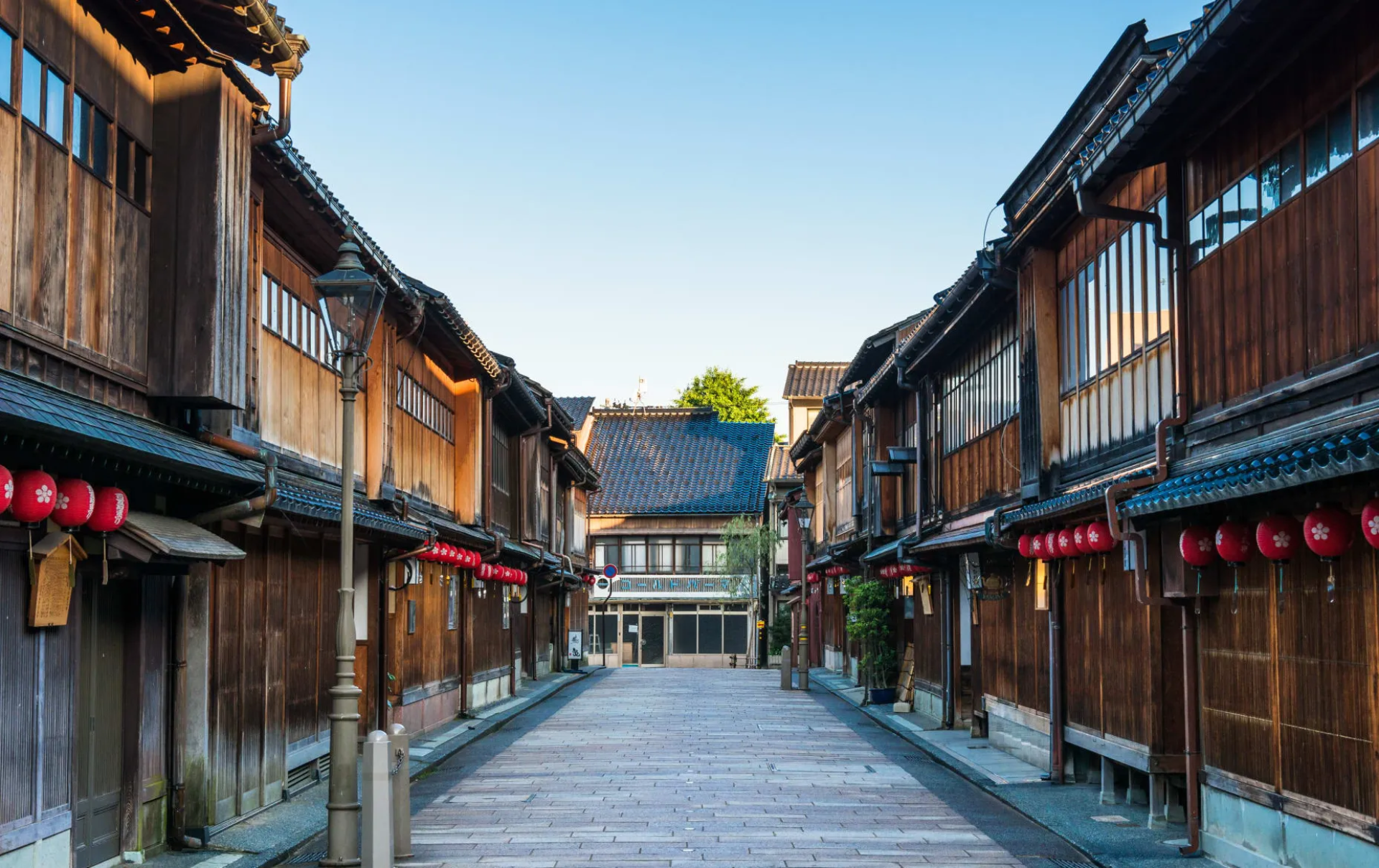
El Distrito Higashi Chaya en Kanazawa, Japón, es un barrio histórico de casas de té del período Edo, donde se preserva la arquitectura tradicional y el legado cultural de las geishas.
Higashi Chaya District is a historic neighborhood, so it is open to the public 24 hours a day. However, individual teahouses and shops usually open between 9:00 AM and 5:00 PM. You can easily get there by bus from Kanazawa Station. The Kanazawa Loop Bus lines (right or left) or the Kanazawa Flat Bus stop nearby. I recommend checking local transport schedules to plan your trip: Kanazawa Tourism - City Bus.
Access to Higashi Chaya District is completely free. You can stroll through its streets and admire the traditional architecture at no cost. However, some former teahouses, such as Shima Teahouse or Kaikaro House, charge a small admission fee if you want to go inside and explore their historic interiors. For example, Shima Teahouse usually charges an entrance fee of ¥500. You can find more details about Shima Teahouse here: Kanazawa Tourism - Shima Ochaya.
To get a good feel for Higashi Chaya District and visit one or two teahouses or shops, I recommend setting aside 1.5 to 2 hours. If you stop to enjoy matcha tea at one of its establishments or buy a souvenir, you may want a little more time. It is a place to stroll slowly and absorb the atmosphere.
Higashi Chaya District is one of Kanazawa’s three historic geisha districts, established during the Edo period in the 19th century. These were entertainment venues where geishas performed music and dance for their guests. Its cultural importance lies in being a living testament to traditional Japanese life and the rich geisha tradition. It preserves some of the most beautiful and authentic wooden structures of the period.
To avoid the biggest crowds, I suggest visiting Higashi Chaya early in the morning, just after the shops open, around 9:00-9:30 AM, or in the late afternoon before businesses close. As for the seasons, spring (March-May) and autumn (September-November) offer pleasant weather and beautiful scenery, although they are usually busier. In winter, with fewer tourists, it can be a quieter and very picturesque experience if there is snow.
The stone-paved streets of Higashi Chaya are mostly flat and walkable, although they can be a little uneven in some areas. However, many of the traditional buildings, especially older teahouses, have steps at the entrance, and the interiors may be less accessible because of their historic design. I suggest checking the specific places you want to visit to confirm their individual accessibility. Public transport in Kanazawa, such as buses, usually offers accessible options.
There are several interesting options very close by. Just a short walk away are the other two geisha districts: Kazuemachi Chaya and Nishi Chaya, although they are a bit smaller and less visited. You can also walk to the popular Kenrokuen Garden and Kanazawa Castle. For a different cultural experience, explore the nearby Nagamachi Samurai District. If you are looking for a map of attractions, see: Kanazawa Tourism - Spots.
Of course. First, wear comfortable shoes for walking through the streets. Consider trying coffee or matcha tea at one of the traditional teahouses; some offer tea presentations. If you are interested in geisha culture, look for information about possible exhibitions or performances. Do not forget to visit the interiors of Shima Teahouse or Kaikaro to see what they were like inside. And of course, bring your camera, as it is a very photogenic place. Plan your visit early in the morning to enjoy the calm atmosphere.
¿Prefieres escuchar en español?
🇪🇸 Escucha la audioguía de Higashi Chaya District en español