Don't leave Nagasaki without knowing this Subscribe
IAudioGuia iaudioguia
Audio Guides of Nagasaki

Audio Guide of Meganebashi Bridge

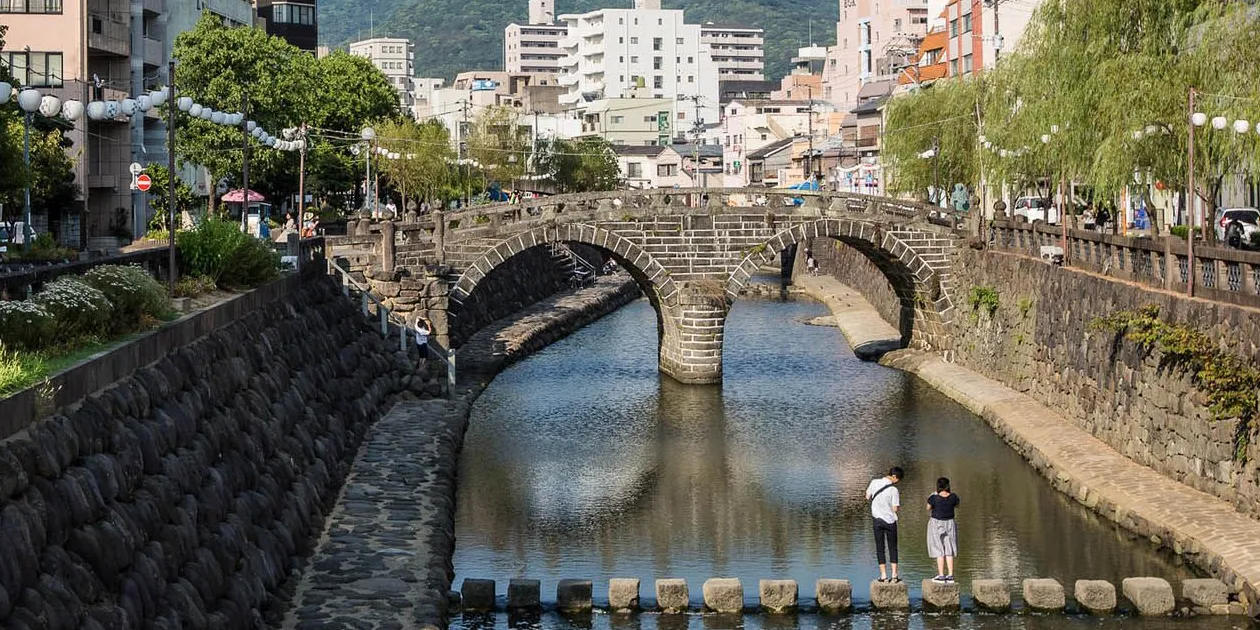
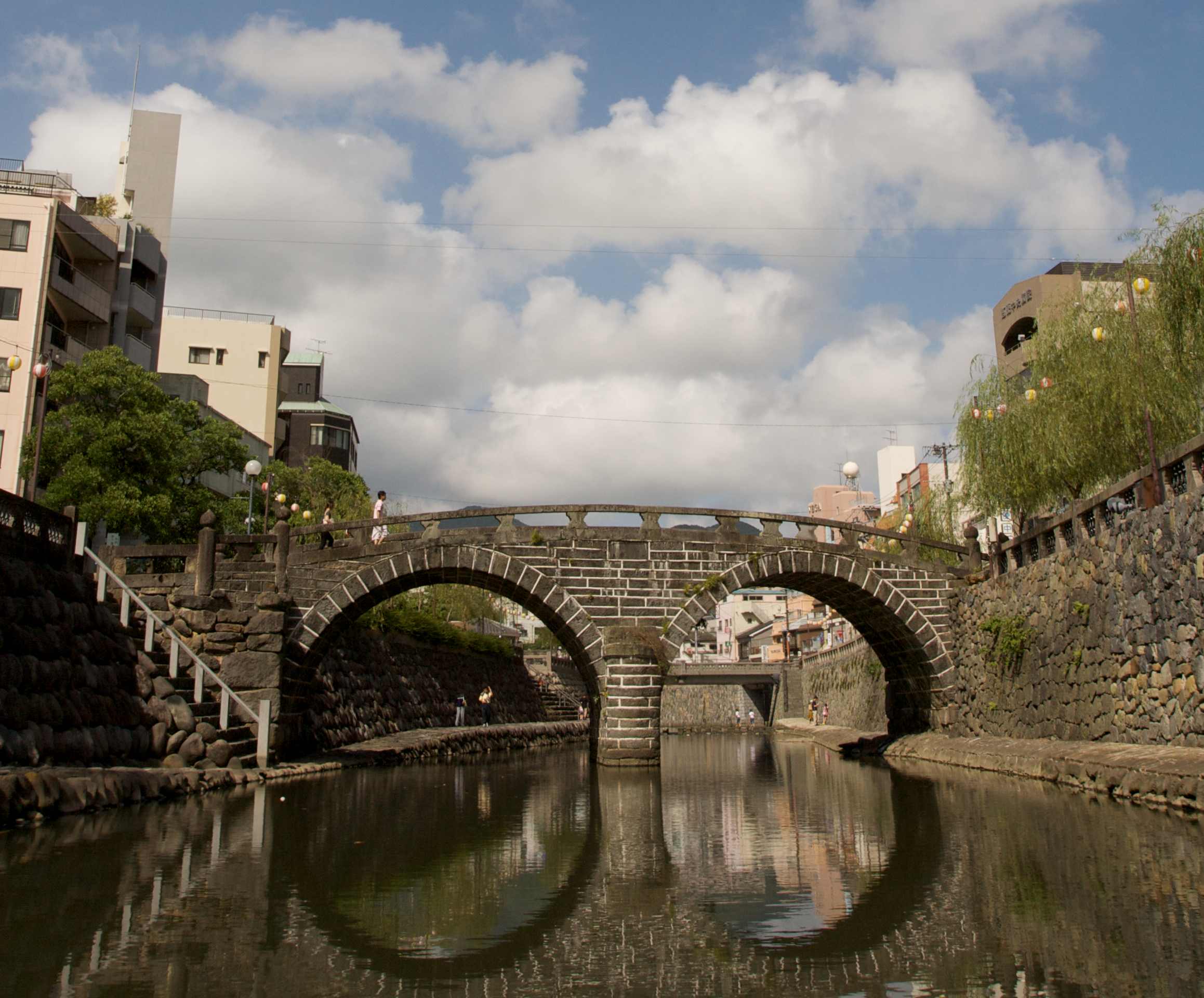
Megane Bridge, known as Spectacles Bridge because of its reflection in the water, is one of the oldest stone bridges in Japan, spanning the Nakashima River in Nagasaki.

✓ What guidebooks don't tell you
✓ Secrets other tourists miss
✓ Listen while you explore
Discover everything
00:00
00:00
Rate this audio guide

📖 Audio Guide Chapters

6 chapters

1. Welcome to Megane Bridge

🔒 Premium Content

Subscribe to access all chapters of this audio guide.

2. The Architecture of Megane Bridge

🔒 Premium Content

Subscribe to access all chapters of this audio guide.

3. History and Figures of Megane Bridge

🔒 Premium Content

Subscribe to access all chapters of this audio guide.

4. Art and Details of Megane Bridge

🔒 Premium Content

Subscribe to access all chapters of this audio guide.

5. Secrets and Curiosities

🔒 Premium Content

Subscribe to access all chapters of this audio guide.

6. Farewell and Recommendations

🔒 Premium Content

Subscribe to access all chapters of this audio guide.

❓ Frequently Asked Questions

What time is the bridge open, and what is the best way to get there?

Meganebashi Bridge is a public thoroughfare open 24 hours a day, so there are no time restrictions. The easiest way to get there is to take the Nagasaki tram to the 'Meganebashi' stop (Lines 3, 4, or 5), which leaves you just a few steps from the river.

How much does it cost to visit or cross the bridge?

Visiting is completely free; there is no fee or admission charge. As part of the city's public infrastructure, you can stroll across the bridge and around the area as often as you like.

How much time should I set aside to see the bridge?

A typical visit lasts between 15 and 30 minutes, which is enough time to cross it and take photographs. If you decide to look for the famous heart-shaped stones in the walls or enjoy a relaxed walk along the riverbank, you could easily stay up to an hour.

What is the history behind this bridge, and why is it called that?

Built in 1634, it is Japan's oldest stone arch bridge and is designated an Important Cultural Property. Its name, 'Megane,' means 'glasses' in Japanese, because the reflection of its two arches in the water creates the perfect shape of a pair of spectacles.

What is the best time of day or year to take photos?

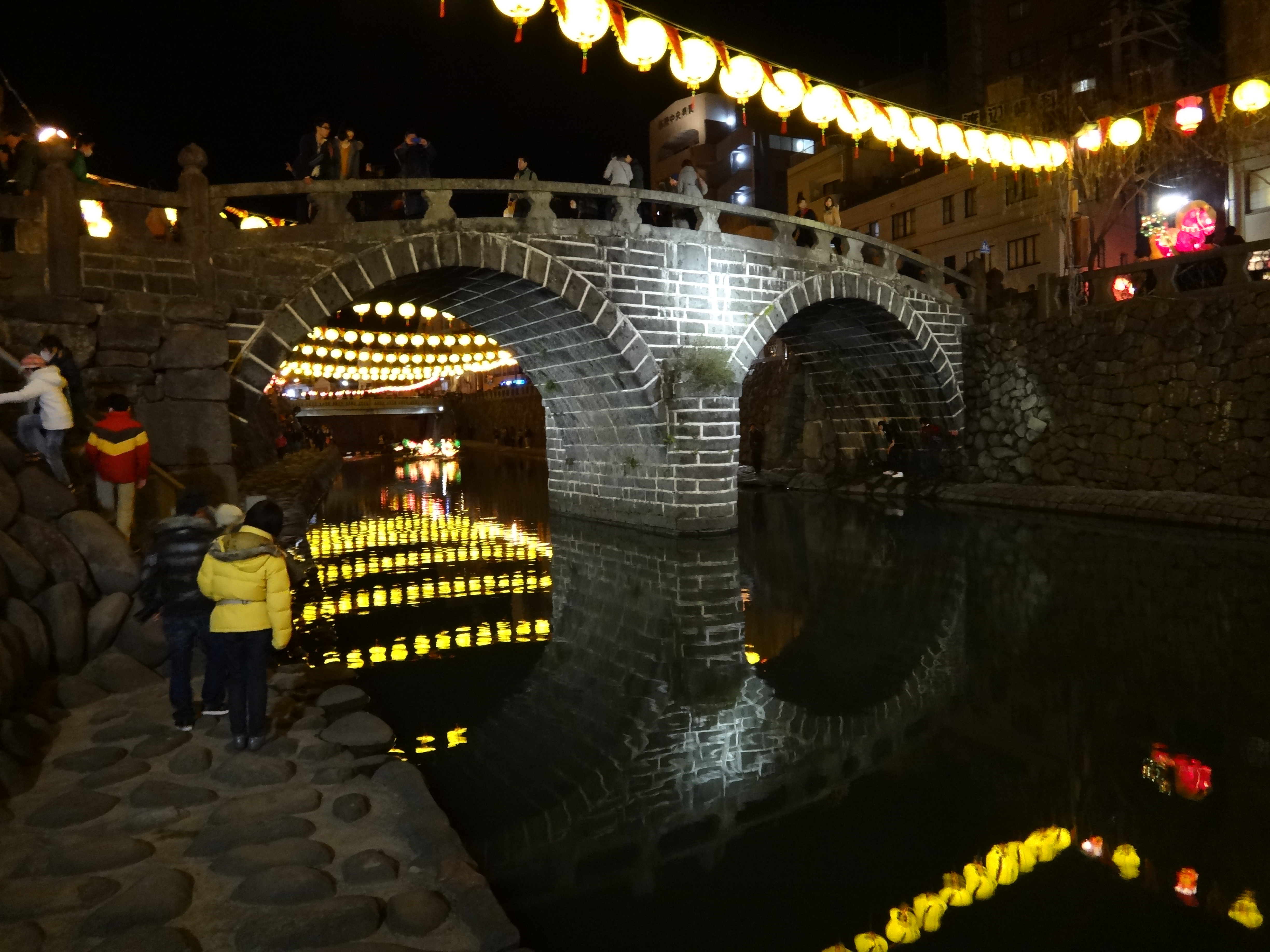
To capture the perfect mirror effect, I recommend going early in the morning or at sunset when the water is calm. The setting is especially beautiful during the Nagasaki Lantern Festival in winter or when the hydrangeas bloom in late May.

Is the site accessible for people with reduced mobility?

The historic bridge has steps that make direct crossing difficult for wheelchair users, but it can still be enjoyed perfectly from the side walkways. The paved paths running parallel to the Nakashima River offer excellent accessible views of the structure.

What other tourist attractions are nearby within walking distance?

You are in a central location, just a few minutes on foot from the historic Kofukuji Temple and the Hamano-machi shopping street. You can also easily walk to Nagasaki Chinatown to enjoy local cuisine after your visit.

Any practical tips or interesting facts to make the most of the visit?

Don't stay only on top of the bridge; go down to the stone paths at water level and look for the heart-shaped stones hidden in the retaining wall. Finding one of these stones is popularly considered a symbol of good luck in love and makes for a fun activity.

¿Prefieres escuchar en español?

🇪🇸 Escucha la audioguía de Meganebashi Bridge en español