Discover the history and secrets of this place with our audio guide.
Fushimi Inari Taisha is open 24 hours a day, 7 days a week, which is fantastic. You can get there very easily by taking the JR Nara Line to Inari Station, just two stops from Kyoto Station, or the Keihan Line to Fushimi-Inari Station. Both stations are literally just a few steps from the main entrance.
One of the best pieces of news is that admission to Fushimi Inari Taisha is completely free. You can explore the shrine and its thousands of torii at no cost, which makes it a must-see in Kyoto even on a tight budget. You do not need to worry about tickets or fees.
The length of the visit can vary quite a lot. If you only want to see the main area and the beginning of the trails, 1 to 2 hours is enough. But if you plan to hike all the way to the top of Mount Inari and enjoy all the views, I recommend setting aside 3 to 4 hours so you can do it at a relaxed pace, as it is a fairly substantial walk.
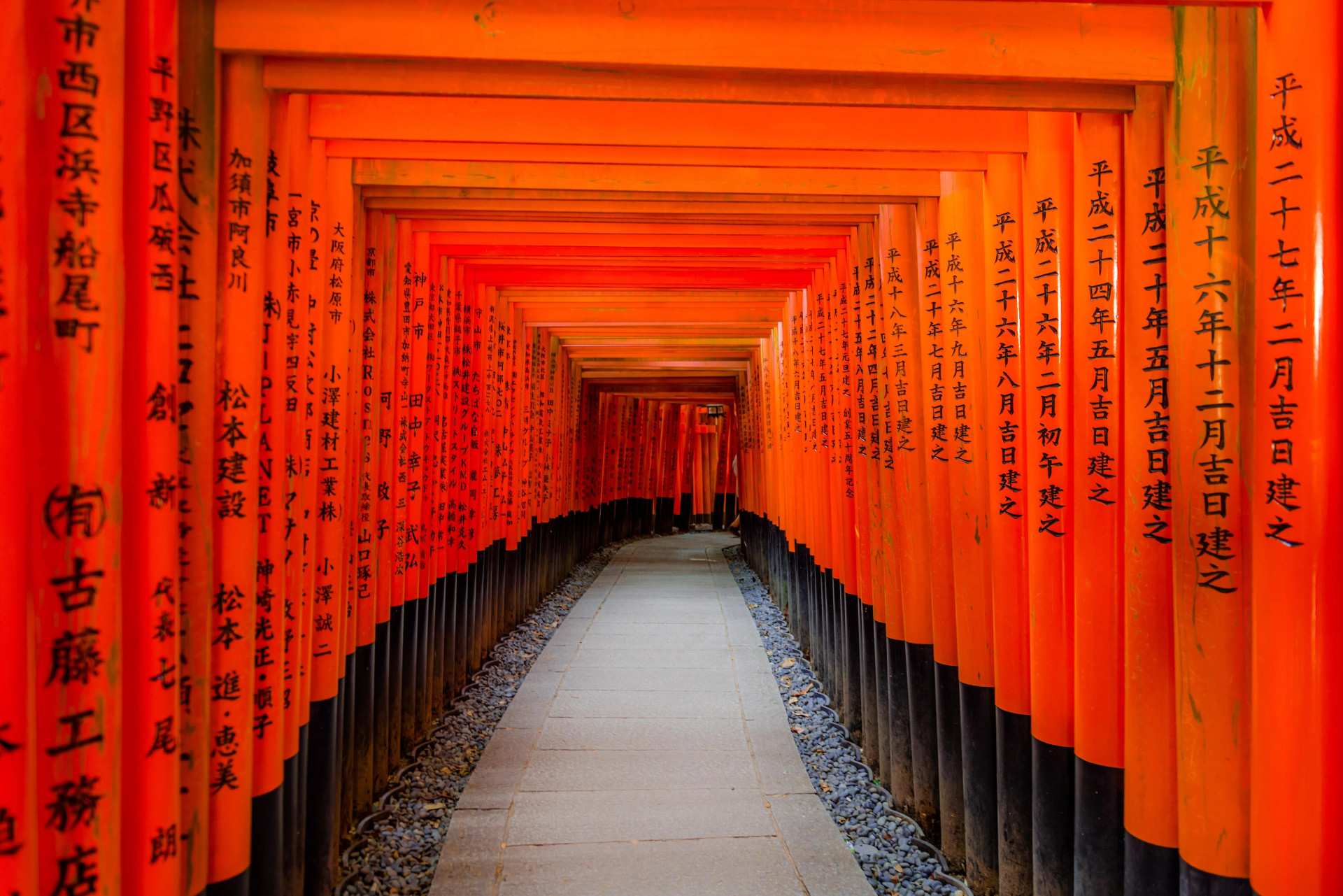
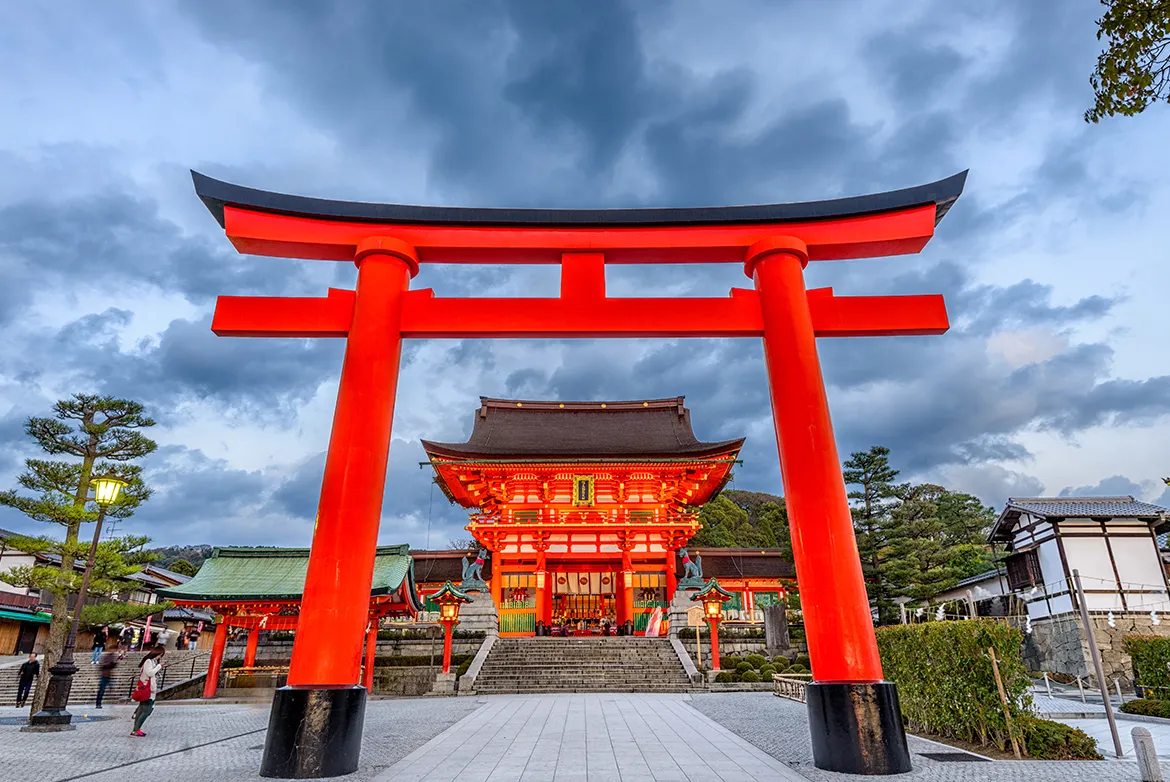
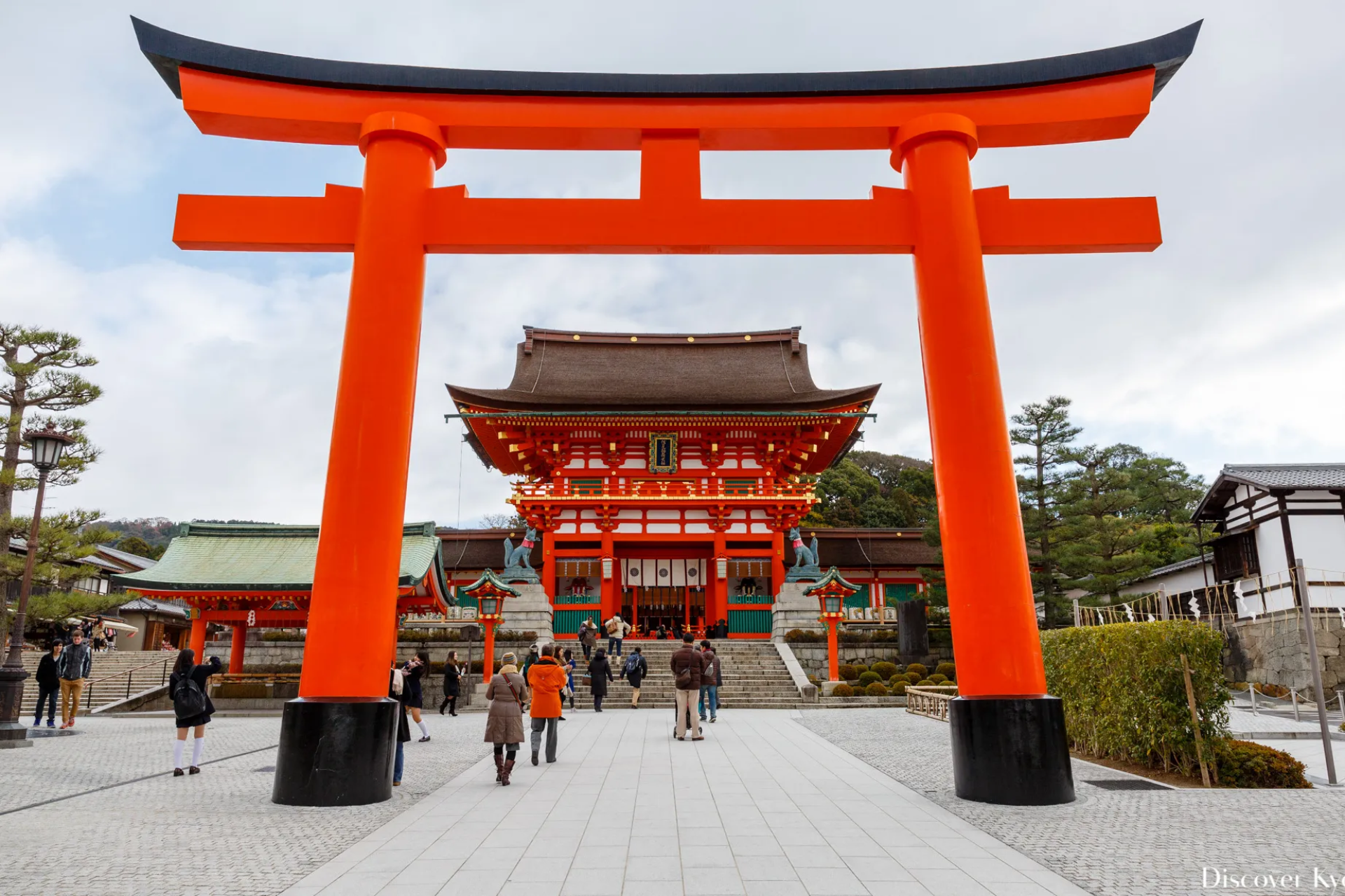
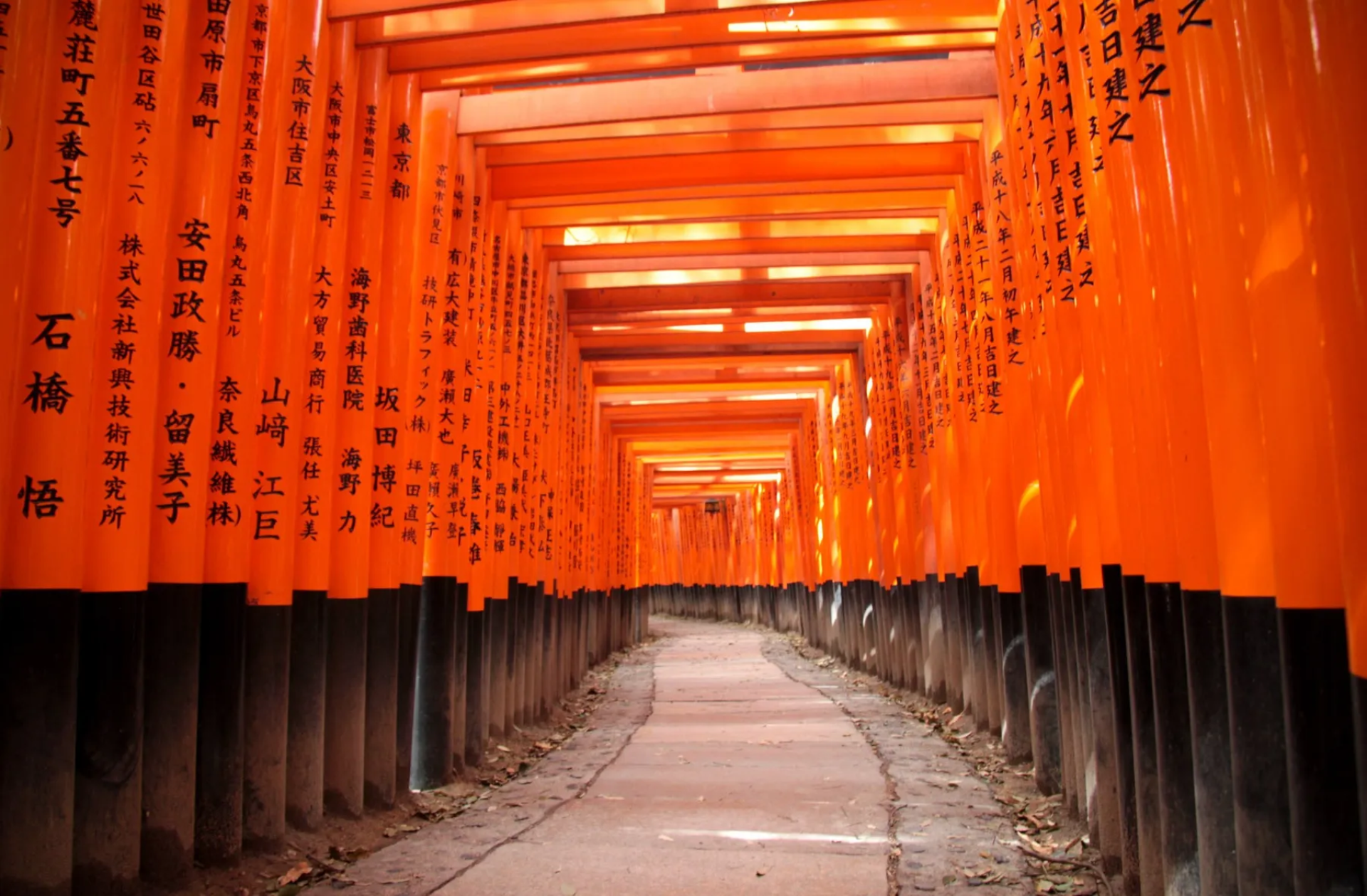
Fushimi Inari Taisha is the main shrine dedicated to Inari, the god of rice and sake in the Shinto religion, but also the patron of business and merchants. The thousands of torii gates, known as senbon torii, are donations from companies and private individuals who, in return, pray for good fortune and prosperity. Each torii is engraved with the donor's name and the date of the donation, creating a stunning orange corridor along the mountain paths. For more information, you can visit the official Fushimi Inari Taisha website.
To avoid the biggest crowds, I recommend going very early in the morning, before 8:00 AM, or late in the afternoon, close to sunset. As for the best time of year, spring from March to May and autumn from September to November offer the most pleasant weather and beautiful scenery, although they also bring more visitors. If you are looking for a quieter experience, consider going on weekdays or outside the main tourist seasons.
The main shrine area and the first section of the torii paths are relatively accessible. However, as you go farther up Mount Inari, the routes become steeper, with stairs and uneven ground, which makes access to the summit quite difficult for wheelchair users or people with reduced mobility. You can still enjoy the lower part, but the full uphill experience is challenging.
After Fushimi Inari, you can explore the charming Fushimi district, known for its sake breweries and the picturesque Horikawa Canal. If you enjoy sake, you can visit the Gekkeikan Okura Sake Museum. You can also take the opportunity to visit central Kyoto, which is only a few train stops away.
Absolutely. Wear comfortable clothing and shoes, since it is a considerable walk. Bring water, especially in summer. Although the first photo spots are iconic, do not stop at only the first torii gates; go a little farther up to find quieter stretches and spectacular views. And do not forget to try kitsune udon at one of the local stalls, it is the specialty of the area.
¿Prefieres escuchar en español?
🇪🇸 Escucha la audioguía de Fushimi Inari Taisha en español