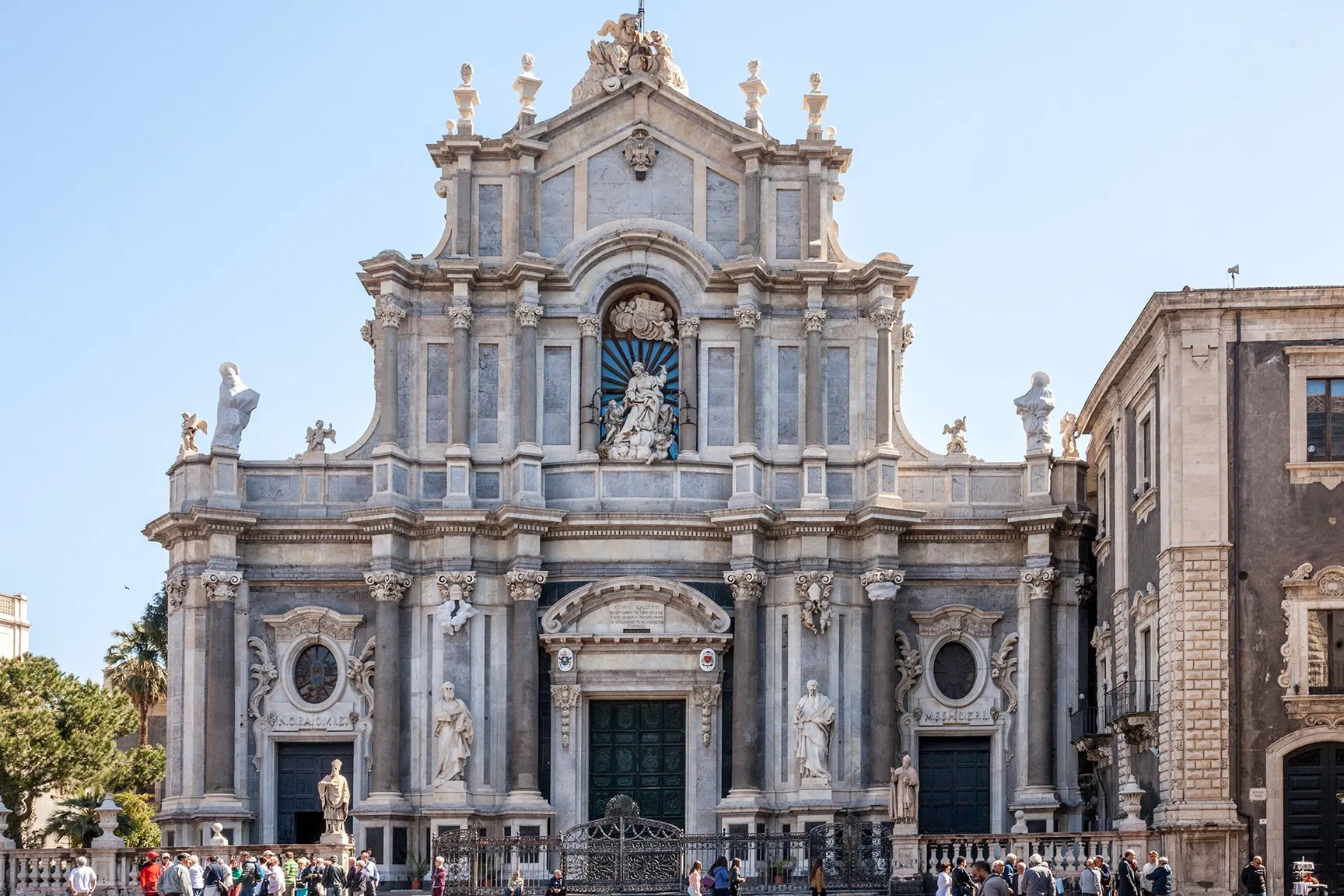
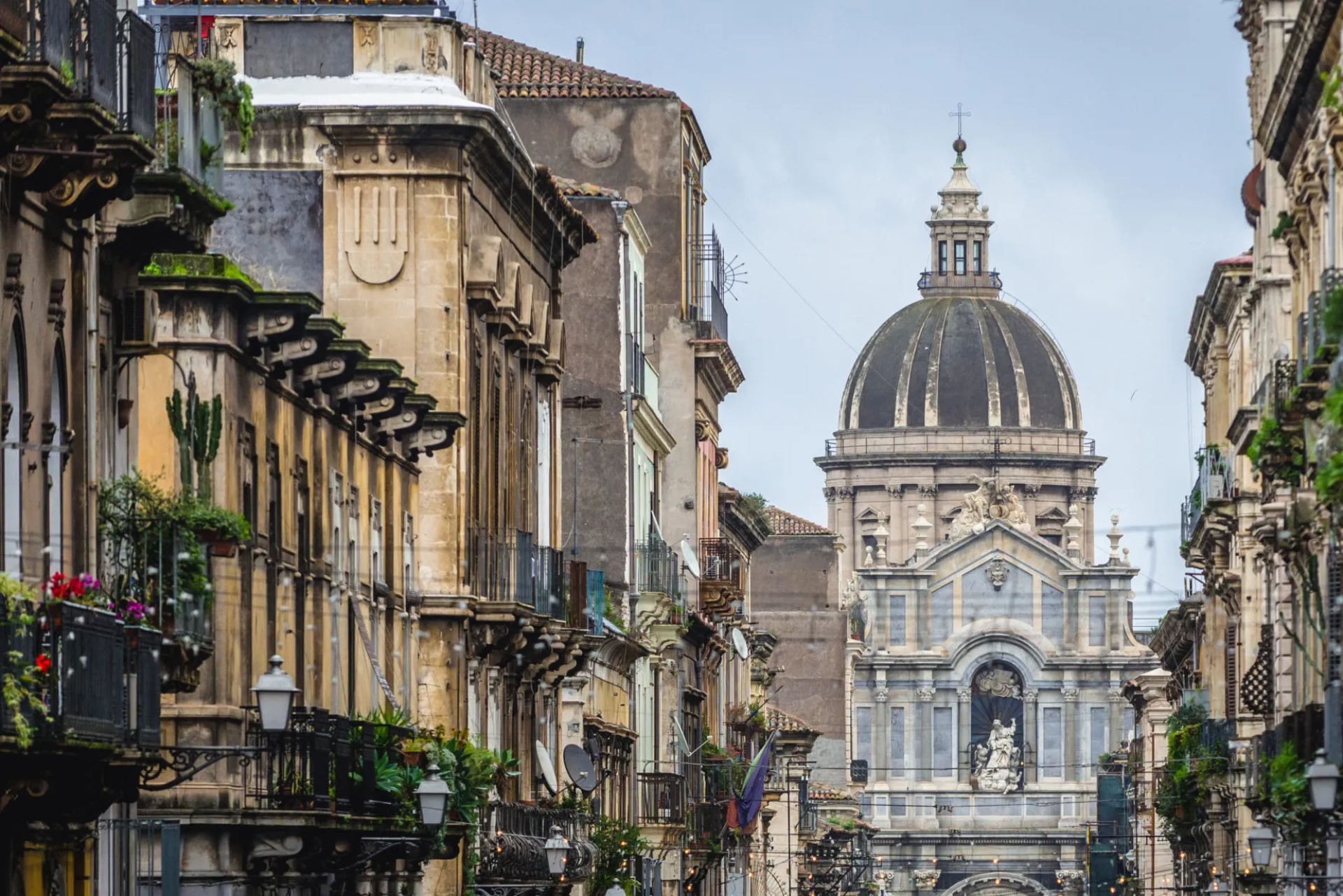
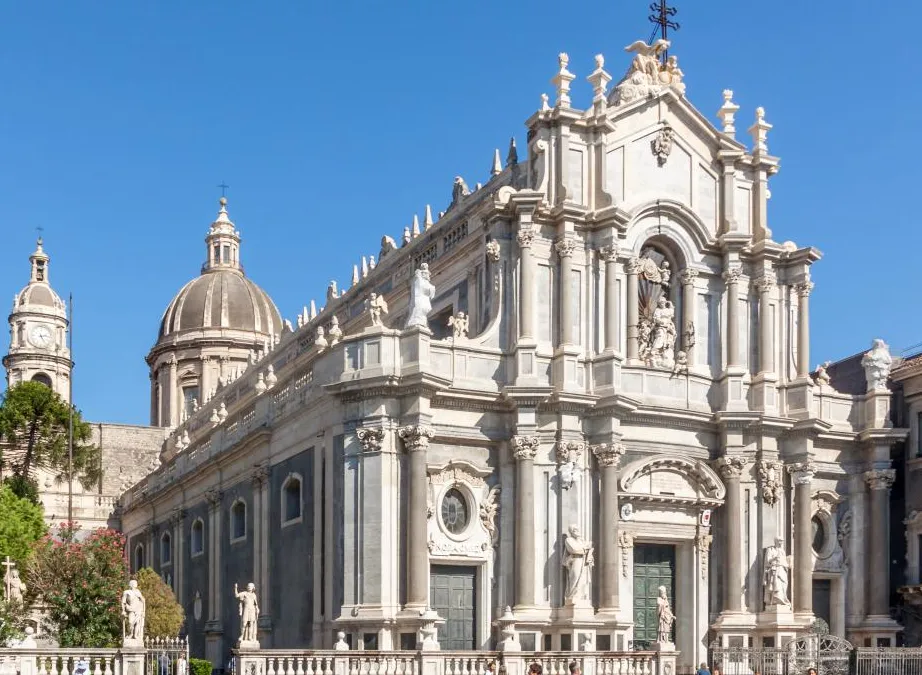
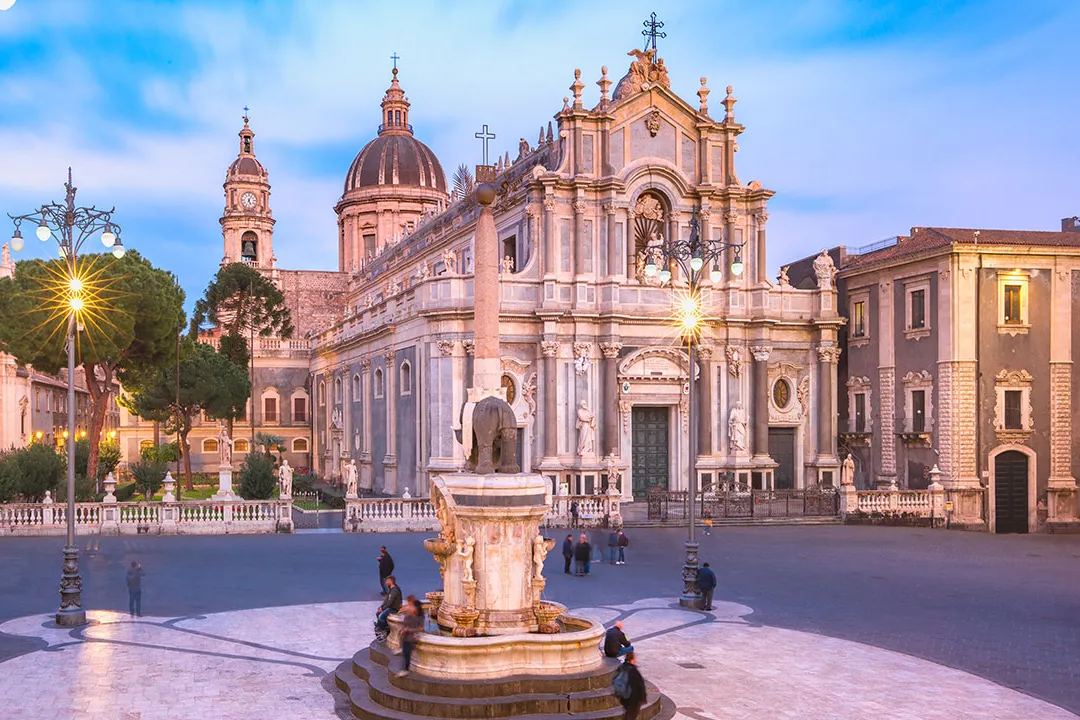
A Sicilian Baroque jewel dedicated to Saint Agatha, rebuilt after earthquakes and volcanic eruptions, combining Norman and 18th-century elements.
Catania Cathedral, also known as the Cathedral of Saint Agatha, usually opens every day in the morning and afternoon for tourist visits. I recommend checking the specific hours on its official website or calling directly, as they may vary depending on the season or special events. You can find more information on its website or by calling +39 095 320044.
In general, entry to Catania Cathedral is free for basic access and prayer, but if you want to visit specific areas such as the Treasury or certain chapels, there may be a small fee. It is best to confirm at the entrance or on its website for details about possible donations or tickets for restricted areas. It is always good to contribute to the upkeep of these historic places. To do so, you can visit its online donations section.
For a complete and rewarding visit that allows you to appreciate the architectural beauty, artistic details, and immerse yourself in its history, I would recommend spending between 45 minutes and 1 hour 30 minutes. If you only want a quick visit to see the highlights, 30 minutes could be enough.
Catania Cathedral is of great importance because it houses the remains of Saint Agatha, the city's patron saint, and it has been rebuilt several times over the centuries after earthquakes and volcanic eruptions, reflecting the resilience of Catania. Its architecture is a fascinating blend of styles, from the original Norman design to Baroque, and its history is closely tied to the city's identity. It is a living witness to Catania's history. To learn more, you can visit the history section on Wikipedia.
If you want to avoid large crowds, I suggest visiting the cathedral early in the morning, just after opening, or late in the afternoon, before closing. As for the best time of year, spring (April-May) and autumn (September-October) are usually ideal, as the weather is pleasant and there are fewer tourists than in the summer months. Avoid the week of Saint Agatha's festivities in early February if you do not like crowds, although it is a unique experience.
Catania Cathedral makes an effort to be accessible. The main nave is usually accessible thanks to ramps or level entrances. However, some older or elevated areas, such as the crypts, may have steps and be less accessible. I recommend contacting the cathedral directly before your visit to confirm specific accessibility details and the best routes for people with reduced mobility. You can contact the cathedral administration at +39 095 320044 or through its contact page.
You are in the heart of Catania, so there is plenty nearby. Right next door you will find the lively Cathedral Square with its famous Elephant Fountain, the Amenano Fountain, and the Palace of the Elephants. Just a short walk away are the picturesque Fish Market, the Ancient Roman Theatre, and Via Etnea for shopping. Be sure to stroll through the nearby streets to discover authentic local life in Catania.
Of course. Dress respectfully, with shoulders and knees covered, especially if you plan to enter. Consider bringing an audio guide so you do not miss any historical or artistic details. Finally, keep quiet and respect the atmosphere of worship, and although we invite you to listen with IAudioguia, avoid eating or drinking inside the temple to help preserve this magnificent place.
¿Prefieres escuchar en español?
🇪🇸 Escucha la audioguía de Catania Cathedral en español