Donde los mosquitos gobernaron más que los holandeses y los amores prohibidos escribieron la primera página de Guyana
Fort Nassau, being largely an archaeological site with ruins, does not have fixed opening hours like a traditional museum, as it is located in a more remote inland area of Guyana, near the Berbice River. Access is generally arranged through specialized tours that require a boat trip from the coast. We recommend contacting local tour operators in Guyana to plan your visit and obtain detailed information about logistics and any necessary permits. You can look for options through the Guyana Tourism Office.
Since Fort Nassau is a historic site rather than a theme park or museum with facilities, there is usually no formal entrance fee as such. However, the main costs will come from transportation to reach the site, usually by boat, and the services of a local guide, which are highly recommended due to the nature of the site. Keep in mind that any organized tour will usually include these costs.
Exploring Fort Nassau and its historic ruins can take between 2 and 4 hours. This allows time to walk around the site, understand its layout and significance, and take in the atmosphere. However, the total duration of the excursion will depend significantly on the travel time required to reach the site, which can often make it a full-day trip or even involve an overnight stay in the area.
Fort Nassau was a key fort of the Dutch West India Company and the administrative center of the Berbice colony in the 17th and 18th centuries. It represents a fundamental pillar of Guyana's colonial history, having witnessed the slave trade, commerce, and various uprisings, including the famous Berbice slave rebellion of 1763 led by Cuffy. It is a site of immense historical and cultural value, vital for understanding the formation of the Guyanese nation. You can find more information on Wikipedia.
The best time to visit Fort Nassau, and Guyana in general, is during the dry seasons, from August to November and from February to April. During these months, weather conditions are more pleasant, temperatures are manageable, and river levels are usually lower, making boat access easier. Avoid the heavy rainy season, which can make travel more difficult and the site muddier.
Unfortunately, due to its remote location and the nature of the ruins in a natural setting without modern infrastructure such as paved paths or ramps, Fort Nassau is not easily accessible for people with reduced mobility or wheelchair users. The terrain can be uneven, and access involves boat transport and walking along trails. It is recommended to check with the specific tour operator for accessibility details and ground conditions before planning your visit.
Fort Nassau is located in a more remote inland region of Guyana, so nearby attractions are usually linked to nature and wildlife. You can explore the biodiversity of the Guyanese rainforest, go birdwatching, or visit local communities. Another option is to combine your visit with a tour of New Amsterdam, a colonial town with its own history at the mouth of the Berbice River. Most tours to Fort Nassau also include an immersion in the surrounding natural environment.
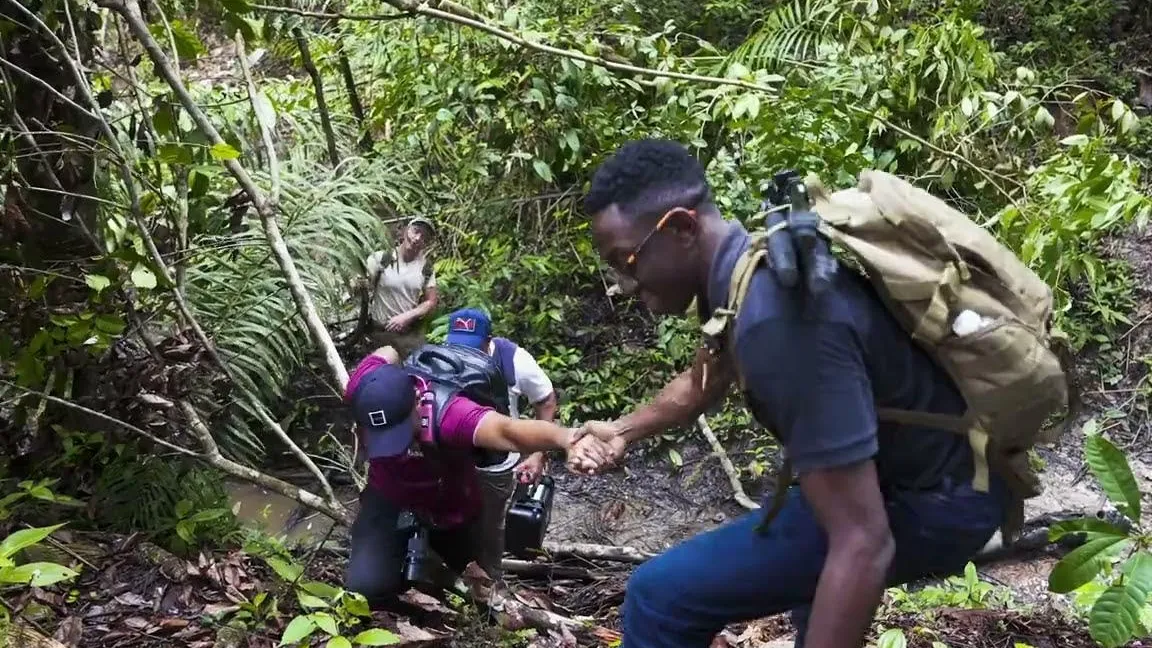
For the best experience, be prepared for an adventure. Bring insect repellent, which is essential in tropical areas, sunscreen, a hat, enough drinking water, and light, comfortable clothing. Given the site's remote nature, hire an experienced local guide who can not only take you there but also provide deep historical and cultural insight. And do not forget your camera to capture the natural beauty and history of the place.
¿Prefieres escuchar en español?
🇪🇸 Escucha la audioguía de Fort Nassau en español