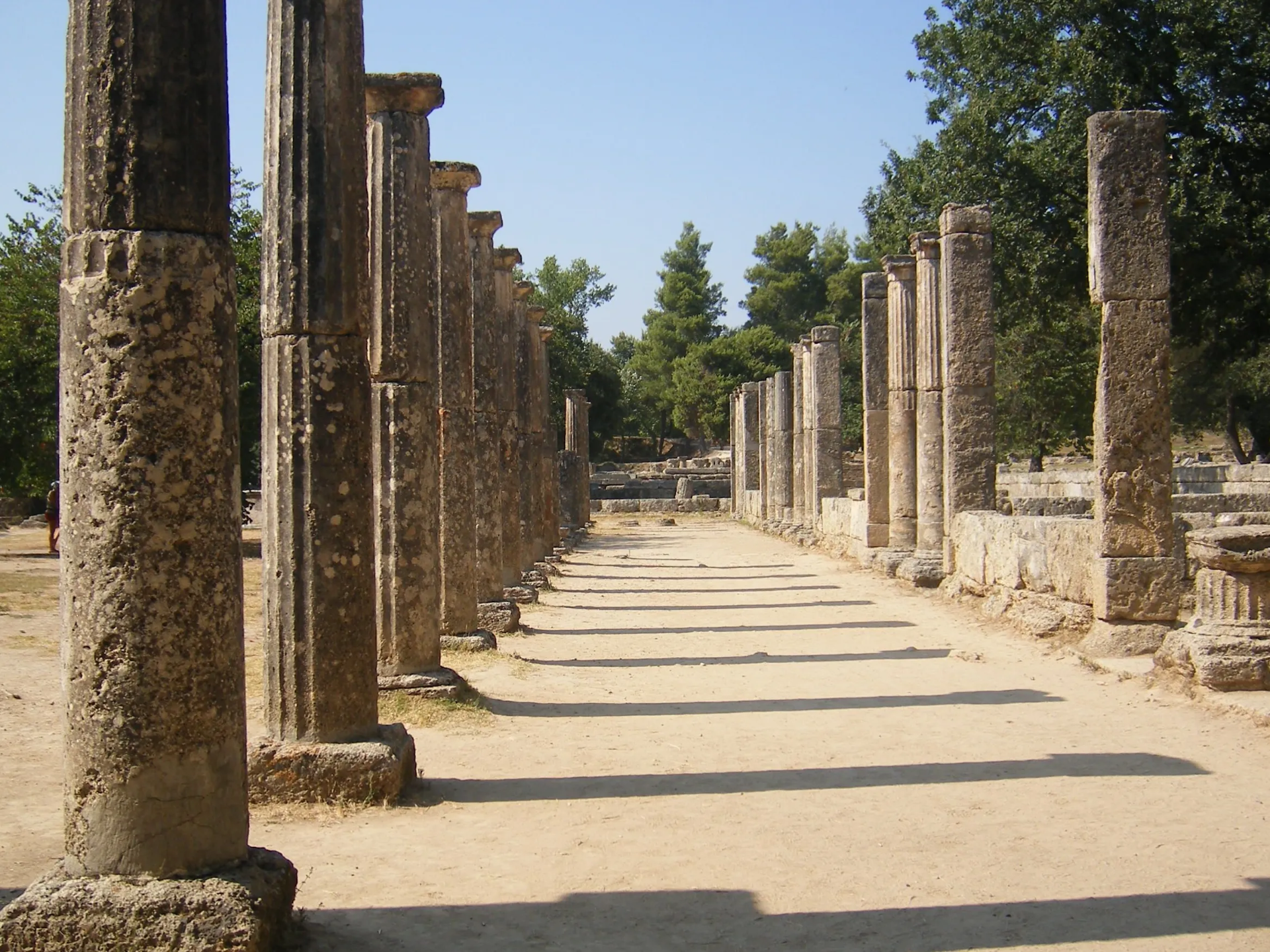
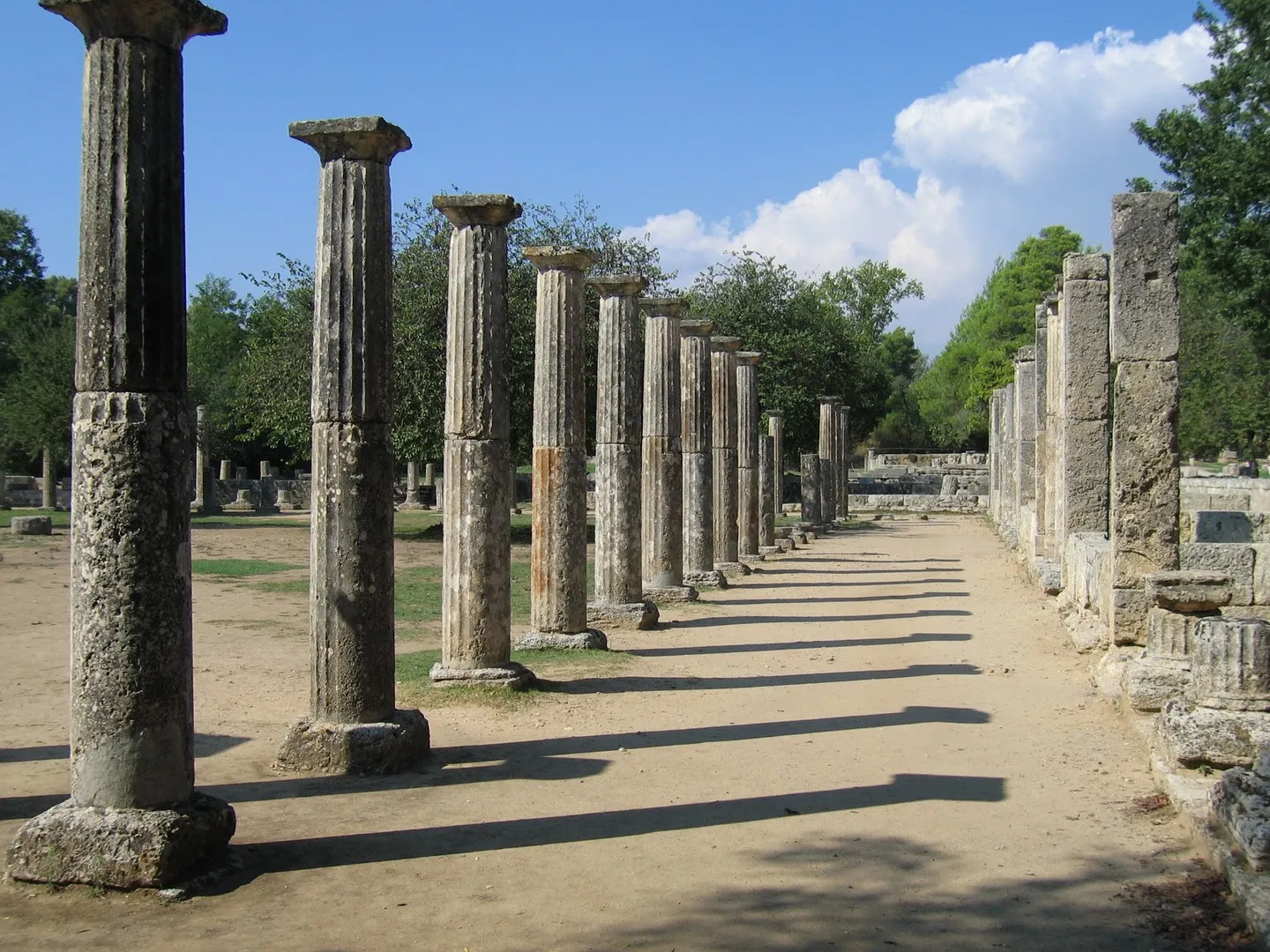
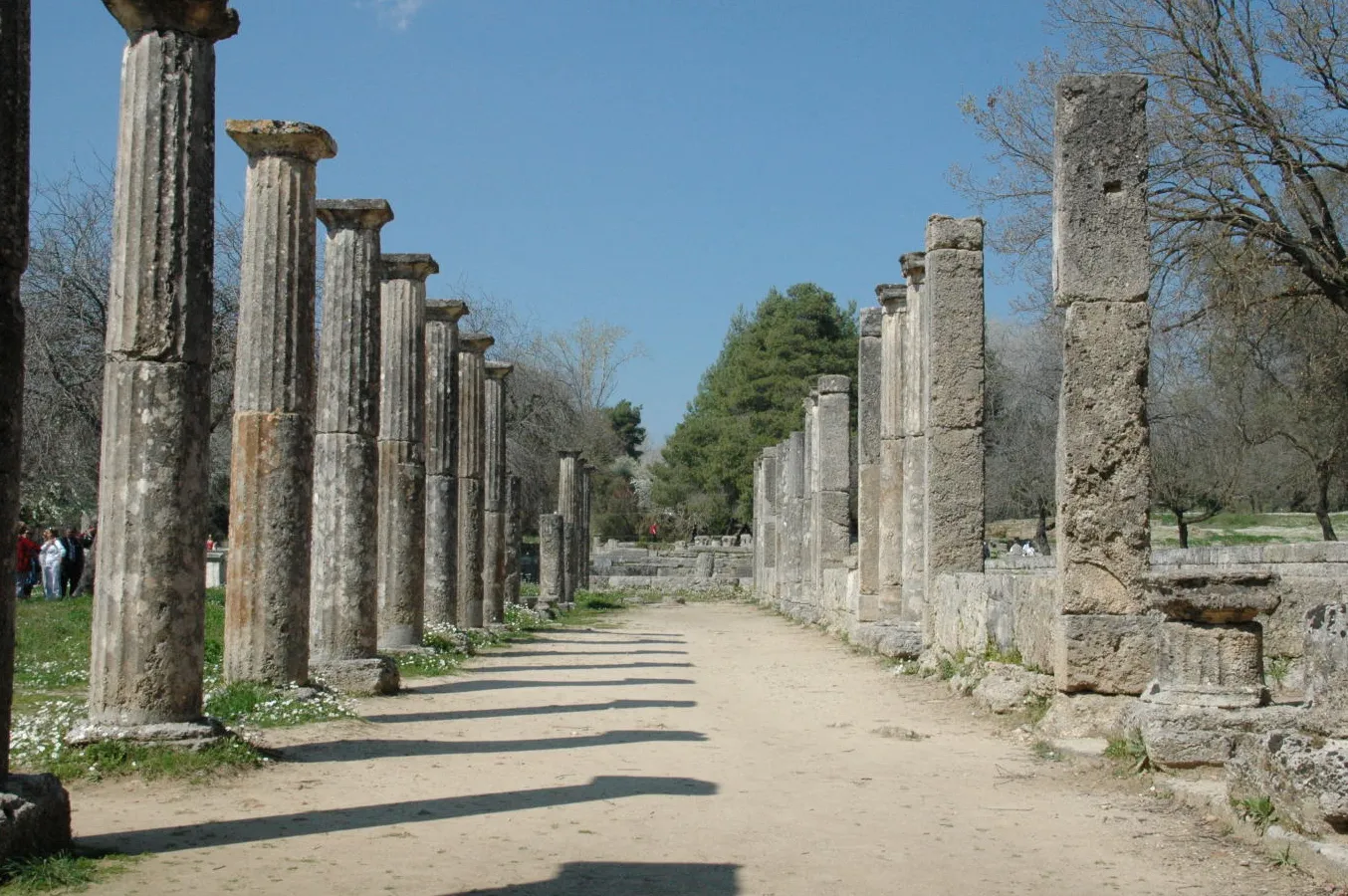
Donde los héroes se untaban en aceite y las leyendas se rompían (literalmente, con ese suelo resbaladizo).
The Palaestra is located within the archaeological site of Olympia. The site usually opens at 8:00 AM and closes at sunset (approximately 5:00 PM in winter and 8:00 PM in summer). It is advisable to check the latest opening hours on the official website of the Greek Ministry of Culture and Sports before your visit. You can reach it on foot from the main entrance of the site. You can check the updated opening hours here.
Access to the Palaestra is included in the general admission ticket to the archaeological site of Olympia. There is no additional fee to see the Palaestra specifically. Your site ticket also gives you access to other fascinating areas such as the Stadium and the Temple of Zeus. Tickets can be purchased at the site's ticket office. For more information on prices and purchases, you can visit the official Olympia page.
The visit to the Palaestra itself does not take much time, perhaps about 15–20 minutes to explore it and take photos. However, since it is part of the extensive archaeological site of Olympia, I recommend allowing at least 3 to 4 hours to cover the whole complex, including the Archaeological Museum of Olympia and the Museum of the Olympic Games. This will let you fully absorb the historical importance of the place.
The Palaestra was a crucial building where Greek athletes trained for wrestling, boxing, and jumping, preparing for the Olympic Games. It was a center of physical and social activity, fundamental to the training of future victors. Its architectural design, with a central courtyard surrounded by rooms, reflects its function as a versatile training space.
To avoid crowds and the oppressive summer heat, the best time to visit is early in the morning, just after opening, or late in the afternoon. As for the best season, spring (April–May) and autumn (September–October) are ideal, with more pleasant temperatures and fewer tourists than in peak summer. This will allow you to enjoy the visit more peacefully.
The archaeological site of Olympia, including the Palaestra, has some accessible areas, but you should keep in mind that the terrain can be uneven, with dirt and gravel paths that may make wheelchair movement difficult in certain parts. However, efforts have been made to improve accessibility, and the main areas are usually easier to navigate. It is recommended to contact the site in advance for detailed accessibility information based on your specific needs. You can find the inquiry phone number on the website of the Greek Ministry of Culture and Sports.
Right next to the Palaestra, you should not miss the Gymnasium, the Workshop of Phidias, and the Heroon. Within the same archaeological site, the Temple of Zeus, the Temple of Hera (where the Olympic flame is lit), and the original Stadium are essential visits. In addition, the Archaeological Museum of Olympia, with artifacts found on the site, and the Museum of the Ancient Olympic Games are highly recommended and are just a short walk away.
Of course. For the best experience, I recommend wearing comfortable walking shoes, bringing sun protection (a hat, sunglasses, and sunscreen), and carrying enough water, especially if you visit in summer. Consider hiring a guide or using an audio guide (IAudioguia.com) to better understand the history and meaning of each ruin. Plan your visit in advance and arrive early to avoid the crowds.
¿Prefieres escuchar en español?
🇪🇸 Escucha la audioguía de the Palaestra of Olympia en español