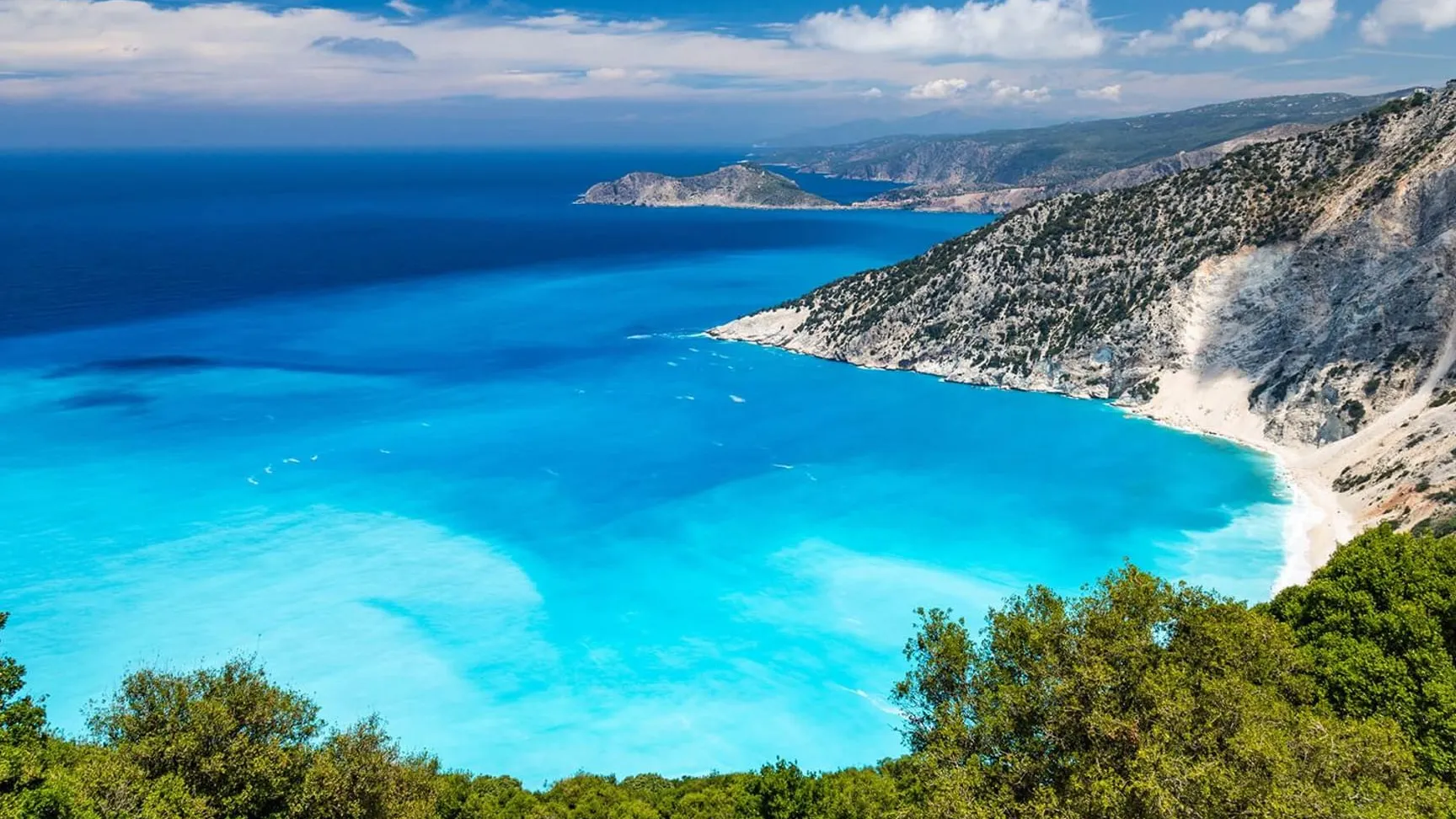
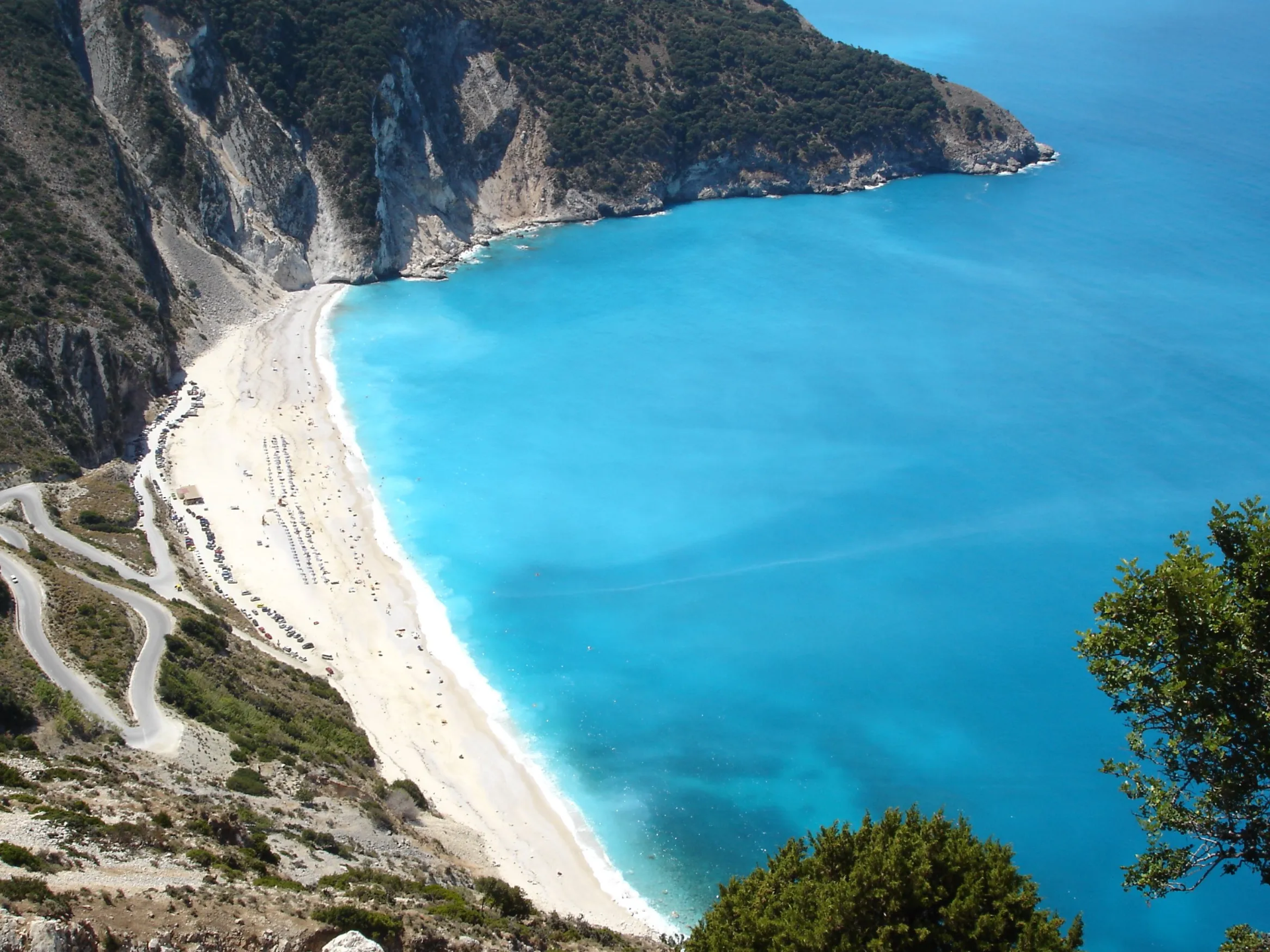
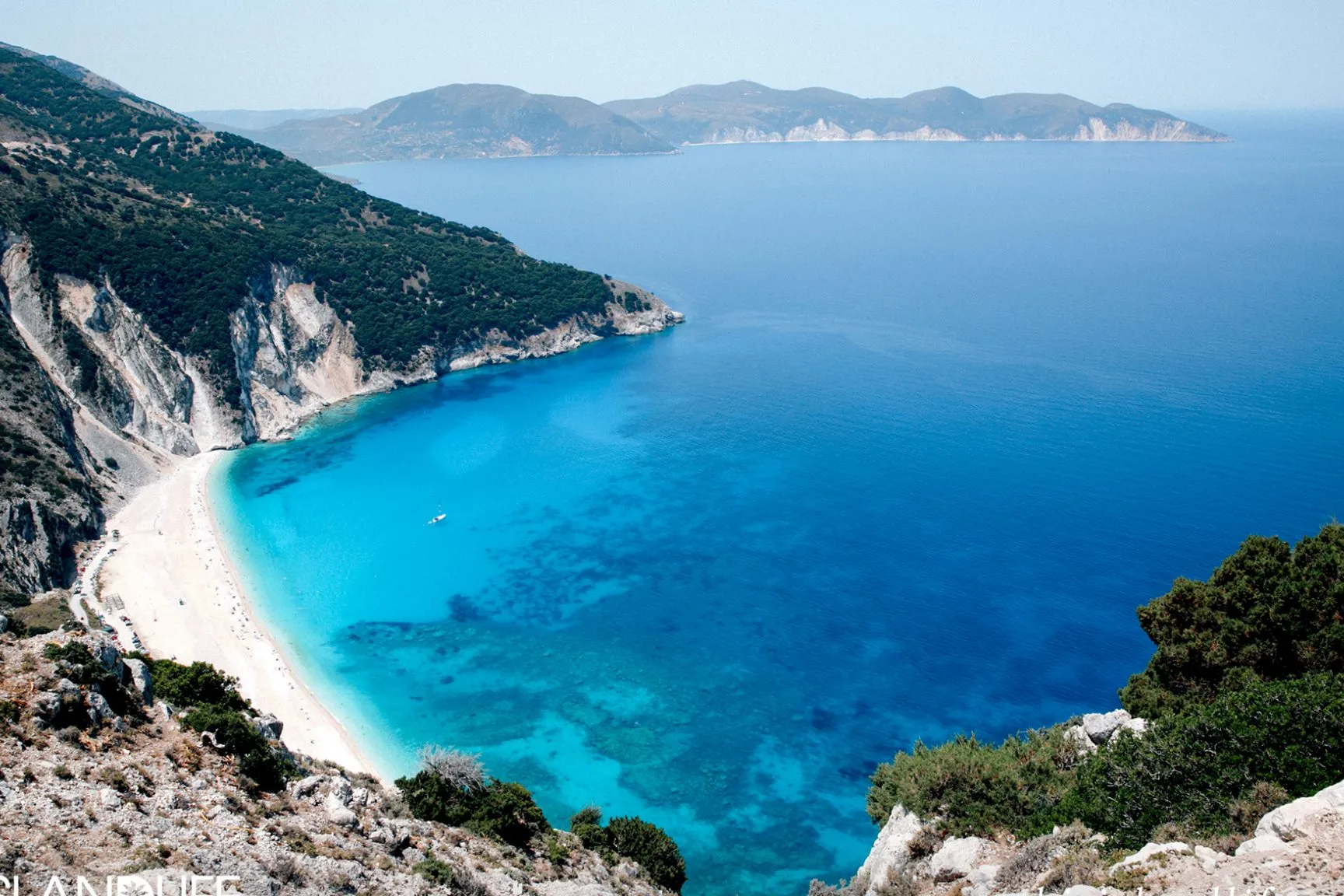
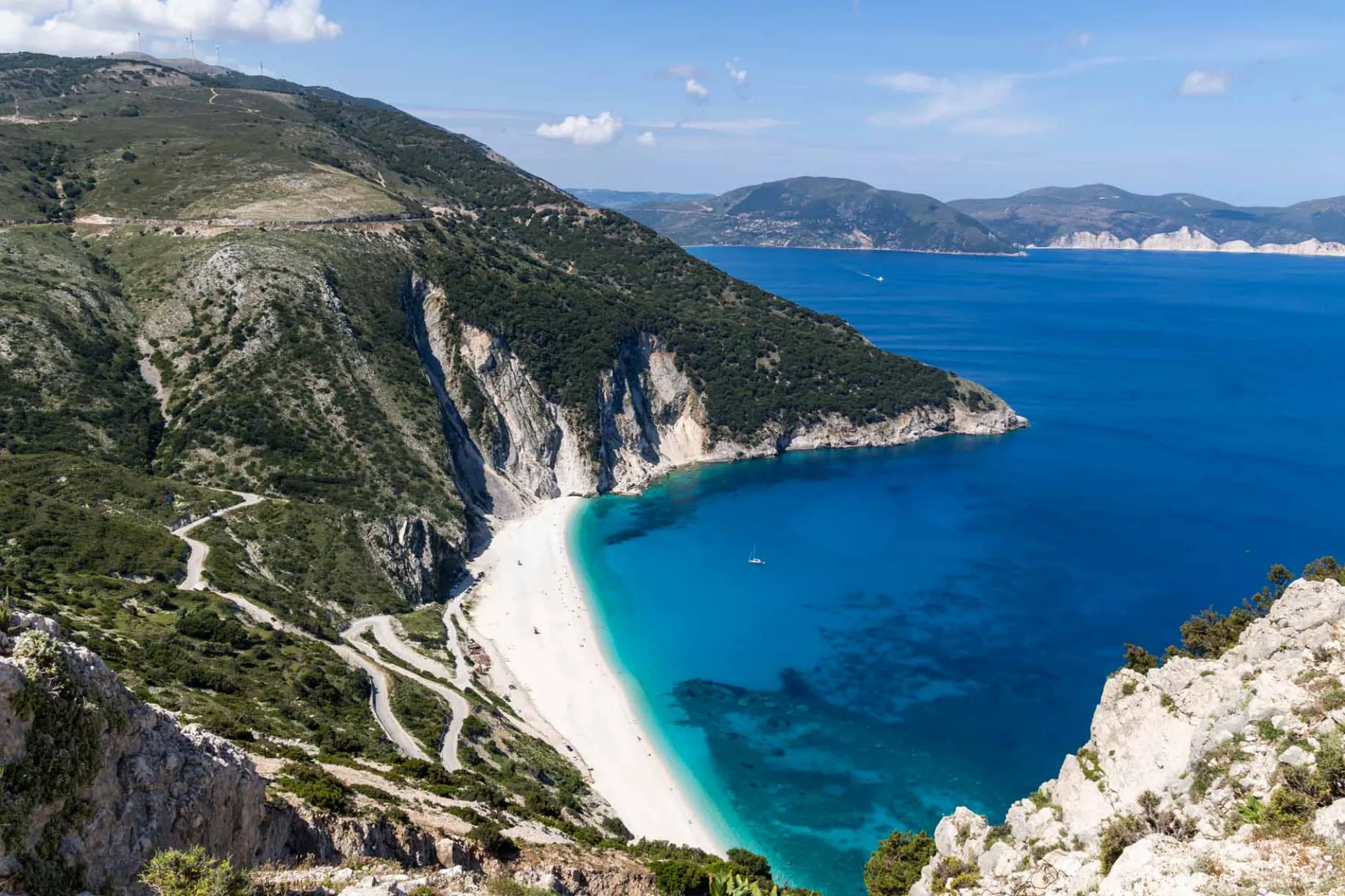
One of the most stunning beaches in Greece, famous for its turquoise waters and unique geological landscape.
Myrtos Beach is open to the public 24 hours a day, every day of the week, as it is a natural beach with unrestricted access. You can get there by car or bus. Renting a car is recommended for greater flexibility, or you can take a bus from Argostoli or Sami during the high season, from June to September. There is no specific official website for beach hours, but you can check Kefalonia Island for more information on how to get there.
No, access to Myrtos Beach is completely free. There are no entrance fees or costs associated with enjoying the beach itself. The only possible expense would be renting a parasol and sun loungers if you wish, with prices varying, or parking, which is usually free in designated areas.
To fully enjoy Myrtos Beach, I would recommend spending at least half a day, around 3 to 4 hours. This will give you time to swim, sunbathe, walk along the shore, and admire the stunning views from the upper viewpoints. If you want to relax even more, you can stay all day!
Although Myrtos Beach does not have an ancient history filled with specific events, its significance lies in its natural beauty and in being an iconic symbol of Kefalonia and Greece. It has won numerous awards and has repeatedly been ranked among the best beaches in the world. Its striking landscape, with white cliffs and turquoise waters, makes it a natural treasure of great scenic and aesthetic value.
The best time to visit Myrtos Beach is during spring, from May to June, or autumn, from September to October, when the weather is pleasant and there are fewer crowds. During the day, to avoid peak hours, I suggest going early in the morning, before 10:00 a.m., or late in the afternoon to see the sunset, which is spectacular from the cliffs. It is busier in July and August.
Access to Myrtos Beach for people with reduced mobility can be challenging. There is a paved road descending to the beach from the main road, but it is quite steep with tight bends. Once at the beach, the surface is made of white pebbles. There are no specific adaptations such as walkways or beach wheelchairs, so caution and, if needed, assistance are recommended. You can view some images of the access at Greeka to get an idea.
Near Myrtos, you can visit the picturesque villages of Assos and Fiskardo, known for their traditional architecture and beautiful harbors. Assos, with its Venetian castle, is just about a 20-minute drive north. Fiskardo, a little farther north, is famous for being the only village to survive the 1953 earthquake and for its lively tavernas. You can also explore the Melissani and Drogarati caves, which are relatively nearby.
Absolutely! I recommend bringing suitable footwear for the pebbles, high-protection sunscreen, a hat, and sunglasses, as there is not much natural shade. Also bring plenty of water and some food, as options on the beach itself are limited or more expensive. Do not forget your camera to capture the stunning views, and if you can, stay until sunset—it is an unforgettable experience. And of course, leave it as clean as you found it!
¿Prefieres escuchar en español?
🇪🇸 Escucha la audioguía de Myrtos Beach en español