Discover the Temple of Hephaestus in Athens. A unique experience to learn about its history and significance.
The Temple of Hephaestus is located inside the Ancient Agora of Athens, which usually opens from 8:00 a.m. to 5:00 p.m. in winter and until 7:00 p.m. in summer, although it is advisable to check the specific opening hours depending on the season. You can get there easily by metro; the nearest station is Thissio (Line 1), and Monastiraki (Lines 1 and 3) is also quite close. For more details, you can visit the official Ancient Agora of Athens page: Official Ancient Agora of Athens page.
The Temple of Hephaestus does not have a separate admission ticket; it is included in the ticket for the Ancient Agora of Athens. The combined ticket price (including the Agora and the Temple of Hephaestus) is usually €10, although there are discounts for EU students and seniors, and admission is free on certain public holidays. I recommend checking the official website for updated prices: Ancient Agora of Athens ticket prices.
To visit the Temple of Hephaestus itself at a relaxed pace, you can spend around 20 to 30 minutes. However, since it is located within the Ancient Agora of Athens, I recommend planning at least 1.5 to 2 hours to explore the entire archaeological site, which includes other major points of interest. That way, you can enjoy the surroundings and learn about its history without rushing.
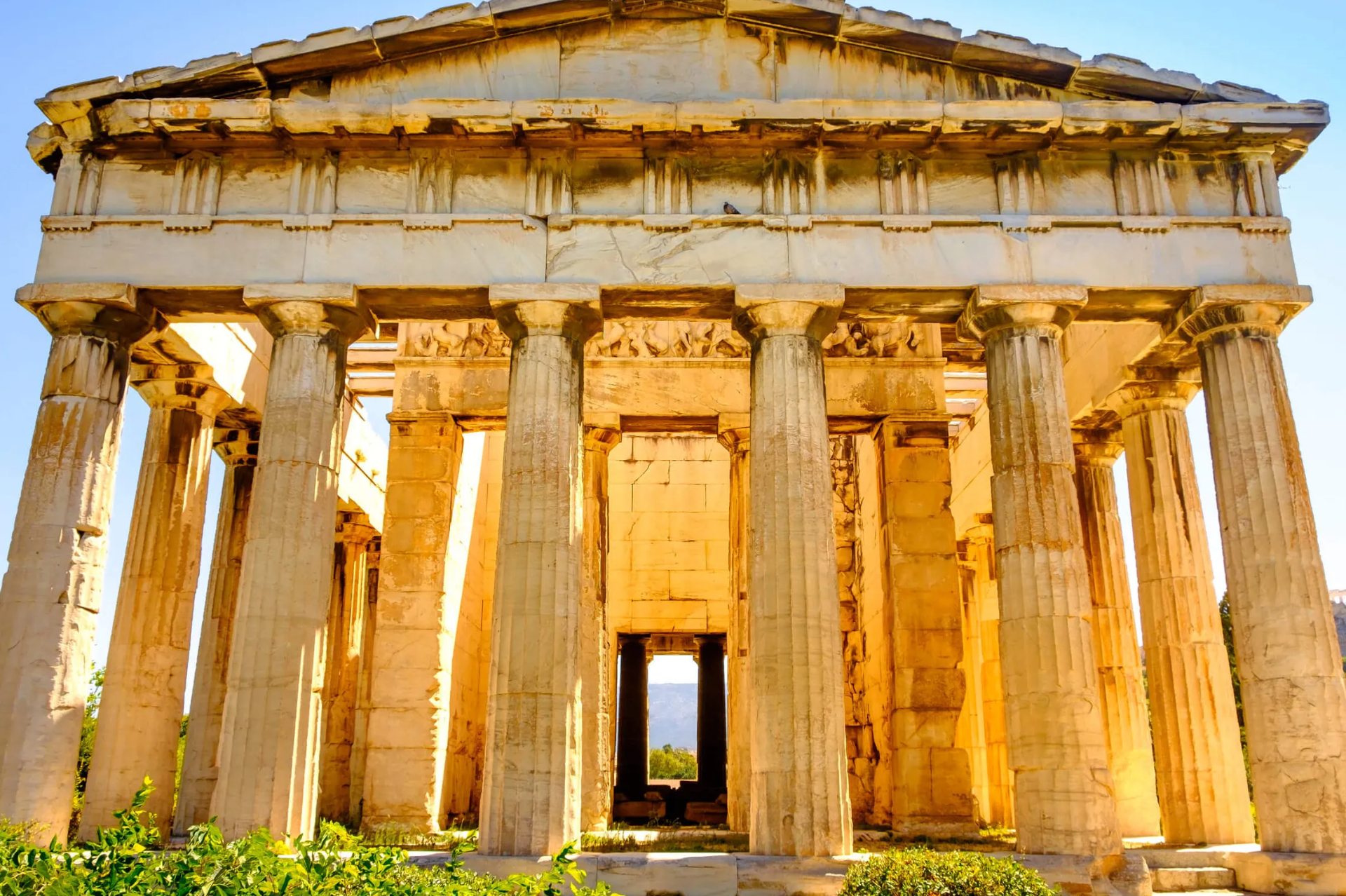
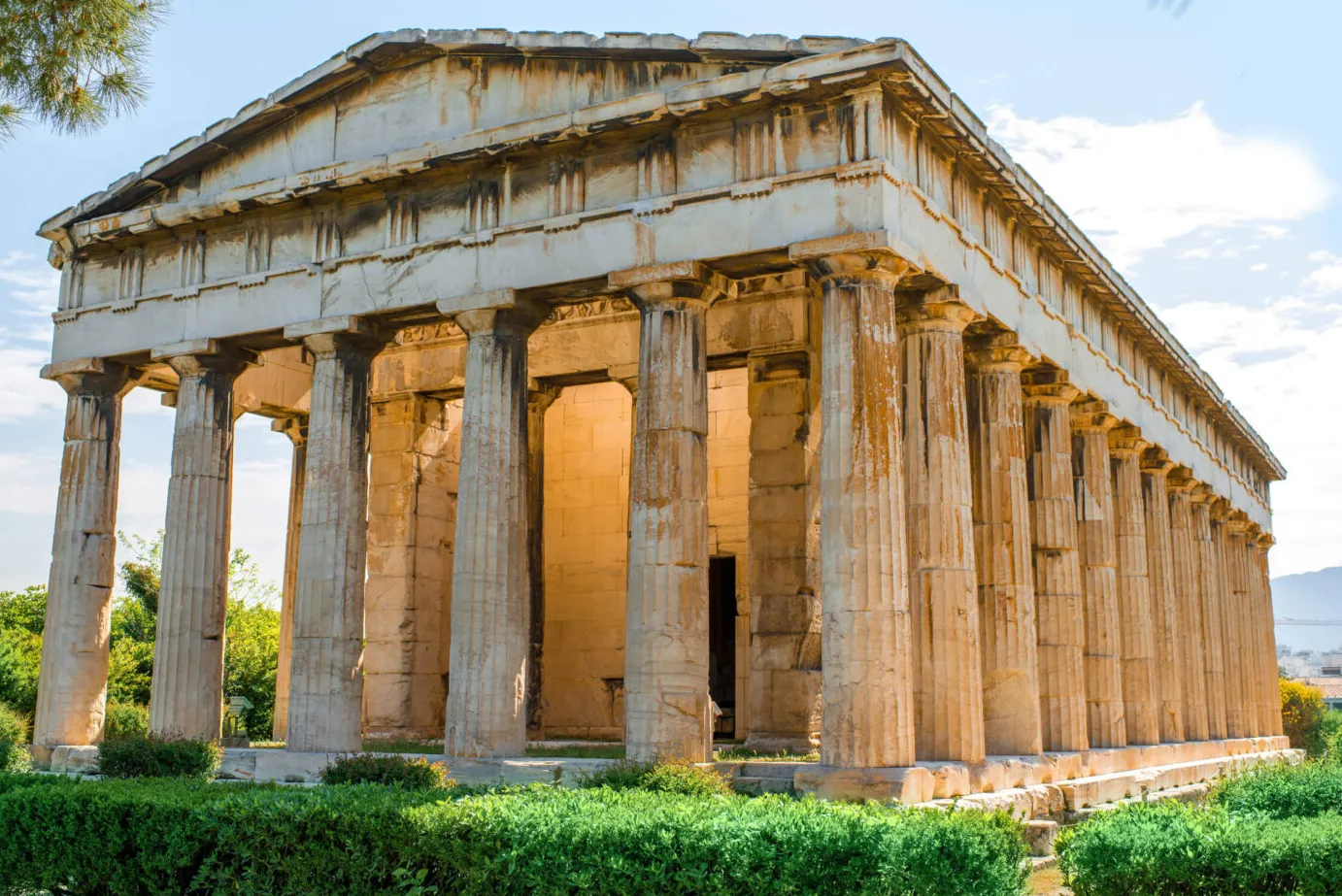
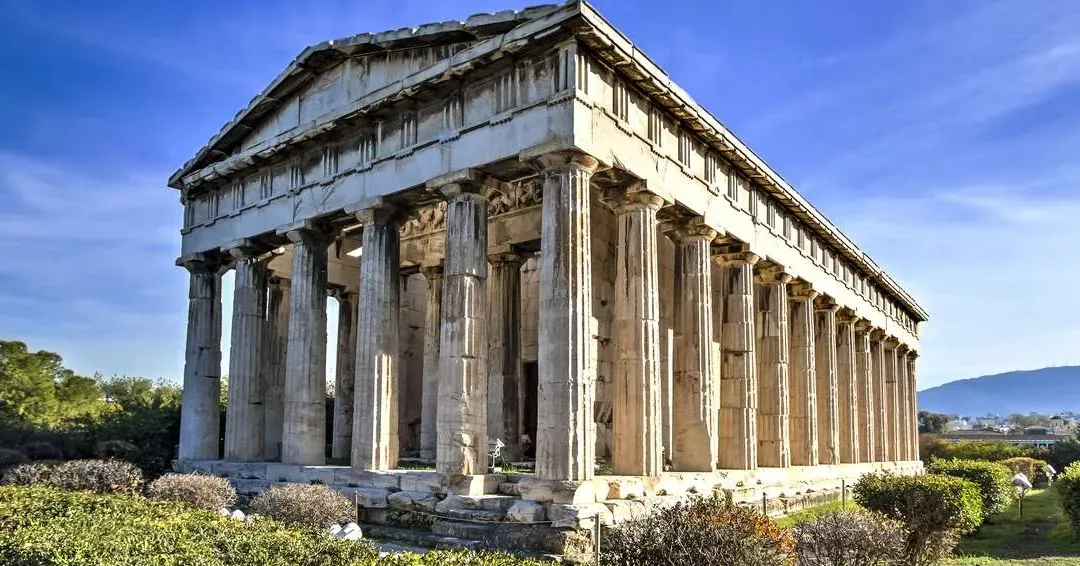
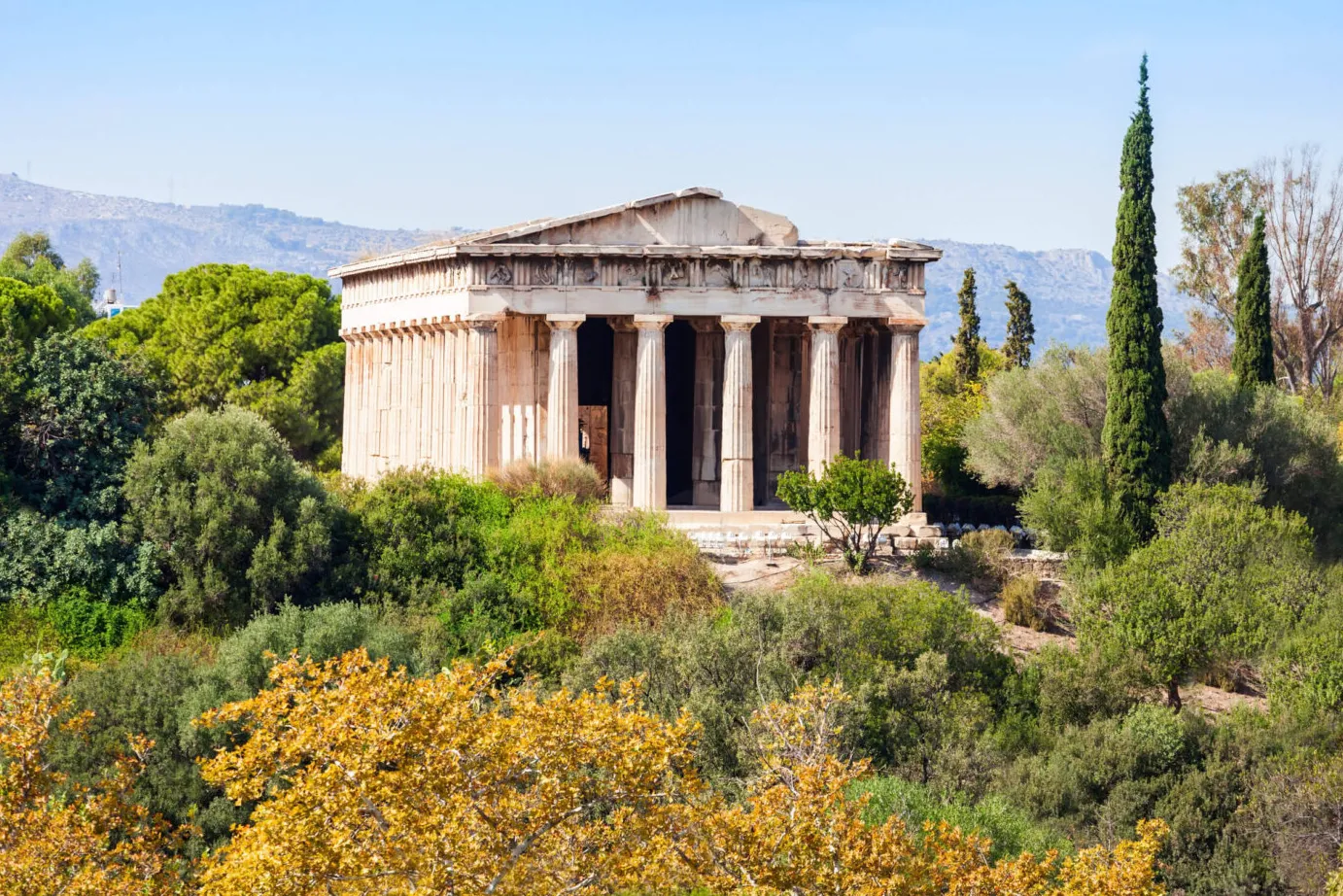
The Temple of Hephaestus is one of the best-preserved Doric temples in Greece and was dedicated to Hephaestus, the god of fire and metallurgy, and to Athena Ergane, the goddess of pottery and craftsmanship. Its importance lies not only in its excellent state of preservation, but also in the clear insight it offers into the architecture and religion of Ancient Greece, making it a fascinating example of its engineering and art. It was built between 460 and 415 BC, making it contemporary with the construction of the Parthenon.
The best time to visit is early in the morning, right when it opens, or late in the afternoon, to avoid the crowds and intense heat, especially during the summer months (June, July, and August). As for the best season, spring (April-May) and autumn (September-October) offer more pleasant temperatures and fewer tourists, allowing for a more comfortable experience.
The terrain inside the Ancient Agora, where the Temple of Hephaestus is located, is uneven, with some slopes and dirt paths, which can make wheelchair access or access for people with reduced mobility difficult in certain areas near the temple. However, work is being done to improve accessibility in some parts. It is advisable to contact the site administration directly for updated accessibility information. To reach them, you can check their website or look for a contact phone number on the official Ancient Agora website.
The Temple of Hephaestus is right in the heart of Athens' historic center, surrounded by many other points of interest. Right next to it, you have the rest of the Ancient Agora and the Agora Museum. A short walk away, you can visit the Monastiraki neighborhood with its famous square and market, the Acropolis of Athens with the Parthenon, the Plaka neighborhood with its charming streets, and Hadrian's Library. Everything is within easy walking distance, ideal for a full day of exploration.
Of course! I recommend wearing comfortable walking shoes, since the Ancient Agora is large and the ground is uneven. Don't forget water, especially in summer, and sunscreen. Consider hiring a local guide or using an audio guide to better understand the site's rich history; our platform offers audio guides that can enrich your experience: IAudioguia. Also, take your time to stroll around and admire the temple's architectural details and the panoramic views from the hill.
¿Prefieres escuchar en español?
🇪🇸 Escucha la audioguía de The Temple of Hephaestus en español