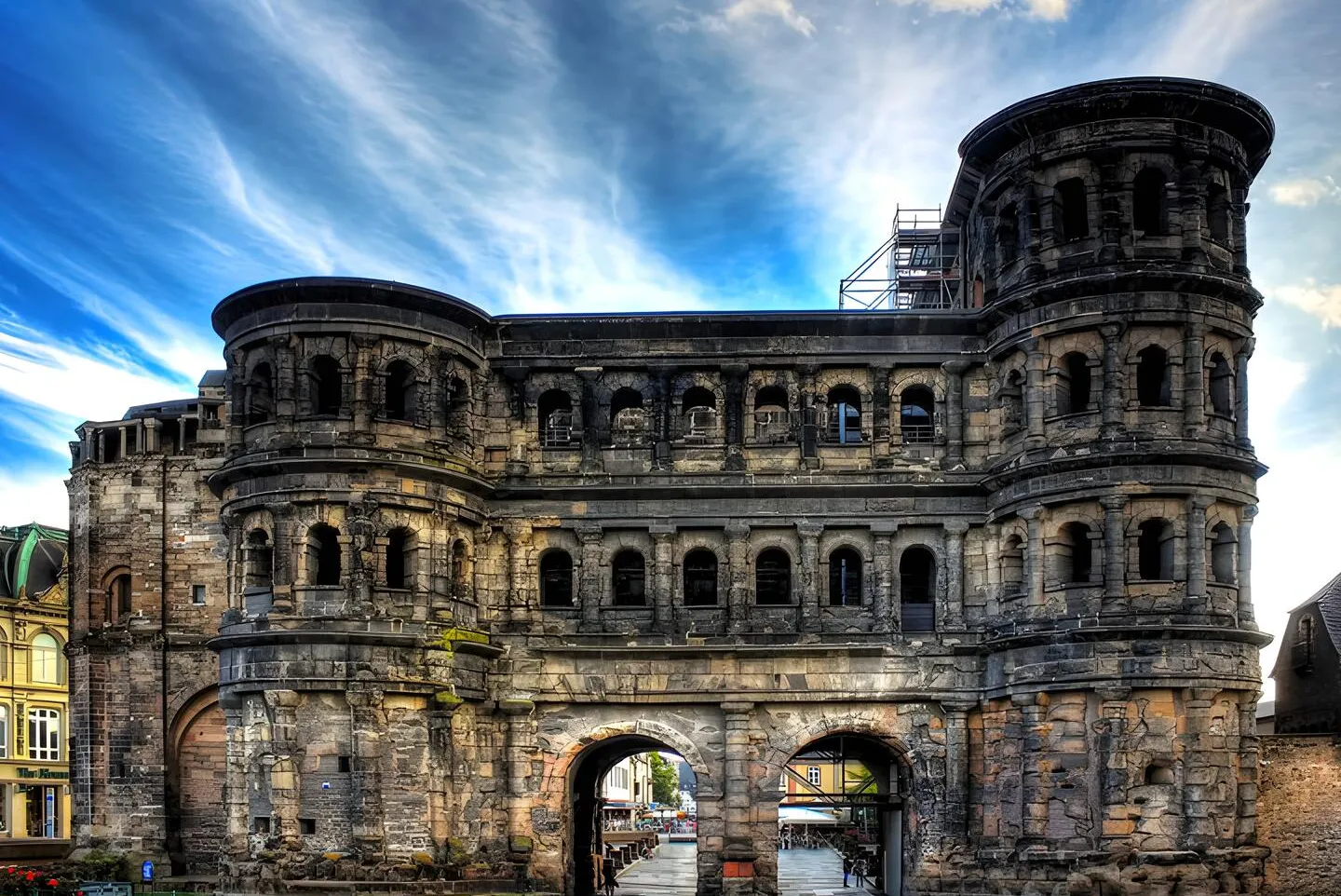
La puerta romana que se convirtió en iglesia, en casa de un ermitaño y casi termina en cantera de piedra.
The Porta Nigra is open daily from 9:00 to 18:00 in high season (April to October), and from 10:00 to 16:00 in winter, although it is best to check for holidays. You can easily walk there from the center of Trier or take a bus; the main entrance is on Simeonstraße. For more details, visit the official Trier website.
Admission costs around €3 for adults, €2 for young people, and is free for children under 18 and TrierCard holders. If you travel in a group or with a guide, there may be discounts. Check current prices on the official website.
It is recommended to spend at least 1 hour exploring the main structure and climbing the towers, but if you want a more detailed visit with an audio guide, allow 1.5 to 2 hours. It is a compact site, ideal for a quick stop on a day of sightseeing in Trier.
The Porta Nigra, built in the 3rd century AD as part of the Roman walls of Trier (Augusta Treverorum), is the best preserved of the four gates and was declared a UNESCO World Heritage Site in 1986. In the Middle Ages, it was converted into a church dedicated to Saint Simeon, symbolizing the transition from the Roman to the Christian era in Europe.
The best time is during spring or summer (May to September) to enjoy good weather and local events, preferably early in the morning or at sunset to avoid crowds and capture stunning photos. In winter, the Christmas lights make it magical, but be prepared for the cold.
Accessibility is partial: the ground floor is wheelchair accessible, but climbing to the upper towers requires narrow and steep stairs, which is not advisable. Contact the visitor center at +49 651 29411 for assistance options or adapted tours; the official site has more info at trier.de.
Nearby, just a 10-minute walk away, you will find the Trier Cathedral and the Church of Our Lady, also UNESCO Heritage Sites, and the Rheinisches Landesmuseum with Roman artifacts. Don't miss the Roman Bridge over the Moselle, 1 km away, for a complete historical route.
Wear comfortable shoes for the stairs and consider renting an audio guide on site to enrich the experience (available in several languages). Avoid peak midday hours and combine the visit with a stroll through the historic center; if it rains, keep in mind that the outer parts can be slippery.
¿Prefieres escuchar en español?
🇪🇸 Escucha la audioguía de the Porta Nigra of Trier en español