No te vayas sin conocer la historia Suscribete
IAudioGuia iaudioguia
Audio Guides of Mont Saint Michel

Audio Guide of the Great Causeway

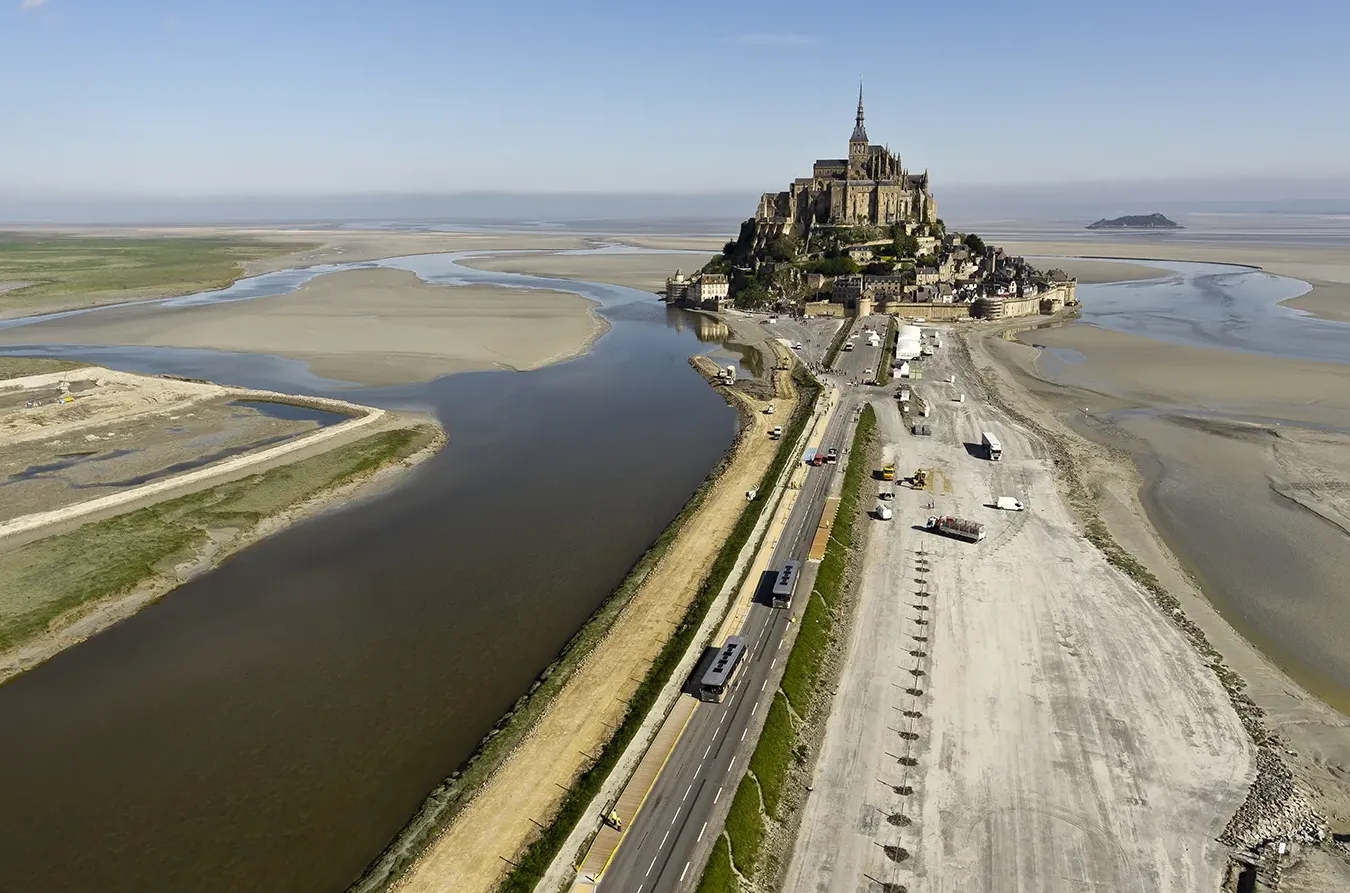
La Gran Dique es la monumental estructura de piedra que conecta Mont Saint-Michel con el continente francés, diseñada para domar las feroces mareas y facilitar el acceso a este sitio icónico.

✓ What guidebooks don't tell you
✓ Secrets other tourists miss
✓ Listen while you explore
Discover everything
00:00
00:00

📖 Audio Guide Chapters

6 chapters

1. Introduction and History

🔒 Premium Content

Subscribe to access all chapters of this audio guide.

2. Architecture and Design

🔒 Premium Content

Subscribe to access all chapters of this audio guide.

3. Art and Decoration

🔒 Premium Content

Subscribe to access all chapters of this audio guide.

4. Historical Figures

🔒 Premium Content

Subscribe to access all chapters of this audio guide.

5. Curiosities and Legends

🔒 Premium Content

Subscribe to access all chapters of this audio guide.

6. Cultural Importance and Legacy

🔒 Premium Content

Subscribe to access all chapters of this audio guide.

❓ Frequently Asked Questions

What are the opening hours for accessing the Great Causeway and the footbridge?

The Great Causeway (the dike) and the pedestrian footbridge are public spaces open 24 hours a day, 365 days a year, so you can cross them freely at any time. However, please note that the shuttle bus service ('Le Passeur') generally operates from 7:30 a.m. to midnight, depending on the season.

Do I have to pay an entrance fee to cross the bridge to Mont Saint-Michel?

No, access to the footbridge and walking across it is completely free for pedestrians. The main cost to consider is parking on the mainland (approx. €15–€25 depending on the season), which includes use of the free shuttle buses to the foot of the mount.

How long does it take to walk from the parking area to the mount using the footbridge?

The full walk from the parking area and visitor information center covers about 2.5 km and usually takes between 35 and 45 minutes at a relaxed pace. It is a highly recommended scenic walk, perfect for listening to our Mont Saint-Michel audio guide and getting into the atmosphere.

Why did they build this footbridge instead of the old road?

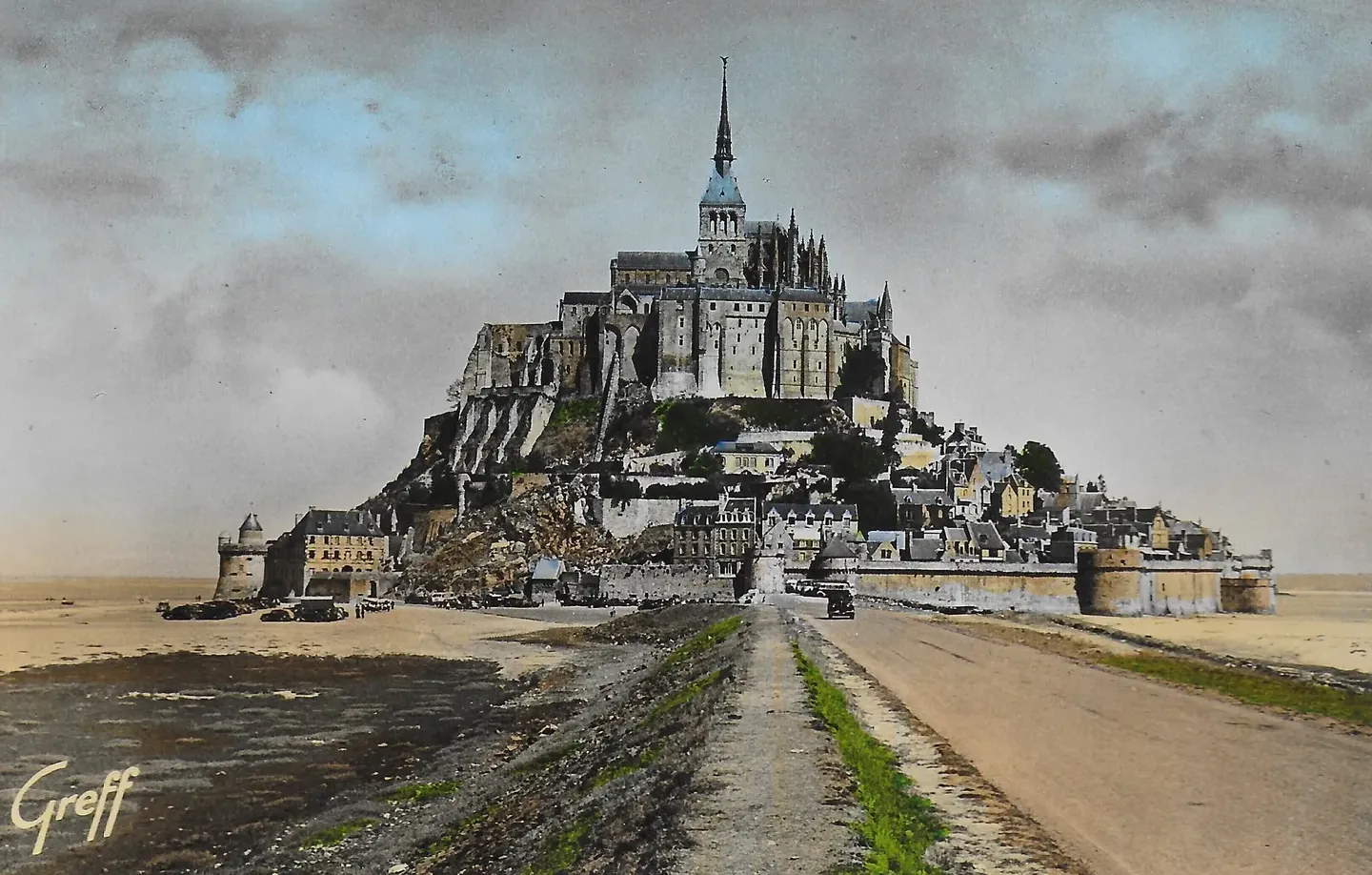
This engineering work, completed in 2014, was built on piles to allow sea currents to flow underneath, preventing sand buildup. Its historical and ecological purpose was to restore Mont Saint-Michel’s island character, allowing it to become a true island again during high tide.

What is the best time to cross the footbridge for photos?

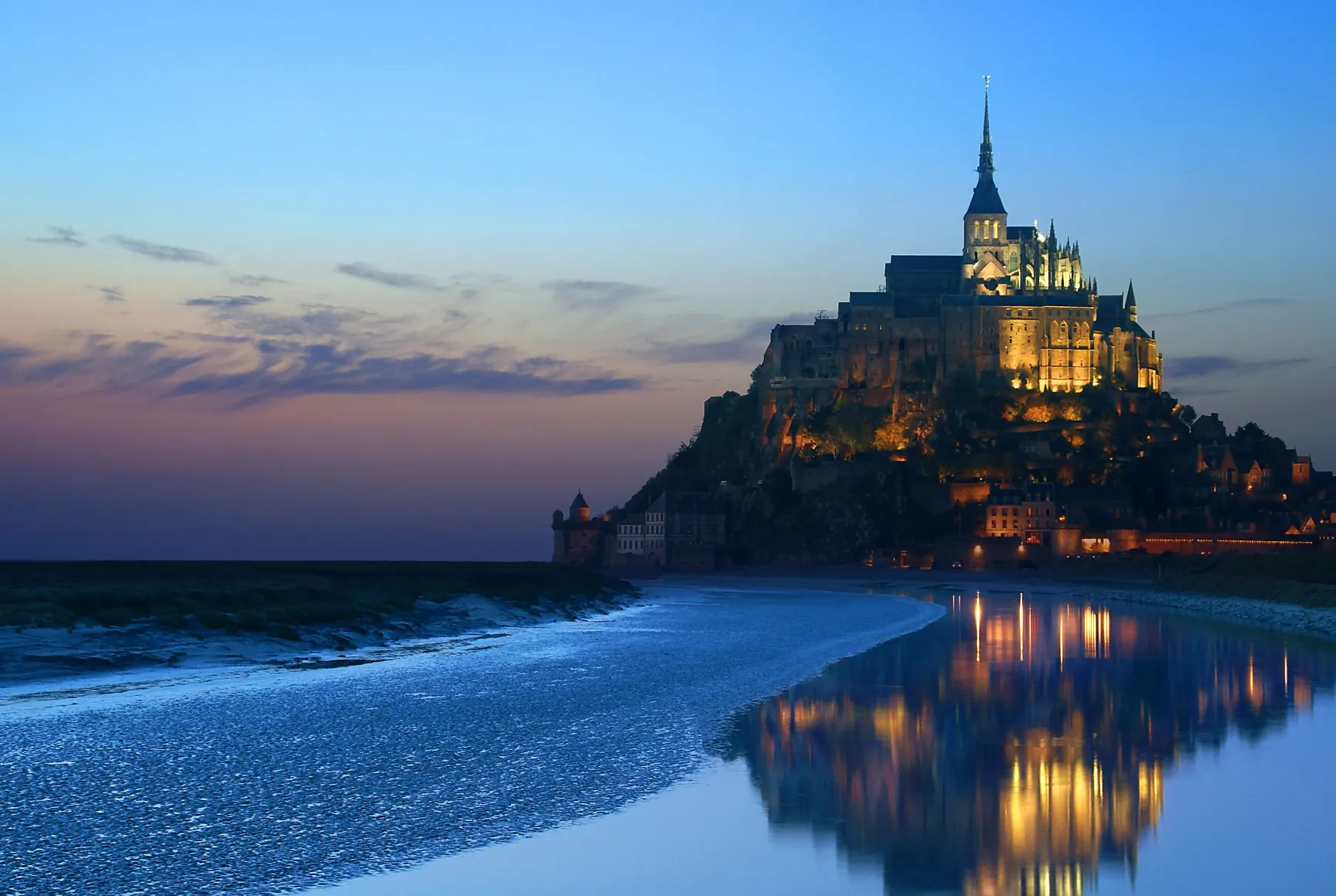
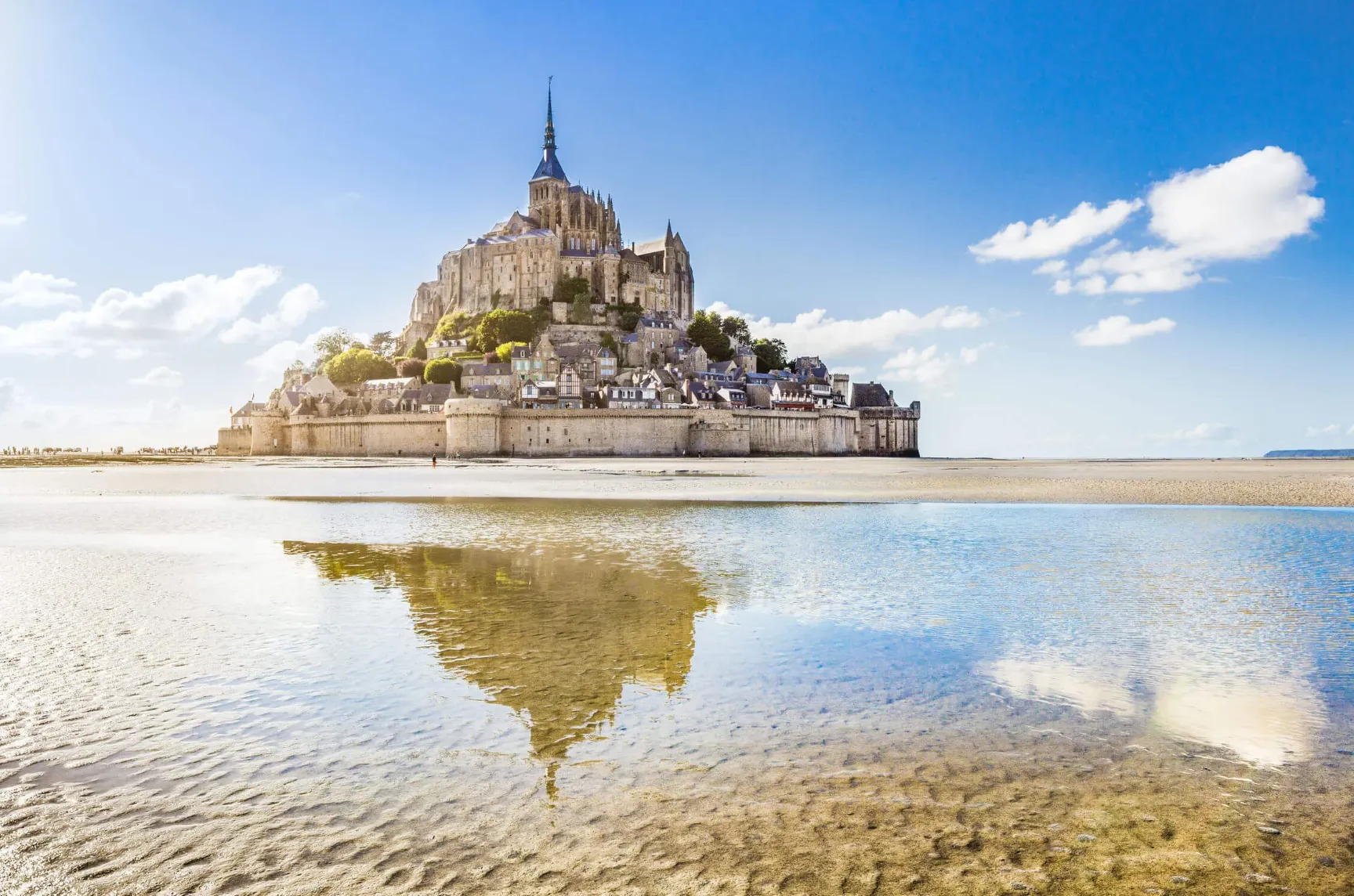
For spectacular photographs, we recommend crossing at high tide (check the tide tables) when the water surrounds the structure, or at sunset to see the abbey illuminated. Avoiding the middle of the day (11:00 a.m.–3:00 p.m.) will let you enjoy the walk with far fewer people.

Is the footbridge accessible for people with reduced mobility or wheelchairs?

Yes, accessibility is excellent; the footbridge has a smooth wooden surface and wide spaces specifically designed for wheelchairs and strollers. In addition, the 'Le Passeur' shuttle buses that run across it are also adapted for people with reduced mobility.

What else can I see nearby before crossing the footbridge?

Just before beginning the crossing, we recommend visiting the Couesnon Dam, a modern hydraulic dam that can be explored on foot. It is essential to the system that keeps the bay free of sediment and offers an excellent panoramic view of the mount.

What practical advice would you give me for crossing on foot?

The wind can be strong in the bay even on sunny days, so always bring a windbreaker or light jacket. Also, wear very comfortable shoes, because after crossing the footbridge you will have to climb many stairs inside the village and the abbey.

¿Prefieres escuchar en español?

🇪🇸 Escucha la audioguía de the Great Causeway en español