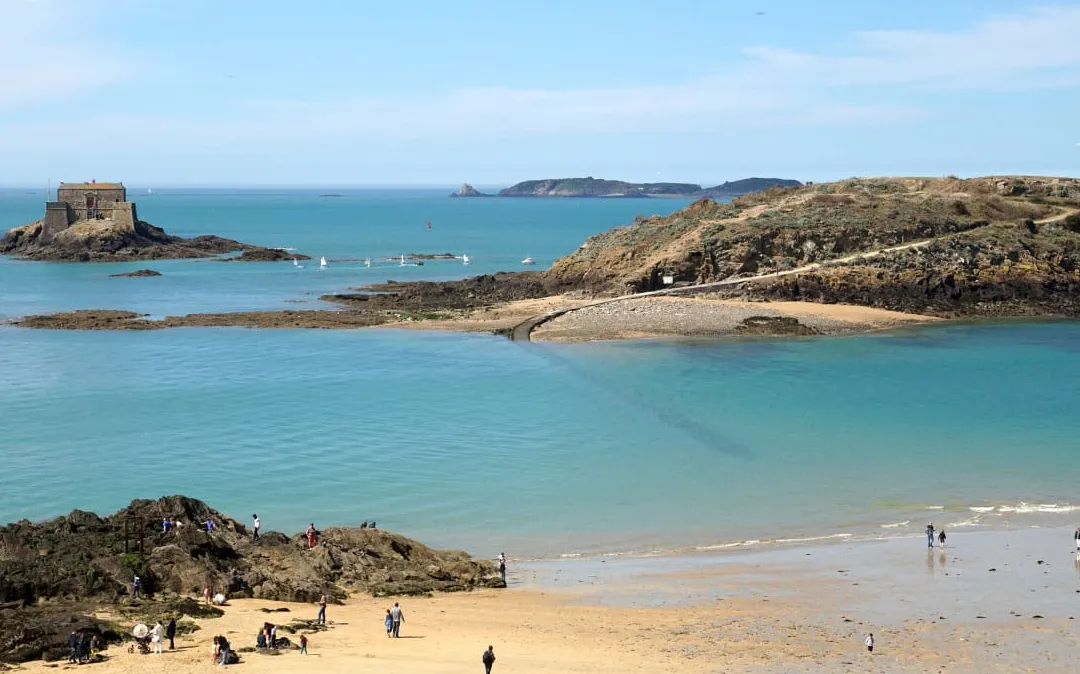
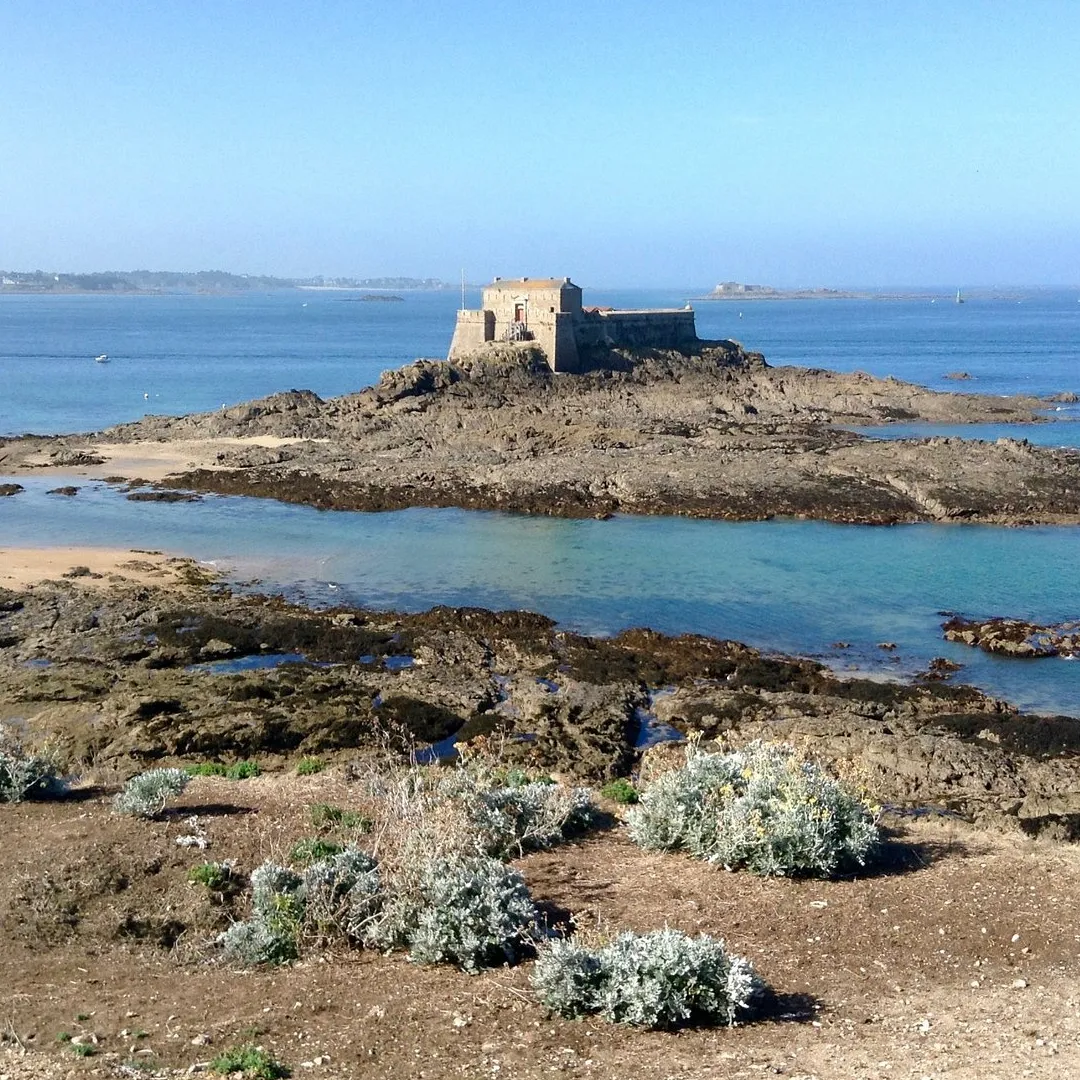
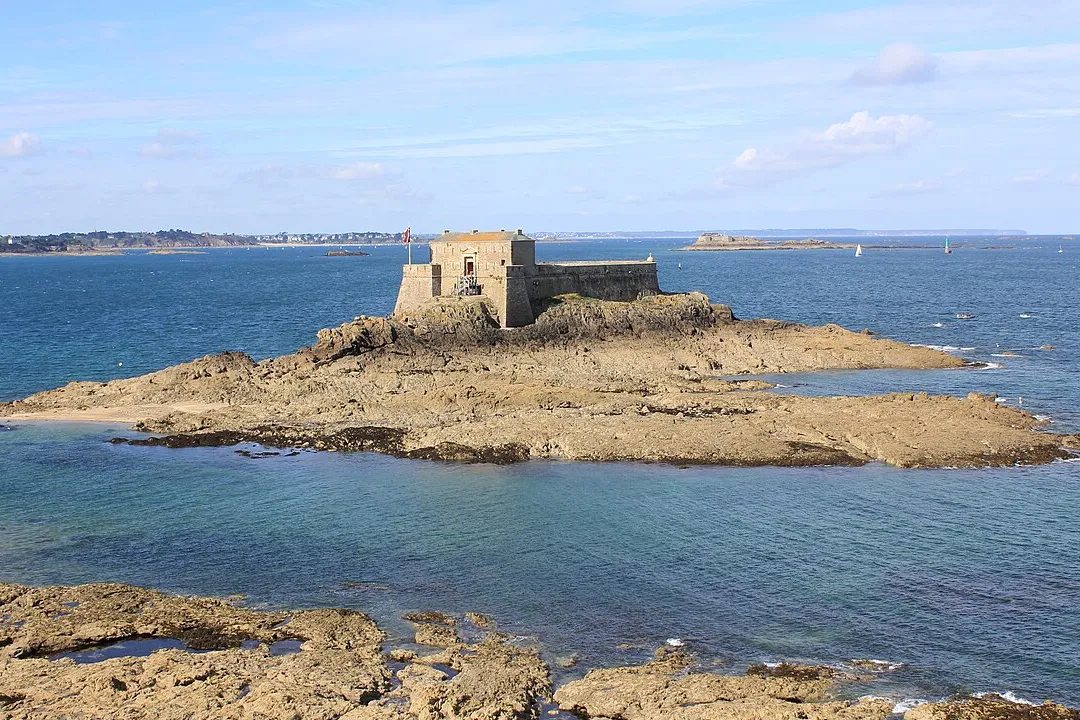
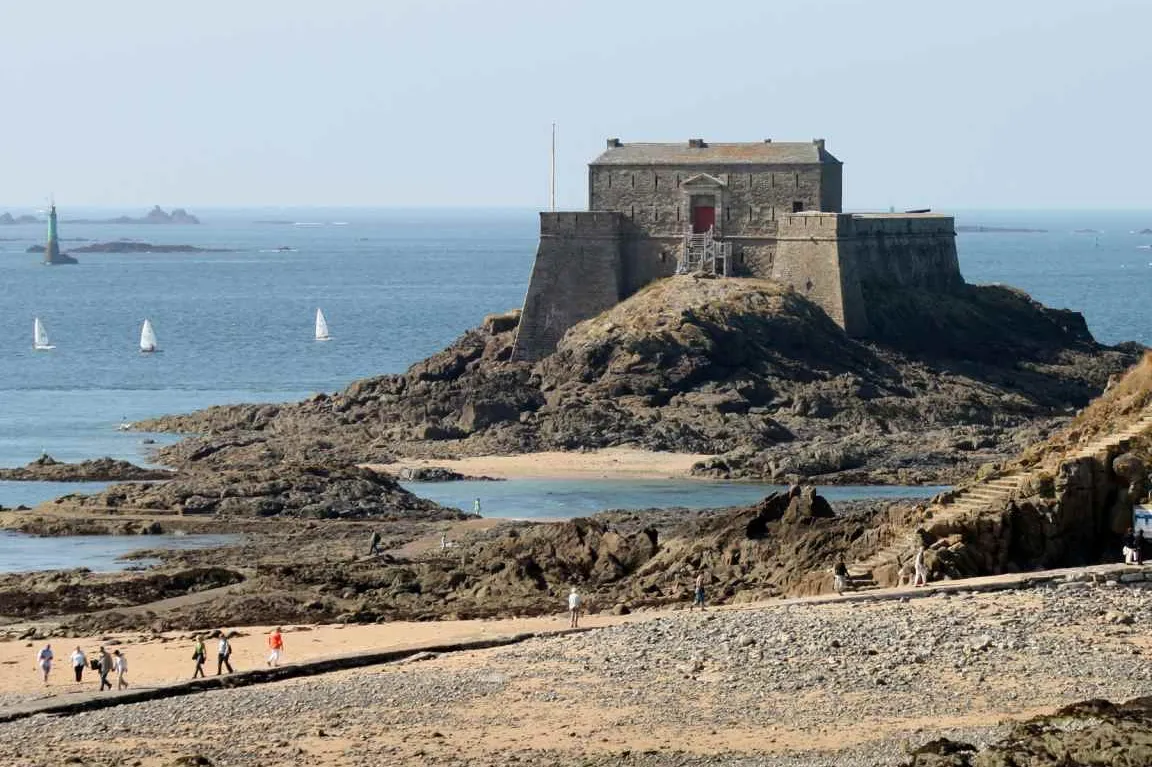
Two islands that can be visited at low tide. Grand Bé is home to the tomb of the famous French writer Chateaubriand.
The main attraction of Grand Bé and Petit Bé is that they are only accessible on foot during low tide. It is crucial to check the tide times, as the visiting window is limited. You can find schedule details at the Saint-Malo tourist offices or on specialized tide websites such as Maree.info. Once the tide is out, you can walk directly from Bon Secours Beach.
Good news! Access to the islets of Grand Bé and Petit Bé is completely free. You do not need to buy tickets or pay any fee to enjoy this incredible walk. You just need to make sure you arrive at the right time at low tide.
For a complete and unhurried visit, including the walk around the islets and exploring their fortifications, I recommend setting aside between 1.5 and 2 hours. It is important to keep the tide schedule in mind, as you will only have a limited time to explore before the water returns.
Grand Bé is famous for being the final resting place of Chateaubriand, the celebrated French writer and politician, whose tomb stands on the islet facing the sea. Both islets, and particularly Petit Bé, contain old fortifications designed by Vauban in the 17th century to defend Saint-Malo, giving them great historical and architectural value.
The best time to visit Grand Bé and Petit Bé is undoubtedly during low tide on a sunny day, preferably outside the peak summer season (July and August) to avoid the crowds. Early mornings or late afternoons offer beautiful light and pleasant temperatures. And do not forget to always check the tide tables!
Unfortunately, access to Grand Bé and Petit Bé is not suitable for people with reduced mobility or wheelchairs. The access path is sandy and rocky, and the terrain on the islets is uneven, with slopes and steps in the fortifications, which makes movement difficult. The very nature of the visit, dependent on the tide, means it is not easy terrain to cross.
Around Grand Bé and Petit Bé, Saint-Malo offers plenty of fascinating places. You can walk along the city walls, explore the Saint-Malo Castle (home to the Museum of the History of the City and the Malouin Region), or enjoy beaches such as Sillon or Bon Secours. The historic walled center is full of shops, restaurants, and impressive facades.
Absolutely. First, and most importantly, always check the tide tables (Maree.info) and plan your time so you do not get stranded. Wear comfortable shoes that can get wet, as the path may be damp. Do not forget your camera to capture the beauty of the landscape, and if you want to go deeper, consider bringing an audio guide from IAudioguia for an enriching experience in Saint-Malo.
¿Prefieres escuchar en español?
🇪🇸 Escucha la audioguía de Grand Bé and Petit Bé in Saint-Malo en español