No te vayas sin conocer la historia Suscribete
IAudioGuia iaudioguia
Audio Guides of Dijon

Audio Guide of Arquebuse Botanical Garden

Discover the history and secrets of this place with our audio guide.

✓ What guidebooks don't tell you
✓ Secrets other tourists miss
✓ Listen while you explore
Discover everything
00:00
00:00

📖 Audio Guide Chapters

8 chapters

1. Introduction

🔒 Premium Content

Subscribe to access all chapters of this audio guide.

2. History of the Garden

🔒 Premium Content

Subscribe to access all chapters of this audio guide.

3. Botanical Collections

🔒 Premium Content

Subscribe to access all chapters of this audio guide.

4. The Natural History Museum

🔒 Premium Content

Subscribe to access all chapters of this audio guide.

5. The Rose Garden and the Arboretum

🔒 Premium Content

Subscribe to access all chapters of this audio guide.

6. The Planetarium

🔒 Premium Content

Subscribe to access all chapters of this audio guide.

7. Visitor Recommendations

🔒 Premium Content

Subscribe to access all chapters of this audio guide.

8. Conclusion

🔒 Premium Content

Subscribe to access all chapters of this audio guide.

❓ Frequently Asked Questions

What are the opening hours of Arquebuse Botanical Garden and its museums?

The garden is open every day from 9:00 a.m. to 8:00 p.m. in summer and until 6:00 p.m. in winter, giving you plenty of flexibility. However, keep in mind that the Natural History Museum and the Planetarium are closed on Tuesdays and have more specific schedules, so I suggest checking the details on the Dijon Tourism website before you go.

Do you have to pay admission to visit the park or the Natural History Museum?

I have excellent news for your budget: admission to the botanical garden and the permanent exhibitions of the Natural History Museum is completely free. Only some specific Planetarium shows may have a fee or require advance booking, but the vast majority of the complex is freely accessible.

How much time is recommended to visit the entire Arquebuse complex?

To enjoy it without rushing, I recommend setting aside between 1.5 and 2 hours of your time. This will allow you to stroll მშვიდfully through the arboretum and the rose garden, and spend about 45 minutes exploring the fascinating collections of the natural science museum.

What is the historical importance or origin of this garden in Dijon?

This place was not always an oasis of peace; in the 16th century it served as a training ground for arquebusiers (the shooters of the arquebus company), which is where its name 'Arquebuse' comes from. Today it has been transformed into a sanctuary of biodiversity that brings together military history and botanical conservation in a single space.

What is the best time of year to visit the Arquebuse Garden?

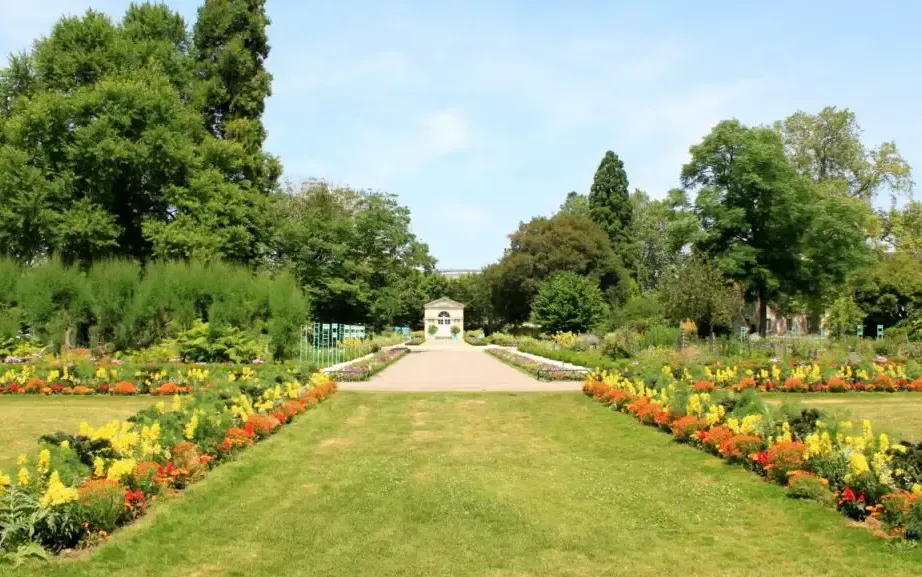
Without a doubt, spring and early summer (May and June) are the magical times, as the rose garden is in full bloom and the colors are spectacular. If you are looking for peace and quiet, visit the gardens early in the morning, when the light is ideal for photography.

Are the garden and museum accessible for people with reduced mobility?

Yes, the site is very well adapted; the garden paths are flat and paved, making wheelchair use easy. In addition, the Raines Pavilion (the museum) has elevators and access ramps to ensure that everyone can enjoy the visit.

What other tourist attractions can I visit nearby after the garden?

You are in a strategic location, right next to the train station and just a short walk from the impressive Dijon Cathedral. You can also continue your route toward the historic center by following the famous Owl Trail.

What practical advice would you give me to make the most of the visit?

Do not limit yourself to the outdoors; step into the Hubert Curien Planetarium if you are traveling with children or enjoy astronomy, as it is a hidden gem. Also, bring your headphones and check whether audio guides are available on IAudioguia.com to enrich your experience with interesting facts as you walk.

¿Prefieres escuchar en español?

🇪🇸 Escucha la audioguía de Arquebuse Botanical Garden en español