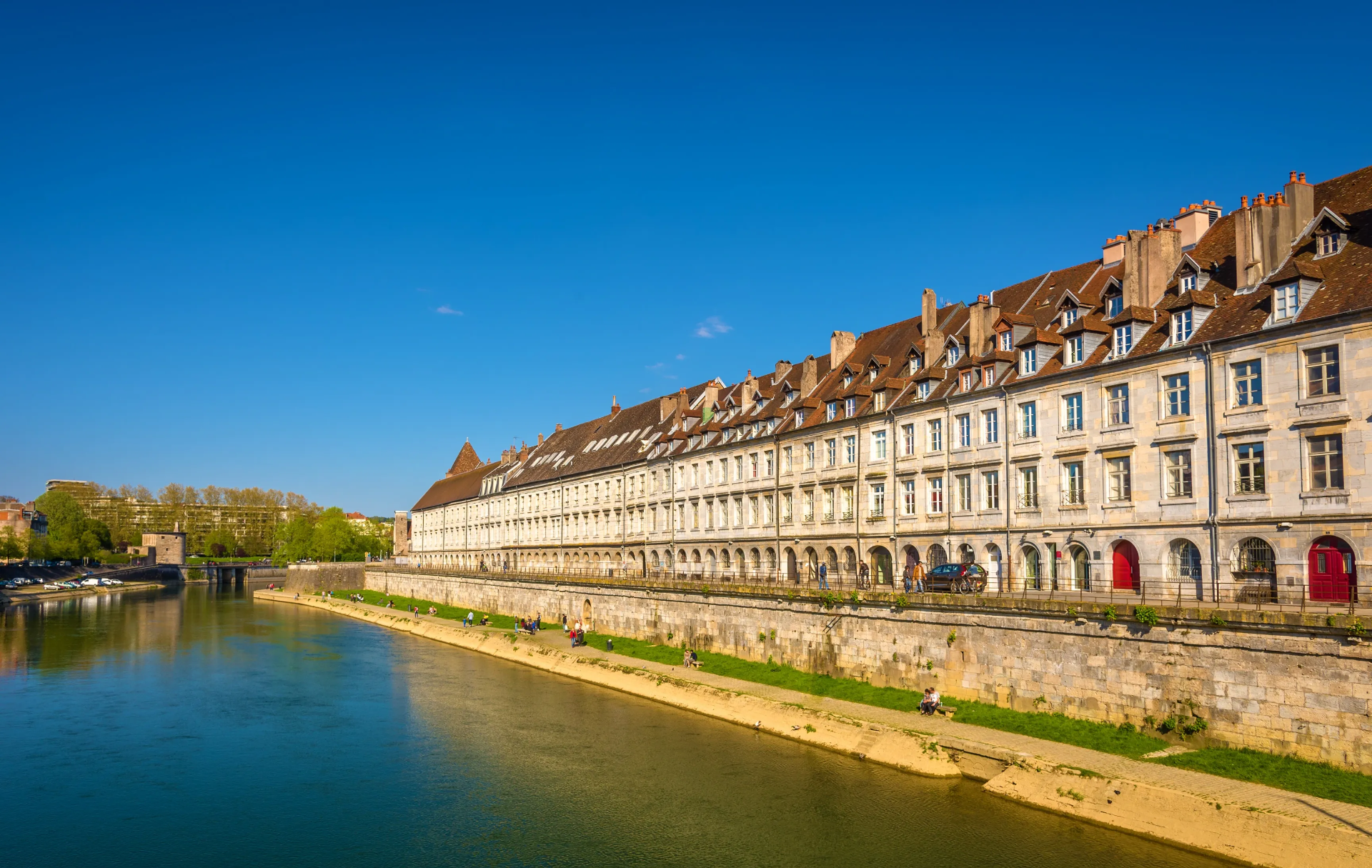
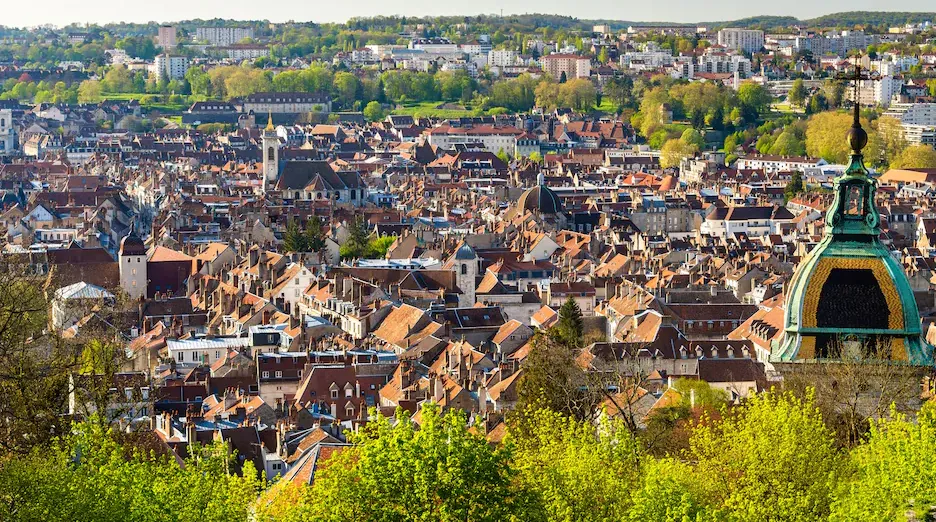
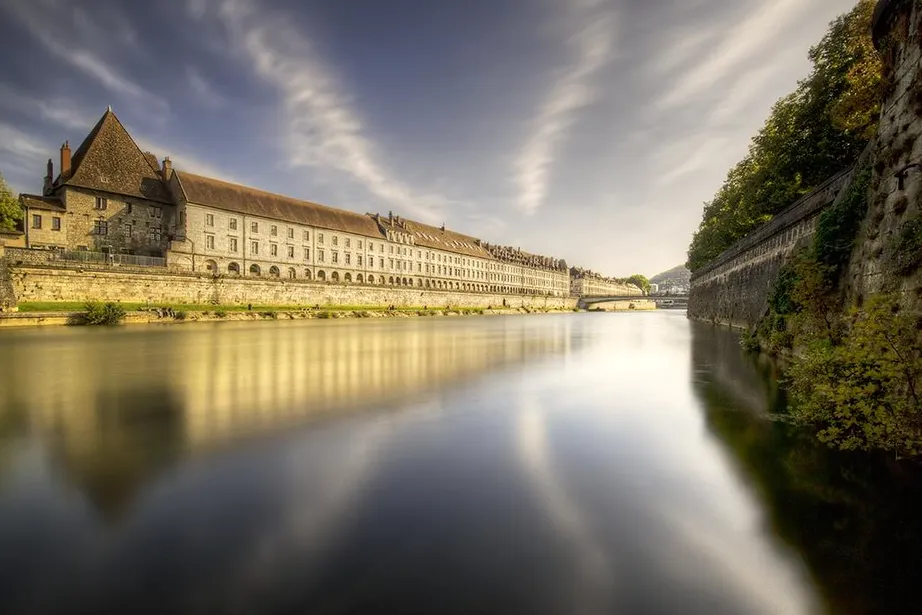
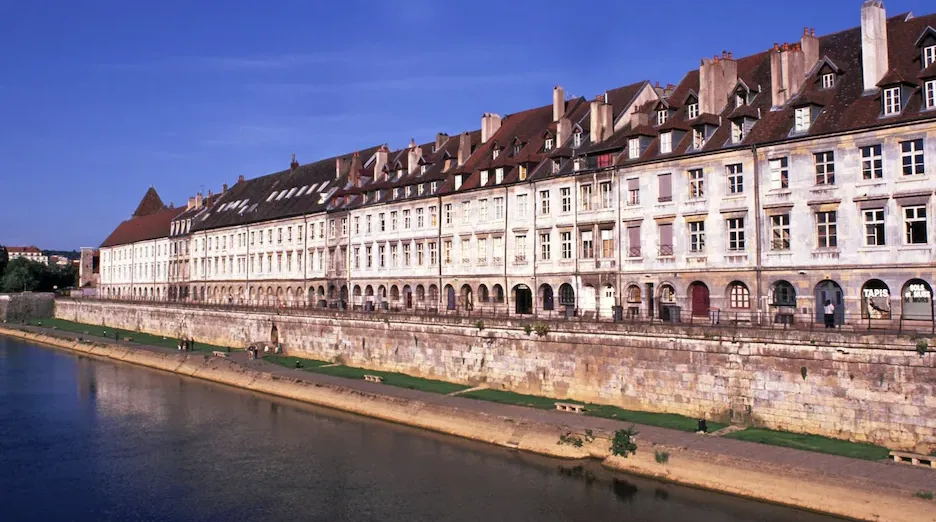
An imposing 19th-century flour mill transformed into an emblematic cultural and residential center, bearing witness to the industrial and urban evolution of Besançon.
The Great Mill of Besançon is not a working mill or a tourist attraction regularly open to the public in the traditional sense. In fact, it refers to an area of the Doubs River where mills historically stood. Today, the most common way to 'access' it is to appreciate it from the riverbanks while walking through Besançon, especially near the Citadel or Battant Island.
No, there is no entrance fee to visit or walk along the banks of the Doubs River in the area where the Great Mill of Besançon once stood. It is a free public area, ideal for a walk, a picnic, or simply enjoying the city's riverside scenery.
Since the Great Mill is not a visitable site as such, but rather a scenic and historical point of interest, the duration of the visit is flexible. You could spend 15 to 30 minutes enjoying the river views, or include it in a longer walk of several hours along the Doubs or toward the Citadel of Besançon, which is a nearby must-see attraction.
The Great Mill of Besançon was historically important because it represented the economic backbone of the city for centuries. The mills in this part of the Doubs were vital for grinding grain and supporting other industries powered by the river. Their presence was essential to daily life and the development of Besançon, and although the original structures no longer survive, their legacy remains part of the city's riverside identity.
The best time to visit the Great Mill area is during spring or summer, from May to September, when the weather is more pleasant for walking along the riverbanks. As for the time of day, the afternoon offers beautiful light for photographs and, in good weather, is ideal for a relaxed stroll. Avoid the hottest summer hours if you prefer milder temperatures.
The banks of the Doubs River in Besançon are generally quite accessible for people with reduced mobility, with paved paths and level walkways. However, since there is no specific structure to visit, accessibility relates more to how easily the surroundings can be enjoyed from the riverside promenades. It is recommended to consult local maps or the Besançon tourist office for specific information about ramps or access at the exact point of interest.
Besançon is full of places to explore. Very close to the Great Mill area is the impressive Citadel of Besançon, a UNESCO World Heritage Site with museums and spectacular views. You can also stroll through the historic center, cross Pont Battant, visit Saint-Jean Cathedral, or enjoy a boat trip on the Doubs.
To make the most of your visit, I recommend including the Great Mill area in a broader tour of Besançon. Consider a boat trip on the Doubs for a different perspective on the city and the river, or combine your visit with the Citadel. Wear comfortable shoes, sunscreen, and bring a bottle of water, especially in summer. And do not forget your camera to capture the beautiful riverside scenery.
¿Prefieres escuchar en español?
🇪🇸 Escucha la audioguía de the Great Mill of Besançon en español