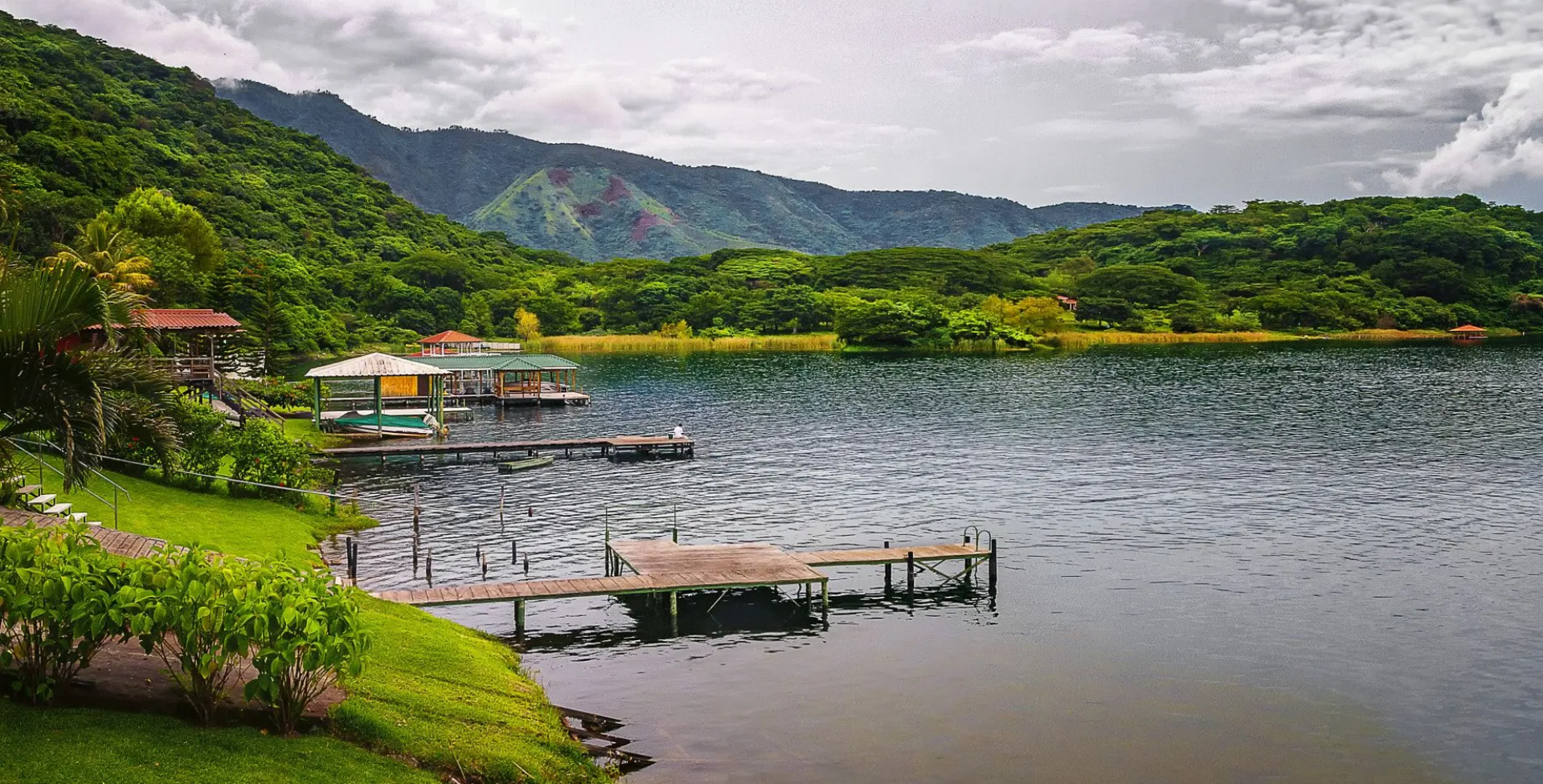
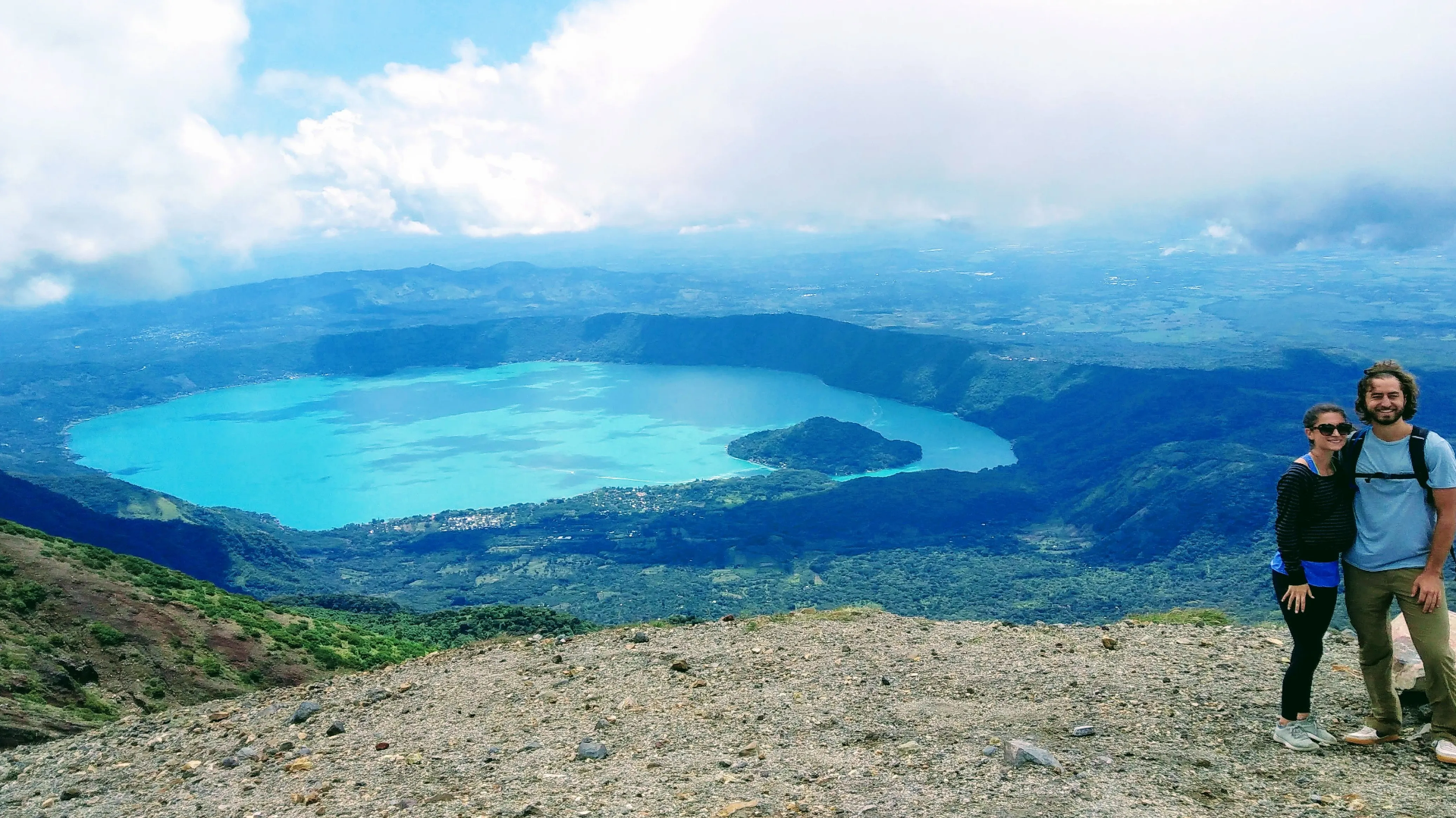
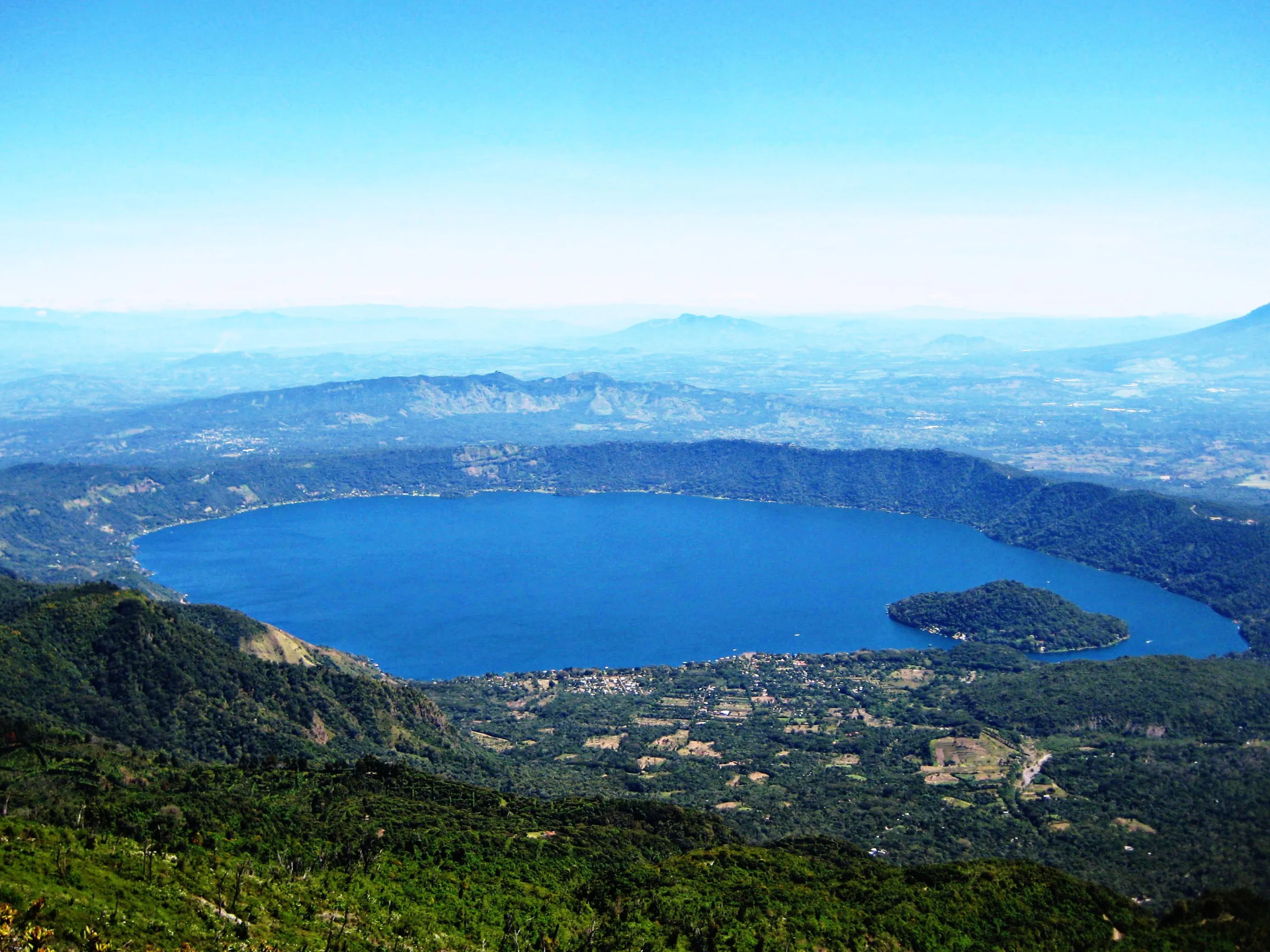
¿Sabías que este paraíso azul esconde la historia de una princesa que se sacrificó por amor, convirtiéndose en su guardiana eterna?
The lake is accessible year-round, 24 hours a day, although visiting during daylight hours is recommended for safety. To get there, take the CA-2 highway from Santa Ana toward Sonsonate; there is a turnoff in Coatepeque. Check the map on the official El Salvador Ministry of Tourism website: MITUR El Salvador.
Access to the lake is free, as it is a public natural site. However, if you plan to camp or use recreational areas such as kayaks, there are moderate fees of around $5–10 per person; check for updates at the nearby national park.
A typical visit lasts 2 to 4 hours to walk along the shores and enjoy the views. If you include activities such as swimming or a picnic, extend it to half a day for a more relaxed experience.
Lake Coatepeque is a volcanic crater formed thousands of years ago, considered sacred by the Indigenous Maya peoples for its beauty and hot springs. Today it represents an ecological and cultural treasure of El Salvador, attracting those seeking a connection with ancestral nature.
The dry season from November to April offers ideal weather with less rain and clear skies. Visit early in the morning to avoid the heat and enjoy the morning mist over the water.
Some areas of the lake have paved paths and level access near the viewpoints, but the natural terrain can be uneven in other spots. I recommend contacting the national park in Cerro Verde at +503 2441-6000 for assistance options or adapted routes.
Nearby you will find Cerro Verde National Park with its volcanoes and trails, just 20 minutes away. You can also visit the Maya ruins of Chalchuapa or the beaches of Acajutla, ideal for a full-day itinerary.
Bring insect repellent, sunscreen, and water, as there are not many facilities on site. Wear comfortable walking shoes and check the weather before you go; also, respect the environment by not leaving trash behind.
¿Prefieres escuchar en español?
🇪🇸 Escucha la audioguía de Lago de Coatepeque en español