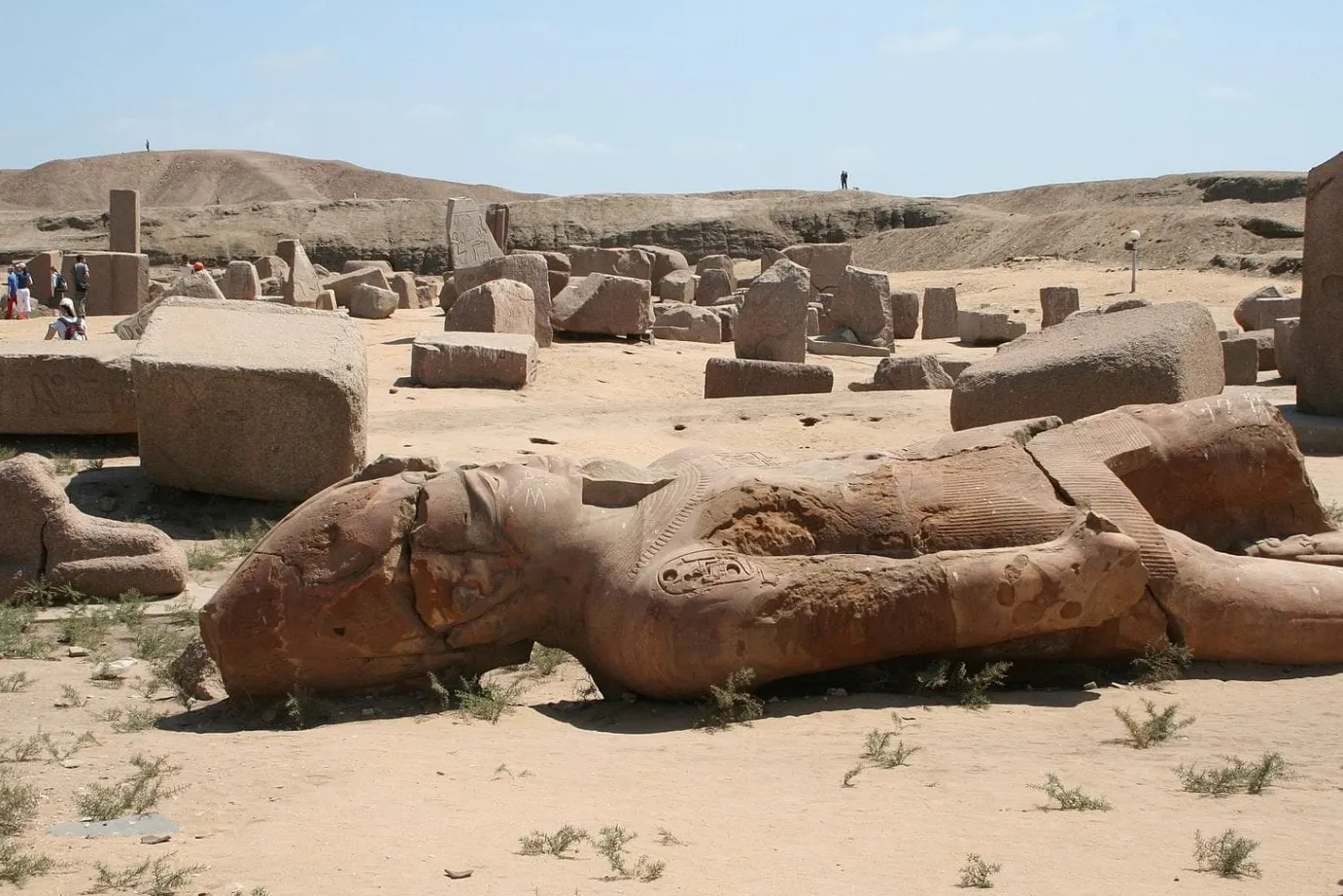
An impressive Egyptian temple dedicated to the lunar god Khonsu, located in the ancient city of Tanis.
The Khonsu Temple in Tanis is part of the Tanis archaeological site. It is generally open to visitors from 8:00 AM to 5:00 PM. It is recommended to confirm specific hours before your visit, as they may vary seasonally. Access is straightforward, as it is part of the main archaeological complex; you can find more details here.
Yes, admission to the Khonsu Temple is included in the entrance fee for the Tanis archaeological site. This fee is paid upon arrival. We currently do not have an exact price or an official website for buying tickets online, so it is best to bring cash and ask when you arrive.
To explore the Khonsu Temple at a relaxed pace and appreciate its details, it is recommended to allow between 30 minutes and 1 hour. If you also wish to visit the rest of the extensive Tanis site, you should plan for at least half a day for the full experience.
The Khonsu Temple is a crucial element within the Tanis complex, one of the important capitals of Ancient Egypt during the Third Intermediate Period. Khonsu was the lunar god, son of Amun and Mut, and this temple reflects devotion to this Theban triad. Its architecture and reliefs offer a unique insight into the religion and art of that time.
The best time to visit Tanis, and therefore the Khonsu Temple, is during the cooler months, from October to April, avoiding the scorching summer heat. As for the time of day, early morning or late afternoon are ideal for avoiding large crowds and enjoying more pleasant temperatures for exploring.
As part of an ancient archaeological site, the Khonsu Temple presents accessibility challenges. The ground may be uneven and sandy, and there are no specific ramps or infrastructure. People with reduced mobility may find it difficult to move freely around the site. It is recommended to contact local authorities or a guide if you have specific needs.
Around the Khonsu Temple, within the same Tanis site, you can explore extensive ruins including other temples, such as the Temple of Amun, fallen obelisks, and the royal necropolis, where intact tombs were discovered. Tanis is an archaeological treasure in itself, offering an immersive experience in pharaonic history. Discover more about what there is to see in Tanis here.
For the best visit, wear comfortable clothing and footwear, use sun protection (hat, sunglasses, sunscreen), and bring enough water, as the site is extensive and exposed. Consider hiring a local guide to enrich your experience with explanations about the history and details of the discoveries. Don't forget your camera to capture the majesty of the place.
¿Prefieres escuchar en español?
🇪🇸 Escucha la audioguía de Khonsu Temple en español