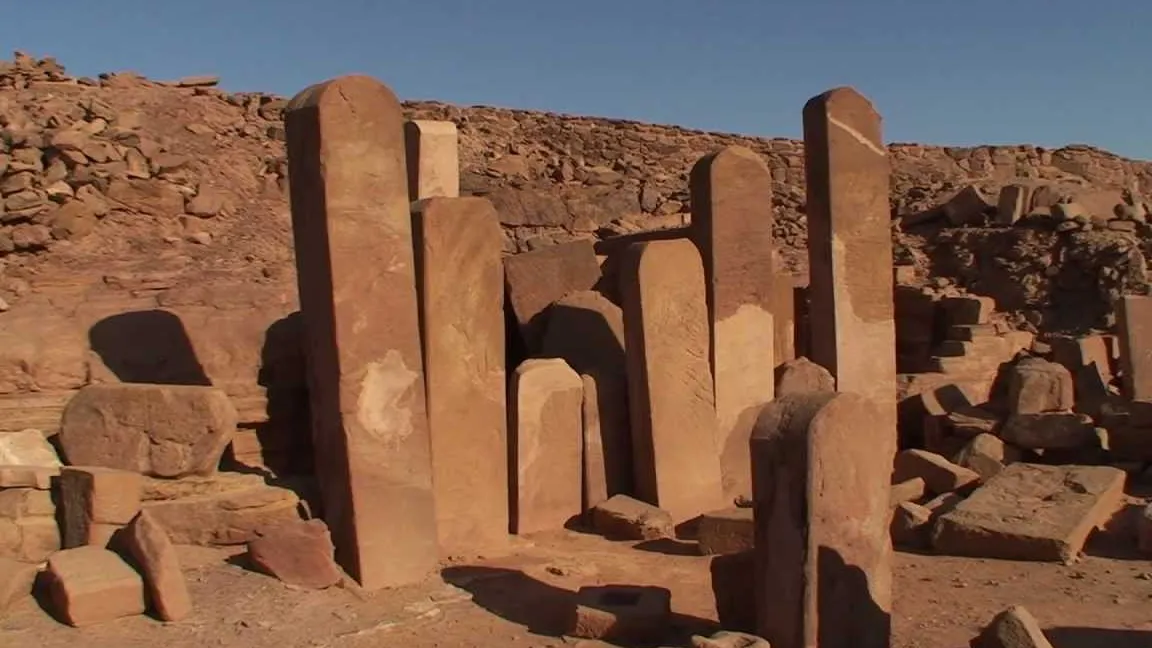
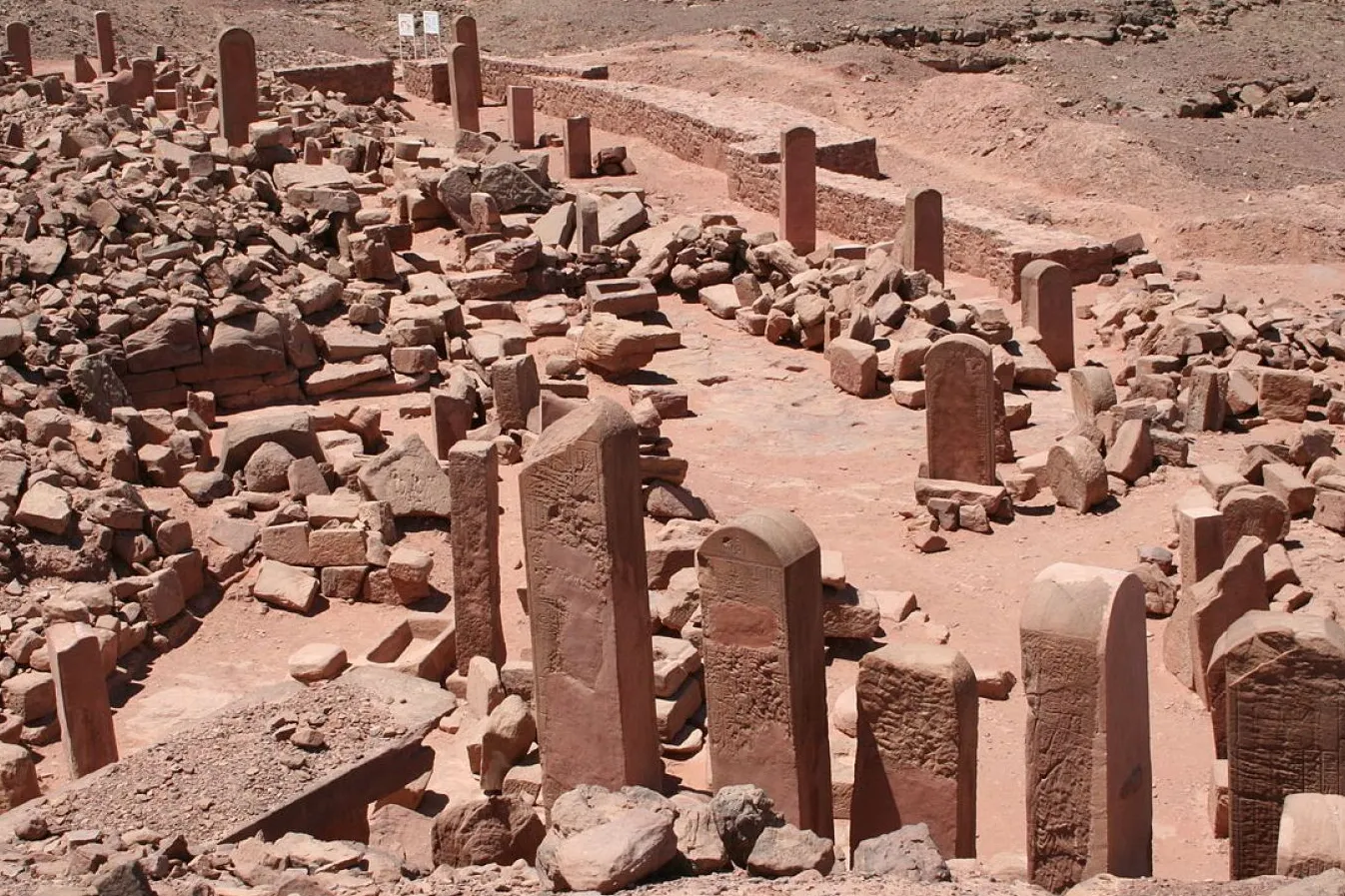
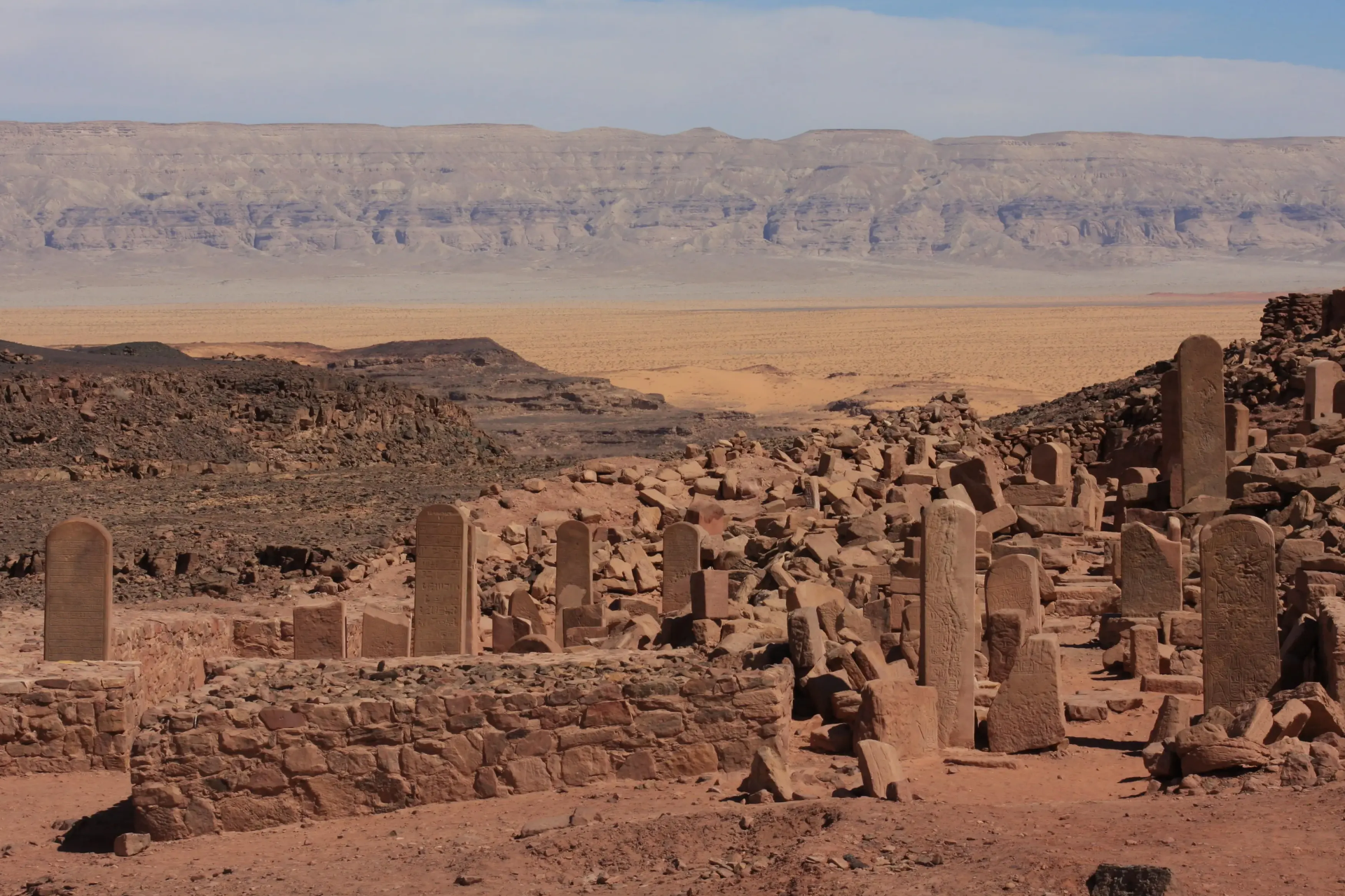
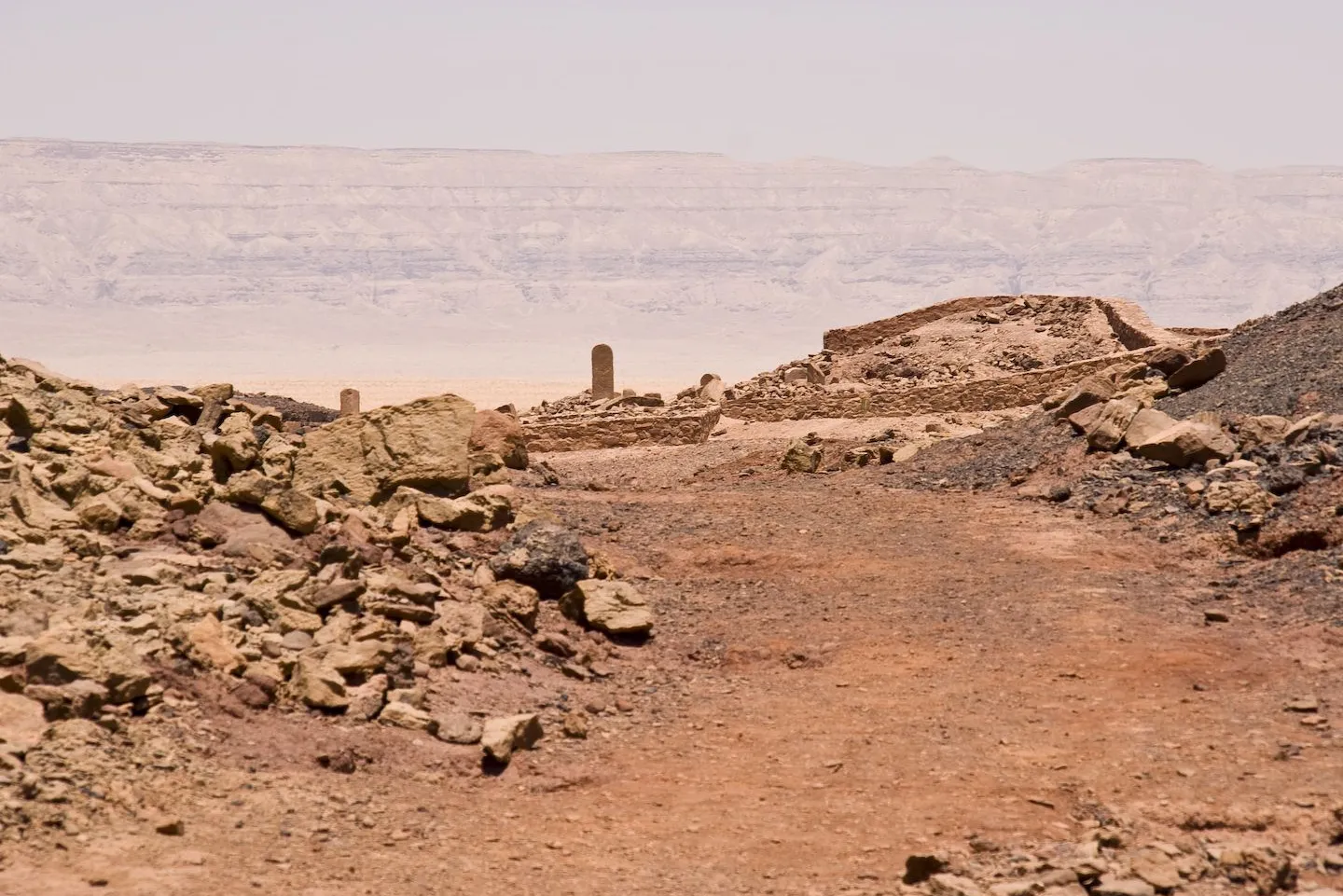
Antiguas ruinas de minas de turquesa y un templo faraónico en el Sinaí, Egipto. Sitio clave para entender la explotación minera antigua y los orígenes de la escritura alfabética.
The archaeological site does not have strict opening hours, but it is visited only during daylight hours, from sunrise to sunset. Access is remote and requires a 4x4 vehicle followed by a hike; you can see its exact location on Google Maps.
Yes, there is an official entrance fee that is usually around 80 to 100 EGP for foreign visitors, payable at the ticket office or local checkpoint. In addition, it is customary and almost obligatory to hire and tip the Bedouin guide who will accompany you for safety.
We recommend allowing at least half a day, about 4 to 5 hours, for the experience. The uphill walk takes between 60 and 90 minutes, and you will want enough time to explore the Temple of Hathor and enjoy the panoramic views at a relaxed pace.
Serabit el-Khadim is crucial for housing the Temple of Hathor, the 'Lady of Turquoise,' and ancient Middle Kingdom mines. It is world-famous because the Proto-Sinaitic script inscriptions discovered here are considered the origin of our modern alphabet.
The best time is between October and April, when temperatures in the Sinai Desert are milder. It is ideal to start the excursion very early in the morning to avoid the midday sun during the climb.
Unfortunately not; access requires a demanding hike along rocky and steep mountain paths. There is no adapted infrastructure, so good physical condition is required to reach the ruins.
Nearby is Wadi Maghareh, another historic site with Pharaonic reliefs and ancient mines. The visit is often combined with routes through the Sinai Desert or stops along the Gulf of Suez coast, such as the town of Abu Zenima.
Bring plenty of water, at least 2 liters per person, a hat, and sunscreen, as there are no services or shade at the top. Wear hiking boots to protect your ankles on the uneven terrain and carry cash in local currency.
¿Prefieres escuchar en español?
🇪🇸 Escucha la audioguía de Serabit el-Khadim en español