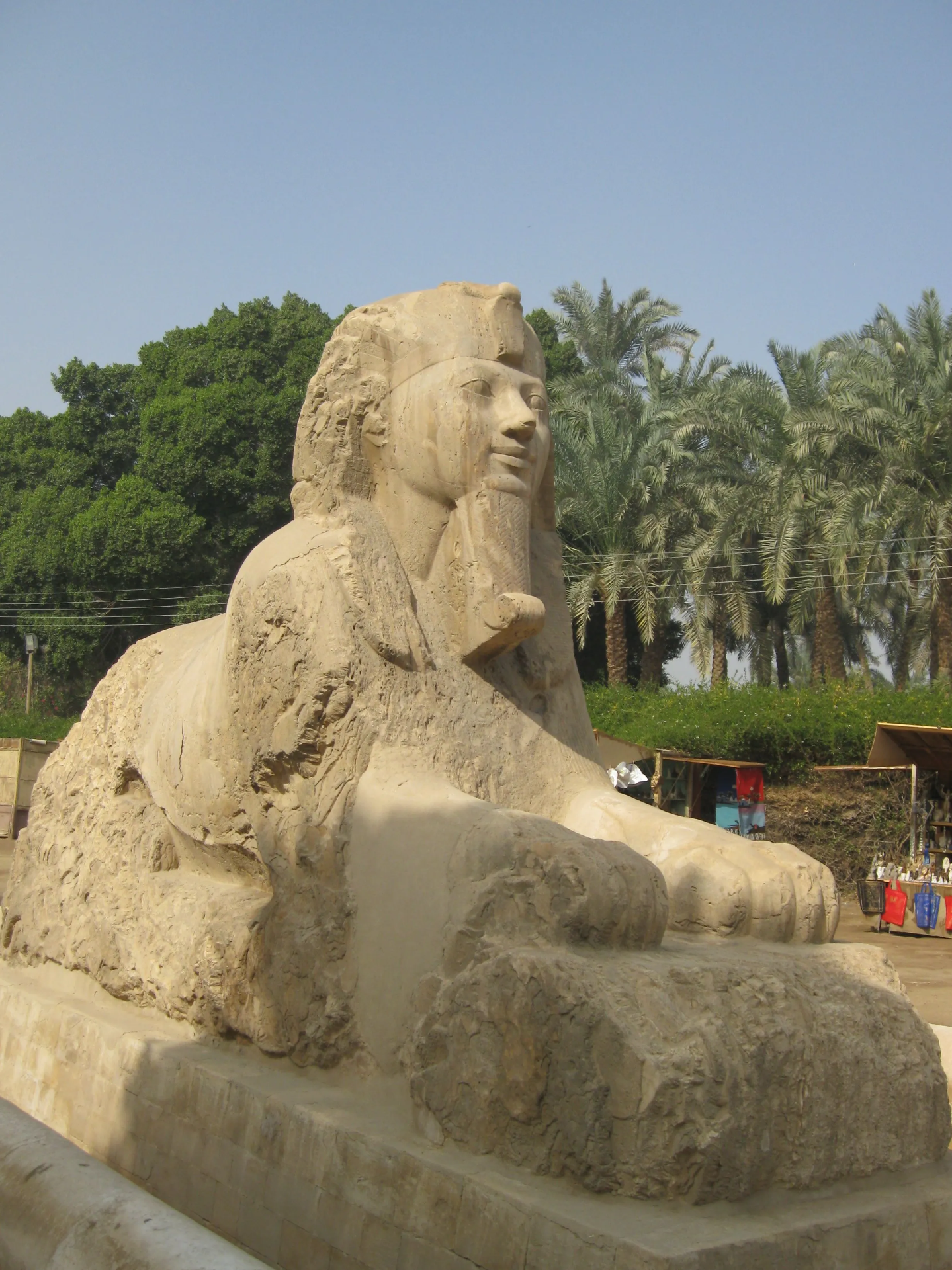
¿Sabías que un faraón se talló a sí mismo en piedra blanda para vigilar su capital eterna, pero casi termina hecha polvo?
The Alabaster Sphinx is located in the Memphis Museum in Mit Rahina, about 20 km south of Cairo. It is generally open from 8:00 a.m. to 5:00 p.m. You can get there by taxi, on an organized tour, or by public transport, although the first two options are the most recommended for tourists. You can find more details on the Memphis Museum page on Tripadvisor: Tripadvisor - Memphis Museum.
The Alabaster Sphinx is part of the Memphis Museum complex, so the admission price is the museum's general ticket. The cost is usually reasonable, around 80-100 EGP for adults, and student discounts may apply. It is advisable to check updated prices on arrival, as they may vary. There is no additional specific fee to see only the Sphinx apart from the general admission.
For the Alabaster Sphinx itself, seeing it up close and taking a few photos will take about 15-20 minutes. However, to enjoy the full Memphis Museum, which includes the colossal statue of Ramesses II and other finds, we recommend setting aside between 1 and 2 hours. That way you can appreciate the full historical richness of the site at a relaxed pace.
This impressive Alabaster Sphinx is believed to represent Hatshepsut or Amenhotep II, although its exact identification remains a mystery. It dates from the New Kingdom (1400-1200 BC) and is the largest alabaster sphinx ever found, weighing approximately 80 tons. Its presence in Memphis underlines the importance of this ancient Egyptian capital as a center of power and worship.
The best time to visit is during the cooler months of autumn and winter (from October to April), when temperatures are more pleasant. As for the time of day, it is recommended to go early in the morning (just after opening) or late in the afternoon, before closing, to avoid crowds and the intense midday heat.
The Memphis Museum, where the Alabaster Sphinx is located, is an open-air archaeological site. Although the Sphinx is in an area with a mostly flat surface, some access points may be uneven. It does not always have specific ramps or full wheelchair adaptations. It is advisable to contact the museum directly for the latest accessibility information. You can look up its phone number in Egypt's museum directory or in your travel guide.
After visiting the Alabaster Sphinx in Memphis, I strongly recommend exploring the Saqqara necropolis nearby, where you will find the Step Pyramid of Djoser, the oldest stone structure in the world. You can also visit the tombs of several nobles and the Serapeum. Both are essential stops for understanding the historical richness of the region and are often combined in the same tour. Read more about Saqqara on Wikipedia: Wikipedia - Saqqara.
Of course! I suggest bringing water, wearing sunscreen and a hat, and comfortable shoes, since you will be outdoors. Consider hiring a local guide at the entrance; their knowledge will greatly enrich your experience by explaining the history and details of the pieces. Do not forget your camera to capture the majesty of the Sphinx and the statue of Ramesses II. An audio guide like ours can be your best ally in discovering every secret!
¿Prefieres escuchar en español?
🇪🇸 Escucha la audioguía de the Alabaster Sphinx en español