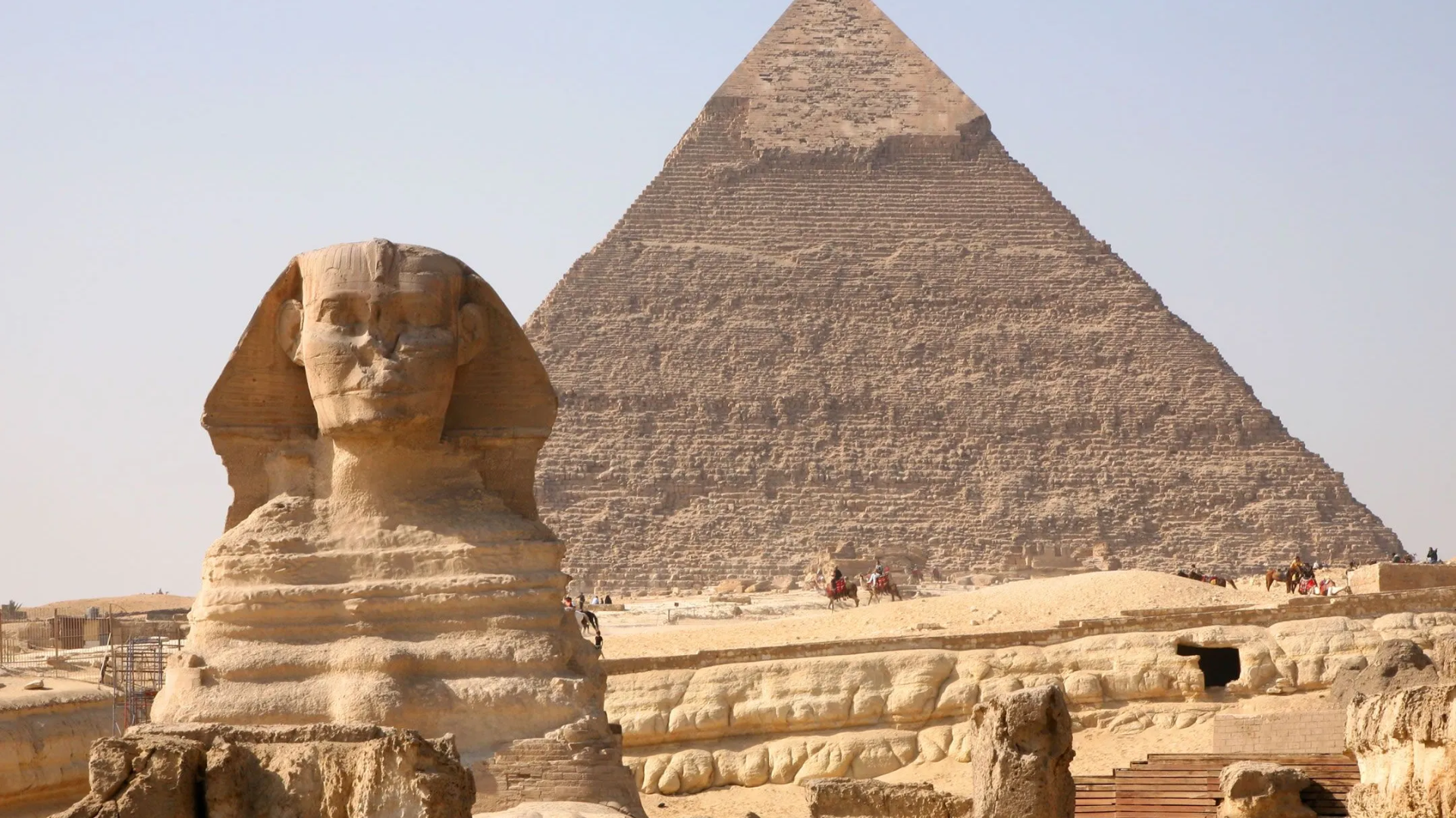
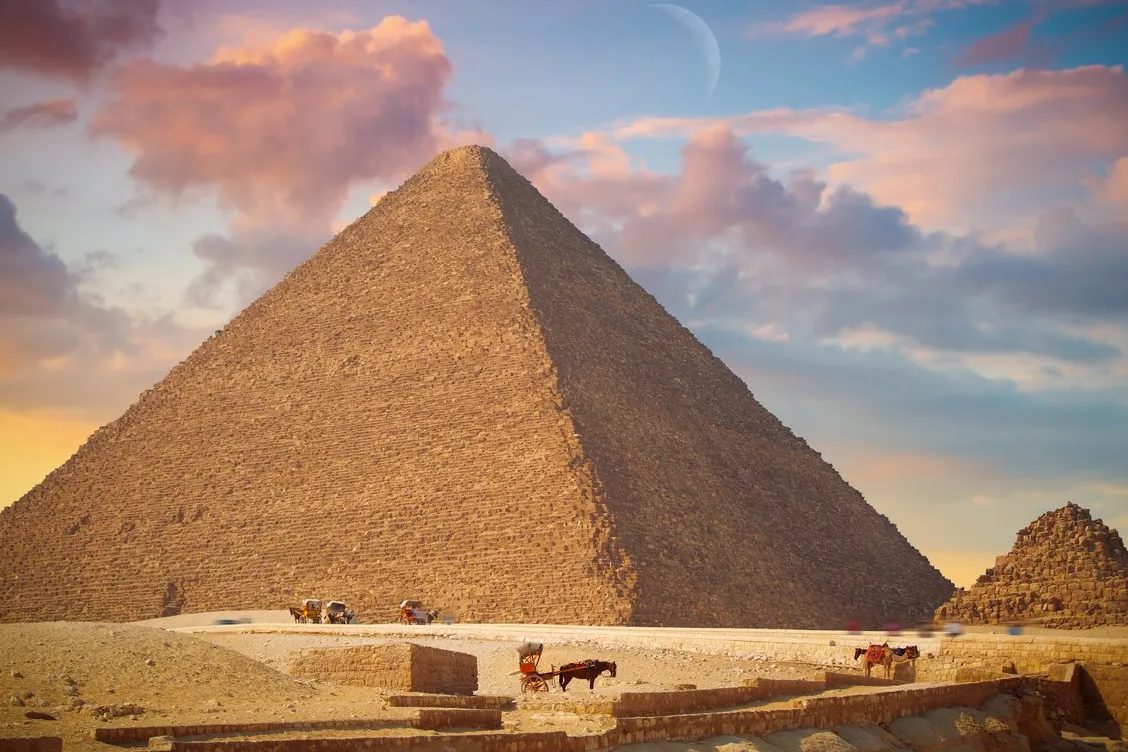
Las icónicas pirámides de Guiza representan el último milagro superviviente de las Siete Maravillas del Mundo Antiguo.
The Giza complex is usually open from 8:00 AM to 5:00 PM in winter and until 6:00 PM in summer. I recommend arriving early to avoid the crowds. You can get there by taxi, Uber/Careem, or through an organized tour from Cairo or Memphis. For detailed information on how to get there, you can check TripAdvisor.
General admission to the Giza area costs approximately 200 EGP (Egyptian pounds). Access to the interior of the Great Pyramid of Khufu has an additional cost of around 400 EGP, and the Pyramid of Khafre, 100 EGP. Students with valid ID usually receive discounts. For updated prices and combined ticket options, we recommend checking at the ticket office or on sites such as Egyptian Museum Cairo (pricing information).
For a full and unhurried visit, I suggest setting aside at least 3 to 4 hours. This will allow you to explore the exterior of the pyramids, the Sphinx, the Valley Temple, and, if you wish, visit the interior of one of the pyramids. If you plan to take a camel ride, add an extra hour. Our audio guide will help you make the most of your time; you can find more information at iAudioguia.com.
The Pyramids of Giza are one of the Seven Wonders of the Ancient World and the only ones still standing. They were built as tombs for the pharaohs Khufu, Khafre, and Menkaure, symbolizing their power and connection with the gods. They represent the peak of Ancient Egyptian engineering and architecture, and their cultural significance is immense as testimony to a millennia-old civilization. To explore further, we recommend our audio guide at iAudioguia.com.
The best time to visit is during the autumn months (October-November) and spring (March-April), when the weather is milder. As for the time of day, I recommend going early in the morning, just after opening, or late in the afternoon. This will help you avoid the crowds and the intense midday heat. Check the weather forecast before your visit on sites such as AccuWeather Giza.
The Giza complex has uneven, sandy terrain, which can make wheelchair access difficult. Some areas are more accessible than others, but the interior of the pyramids is not accessible due to narrow and sloping passageways. It is advisable to contact your tour operator or the official site in advance to learn about specific facilities and plan your visit. For more information, I suggest checking travel forums or the website of Egypt’s Ministry of Tourism and Antiquities, if they provide accessibility information.
Yes, very close to the Pyramids and the Sphinx, you can visit the Valley Temple and the Solar Boat Museum, located next to the Great Pyramid. In addition, a short drive away are Saqqara, with the Step Pyramid of Djoser, and Dahshur, with the Red Pyramid and the Bent Pyramid, which offer a deeper perspective on the evolution of Egyptian pyramids. For a complete plan, see our guide at iAudioguia.com.
Wear comfortable shoes, sunscreen, and a hat, and bring enough water, especially if you visit in summer. Be cautious with street vendors and unofficial ‘guides’; be firm but polite. If you are going to take a camel ride, negotiate the price before getting on. Consider our audio guide from iAudioguia.com for an enriching and uninterrupted experience, available at iAudioguia.com. And remember, do not forget your camera—the views are spectacular!
¿Prefieres escuchar en español?
🇪🇸 Escucha la audioguía de Pyramids of Giza en español