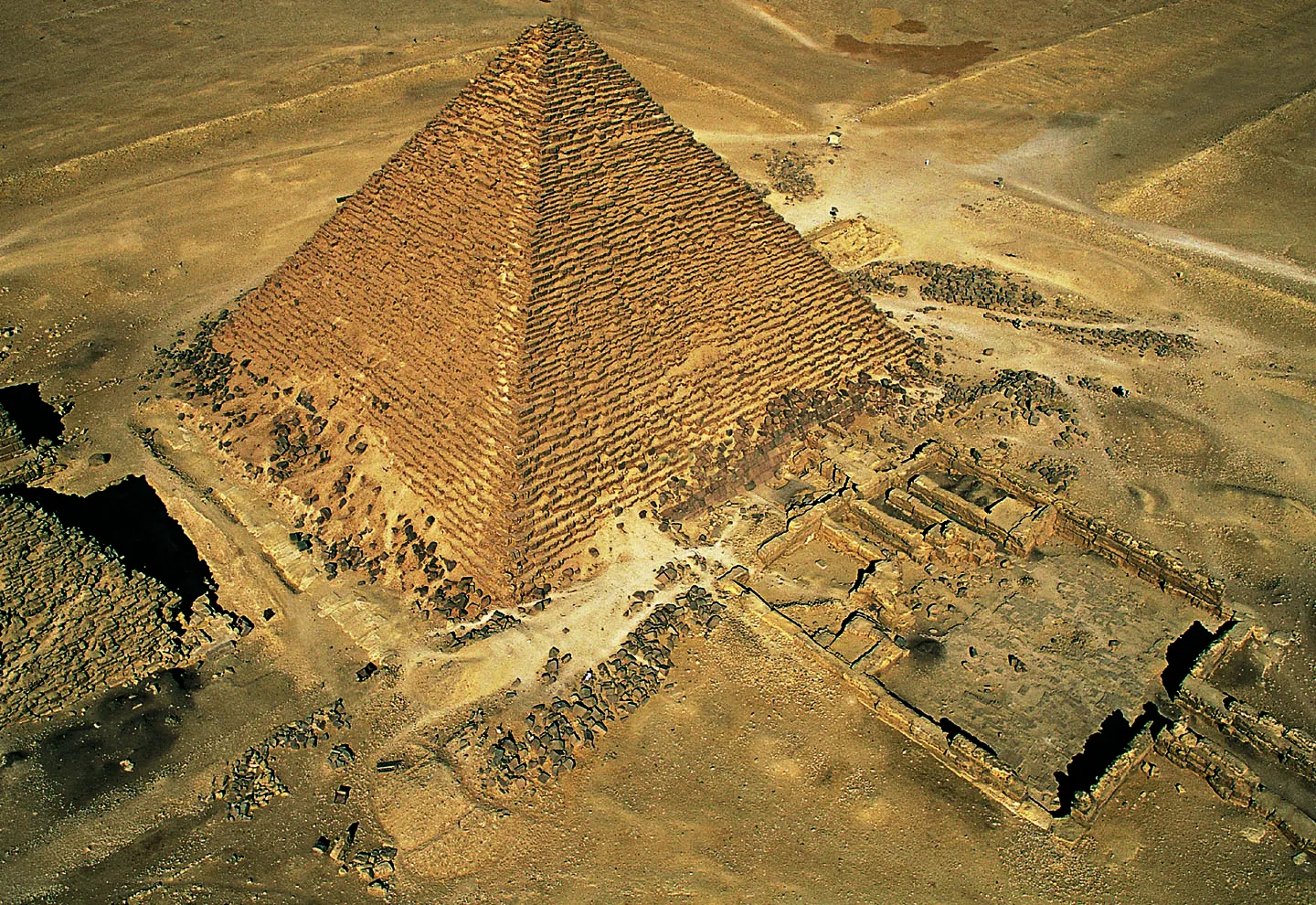
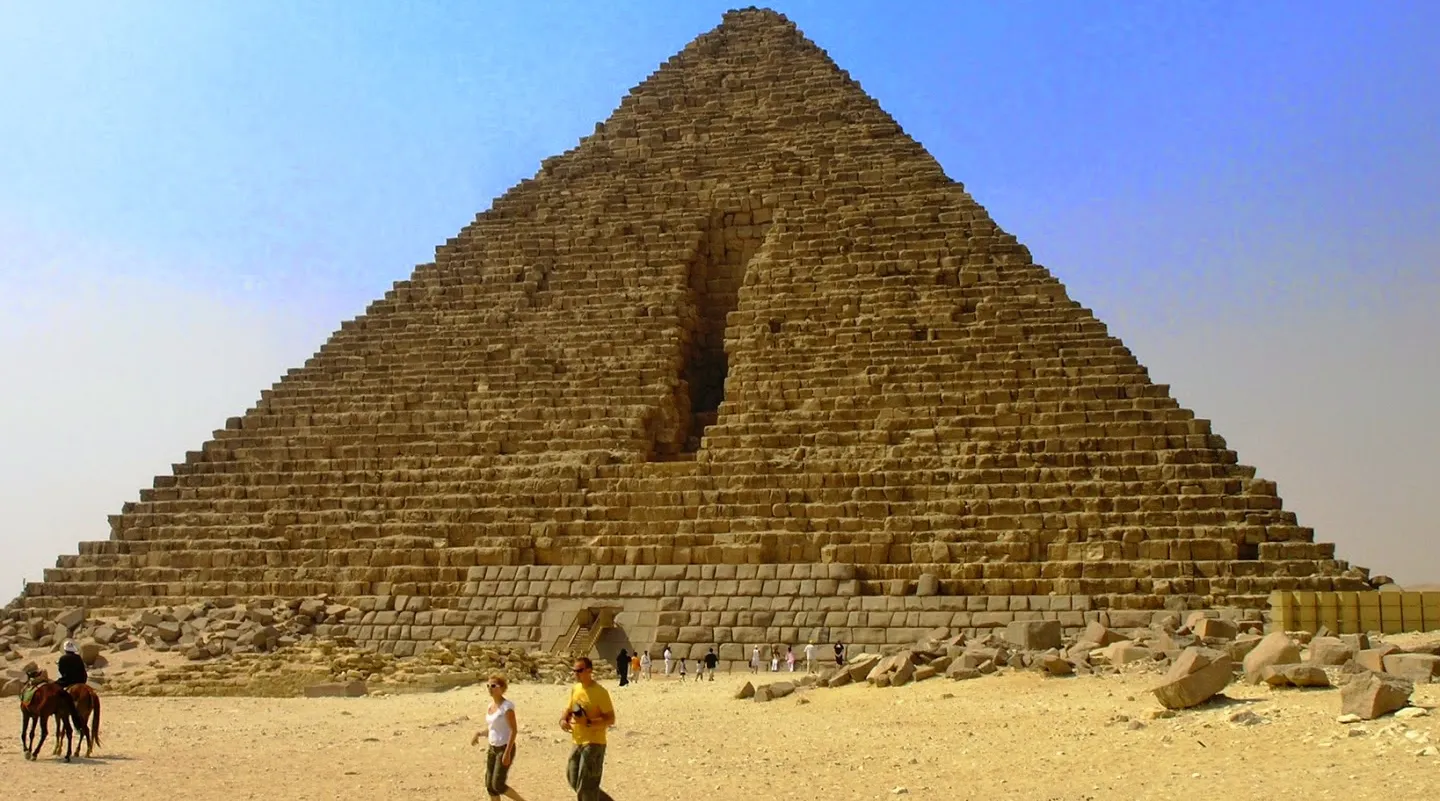
La Pirámide de Menkaura, la más pequeña de las tres grandes pirámides de Guiza, fue erigida para el faraón de la IV Dinastía en la necrópolis cercana a la antigua Memphis. Representa el culmen de la arquitectura funeraria egipcia antigua.
The Pyramid of Menkaure, like the rest of the Giza complex, usually opens from 8:00 a.m. to 5:00 p.m. for most of the year, although in winter it may close a bit earlier. You can easily visit on your own by buying tickets at the site ticket office. For more details, I recommend checking the official information on the Egyptian Ministry of Tourism website.
Access to the Giza pyramid area has a general admission fee. However, if you want to enter the interior of the Pyramid of Menkaure, you will need to buy a specific additional ticket, which is usually cheaper than the one for the Great Pyramid of Khufu. Prices may vary, so I recommend checking the latest rates directly at the ticket office or on the Supreme Council of Antiquities of Egypt website before your visit.
Although the Pyramid of Menkaure is smaller, it is part of the vast Giza complex, which includes the other two great pyramids and the Sphinx. I suggest allowing at least 2 to 3 hours to explore the plateau at a relaxed pace, including entry to Menkaure if you choose to go inside. If you want to enjoy it without rushing, you could even dedicate a full morning or afternoon.
The Pyramid of Menkaure is the third and smallest of the three great pyramids of Giza, built for Pharaoh Menkaure, son of Khafre and grandson of Khufu. Although smaller in size, it stands out for the pink granite casing still preserved on part of its base, which made it visually striking in antiquity. Its construction is a testament to the power and belief in eternal life of Egypt's Fourth Dynasty. You can find more details on Wikipedia about the Pyramid of Menkaure.
To avoid large crowds and intense heat, the best time to visit the Pyramid of Menkaure and the Giza complex is early in the morning, right when the gates open, or late in the afternoon. As for the best season, the autumn months (October-November) and spring (February-April) offer more pleasant temperatures than the hot summer months or the somewhat cooler winter period.
Access to the Giza Plateau in general is fairly flat and can be navigated by wheelchair, but entry into the interior of the Pyramid of Menkaure requires descending through narrow, sloping passages, making it inaccessible for people with reduced mobility. The exterior areas and surroundings of the pyramid can still be enjoyed with relative ease.
Absolutely. The Pyramid of Menkaure is part of the impressive Giza complex. Right nearby, you can explore the remarkable Pyramids of Khufu and Khafre, as well as the enigmatic Great Sphinx of Giza. For a fuller experience, you can also visit the Valley Temple of Khafre, and if you have extra time, the nearby Grand Egyptian Museum (GEM), although that last one is a short distance away and would require more time.
Definitely. Bring sunscreen, a hat or cap, sunglasses, and plenty of water, especially if you visit during warmer months. Wear comfortable shoes, as you will walk quite a bit over uneven ground. Consider hiring a certified local guide to better understand the history, or use an audio guide such as those from IAudioguia.com for an enriching and independent experience. And do not forget a good camera: the views are spectacular!
¿Prefieres escuchar en español?
🇪🇸 Escucha la audioguía de the Pyramid of Menkaure en español