A historic oasis on the Nile, cradle of ancient civilizations and home to millennia-old temples.
The island is accessible 24 hours a day, but the archaeological area and the Aswan Museum are usually open from **8:00 AM to 5:00 PM**. The most authentic and affordable way to get there is by taking the local public ferry from Aswan’s Corniche waterfront.
The public ferry costs only a few coins, while admission to the archaeological area of the Abu ruins and the museum is around **100 EGP** (Egyptian pounds). Remember to bring cash in local currency, as cards are rarely accepted at the ticket office.
To explore the ruins, see the Nilometer, and stroll through the colorful Nubian villages, I recommend setting aside **2 to 3 hours**. If you also decide to visit the private Animalia museum, add an extra hour to your itinerary.
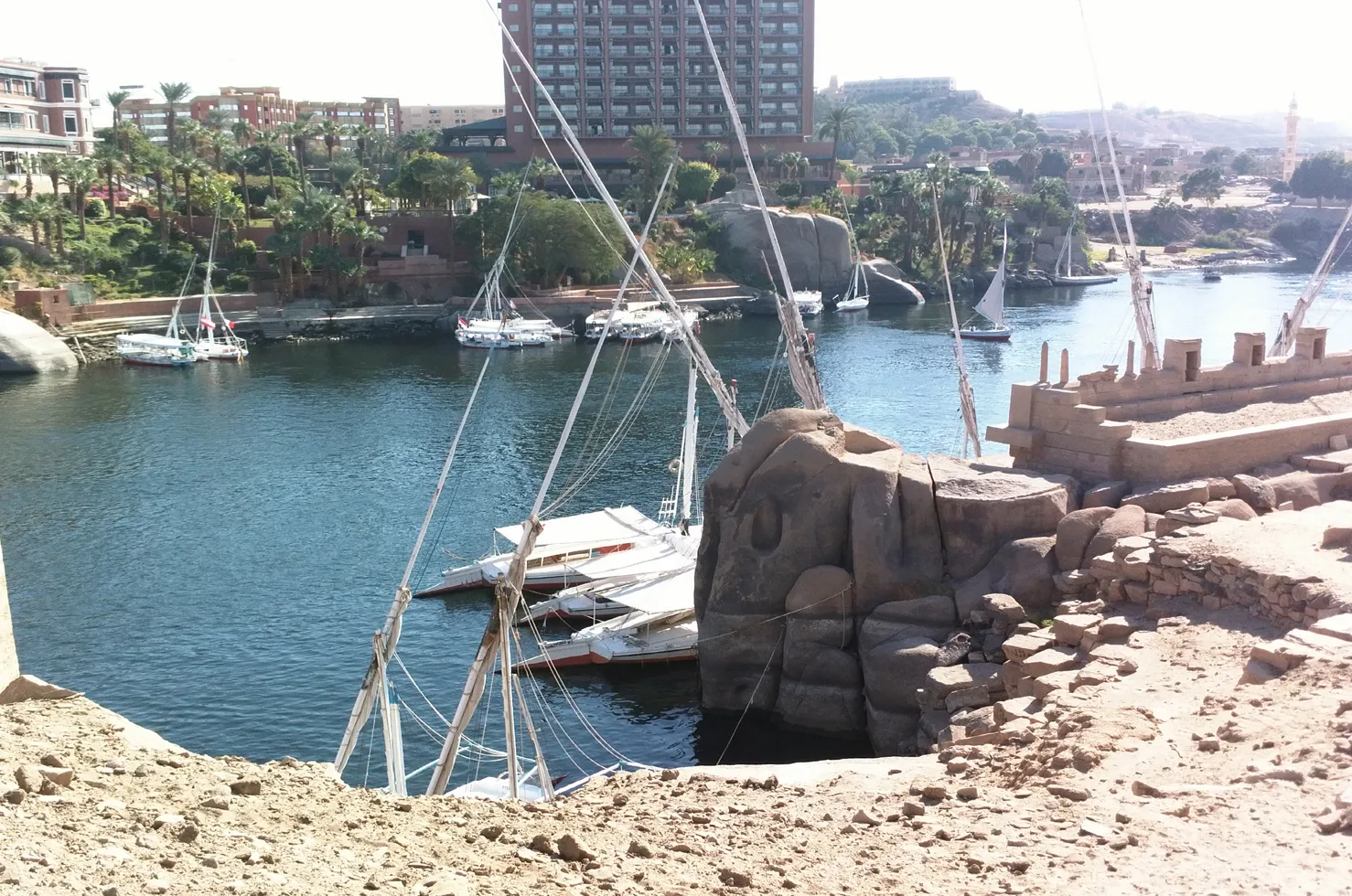
It was a strategic border fortress and the cult center of the god **Khnum**, creator of humanity on the potter’s wheel. Here you will find the famous **Nilometers**, ancient structures used to measure the river level and calculate annual taxes.
The best season is from **October to April** to avoid the extreme heat. The best time of day is at sunset; the golden light over the ruins and the Nile creates an unforgettable visual experience and is perfect for photography.
Unfortunately, accessibility is difficult because of loose sandy paths and the uneven terrain of the ruins. In addition, access to the boats and ferries usually involves steps or unstable gangways that are not well suited for wheelchairs.
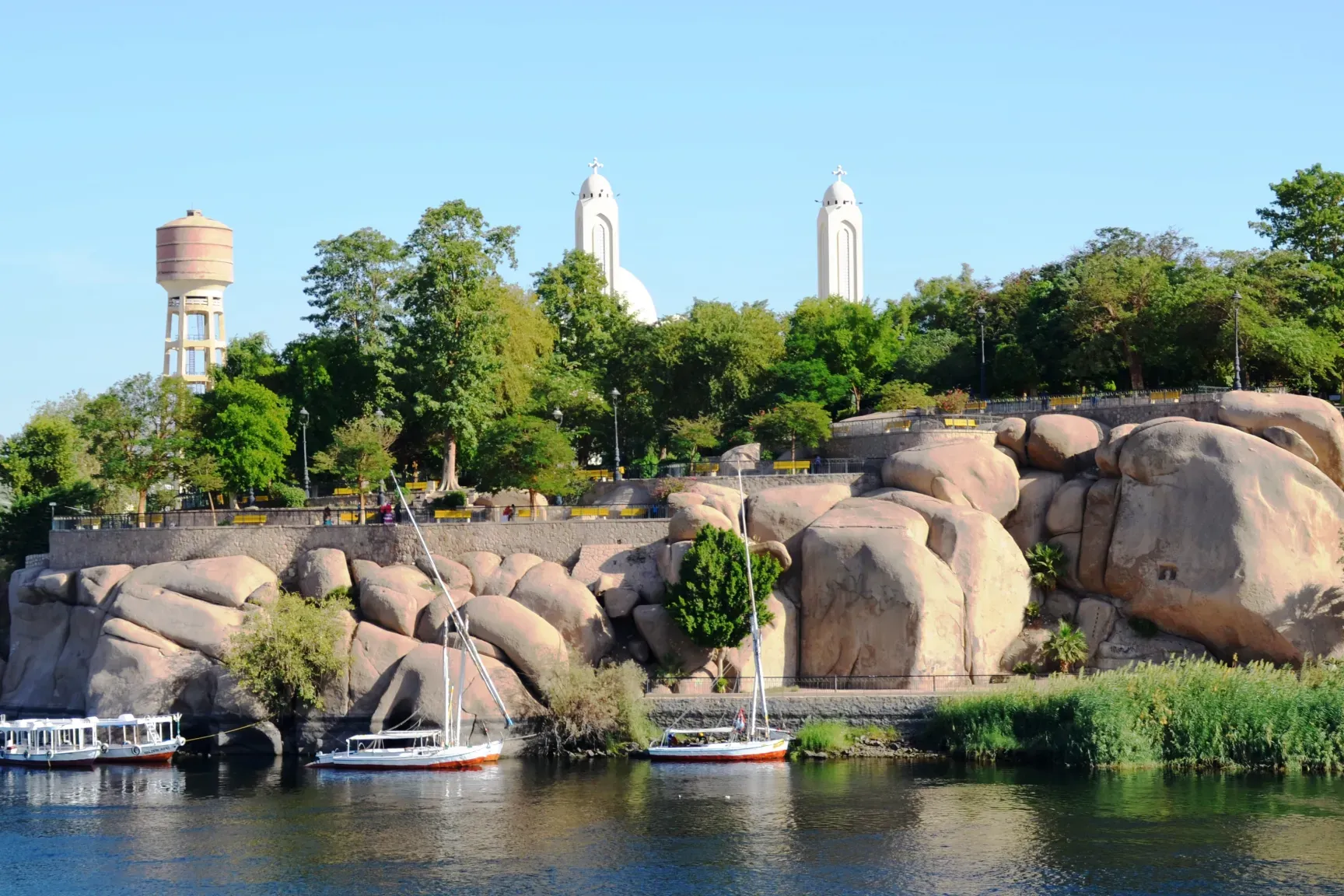
Directly opposite, you will find the beautiful Aswan Botanical Garden on Kitchener’s Island. Very close by are also the impressive **Tombs of the Nobles** carved into the Nile’s west bank.
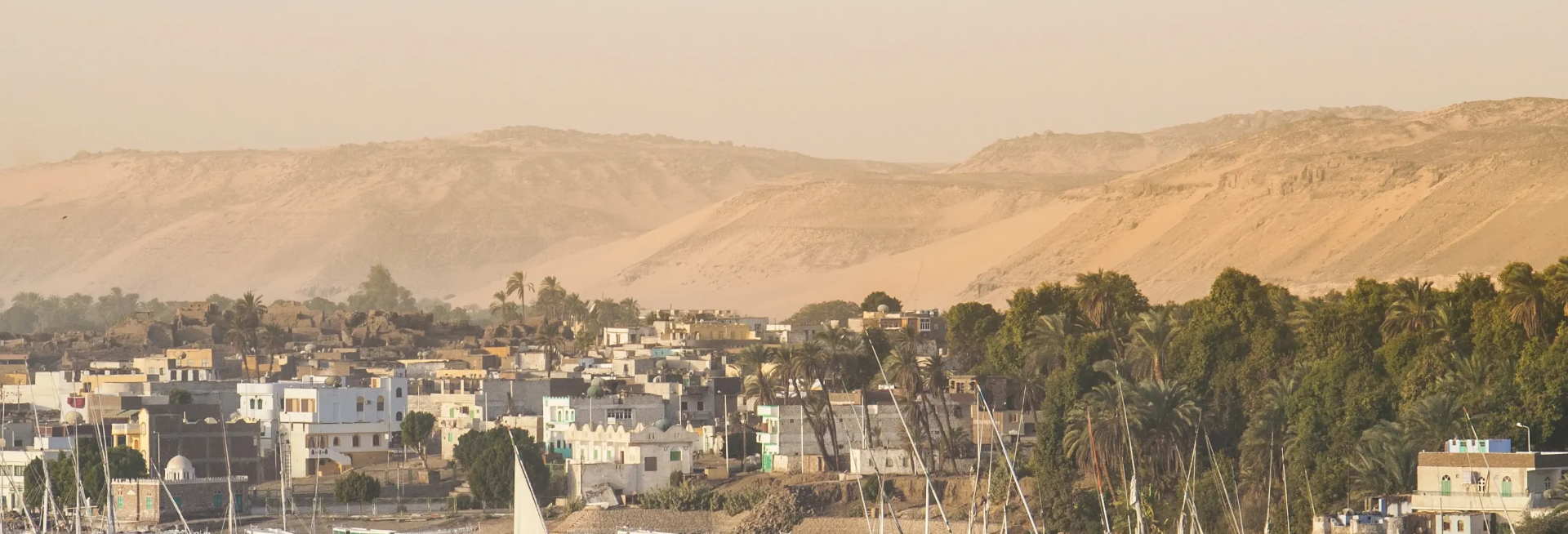
Wear very comfortable closed shoes for walking on sand and stones. Don’t miss a walk through the Nubian villages of **Siou and Koti** on the island to engage with the local culture and enjoy traditional tea.
¿Prefieres escuchar en español?
🇪🇸 Escucha la audioguía de Elephantine Island en español