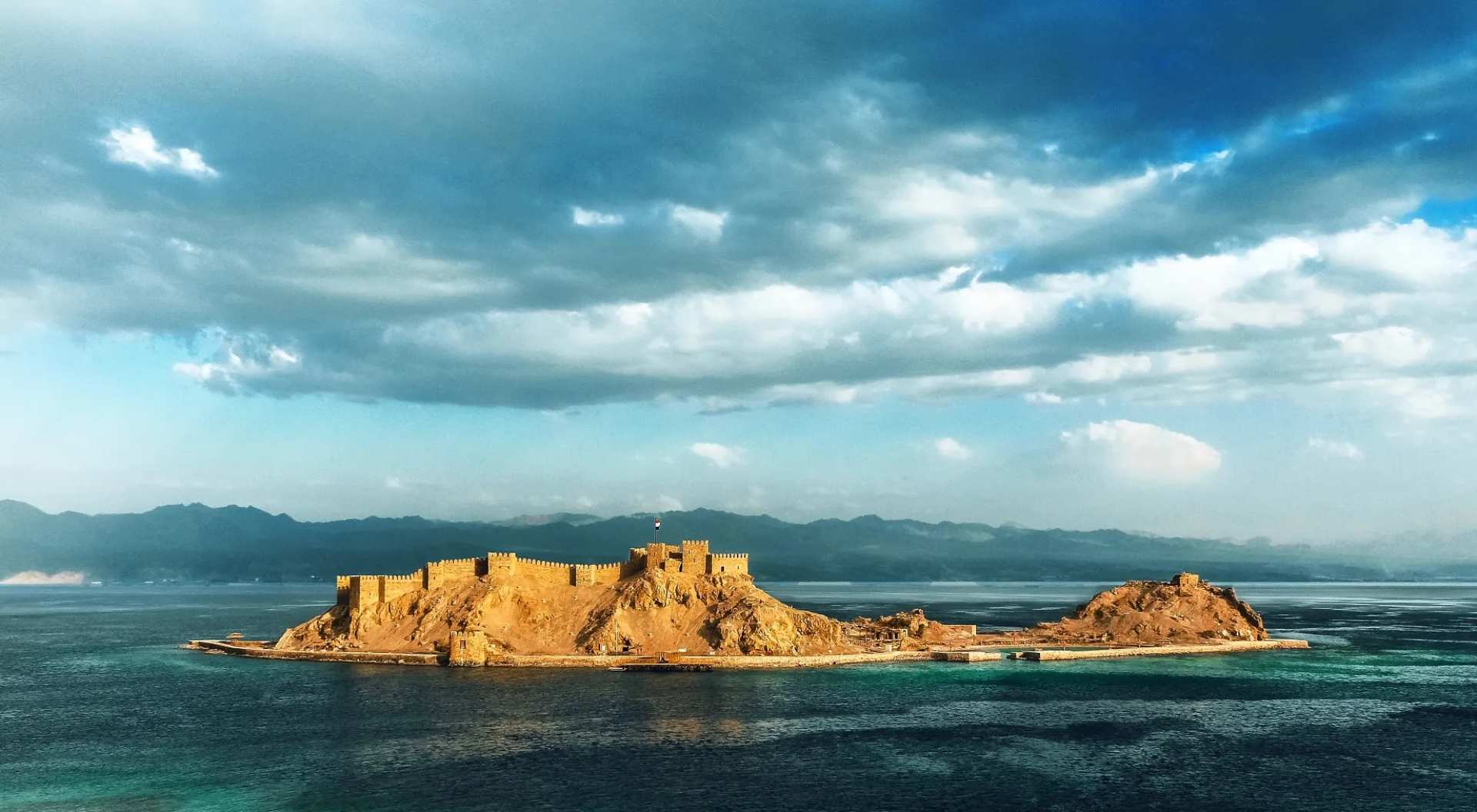
A fortified island with a rich history that blends biblical legends with Islamic and Crusader conquests.
Pharaoh's Island, also known as Jazirat Fara'un, lies off the coast of Taba and is only accessible by boat, from the Taba Heights marina or the port of Nuweiba. The site generally opens from 9:00 a.m. to 5:00 p.m. It is advisable to book a boat tour that includes transportation, as arranging access independently can be complicated.
The cost varies significantly depending on whether you visit on your own or with an organized tour, which usually includes boat transfer, snorkeling equipment, and food, with prices typically around USD 40–60 per person. There is no official ticket office on the island itself; payments are handled through local tour operators in Taba. I recommend comparing prices at the Taba Heights or Nuweiba piers.
To fully enjoy Pharaoh's Island, plan for at least 4 to 6 hours, which will give you time to explore the ruins, swim, and snorkel. If you book a full-day tour, you may spend between 6 and 8 hours, including the boat trip and a lunch stop.
The island is famous for housing the Fortress of Salam, an imposing stone structure built by the Nabataean king Obodas III around the 1st century BC to protect his trade routes. Its current name comes from the mistaken belief that it was the residence of the Pharaoh whose daughter saved Moses, although historically it is associated with King Obodas.
The best time is during spring (March to May) or autumn (September to November) to avoid the intense summer heat and the winter chill. To avoid crowds and the midday heat, I suggest visiting in the morning, arriving around 9:00 a.m., when the light is excellent and the sun is not yet too strong.
Unfortunately, Pharaoh's Island is not wheelchair accessible due to its natural terrain. Access from the boat involves climbing a small ladder, and the ground inside the fortress is uneven, with stones and slopes. For a more inclusive experience, I recommend exploring audio guide options at more accessible Egyptian sites such as Shali Fortress in Siwa.
Around Taba, you can visit the Colored Canyon, ideal for hiking and photography, or the Springs of Moses, a historic and religious site. If you enjoy the sea, the waters of Nabq National Park offer some of the best snorkeling in Sinai, with impressive reefs.
Bring sunscreen, a hat, water, comfortable closed-toe shoes for walking on the stones, and your swimsuit under your clothes. Do not forget to bring cash for tips, and remember that there are no services on the island, so make the most of your breaks on the boat. If you want to follow the history without missing a detail, download an audio guide from iaudioguia.com before you go.
¿Prefieres escuchar en español?
🇪🇸 Escucha la audioguía de Pharaoh's Island en español