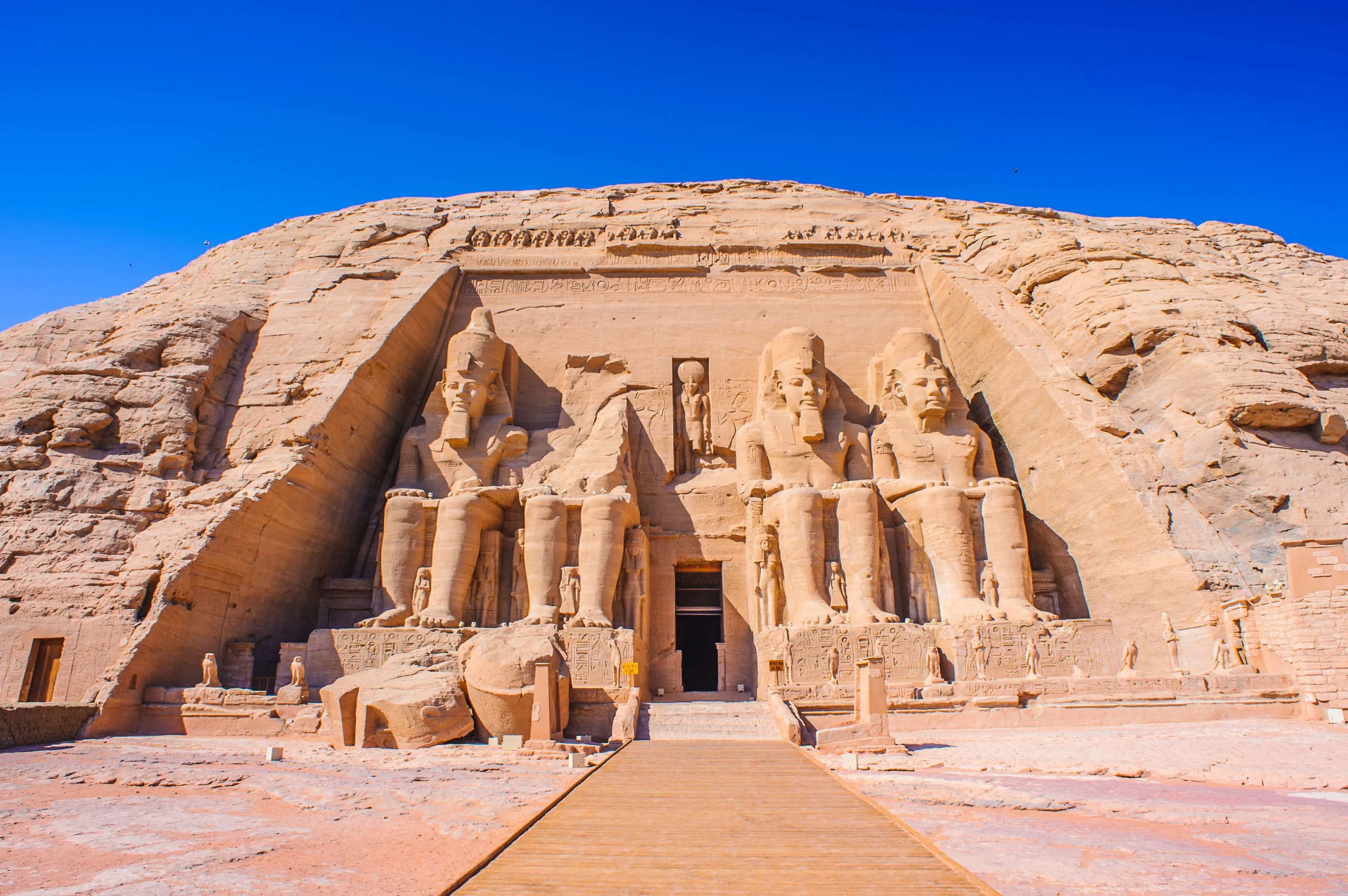
The heart of an ancient temple, with restricted access and the most sacred place of ancient Egyptian civilization.
The Abu Simbel complex, which includes the sanctuary, generally opens at 6:00 AM and closes at 5:00 PM (last entry is usually at 4:00 PM). It is crucial to always check the latest opening hours before your visit, as they may vary by season. You can consult the official information here: Egyptian Ministry of Tourism and Antiquities.
Entry to the Abu Simbel complex has a fee. The current price for foreign tourists is approximately 240 EGP (Egyptian pounds), although this may vary. It is not usually free, but there are sometimes discounts for students with an international student ID. I recommend checking the latest rates at the ticket office or on the official UNESCO World Heritage website, although specific ticket prices are rarely published online: UNESCO Abu Simbel.
To thoroughly explore the Great Temple of Ramesses II and the Small Temple of Nefertari, including the impressive Sanctasanctorum, it is recommended to allow at least 2 to 3 hours. This will give you time to appreciate the details, take photographs, and absorb the majesty of the site without rushing.
The Sanctasanctorum is the most sacred and deepest chamber of the Great Temple of Ramesses II at Abu Simbel. It contains four seated statues of Ra-Horakhty, Amun-Ra, the deified Ramesses II, and Ptah. Its greatest significance is the ‘sun phenomenon,’ an event that occurs twice a year (around February 20 and October 20), when the sun’s rays directly illuminate the statues, except for Ptah, the god of darkness. This astronomical event demonstrates the advanced engineering and knowledge of the ancient Egyptians.
The best time to visit Abu Simbel is during the winter months (from October to April), when temperatures are more pleasant. To avoid the biggest crowds and the midday heat, try to arrive right at opening time (6:00 AM) or late in the afternoon (after 3:00 PM). If your goal is to witness the solar phenomenon, keep in mind that those dates are extremely crowded.
Access to the temples of Abu Simbel, and specifically to the Sanctasanctorum inside the Great Temple, presents certain challenges for people with reduced mobility. There are slopes, natural uneven surfaces, and steps inside the temples. Although the entrance to the complex is relatively flat, the interior can be difficult to navigate in a wheelchair. It is recommended to contact a specialized tour operator or the local site for more detailed accessibility information.
Yes, the Abu Simbel complex includes not only the Great Temple of Ramesses II and its Sanctasanctorum, but also the Small Temple of Nefertari, dedicated to the goddess Hathor and the Great Royal Wife. Both temples were relocated to save them from the waters of Lake Nasser. In addition, the Lake Nasser area offers impressive scenery, although most visitors focus on the temples.
Of course—here are some useful tips: Bring plenty of water and sun protection (hat, sunglasses, sunscreen), as the sun can be very intense. Wear comfortable clothing and suitable walking shoes. Hire a local guide if you want to delve deeper into the history and details of the temples. Don’t forget your camera, but keep in mind that there is sometimes a small fee for taking photos with a professional camera inside the temples.
¿Prefieres escuchar en español?
🇪🇸 Escucha la audioguía de Sanctasanctorum en español