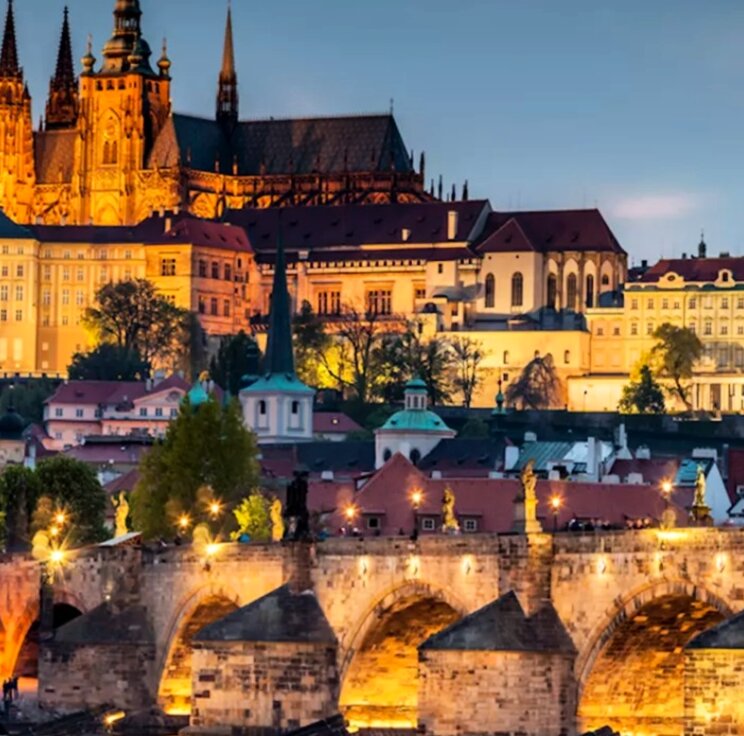
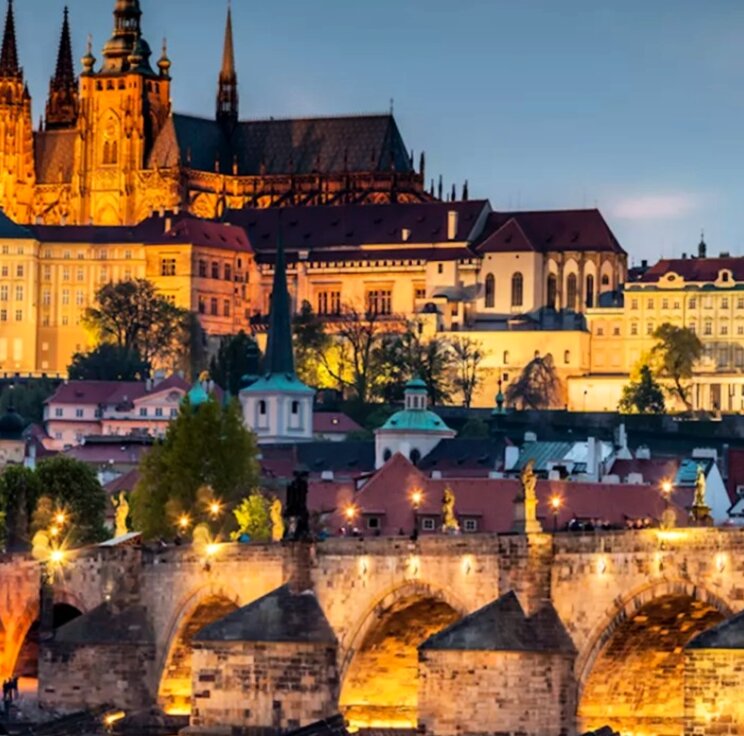
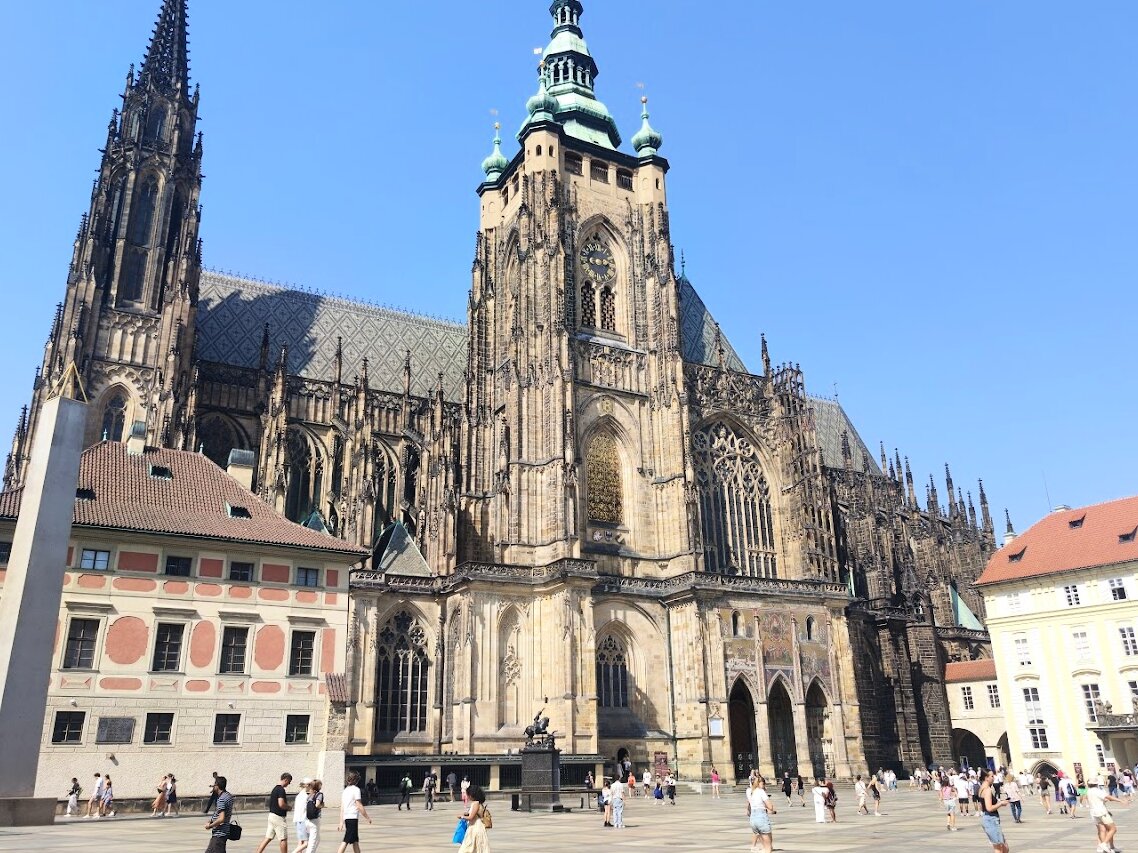
Prague Castle, the largest fortress in the world according to Guinness, stands on Hradčany Hill above the Vltava River. A historic complex that includes cathedrals, palaces and museums, it bears witness to a thousand years of Czech history.
The Prague Castle complex generally opens at 6:00 and closes at 22:00, although the historic buildings with exhibitions have more limited opening hours, normally from 9:00 to 17:00, which may vary depending on the season. You can enter through several gates, with the Giants' Gate (First Courtyard) being the most impressive, or use the eastern entrance to avoid the largest crowds. I recommend checking the specific opening hours on the official website: Prague Castle Opening Hours.
Entry to the Castle's outdoor grounds is free, but you need to buy a ticket to access historic buildings such as St. Vitus Cathedral, the Old Royal Palace, St. George's Basilica or Golden Lane. There are several circuits at different prices. Prices vary, but you can find tickets ranging from approximately CZK 250 to CZK 450. I suggest checking the options and current prices at: Prague Castle Tickets.
To explore Prague Castle fully and without rushing, including the main historic buildings and their exhibitions, I would recommend allowing at least half a day, between 3 and 4 hours. If you only have time to see the essentials or want to explore a particular museum in greater depth, plan your itinerary in advance.
Prague Castle is one of the largest palace complexes in the world and has been the seat of the kings of Bohemia, the Holy Roman emperors, the presidents of Czechoslovakia and, currently, the president of the Czech Republic. Its long history, dating back to the 9th century, and its impressive Gothic, Romanesque and Baroque architecture make it a symbol of the Czech nation and a melting pot of European history.
To make the most of your visit and avoid the largest crowds, I recommend visiting the Castle first thing in the morning (just as the buildings open), or late in the afternoon. The low season (autumn and winter, excluding Christmas) is usually less crowded than spring or summer. It is also advisable to avoid weekends if possible.
Prague Castle is a very large and ancient complex, which presents certain accessibility challenges. Some areas are accessible via ramps and lifts, but others, especially historic buildings, have steps or uneven surfaces. It is advisable to consult the accessibility map or contact the visitor centre directly to plan a suitable route. You can find more information on the official website: Accessibility at Prague Castle.
Immediately below Prague Castle is the charming Malá Strana (Lesser Town) district, with places such as Charles Bridge, St. Nicholas Church and Kampa Island. You can also explore the Hradčany district around the Castle, with its palaces and viewpoints, or cross the river to visit the historic centre of the Old Town. There are plenty of options for extending your experience.
Of course. For the best possible visit, I suggest wearing comfortable footwear, as there is a lot of walking and there are slopes. Consider buying tickets online in advance to save time in queues. Bring water, especially in summer. And for a more enriching experience, I strongly recommend one of our audio guides from iAudioguia - Travel Audio Guides in Spanish, so you can discover the fascinating history and secrets of every corner as you walk around.
¿Prefieres escuchar en español?
🇪🇸 Escucha la audioguía de Prague Castle en español