Discover the history and secrets of this place with our audio guide.
Jogyesa Temple is open 24 hours a day, 7 days a week, making it easy to visit at any time. However, the main ceremonies and activities usually take place during the day. For a more complete experience, we recommend visiting the interior of the temple during daylight hours. No reservation is needed; you can simply arrive and explore.
Good news! Admission to Jogyesa Temple is completely free, making it an excellent option for budget travelers. If you wish to participate in special programs such as the 'Templestay', these do have an additional cost and require advance booking.
For a relaxed visit and to fully appreciate the beauty and atmosphere of Jogyesa Temple, we suggest setting aside 1 to 2 hours. This will give you enough time to wander the grounds, admire the architecture, observe the prayers, and immerse yourself in the tranquility of the place.
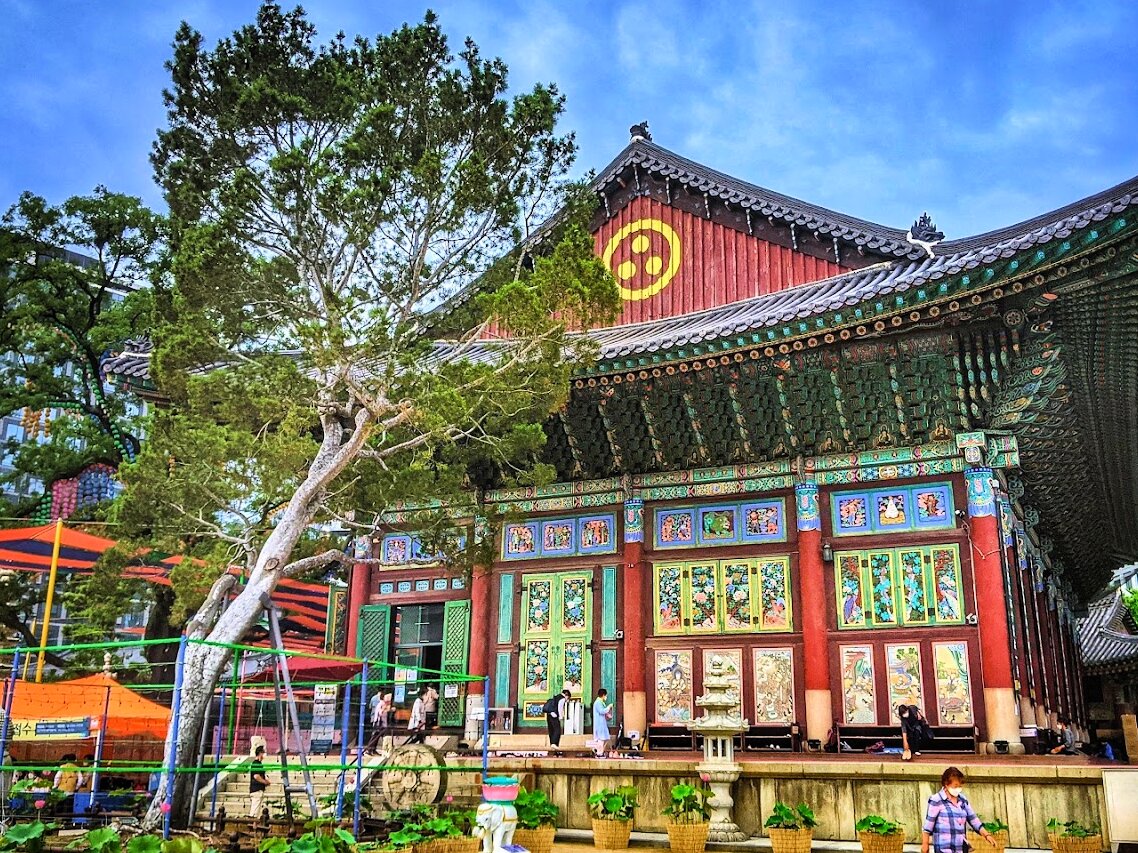
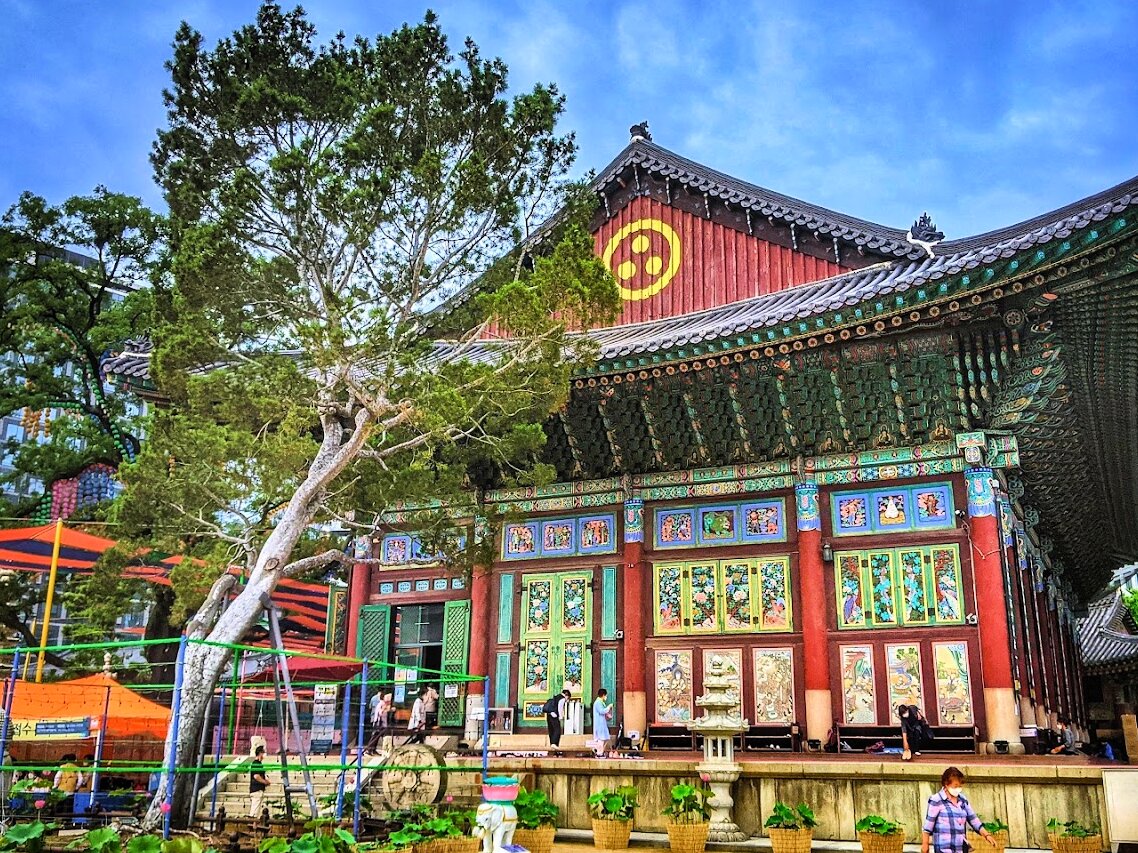
Jogyesa Temple is the center of Korean Zen Buddhism (Jogye Order) and a place of immense cultural and religious importance. Founded in the late 14th century, it has been a spiritual pillar and represents the living history of Buddhism in Korea, with monks who still practice and teach here. It is a testament to the endurance of a centuries-old tradition.
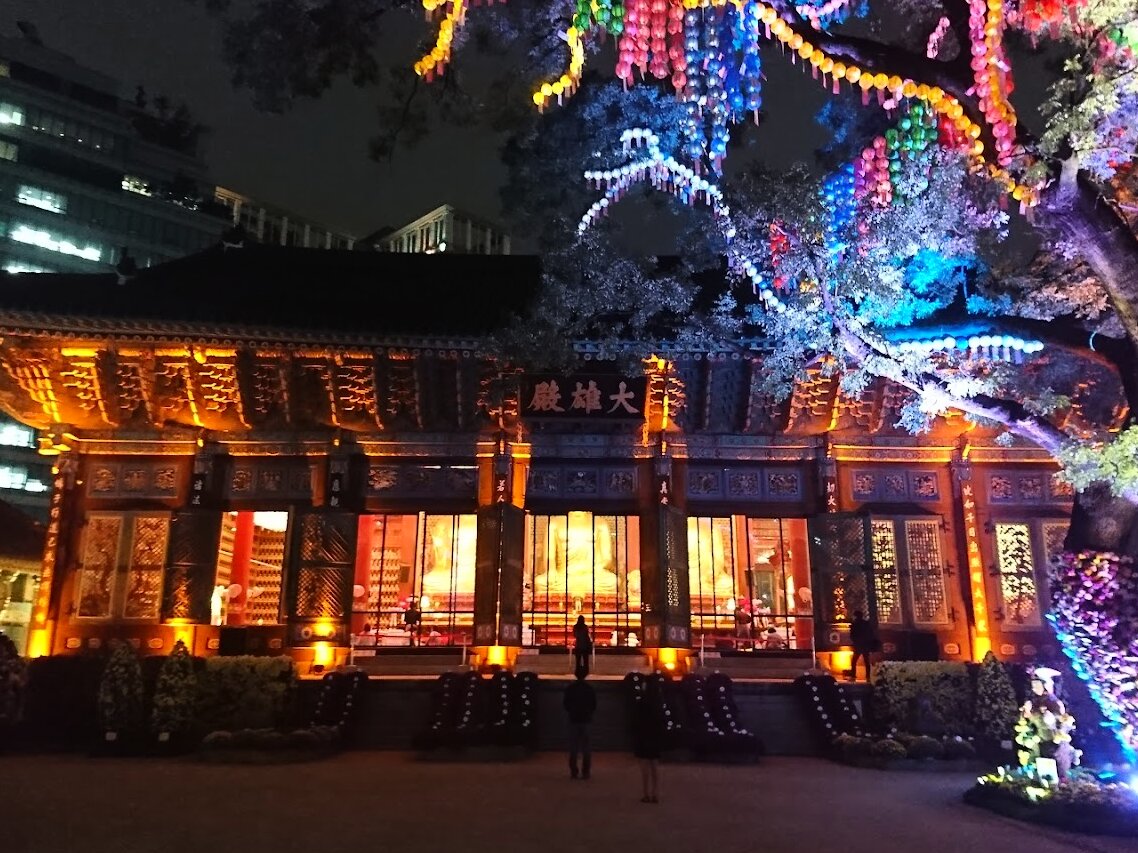
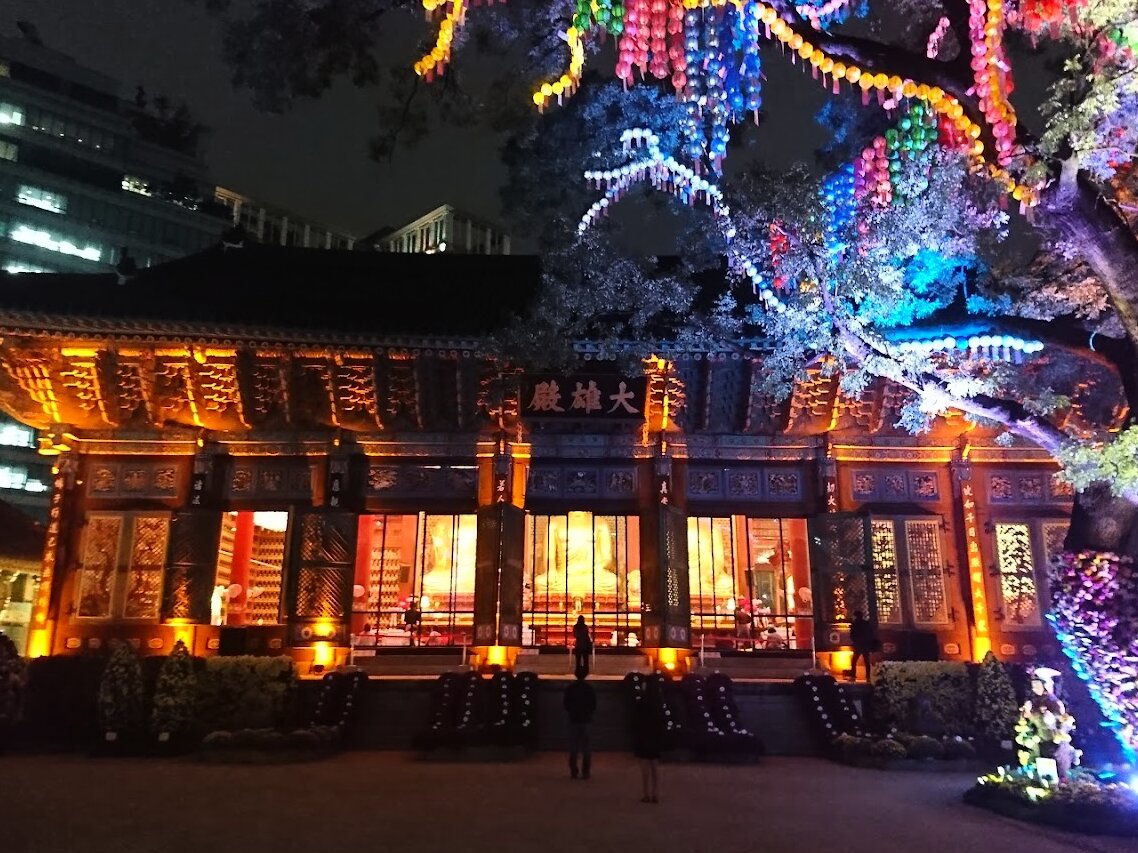
To avoid the crowds and enjoy a more serene atmosphere, we recommend visiting early in the morning. As for the time of year, spring (April-May), when the trees bloom with lotus lanterns, and autumn (October-November), with its vibrant colors, are the most picturesque seasons. The Lotus Lantern Festival in May is an unforgettable experience, but it can get very crowded.
Yes, in general, Jogyesa Temple is quite accessible. The main grounds are flat and there are ramps in some areas, although the age of the complex may present steps at certain points inside the buildings. It is advisable to contact the temple directly if you have specific needs to get the most up-to-date information: +82 2-732-5290.
Absolutely! Jogyesa Temple is in a prime location. Right next door you'll find Insa-dong, famous for its craft shops and tea houses. Gyeongbokgung Palace and the traditional Bukchon Hanok Village are also within walking distance, offering a fascinating contrast between the spiritual and the historical-cultural side of Seoul. For more information about Seoul, you can visit the official tourism site: english.seoul.go.kr.
Dress modestly, covering your shoulders and knees, out of respect for this sacred place. If you witness a ceremony, you can join in quietly or simply observe from a distance. Turn off your camera flash so as not to disturb anyone, and consider trying the 'Templestay' if you're looking for a deeper immersion into Korean Buddhist culture. You can find more details on the official website: jogyesa.kr.
¿Prefieres escuchar en español?
🇪🇸 Escucha la audioguía de Jogyesa Temple en español