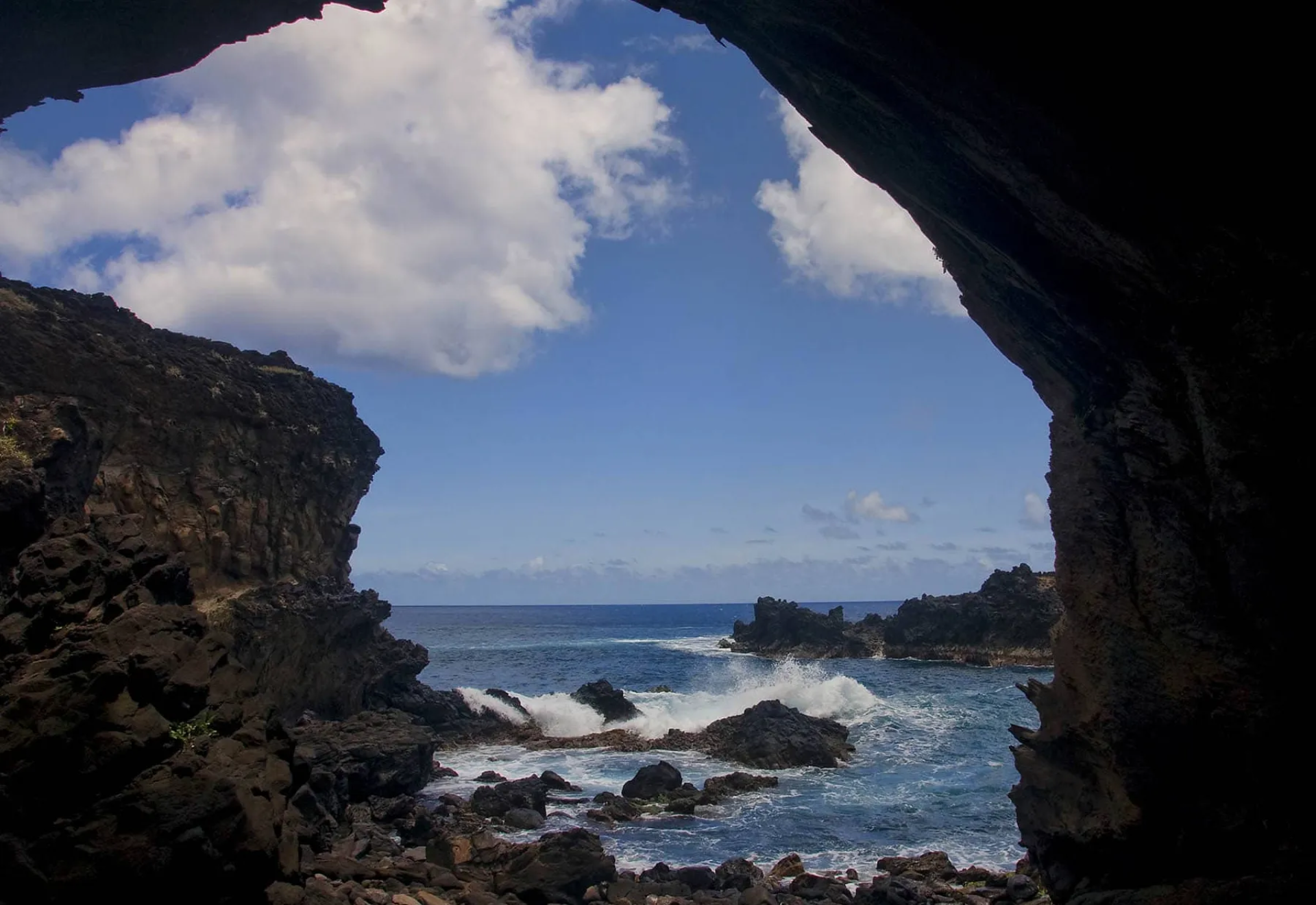
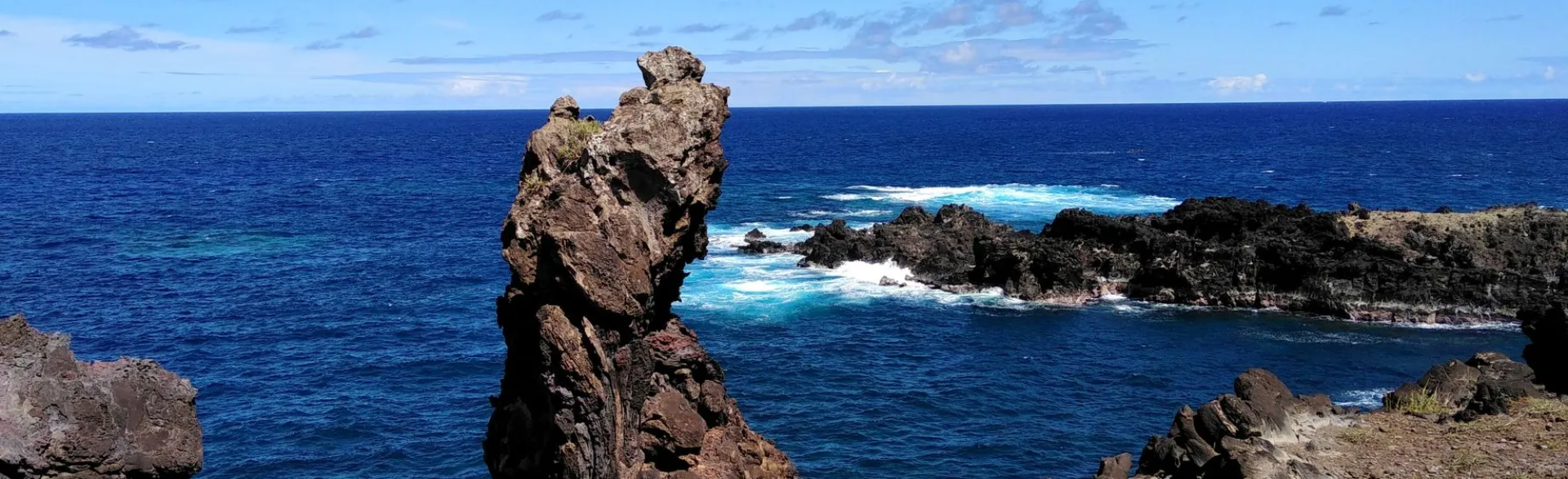
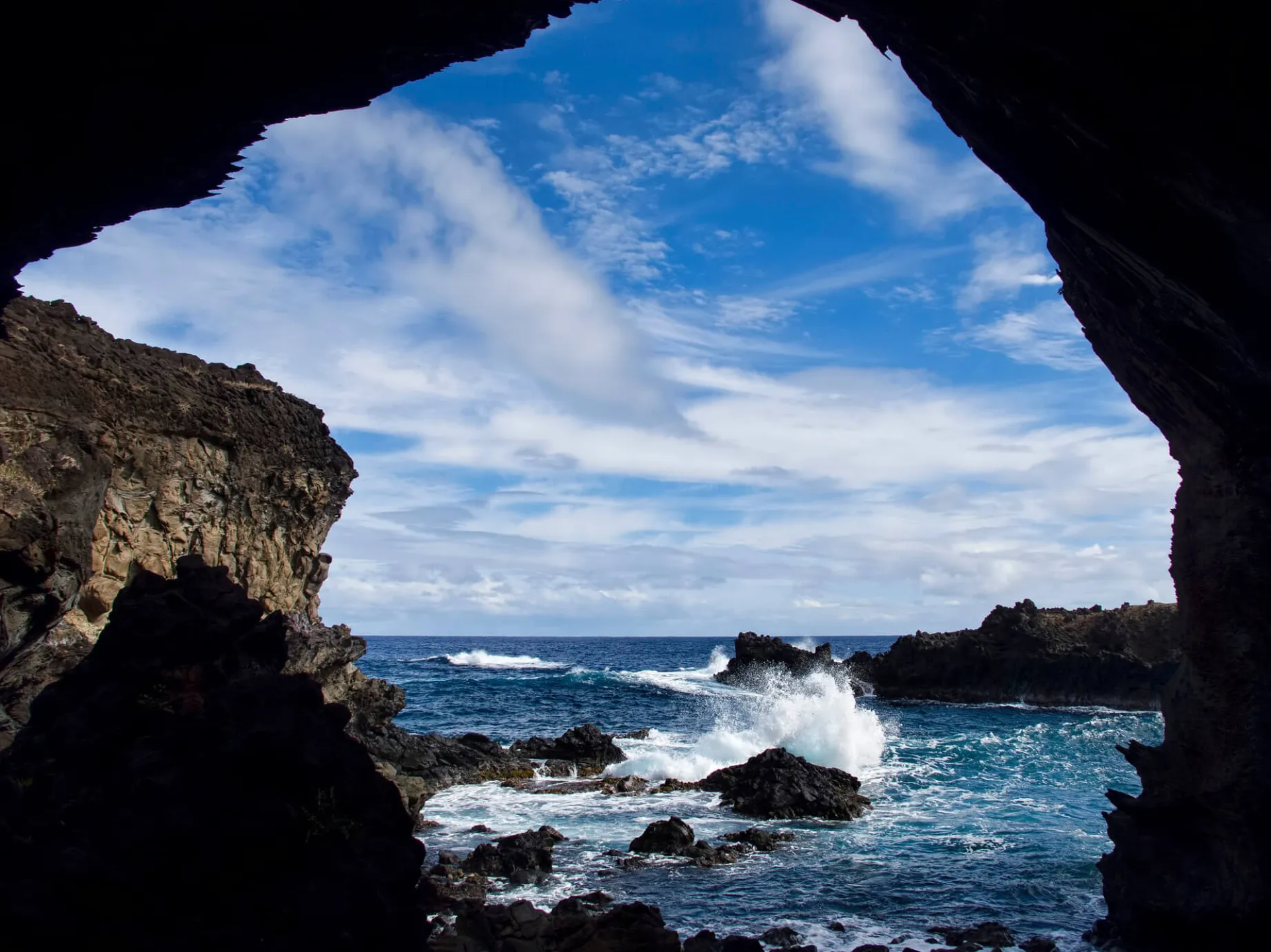
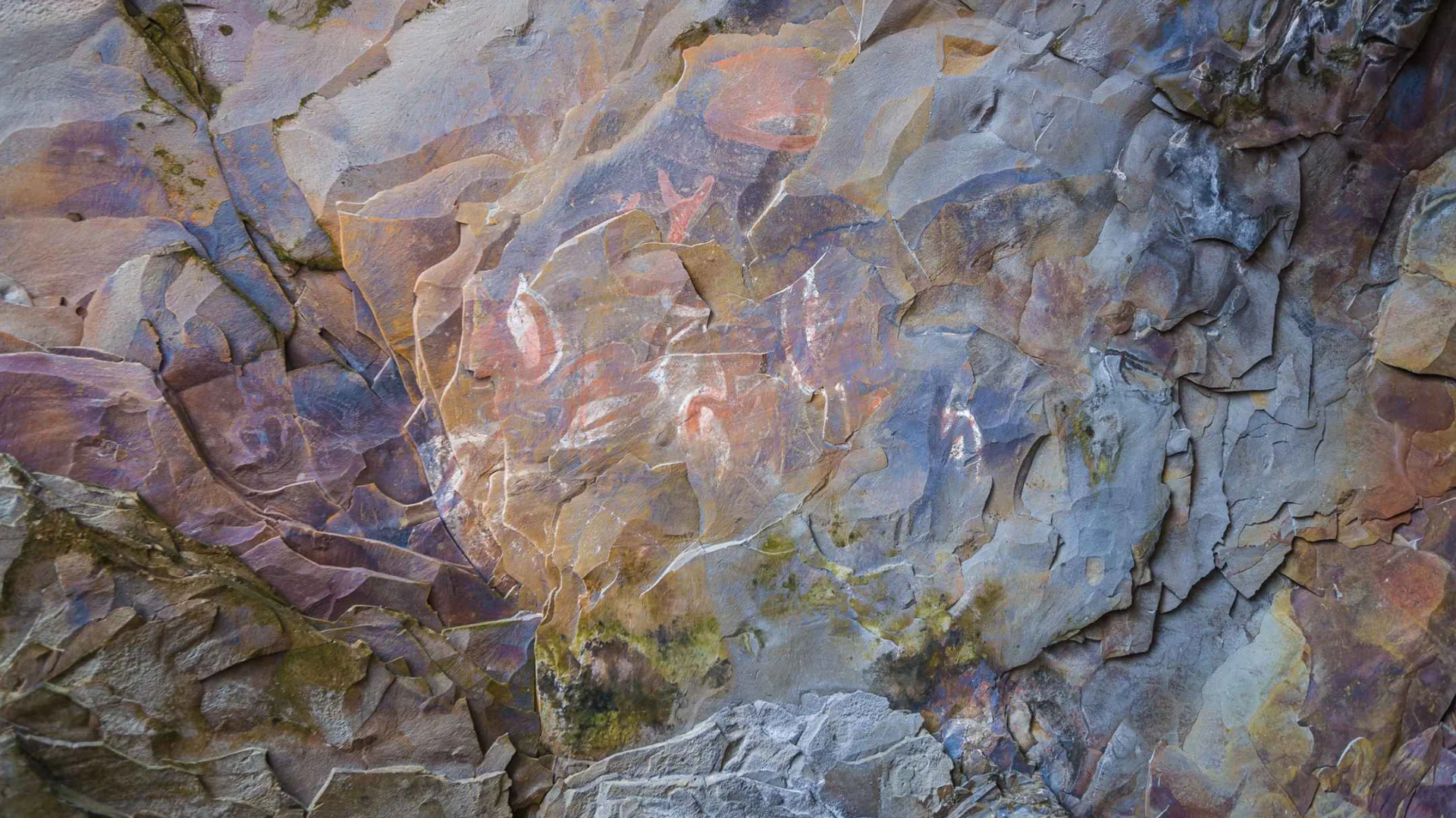
A sea cave with stunning rock paintings that tell the story of the ancestral Rapanui culture, offering a unique window into its traditions.
The cave is a natural public-access site located south of Hanga Roa, generally accessible during daylight hours, although it is recommended to go between 9:00 AM and 6:00 PM. You can easily reach it on foot from the town via Policarpo Toro Street or by bicycle, following the coastal route toward Mataveri.
To visit this and other archaeological sites, it is mandatory to have a Rapa Nui National Park ticket (Ma'u Henua). You can buy your ticket in advance on the official Ma'u Henua website, and it is valid for 10 days to explore the island.
It is a short but intense visit; generally, you will need between 30 and 45 minutes to go down, take in the surroundings, and climb back up. It is the perfect amount of time to combine with a longer walk or to listen to the full story on your IAudioguia.
Its name can be translated as 'the cave where men eat,' and it is famous for its rock paintings of the Manutara, sacred birds, on the ceiling. These paintings are closely linked to the Birdman cult and the ancient ceremonies of Rapa Nui.
The afternoon is the ideal time, especially near sunset, when sunlight enters the cave directly and illuminates the reddish paintings. In terms of climate, any time of year is good, but try to choose a day without rain, as the steps can be slippery.
Unfortunately, it is not wheelchair accessible, as the descent requires going down a steep stone staircase and walking over uneven rocks. If you have reduced mobility, you can still enjoy the panoramic views from the top of the cliff.
The cave is strategically located near the start of the 'Te Ara o Te Ao' trail that leads to Rano Kau volcano. You are also very close to the gardens of explora Hotel and the Mataveri area, perfect for continuing your route toward the ceremonial village of Orongo.
Wear shoes with good grip for the wet rocks and, above all, do not touch the paintings to help preserve them. We strongly recommend downloading our audio guide from IAudioguia so you can understand the deep cultural meaning of what you are seeing without missing any detail.
¿Prefieres escuchar en español?
🇪🇸 Escucha la audioguía de Ana Kai Tangata en español