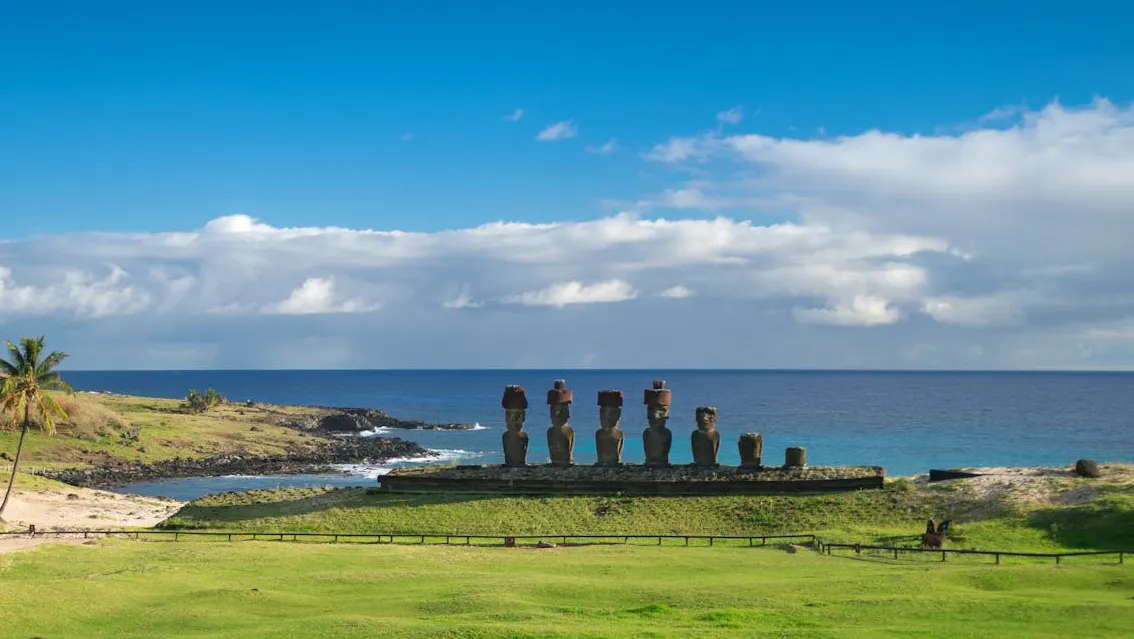
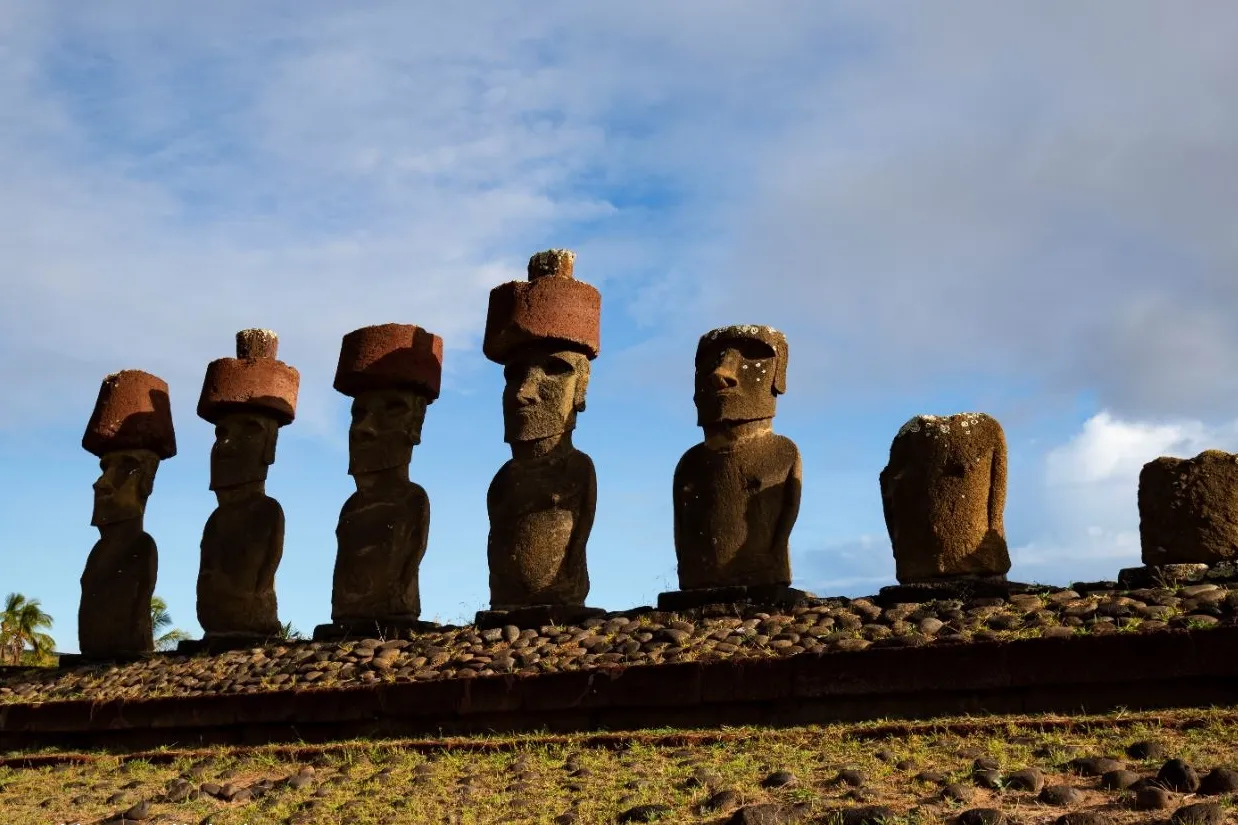
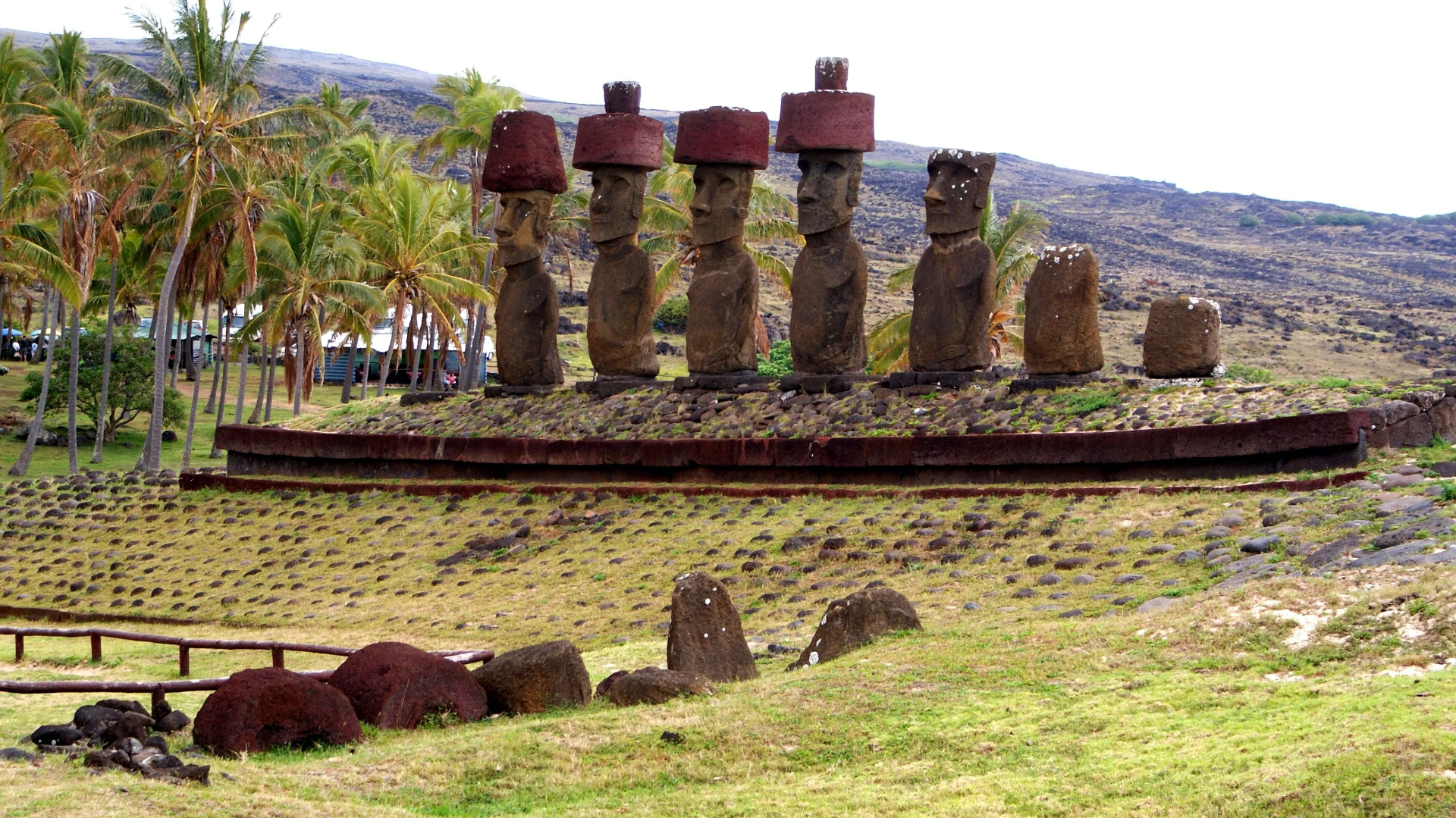
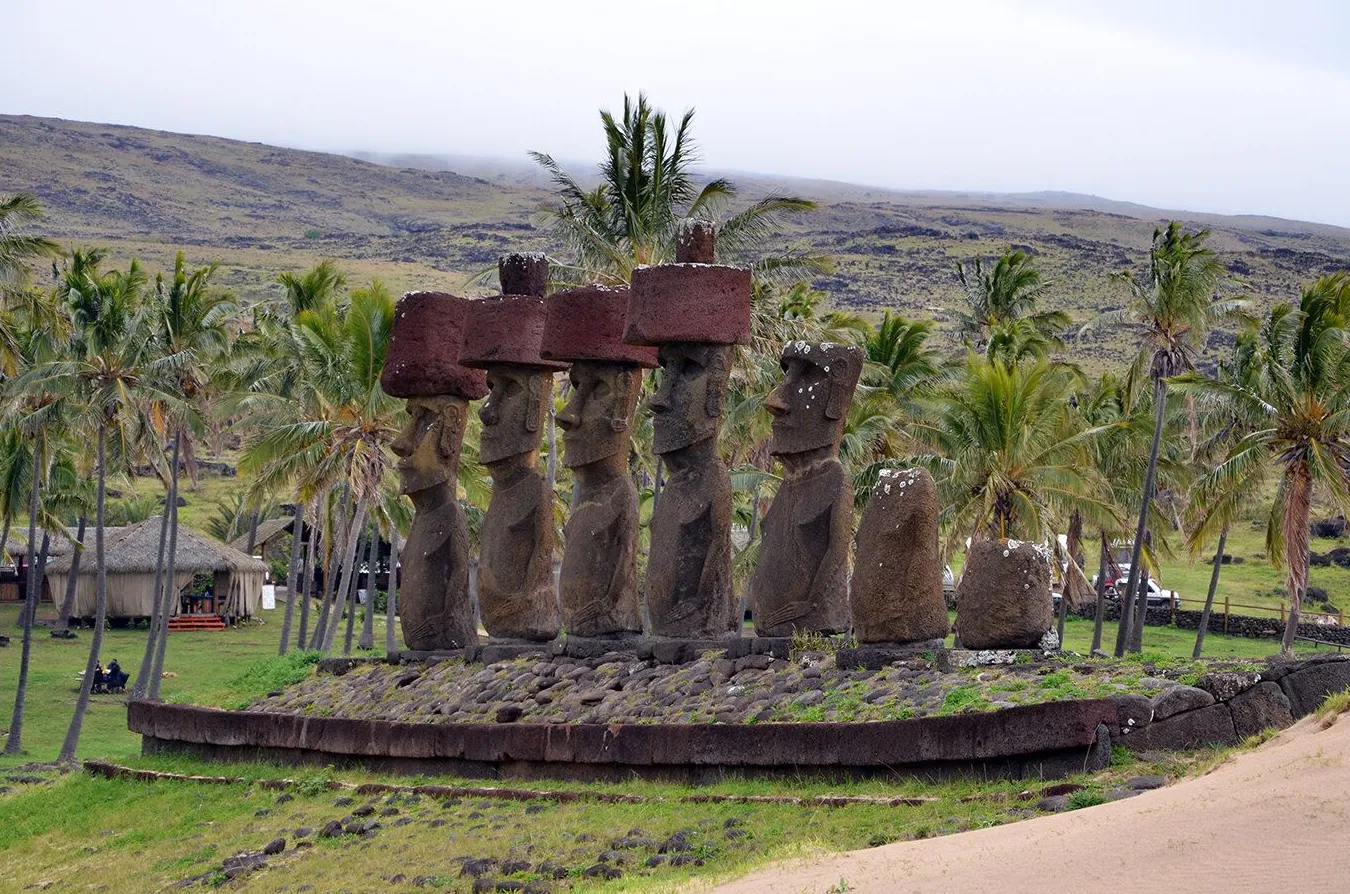
Siete moáis que un noruego loco resucitó de la arena, en la playa donde nació la leyenda rapanui: ¿están sonriendo o juzgándote?
To visit Ahu Nau Nau, you need to go to Rapa Nui National Park, as this archaeological site is located within it. The park is open daily from 9:00 a.m. to 6:00 p.m. (last entry at 5:00 p.m.), although hours may vary slightly depending on the season. I recommend checking the official information on the Rapa Nui National Park website before your visit to confirm.
Access to Ahu Nau Nau and Rapa Nui National Park requires the purchase of the BIP Rapa Nui pass (Park Entry Ticket), which costs approximately USD 80 for foreigners and CLP 10,000 for Chilean residents. This pass is valid for 10 days and gives you access to the island’s main archaeological sites. Tickets can be purchased at the CONAF office in Hanga Roa or through their official website.
For a complete visit to Ahu Nau Nau, it is recommended to allow 1 to 2 hours. This gives you enough time to closely observe the 7 restored moai and the ceremonial enclosure with its petroglyphs. If you are interested in photography, especially at sunset, you may want to extend your visit a little longer.
Ahu Nau Nau is a highly important archaeological site that contains 7 restored moai, ranging from 7 to 10 meters in height, as well as a ceremonial enclosure. What makes it special is that it preserves wall paintings and petroglyphs in excellent condition, including manutara bird figures connected to Orongo. It is one of the most complete restorations on the island and represents a place of great spiritual significance for the Rapa Nui people.
The best time to visit Easter Island is during spring, from September to November, or autumn, from March to May, when there are fewer tourists and the weather is more stable. As for the time of day, sunset is especially recommended for photographing the moai, as the golden light enhances their beauty and the contrast with the sea. Avoid the hottest hours around midday if you prefer a more comfortable walk.
Unfortunately, access to Ahu Nau Nau has limitations for people with reduced mobility. The site has a dirt and stone path that may be difficult for wheelchairs or visitors with mobility issues. It is recommended to contact the Rapa Nui National Park Office (+56 32 210 0140) to ask about alternatives and specific conditions before planning your visit.
Within the same Rapa Nui National Park, you can visit the Orongo site, about 500 meters away, Ahu Vinapu with its perfectly fitted stone wall, and Ahu Tahai, ideal for watching the sunset. In the town of Hanga Roa, near Anakena Beach, you will find Ahu Kivi and other moai. You can also visit the Father Sebastian Englert Anthropological Museum to learn more about the island’s history.
1) Bring your BIP Rapa Nui pass with you, and you can buy it online before traveling. 2) Wear comfortable shoes and sun protection, as there is little shade. 3) Bring enough water and insect repellent. 4) Respect fenced areas, and do not touch the petroglyphs or climb on the moai. 5) Consider hiring a local guide to better understand the cultural significance; the Rapa Nui Tour Guides Association can help. 6) Bring your camera and enjoy the sunset if your schedule allows.
¿Prefieres escuchar en español?
🇪🇸 Escucha la audioguía de Ahu Nau Nau en español